Clean, consistent corners can make the difference between a homemade-looking book and a polished binding project. The right corner cutter helps position material accurately, repeat cuts reliably, and match the finish to your cover design.
This roundup compares 10 tools and kits, from compact punches and acrylic guides to multi-size miter sets and manual corner-cutting machines. Use the guide below to narrow your choice by precision, corner radius, material, and project frequency.
Best 10 Book Corner Cutters for Precision Work Picks for 2026
Multi-Size Miter Set
BENECREAT 5-Piece Corner Tool Kit

- Five sizes from 3 mm to 7 mm
- 201 stainless steel construction
- Useful for books, albums, and cards
Best For: Bookbinders needing several corner sizes
Rounded-Corner Specialist
Sunstar Kadomaru Pro Corner Cutter

- Cuts smooth rounded corners
- Handles up to three paper sheets
- Works with thin laminated film
Best For: Scrapbooking and rounded paper corners
Beveled Binding Set

- Four sizes from 2 mm to 10 mm
- Stainless steel construction
- Includes a storage case
Best For: Bookbinding and varied cover materials
Three-Radius Rounder
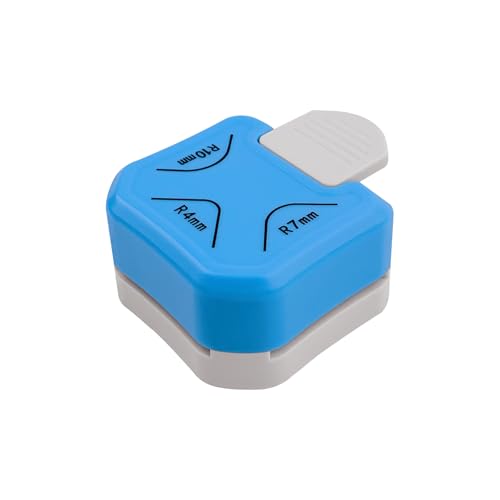
- R4 mm, R7 mm, and R10 mm options
- Compact manual corner-rounding design
- Works with paper, photos, and laminate
Best For: Craft and document corner rounding
Best Precision Jig Set
Multi-Size Bookbinding Corner Jigs

- Four jigs in 4, 5, 6, and 12 mm sizes
- Made for angled bookbinding corners
- Compact 3D-printed design
Best For: DIY bookbinders seeking multiple corner-guide sizes
Best Starter Kit
Molain Bookbinding Corner Tool Set

- Six rulers, guides, and specialty tools
- Includes a 3 mm corner miter tool
- PP plastic with clear measurement edges
Best For: Beginners making notebooks, journals, and calendars
Best Heavy-Duty Cutter

- Steel manual machine with cast-iron base
- R6 and R10 blade options included
- Cuts materials up to 30 mm thick
Best For: Professional shops and thick-material corner rounding
Best Multi-Size Set
OLYCRAFT Acrylic Book Corner Miter Tools

- Four corner sizes from 2mm to 10mm
- Includes two multi-function guide rulers
- Acrylic guides support repeatable layouts
Best For: Bookbinders needing varied corner sizes and alignment guides
Best Handheld Punch

- R5, straight 10mm, and scallop designs
- Manual punch with grippable ABS housing
- Listed for 70gsm–230gsm card stock
Best For: Paper crafters wanting quick decorative corner finishes
Best Starter Guide Kit
5-Piece Bookbinding Stencils and Guides

- Five varied stencils and cutter guides
- Resilient polyethylene construction
- Designed for beginner bookbinding projects
Best For: Beginners making notebooks, journals, and photo albums
Multi-Size Miter Set – BENECREAT 5-Piece Corner Tool Kit
For book corner cutters for precision work, the BENECREAT set provides five stainless steel sizes for marking and cutting consistent beveled corners on covers, pages, and other binding materials. Its clear scale and simple alignment method make it useful when different corner dimensions are needed.
Best For: Bookbinding, album making, diaries, cards, and projects requiring 3 mm to 7 mm corner sizes.
Pros:
- Includes five sizes: 3 mm, 4 mm, 5 mm, 6 mm, and 7 mm.
- Made from 201 stainless steel with a clear scale.
- Suitable for books, photo albums, cards, and other binding work.
Cons:
- Designed for guided cutting rather than powered or automatic cutting.
- The set may be more than needed for projects using only one corner size.
This is a practical choice when size flexibility matters. The five-piece format covers several common binding applications, while the stainless-steel construction is suited to repeated manual use.
Rounded-Corner Specialist – Sunstar Kadomaru Pro Corner Cutter
The Sunstar Kadomaru Pro is a compact option for book corner cutters for precision work when the goal is a clean, rounded finish. It is operated by inserting the material and pressing the handle, and it can handle up to three sheets of 20 lb bond paper or laminated film up to 3.9 mils thick.
Best For: Rounding corners on paper, cards, laminated film, scrapbook projects, and professional-looking documents.
Pros:
- Produces rounded corners with a simple press-down operation.
- Handles up to three sheets of 20 lb bond paper.
- Works with laminated film up to 3.9 mils thick.
- Compact metal construction from a Japanese stationery brand.
Cons:
- It rounds corners rather than creating beveled mitered corners.
- Its stated paper capacity is limited to three sheets at a time.
Choose this model for repeatable radius cuts rather than traditional bookbinding miters. Its straightforward manual design is especially convenient for paper and laminated craft materials.
Beveled Binding Set – Sthmeyue Four-Size Miter Tool
The Sthmeyue tool is aimed at book corner cutters for precision work on covers, notebook liners, and cards. It includes four beveled-edge sizes and is made from stainless steel, giving binders a compact manual set for working with common chipboard and decorative-paper materials.
Best For: Bookbinding, notebook covers, album covers, cards, and projects using different cover materials.
Pros:
- Includes 2 mm, 3 mm, 5 mm, and 10 mm cutting sizes.
- Made from stainless steel for repeated manual use.
- Works with common chipboard and decorative paper.
- Comes with a storage case.
Cons:
- Provides four fixed sizes rather than an adjustable cut.
- As a manual mitering tool, it requires careful positioning and pressure.
This set is a strong fit for binders who want several beveled options in one case. The broad size range, including a 10 mm option, helps accommodate varied cover materials and designs.
Three-Radius Rounder – 3-in-1 Paper Corner Punch
For book corner cutters for precision work involving rounded edges, this 3-in-1 punch offers three selectable radii in one compact tool. Its manual design is intended for paper crafts, cardstock, laminate, photos, and document finishing where consistent corner rounding is preferred.
Best For: Scrapbooking, photo corners, cardstock, laminate, DIY projects, and office document finishing.
Pros:
- Offers R4 mm, R7 mm, and R10 mm corner options.
- Combines three radius choices in one portable tool.
- Uses a manual press operation for straightforward corner rounding.
- Suitable for paper crafts, photos, laminate, and cardstock.
Cons:
- It is designed for rounded corners, not beveled bookbinding cuts.
- The listed sheet capacity is one sheet at a time.
- Its body combines plastic and metal rather than being all metal.
This tool is best when versatility means changing the rounding radius rather than cutting a miter. Its three settings make it convenient for small creative and document-finishing jobs.
Best Precision Jig Set – Multi-Size Bookbinding Corner Jigs
For book corner cutters for precision work, this compact jig set provides four size options for creating consistently angled corners in bookbinding projects. Its simple format suits DIY makers, beginners, and more experienced crafters.
Best For: Bookbinding projects that need 4, 5, 6, or 12 mm corner guides.
Pros:
- Includes four corner jigs in multiple sizes.
- Designed specifically for bookbinding corners.
- Lightweight and compact at 2.24 ounces.
- Made with 3D printing and high-quality materials.
Cons:
- Provides corner jigs rather than a complete cutting tool kit.
- The supplied size range may not cover every project.
This is a focused choice when you already have a cutting blade or knife and want repeatable corner angles. The range of included sizes adds flexibility without taking up much workspace.
Best Starter Kit – Molain Bookbinding Corner Tool Set
If you want book corner cutters for precision work plus tools for related layout tasks, this six-piece Molain kit offers a broader starting point. It combines corner, ruler, spacer, divider, and eyelet-guiding tools for notebooks, calendars, and journals.
Best For: Beginners building a versatile toolkit for scrapbooking and bookbinding.
Pros:
- Includes six differently shaped bookbinding tools.
- Features a 3 mm corner miter tool and several rulers.
- Clear edges and measurement guides support consistent marking and cutting.
- PP plastic construction is designed to resist wear and retain shape.
Cons:
- It is a guide and template set, not a powered or heavy-duty cutter.
- The kit is oriented toward starter-level projects.
Choose this set when versatility matters more than a dedicated corner-cutting machine. Its range of templates can help simplify several bookmaking steps, although thicker materials may require a separate cutting tool.
Best Heavy-Duty Cutter – Manual R6/R10 Corner Rounder
For demanding book corner cutters for precision work, this manual metal machine is built for controlled, repeatable corner rounding. It includes R6 and R10 blades, a lever handle, a press device, and capacity for materials up to 30 mm thick.
Best For: Professional or high-volume cutting of books, cardboard, leather, plastic sheets, and similar materials.
Pros:
- Heavy-duty A3 steel structure with a cast-iron base.
- Includes R6 and R10 double-arc blade options.
- Can cut material up to 30 mm thick in one operation.
- Press and side supports help reduce slipping during cuts.
Cons:
- Manual machine design is larger and less portable than a jig.
- Changing blade sizes requires replacing the bottom blade seat as well.
- Upper and lower blades must be aligned correctly for symmetrical corners.
This is the strongest option in the group for thick stacks and varied materials. Its heavier construction and lever action favor stability and productivity, while the blade-matching requirement makes setup more involved.
Best Multi-Size Set – OLYCRAFT Acrylic Book Corner Miter Tools
For book corner cutters for precision work, the OLYCRAFT set is designed around repeatable corner layouts and multiple chamfer sizes. Its acrylic guides support corner trimming, gap placement, rounding, and closure-point marking across bookbinding projects.
Best For: Bookbinders who want several fixed corner sizes and layout guides in one compact set.
Pros:
- Includes four corner tools in 2mm, 3mm, 5mm, and 10mm sizes.
- Includes two 5-in-1 book cover guide rulers with 6mm and 8mm corner options.
- Smooth, clear acrylic construction provides visible markings and a durable working surface.
- Useful for books, journals, photo albums, and cards.
Cons:
- This is a guide and jig set rather than a powered or integrated cutting punch.
- The several separate pieces may require organized storage between projects.
Choose this set when flexibility and consistent measuring matter more than having a single handheld cutter. The range of sizes makes it especially adaptable for varied cover designs.
Best Handheld Punch – QIQQIKIN 3-in-1 Corner Cutter
For book corner cutters for precision work on paper-based projects, the QIQQIKIN 3-in-1 punch combines three edge treatments in one handheld tool. It is built for manual cutting of card stock, laminated paper, scrapbook pages, and similar materials.
Best For: Crafters who want rounded, straight, and scalloped corner options from one compact punch.
Pros:
- Offers R5, straight 10mm, and scallop corner designs.
- Designed for easy squeezing with a smooth, grippable ABS housing.
- Sharp metal cutter is intended to produce neat edges without burrs or scraping.
- Handles stated paper weights from 70gsm to 230gsm.
Cons:
- Its three fixed designs may be less suitable for custom bookbinding corner angles.
- The listed tool dimensions make it more appropriate for smaller paper and craft work than large covers.
This is the more convenient choice for quick, repeatable corner finishing on paper and card. Select it when handheld operation and decorative edge variety are priorities.
Best Starter Guide Kit – 5-Piece Bookbinding Stencils and Guides
For beginners comparing book corner cutters for precision work, this five-piece guide kit provides varied stencils and cutter guides for bookbinding and scrapbooking. The different shapes and sizes are intended to help with notebooks, calendars, junk journals, handbooks, and photo albums.
Best For: New crafters building a basic bookbinding toolkit with flexible templates.
Pros:
- Includes five pieces with different shapes and sizes.
- Made from resilient polyethylene designed to resist bending and wear.
- Suitable for starter projects involving books, journals, and photo albums.
- Lightweight at 40g, making the kit easy to handle and store.
Cons:
- The supplied information does not specify the exact dimensions or corner radii of each piece.
- It is a guide kit, so users may need a separate cutting tool for completing corners.
- The tools should be stored away from heat and protected from bending.
This kit makes sense for learning basic layouts and experimenting with different template shapes. More experienced binders may prefer a set with clearly specified corner measurements.
How We Picked the Best Book Corner Cutters for Precision Work
We focused on the features that matter when trimming bookbinding materials repeatedly: guide accuracy, available corner sizes, cutting consistency, ease of alignment, and suitability for paper, card, laminate, book cloth, or cover board. We also considered whether each tool is best for occasional craft work, repeatable workshop use, or beginners building a starter kit.
Because these products use different designs, compare like with like. A punch-style rounder prioritizes speed and simplicity, while a miter jig or guide set offers more control over angled cuts and cover construction. Product descriptions should be checked carefully for supported materials and included sizes before purchase.
Quick Comparison
| Tool type | Best suited to | Main advantage | Potential limitation |
|---|---|---|---|
| Multi-size miter guide set | Bookbinding and repeated cover work | Consistent positioning across sizes | Requires a separate blade or careful cutting |
| Corner-rounding punch | Paper, cardstock, photos, and laminate | Fast, simple rounded corners | Less suitable for angled book-cover miters |
| Manual corner cutter machine | Frequent cutting and thicker materials | Lever operation and repeatability | Larger footprint and higher cost |
| Starter binding kit | Beginners and mixed craft projects | Several tools in one purchase | Individual components may be less specialized |
Key Buying Factors for Book Corner Cutters for Precision Work
Cut Style and Size Range
First decide whether you need a beveled miter for wrapped book covers or a rounded corner for cards, notebooks, photos, and laminated sheets. Multiple sizes are valuable when working across different cover thicknesses or designs, but a single size may be more accurate and economical for a consistent production style.
Material Compatibility
Check whether the tool is intended for paper and cardstock only or can handle book cloth, laminated sheets, chipboard, and other cover materials. Punches are convenient but may struggle with thick or dense stock. Clear acrylic guides can make alignment easier, while steel tools may offer greater durability with regular use.
Alignment and Repeatability
For precision work, look for visible measurement marks, stable edges, a reliable corner stop, and a shape that stays square against the cover. A T-ruler, spacer, or multi-size jig can improve consistency when making several matching books.
Comfort, Storage, and Replacement Parts
Frequent users should consider grip, leverage, blade access, and whether the tool can be stored without damaging its cutting edge. Verify whether replacement blades or punches are available, especially for manual machines and heavily used rounders.
Who Should Buy Which Book Corner Cutters for Precision Work?
Choose a multi-size miter set if you bind books regularly and want repeatable beveled corners across different projects. Choose a corner-rounding punch for quick rounded corners on paper, cardstock, photos, and laminates. Choose a manual cutter machine when speed, leverage, and repeated cuts matter more than compact storage. Choose a starter kit if you are learning bookbinding and want guides, rulers, or spacers included before investing in specialized equipment.
For the cleanest results, test the selected tool on scrap material first, mark the grain or fold direction, and use steady pressure rather than forcing the cut. That small preparation step helps protect both the tool and your finished cover.