The best beginner-friendly kids craft scissors make early cutting practice more manageable while helping children build confidence with paper projects. The right pair should fit small hands, use rounded or blunt tips, and open and close smoothly.
This roundup compares 10 options ranging from plastic training scissors for toddlers to sturdier metal-blade models for preschool and early elementary use. Consider your child’s age, hand strength, supervision needs, and the materials they will cut before choosing.
Best 10 Beginner-Friendly Kids Craft Scissors Picks for 2026
Best Toddler Starter Set
Crayola Toddler Safety Scissors

- Plastic blades with rounded tips
- Straight, wavy, and zigzag styles
- Ambidextrous three-pack
Best For: Toddlers and preschoolers learning basic cutting
Best for Advanced Kids' Crafts

- PowerCut stainless steel blades
- SoftGrip handles for control
- Integrated wire cutter
Best For: Crafters ages 8 and up using varied materials
Best Self-Opening Training Scissors
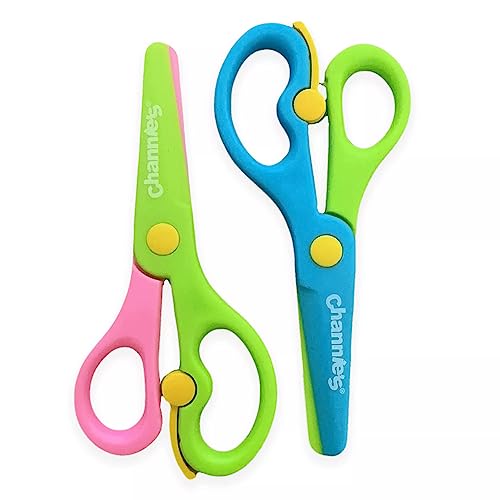
- Spring-assisted opening action
- Small handles for ages 3–5
- Blunt rounded plastic blades
Best For: Preschoolers developing cutting control
Best Classroom Multi-Pack
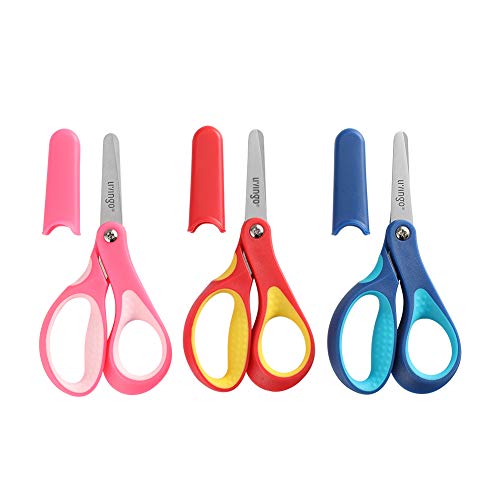
- Three 5-inch scissors
- Blunt stainless steel blades
- Protective covers and comfort grips
Best For: Ages 4+ classroom and home craft projects
Best First-Cutting Pick
Fiskars Starter Toddler Scissors

- Plastic blades and no-loop handle for early practice
- Spring action helps reopen the blades
- Ambidextrous design for ages 2 and up
Best For: Toddlers learning basic scissor motions
Best Colorful Multipack

- Three 5-inch pairs in bright colors
- Blunt tips and soft rubber grips
- Ambidextrous design for shared use
Best For: Classrooms, siblings, and craft stations
Best Activity Bundle
Toddler Safety Scissors Activity Set
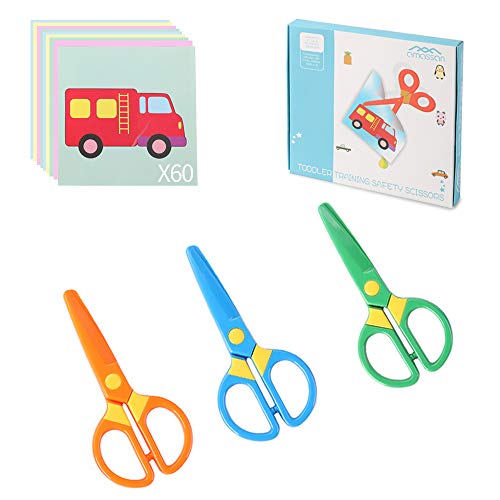
- Three rounded-tip plastic scissors included
- Comes with 60 pre-printed activity sheets
- Designed for ages 2–5 and lightweight cardstock
Best For: Structured preschool cutting practice
Best Overall
Fiskars Blunt-Tip Kids Scissors

- Blunt tip and safety-edge blade design
- Ergonomic handles for ages 4–7
- Lifetime warranty included
Best For: Right-handed children ages 4–7 doing school and paper crafts
Best Training Set
Plastic Preschool Scissors and Paper Kit

- Three ambidextrous plastic scissors
- Spring-assisted opening for practice
- Includes 96 sheets of patterned paper
Best For: Toddlers and preschoolers learning supervised paper cutting
Best for Group Practice
Four-Pack Toddler Safety Scissors

- Four bright, color-coded pairs
- Spring reset supports cutting practice
- Ambidextrous handles for preschool learners
Best For: Small-group preschool paper-cutting activities
Best Toddler Starter Set – Crayola Toddler Safety Scissors
For very young crafters, these beginner-friendly kids craft scissors prioritize simple, supervised paper-cutting practice. The three-pack includes plastic, rounded-tip scissors with straight, wavy, and zigzag cutting styles, giving toddlers multiple ways to explore crafts.
Best For: Toddlers and preschoolers learning basic cutting skills at home or in the classroom.
Pros:
- Plastic blades and rounded tips are designed with preschool safety in mind.
- Three cutting styles add variety to toddler art projects.
- Ambidextrous handles fit both left- and right-handed users.
- Three scissors make sharing or keeping extras convenient.
Cons:
- Plastic blades are intended for paper cutting rather than heavier materials.
- The product is designed for early practice, so older children may need stronger scissors.
Choose this set when safety-oriented construction and early skill development matter more than cutting power. Its patterned blades and lightweight design make it a practical first introduction to scissors.
Best for Advanced Kids' Crafts – Fiskars 6-Inch Super Scissors
Fiskars 6" Kids Super Scissors with PowerCut Technology, Stainless Steel, School Supplies
Check Price On AmazonThese beginner-friendly kids craft scissors are built for children ready to move beyond basic paper practice. Stainless steel PowerCut blades handle cardboard, foam, felt, ribbon, and more, while SoftGrip handles support comfortable control during longer projects.
Best For: Independent crafters ages 8 and up who need more cutting power for varied materials.
Pros:
- PowerCut blades are designed for cardboard, foam, felt, ribbon, and other materials.
- SoftGrip handles provide comfort and control for small hands.
- An integrated wire cutter supports pipe-cleaner and beading projects.
- Stainless steel blades offer precise cutting.
Cons:
- Designed for ages 8 and up, making it less suitable for toddlers and preschoolers.
- It is sold as a single pair rather than a multi-pack.
This is the strongest choice in the group for older children tackling mixed-media crafts. It offers more versatility than plastic training scissors, but its intended age range makes adult guidance and readiness assessment important for younger users.
Best Self-Opening Training Scissors – Channie's Safety Scissors
For preschoolers who are still developing hand strength, these beginner-friendly kids craft scissors combine small handles with a spring-assisted opening action. The blunt, rounded plastic blades are sized for ages 3–5 and support supervised practice with paper crafts.
Best For: Ages 3–5 who need help opening scissors while building hand-eye coordination and fine-motor skills.
Pros:
- Small handles are designed to fit young children’s hands.
- A spring between the handles makes reopening easier.
- Blunt, rounded plastic blades provide a safety-focused training design.
- Two scissors support sharing or use in multiple craft areas.
Cons:
- Plastic blades are intended for early training rather than demanding materials.
- The spring-assisted design may be less useful once a child has developed scissor control.
Consider this pair when the main hurdle is repeatedly opening and closing scissors. It is a focused preschool training option, especially for children who benefit from extra mechanical assistance while practicing basic cuts.
Best Classroom Multi-Pack – LIVINGO Kids Blunt Scissors
This three-pack gives classrooms and families a practical set of beginner-friendly kids craft scissors for paper-based projects. The 5-inch scissors use blunt stainless steel blades, cushioned comfort handles, and protective covers, with enough quantity for sharing or separate craft stations.
Best For: Children ages 4 and up working on paper, foam, poster board, scrapbooking, and classroom crafts.
Pros:
- Blunt stainless steel blades cut paper while offering a safety-focused profile.
- Protective sheaths help cover the blades during storage and transport.
- Cushioned, textured handles are designed to reduce finger fatigue.
- Three bright-colored scissors are convenient for sharing.
Cons:
- Hand orientation is listed as right-handed, unlike ambidextrous alternatives.
- The stainless steel blades may be more advanced than plastic toddler training scissors.
- The product is recommended for ages 4 and up.
This set is a sensible middle ground for preschool and early elementary craft areas. It provides more cutting capability than plastic training scissors while retaining blunt tips and storage covers for everyday supervised use.
Best First-Cutting Pick – Fiskars Starter Toddler Scissors
For families seeking beginner-friendly kids craft scissors, these Fiskars starter scissors emphasize simple, confidence-building operation for children ages 2 and up. Their plastic blades, no-loop handle, and spring-action design are intended to support early cutting practice.
Best For: Toddlers learning the basic closing motion of scissors.
Pros:
- Plastic blades and a no-loop handle are designed with beginner safety in mind.
- Spring action automatically reopens the blades to support early learners.
- Ambidextrous design works for both right- and left-handed children.
- Small-hand grip and limited opening angle help encourage control.
Cons:
- Only one pair is included.
- Plastic blades are intended for early paper-cutting practice rather than a broad range of craft materials.
This is the most focused option for a very young beginner who needs assistance with reopening the scissors. Adult guidance is still appropriate during early cutting activities.
Best Colorful Multipack – Zicolu Kids Scissors Set
This three-pack is a practical choice when you need beginner-friendly kids craft scissors for siblings, classrooms, or activity stations. Each 5-inch pair has a blunt point, soft rubber grip, and ambidextrous design for flexible everyday use.
Best For: Shared craft supplies and families wanting three colorful pairs.
Pros:
- Three scissors are included in blue, purple, and yellow.
- Blunt tips provide a more beginner-oriented design.
- Soft rubber handles are intended to make gripping more comfortable.
- Ambidextrous styling accommodates left- and right-handed users.
Cons:
- The notes do not specify an age range or spring-action reopening feature.
- The set is described as suitable for general DIY, arts, home, and school use, but cutting-material limits are not provided.
Choose this set when quantity and easy identification matter most. Its blunt tips and soft grips suit beginner settings, while the lack of a stated age range makes adult judgment important for younger children.
Best Activity Bundle – Toddler Safety Scissors Activity Set
For a ready-to-use beginner activity kit, these beginner-friendly kids craft scissors combine three pairs of rounded-tip plastic scissors with 60 pre-printed craft sheets. The set is designed for preschool cutting practice, including paper and lightweight cardstock, for children ages 2–5.
Best For: Structured cutting activities at home, in preschool, or in the classroom.
Pros:
- Includes three colorful, ambidextrous scissors with easy-grip handles.
- Rounded tips and safety-edge plastic blades are designed for young children.
- Sixty activity sheets provide immediate cutting and matching practice.
- Suitable for early practice with paper and lightweight cardstock.
Cons:
- The scissors are designed for beginner materials and may not suit heavier crafts.
- Adult supervision is recommended.
- Three pairs may be more than needed for a single child.
This is the strongest all-in-one option for caregivers who want both tools and guided practice. The included worksheets add structure, while the rounded tips and ambidextrous handles support preschool use.
Best Overall – Fiskars Blunt-Tip Kids Scissors
For families and classrooms seeking beginner-friendly kids craft scissors, these Fiskars scissors offer a practical balance of safety, comfort, and everyday cutting performance. The blunt tip and safety-edge blade design are intended for children ages 4–7, while the ergonomic thumb loop is shaped for smaller hands.
Best For: Right-handed children ages 4–7 who need a dependable pair for schoolwork and paper crafts.
Pros:
- Blunt tip and safer blade angle support supervised child use.
- Ergonomic handles are engineered for kids’ hands.
- Designed to cut common classroom and craft materials.
- Includes a lifetime warranty.
Cons:
- Accommodates right-handed users only.
- Sold as a single pair, so it may be less convenient for groups.
Choose this pair when you want a recognizable classroom-style option with a more conventional cutting feel than all-plastic training scissors. Its age range and right-handed design make fit especially important.
Best Training Set – Plastic Preschool Scissors and Paper Kit
This beginner-friendly kids craft scissors set is built around early cutting practice. It includes three all-plastic scissors with spring-assisted opening and 96 sheets of patterned paper, giving children colorful materials to use while learning how to hold and operate scissors.
Best For: Toddlers and preschoolers beginning supervised paper-cutting activities, especially families or classrooms needing multiple pairs.
Pros:
- All-plastic ABS construction is designed for training use.
- Spring-lever design helps the scissors reopen after each cut.
- Small and large finger holes support positioning practice.
- Includes three scissors and 96 sheets of assorted patterned paper.
Cons:
- Plastic blades are intended for paper and training rather than broader craft materials.
- The notes do not specify an age range.
This is a useful starter kit when the main goal is building cutting confidence rather than getting a general-purpose pair. The included paper adds immediate practice value, while the ambidextrous design works for either hand.
Best for Group Practice – Four-Pack Toddler Safety Scissors
For classrooms, playgroups, and siblings, these beginner-friendly kids craft scissors provide four color-coded pairs for shared activities. The ABS plastic design, rounded tips, automatic spring reset, and symmetrical handles support early paper-cutting practice for both right- and left-handed children.
Best For: Small-group preschool activities, color-based supply assignments, and supervised fine-motor practice.
Pros:
- Four pairs in blue, orange, pink, and green support group use.
- Rounded tips and ABS construction are designed for safety during paper activities.
- Built-in spring lever helps reset the blades and reduce hand fatigue.
- Ambidextrous large-loop handles suit right- and left-handed learners.
Cons:
- The scissors are described as cutting paper only.
- The set does not include practice paper.
This four-pack makes the most sense when several children need their own pair at once. Its automatic opening and inclusive handle design favor developmental practice, while the metal-free ABS construction keeps the focus on basic paper cutting.
How We Picked the Best Beginner-Friendly Kids Craft Scissors
We focused on scissors designed for young children who are learning to cut, prioritizing age guidance, blunt or rounded tips, manageable sizes, easy-to-hold handles, and practical safety features. We also considered whether each option is better suited to first-time practice, regular school crafts, or supervised use at home.
Because children develop cutting skills at different rates, product labels should be treated as a starting point rather than a substitute for supervision. Plastic training scissors may be appropriate for introducing the opening-and-closing motion, while sharper stainless-steel blades can be more effective once a child has basic control.
Quick Comparison
| Best for | Look for | Recommended type |
|---|---|---|
| First cutting practice | Small handles and limited cutting action | Plastic training scissors |
| Preschool crafts | Blunt tips and comfortable finger loops | Short safety scissors |
| Frequent paper projects | Durable blades and smooth operation | Kids’ stainless-steel scissors |
| Classroom or sibling use | Multipacks and easy identification | Three- or four-pair sets |
Key Buying Factors for Beginner-Friendly Kids Craft Scissors
Age and Skill Level
Check the manufacturer’s age range, then match it to the child’s ability. Toddlers and children who are completely new to scissors generally benefit from simple training models. Older preschoolers may be ready for blunt-tip scissors that cut paper more efficiently.
Safety Design
Blunt or rounded tips reduce the risk of accidental pokes, but no scissors are entirely risk-free. Look for covered or recessed blade areas on toddler models, and teach children to carry scissors closed with the handles facing up.
Fit and Control
Handles should accommodate the child’s fingers without forcing a tight grip. Lightweight construction, short blades, and a smooth return action can make repeated cutting less tiring. Soft-grip handles may help with longer craft sessions.
Materials and Cutting Performance
Most beginner models are intended for paper, cardstock, worksheets, and lightweight craft materials. Plastic training scissors may struggle with thicker paper, while metal blades usually provide cleaner cuts. Avoid using children’s craft scissors on fabric, packaging, or other materials unless the manufacturer specifically allows it.
Included Extras
Multipacks are useful for classrooms, siblings, or keeping a spare in a craft kit. Sets that include practice sheets can add convenience, but blade safety, fit, and usability should matter more than the number of accessories.
Who Should Buy Which Beginner-Friendly Kids Craft Scissors?
Choose plastic training scissors for a toddler beginning to learn the cutting motion or for a child who still needs highly controlled practice. Choose compact blunt-tip scissors for preschoolers working on lines, shapes, and simple crafts. For children with more experience who need cleaner cuts for school projects, a durable stainless-steel model with a child-sized handle may be the better choice.
Multipacks make sense when several children will use the scissors or when you want dedicated pairs for home, school, and travel. Whichever option you select, use the recommended materials, supervise early sessions, and replace scissors if the blades become loose, damaged, or difficult to control.