The best beginner-friendly hand planes make it easier to smooth boards, trim edges, fit doors, and refine joinery without relying entirely on power tools. This roundup covers full-size bench planes, low-angle block planes, mini planes, and specialty options for different woodworking tasks.
We compare adjustment features, blade size, handling, versatility, and likely use cases so beginners can choose a plane that matches their projects, workspace, and budget.
Best 10 Beginner-Friendly Hand Planes Picks for 2026
Best Adjustable Detail Plane

- Adjustable blade depth and mouth
- Reusable O1 tool-steel blade
- Durable ductile-iron body
Best For: Portable trimming, crafts, and detail woodworking
Best Beginner Bench Plane
Amazon Basics No. 4 Smoothing Plane
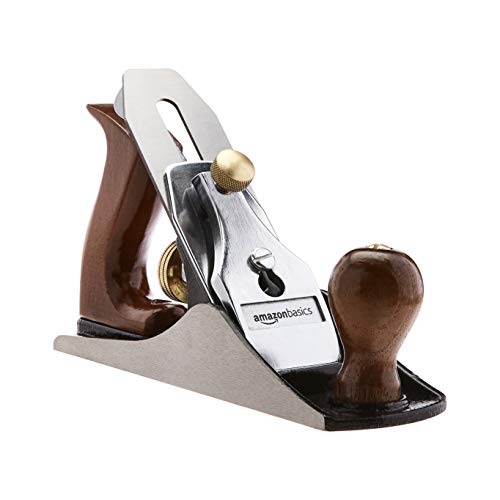
- Stable cast-iron construction
- Adjustable gear for precision
- Contoured wooden handle
Best For: Smoothing larger woodworking and carpentry surfaces
Best Low-Angle Starter Plane
JORGENSEN No. 102 Low-Angle Plane

- Compact 1.12-pound design
- Adjustable cutting depth
- Polished flat bottom
Best For: Precise trimming, deburring, DIY, and crafts
Best Mini Plane for Crafts
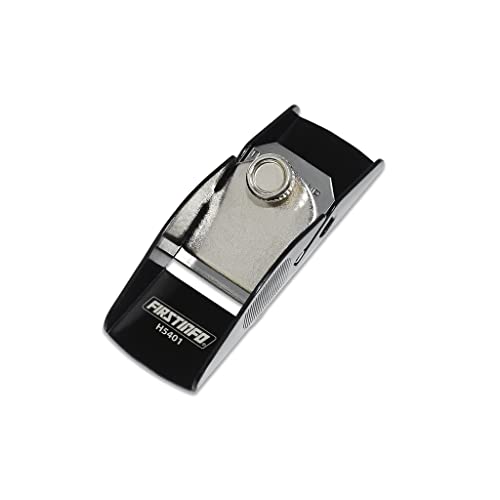
- Only 80 grams
- Adjustable cutter depth
- Warranty up to 18 months
Best For: Model making and small trimming or deburring tasks
Best Overall

- Adjustable cutting depth
- Sharpenable O1 steel blade
- Durable ductile-iron body
Best For: Beginners wanting a versatile full-size plane
Best for Joinery
Portable Router Plane for Precision Joinery

- Adjustable brass depth nut
- Compact 0.95 kg design
- Designed for grooves and mortises
Best For: Beginners practicing detailed joinery work
Best Compact Option
JORGENSEN No.101 Mini Hand Plane

- Lightweight 0.25 kg design
- Adjustable cutting depth
- Includes an instruction manual
Best For: Beginners doing crafts and detail trimming
Best All-Around Starter
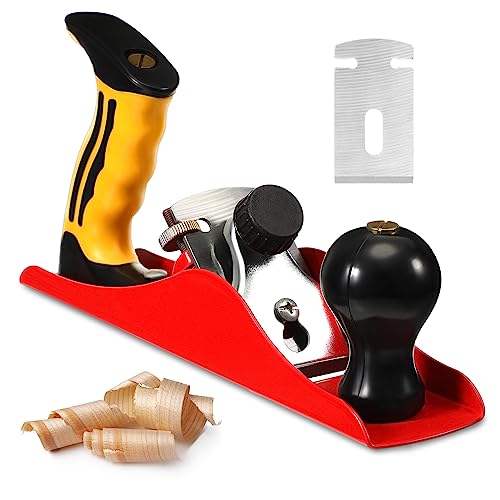
- 2-inch manganese-steel blade
- Simple depth adjustment
- Sturdy carbon-steel body
Best For: General DIY smoothing, trimming, and door projects
Best for Fine Detail
Compact CNC Aluminum Mini Plane

- 4.25-inch portable body
- Dual depth and lateral adjustment
- High-carbon steel blade
Best For: Small parts, joinery, chamfering, and edge trimming
Best Budget-Size Trimmer

- Compact, lightweight design
- Adjustable 1-inch cutter
- 65Mn alloy-steel blade
Best For: Small DIY trimming and fine wood-surface finishing
Best Adjustable Detail Plane – JORGENSEN No. 60-1/2
For shoppers comparing beginner-friendly hand planes, this compact JORGENSEN No. 60-1/2 offers approachable controls with a durable ductile-iron body. Its adjustable blade depth and mouth make it useful for learning controlled trimming and detail work.
Best For: Beginners who want a portable low-angle block plane for trimming, deburring, crafts, and detail woodworking.
Pros:
- Adjustable cutting depth and mouth width
- O1 tool-steel blade can be sharpened and reused
- Flat bottom and included instructions support easier operation
- Ductile-iron body is designed for heavy-duty durability
Cons:
- Its 1.5-pound body may feel heavier than a miniature plane
- The sharp blade requires careful handling
This is a versatile starting point for small woodworking projects, especially if you value adjustability and a rugged build over the lightest possible tool.
Best Beginner Bench Plane – Amazon Basics No. 4 Smoothing Plane
Among beginner-friendly hand planes, this No. 4 smoothing bench plane provides a more substantial platform for woodworking and carpentry. Its cast-iron body, wooden handles, and adjustable gear are suited to users learning precision surface work.
Best For: Beginners who need a full-size smoothing plane for woodworking and carpentry projects.
Pros:
- Durable cast-iron body offers stability and strength
- Adjustable gear helps support precise results
- Steel alloy blade is designed for quality cuts
- Contoured, impact-resistant wooden handle
Cons:
- At 3.8 pounds, it is less portable than compact block planes
- Its bench-plane format may be more tool than needed for small detail jobs
This is the most conventional choice in the group for learners who want a stable smoothing plane and expect to work on larger surfaces rather than only small trims.
Best Low-Angle Starter Plane – JORGENSEN No. 102 Low-Angle Plane
This JORGENSEN No. 102 is a strong option for anyone seeking beginner-friendly hand planes with straightforward depth control. The compact low-angle design is built for controlled trimming, polishing, deburring, and other small woodworking tasks.
Best For: Beginners who want a lightweight, compact plane for precise trimming and general DIY woodworking.
Pros:
- Adjustable cutting depth using the control knob
- O1 tool-steel blade is sharpenable and reusable
- Polished flat bottom promotes smooth operation
- Ductile-iron body combines compact size with durability
Cons:
- Its small format is less suited to broad bench-plane work
- The blade is sharp and needs careful operation
With its low-angle format, modest 1.12-pound weight, and included instructions, this plane balances portability with useful adjustment for newcomers building confidence.
Best Mini Plane for Crafts – FIRSTINFO Mini Hand Plane
For beginners seeking an especially portable option, this FIRSTINFO mini plane is one of the most compact beginner-friendly hand planes available in this selection. Its adjustable cutter and lightweight alloy-steel construction make it practical for model making and small surface corrections.
Best For: Beginners working on models, crafts, trimming, chamfering, polishing, and deburring.
Pros:
- Very compact 80-gram design is easy to carry
- Fully adjustable cutter supports depth changes
- Sharp alloy-steel blade is intended for efficient trimming
- Includes a 12-month warranty, extendable to 18 months by registration
Cons:
- Miniature size limits it to small-scale work
- Its sharp blade requires careful handling
This is the simplest choice for highly portable craft work, but users planning to smooth larger boards should choose a full-size bench plane instead.
Best Overall – JORGENSEN No.4 10" Wood Plane
For beginners seeking a capable all-purpose option, the JORGENSEN No.4 combines an adjustable cutting depth with a flat ductile-iron sole and a comfortable beechwood handle. Its O1 tool-steel blade is sharpenable and suited to general planing, smoothing, trimming, and deburring.
Best For: Beginners who want one full-size hand plane for varied woodworking projects and heavier stock removal.
Pros:
- Adjustable cutting depth is controlled with a turn knob.
- O1 tool-steel blade can be sharpened and reused.
- Ductile-iron body and polished flat bottom support durable, smooth operation.
- Beechwood handle is polished for a comfortable grip.
Cons:
- Its 2.24 kg weight may feel substantial for users new to hand planes.
- The full-size design is less portable than a mini plane.
This is the most versatile choice of the three for learning basic hand-planing techniques while retaining the capacity for broader woodworking tasks.
Best for Joinery – Portable Router Plane for Precision Joinery
This compact router plane is a practical pick for beginners focused on detail work rather than broad surface smoothing. Its adjustable brass nut, flat bottom, and steel construction are designed for tuning joinery, cutting grooves, rabbets, dados, and mortises.
Best For: DIY woodworkers learning precision joinery and needing a compact tool for grooves, dados, rabbets, and mortises.
Pros:
- Adjustable brass nut helps control cutting depth.
- Compact 0.95 kg design is easy to handle and store.
- High-carbon steel construction is intended for sharpness and durability.
- Includes a tool case for convenient storage.
Cons:
- Its specialized design is less suitable for quickly flattening large surfaces.
- The supplied notes do not identify an included instruction manual.
Choose this model when your beginner projects center on controlled joinery cuts. It offers useful precision, but it is not the most general-purpose option in this lineup.
Best Compact Option – JORGENSEN No.101 Mini Hand Plane
The JORGENSEN No.101 is a beginner-friendly hand plane for small projects, crafts, trimming, and light surface work. Its compact ductile-iron body, adjustable blade depth, and polished flat bottom make it approachable when portability and easy handling matter most.
Best For: Beginners, crafters, and DIY users who need a small plane for detail work and portable woodworking.
Pros:
- Lightweight 0.25 kg body is easy to control.
- Adjustable cutting depth supports different trimming tasks.
- O1 tool-steel blade can be sharpened and reused.
- Includes an instruction manual and has a polished flat bottom.
Cons:
- The mini format is less suited to flattening large boards or removing substantial material.
- Its 1.25-inch cutting width limits coverage per pass.
- The blade is sharp, so beginners should follow the operating guidance carefully.
This is the easiest model to carry and maneuver, making it a strong starting point for small-scale work. Select the No.4 instead if you expect to plane larger surfaces regularly.
Best All-Around Starter – Adjustable 9-Inch Hand Planer
For shoppers comparing beginner-friendly hand planes, this 9-inch bench-style model offers a straightforward starting point for smoothing and trimming wood. Its 2-inch manganese-steel blade, flat sole, and simple adjustment process make it suited to general DIY woodworking, including door installation and edge work.
Best For: Beginners who want a full-size hand plane for general smoothing, trimming, and DIY door projects.
Pros:
- 2-inch manganese-steel blade is designed for smooth movement and wear resistance.
- Barbell-shaped adjustment and large clamping cap help simplify depth setting and blade securing.
- Carbon-steel body with red epoxy coating provides a sturdy, rust-resistant build.
- Ergonomic polymer handles and guidance knobs support comfortable use.
Cons:
- Its 9-inch body is less convenient than a mini plane for tight spaces or very small detail work.
- The 2-inch cutting width may be more tool than needed for delicate trimming.
This is the most conventional choice of the three for someone learning basic hand-plane technique. The flat sole and larger body should feel stable during longer passes, while the manual depth adjustment leaves room to learn proper setup and cut control.
Best for Fine Detail – Compact CNC Aluminum Mini Plane
This compact mini plane is a strong option among beginner-friendly hand planes when portability and precise trimming matter most. At 4.25 inches long, it is designed for narrow areas, joinery finishing, chamfering, model making, and furniture-edge work rather than broad surface preparation.
Best For: Beginners and detail-focused woodworkers working on small parts, edges, end grain, and tight spaces.
Pros:
- CNC aluminum-alloy body is compact and easy to carry in a tool bag.
- High-carbon steel blade is supplied sharp and intended for clean cuts on soft and hard woods.
- Dual knobs allow adjustment of blade depth and lateral angle.
- Small format suits joinery finishing, chamfering, and narrow corners.
Cons:
- The 1.3-inch cutting width and mini body are not ideal for quickly flattening large surfaces.
- Its specialized size may offer less stability for users expecting a traditional full-size bench plane.
The dual-adjustment layout can reduce guesswork for new users, while the compact design keeps detail work manageable. Choose it as a complementary or dedicated trimming plane, not as a replacement for a larger smoother on wide boards.
Best Budget-Size Trimmer – Hoteche 3.5-Inch Mini Plane
For beginners who prefer a small, uncomplicated tool, the Hoteche Mini Wood Plane focuses on controlled trimming and fine finishing. Its 3.5-inch body, adjustable cutter, and 65Mn alloy-steel blade make it practical for smoothing rough edges and refining small wood surfaces.
Best For: DIY users who need a compact plane for detail trimming, edge cleanup, and finishing in tight areas.
Pros:
- Compact 89 x 35mm body is easy to handle in confined spaces.
- 65Mn alloy-steel blade is designed for lasting sharpness and precise cuts.
- Adjustable cutter provides control over cutting depth.
- Double-blister packaging helps protect and store the tool.
Cons:
- Its 1-inch cutting width limits productivity on broad surfaces.
- The small body is geared toward trimming and finishing rather than heavy stock removal.
This model keeps the learning curve focused on basic cutter-depth adjustment and short, controlled passes. It is a sensible fit for small projects and edge work, especially when a full-size bench plane would be cumbersome.
How We Picked These Beginner-Friendly Hand Planes
We selected tools that offer a practical starting point for new woodworkers, prioritizing straightforward blade adjustment, manageable size, useful cutting geometry, and broad application. The list includes smoothing bench planes for flattening and finishing, block planes for end grain and edge work, compact models for small projects, and a router plane for leveling joinery.
We also considered whether each design is easy to control, simple to maintain, and suitable for common beginner tasks such as trimming doors, fitting joints, smoothing boards, and chamfering edges. A low price alone was not treated as a substitute for usable adjustments or a stable body.
Quick Comparison
| Type | Best for | What to look for |
|---|---|---|
| Full-size bench plane | Smoothing and general stock preparation | Comfortable handles, stable sole, adjustable blade |
| Low-angle block plane | End grain, edges, and small corrections | Easy depth control and compact footprint |
| Mini plane | Small parts, detail work, and portability | Secure grip and a sharp, replaceable or serviceable blade |
| Router plane | Dados, grooves, and shoulder cleanup | Reliable depth stop and controlled adjustment |
Key Buying Factors for Beginner-Friendly Hand Planes
Choose the Right Plane Type
A No. 4-style smoothing plane is the most versatile choice for general board work. A block plane is easier to maneuver for short cuts, end grain, and fitting edges. Mini planes are convenient but cover less surface area and can be harder to hold steadily. Choose a router plane only when controlled depth work in grooves or recesses is a priority.
Check Adjustment and Blade Access
Beginners benefit from planes with simple depth adjustment and a blade that can be removed without excessive disassembly. Fine depth control helps prevent tear-out, while a secure blade minimizes chatter. Even an inexpensive plane performs better when its iron is sharpened and correctly seated.
Consider Comfort and Scale
Full-size planes generally provide better stability and faster coverage, but compact models are easier to carry and useful on small workpieces. Look for handles that allow a firm, natural grip and a sole that sits flat without rocking.
Plan for Maintenance
Hand planes require occasional sharpening, cleaning, and light protection against corrosion. Budget for a sharpening stone or guide if you do not already own one. A sharp blade is usually more important than an advanced adjustment system.
Who Should Buy Which Beginner-Friendly Hand Planes?
- For one versatile first plane: Choose a No. 4-style smoothing bench plane.
- For door installation and edge trimming: A low-angle block plane is compact and easy to control.
- For small projects or portability: Pick a mini plane with a comfortable body and accessible blade adjustment.
- For grooves, dados, and joinery: Choose a router plane with a dependable depth stop.
- For heavier general woodworking: Select a full-size model with sturdy handles and a broad sole.
For most beginners, the best starting point is the plane that matches the work they do most often and that they can maintain properly. A sharp, well-adjusted basic model will typically outperform a more complicated plane used with a dull blade or unstable setup.