The right underglaze set makes it easier to test colors, paint details, and build a palette that suits the way you work. But jar size, application format, and firing requirements can make two similar-looking sets very different purchases.
We’ve rounded up 10 options spanning liquid colors and semi-moist pans, from compact sampler packs to larger jars. Use the guide below to narrow your choice before you buy.
Best 10 Pottery Underglaze Sets Picks for 2026
Best Starter Kit
Creative Hobbies 10-Color Underglaze Set

- 10 assorted 2-ounce jars
- Applies to clay, greenware, or bisque
- Includes a bisque-painting book
Best For: Beginners seeking guidance and versatile application
Best for Decorative Techniques
Speedball 12-Color Sampler Pack

- 12 opaque colors in 2-ounce bottles
- Supports sgraffito, mishima, and brushwork
- Designed for cone 06–6 firing
Best For: Exploring varied decorative techniques
Best Finish Options
AMACO Velvet 12-Color Set No. 4

- 12 mixable colors in 2-ounce jars
- Soft velour look when unglazed
- Clear glaze changes the finish
Best For: Artists choosing between velour, satin, and gloss looks
Best for Opaque Detail
Pasler 12-Color Underglaze Set

- 12 concentrated, blendable colors
- Ready to use on bisque or greenware
- Stated cone 06–6 firing range
Best For: Detailed designs with mixable opaque colors
Best for Mixable Colors
AMACO Velvet Underglaze 12-Color Set No. 2
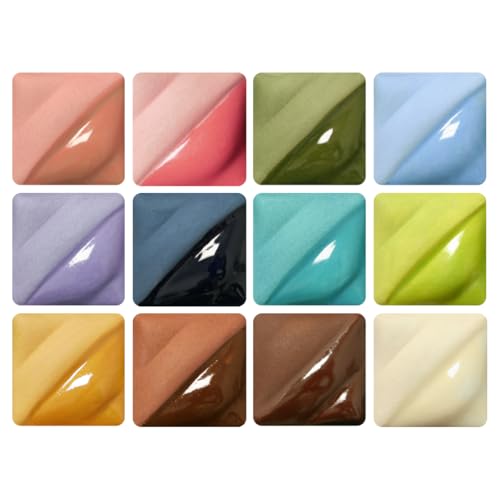
- 12 intermixable colors in 2-ounce jars
- Works on wet or bone-dry clay and bisque
- Velour look unglazed; clear glaze changes finish
Best For: Potters building a mixable palette with flexible finish options
Best for Detailed Decoration
Speedball Underglaze 2020 Sampler Pack

- 12 colors in 2-ounce jars
- Opaque colors designed not to bleed
- Two to three liberal coats recommended
Best For: Detailed painting, sgraffito, mishima, and brushwork
Best Watercolor-Style Pans
AMACO Semi-Moist Underglaze Set No. 4

- Eight colors in a hinged-lid pan tray
- Dilute for transparency or layer for opacity
- For unfired clay or bisque
Best For: Watercolor-style effects and fine-detail decorating
Best Jar Set
Penguin Pottery 8-Color Underglaze Variety Set

- Eight 4 fl. oz. jars of core colors
- Blendable and layerable on clay or bisque
- Specified for Cone 04 to Cone 6
Best For: Potters seeking generous amounts of mixable basic colors
Best Soft-Color Palette
AMACO Semi-Moist Underglazes Set No. 3

- Eight colors in watercolor-style pans
- Dilute for transparency or layer for opacity
- Peach and Rose hold color through Cone 6
Best For: Fine-detail decoration with softer colors
Best Bright Pan Palette
AMACO Semi-Moist Underglazes Set No. 2

- Eight bright and neutral pan colors
- Brush on diluted or layered color
- Pink and Yellow hold color through Cone 6
Best For: Detailed brushwork with bright accents
Best Starter Kit – Creative Hobbies 10-Color Underglaze Set
Among pottery underglaze sets, this 10-color kit is a practical starting point for learning coverage and decorative painting. It includes 2-ounce jars and a how-to-paint-bisque book.
Best For: Beginners who want instructions alongside a versatile color assortment.
Pros:
- Applies to wet clay, greenware, or cone 04 bisque.
- Works for full coverage or painted designs.
- Includes a bisque-painting book; colors are AP Certified Non-Toxic.
Cons:
- Results may vary when fired to cone 6.
- Contains 10 colors, fewer than the 12-color sets listed here.
Its included guidance makes it approachable, while the application options leave room to experiment as your skills grow.
Best for Decorative Techniques – Speedball 12-Color Sampler Pack
If you want pottery underglaze sets for experimenting with decoration, Speedball’s sampler provides 12 opaque colors in 2-ounce bottles. Its stated uses range from detailed painting and sgraffito to mishima and watercolor effects.
Best For: Potters trying several brushwork and surface-decoration techniques.
Pros:
- Includes 12 colors, including white, black, and grey.
- Designed for firing from cone 06 to cone 6; can also be fired at cone 10.
- Lead-free and described as dinnerware safe when used and fired as directed.
Cons:
- Best results call for two to three liberal coats, adding application time.
Choose this sampler for its technique-friendly range, and follow its coat and firing directions for the intended results.
Best Finish Options – AMACO Velvet 12-Color Set No. 4
For pottery underglaze sets that offer distinct finish choices, AMACO Velvet includes 12 mixable colors in 2-ounce jars. Leave them unglazed for a soft velour look, or use a clear matte or gloss glaze to change the finish.
Best For: Artists who want mixable colors and control over matte-to-gloss appearance.
Pros:
- Applies to wet or bone-dry clay and cone 04 bisque.
- Includes bright colors alongside white, black, and brown.
- Can be covered with clear matte or gloss glaze for different finishes.
Cons:
- The unglazed velour surface is not waterproof.
- Bisque applications call for a glaze before firing to cone 05–10.
This set stands out when surface character matters as much as color; plan your clear-glaze choice around the finish you want.
Best for Opaque Detail – Pasler 12-Color Underglaze Set
Pasler’s entry among pottery underglaze sets supplies 12 ready-to-use, concentrated opaque colors in 60 ml containers. It is intended for bisque or greenware and suits detailed painting, sgraffito, mishima, and free-brush work.
Best For: Potters seeking blendable opaque colors for detailed designs.
Pros:
- Colors can be blended to create additional shades.
- Stated firing range is cone 06–6, with some colors remaining true up to cone 10.
- Colors are described as staying in place rather than flowing during firing.
Cons:
- Only some colors are stated to remain true at cone 10.
- A transparent glaze is needed for the stated surface shine and richer color.
It is a useful option for controlled designs, especially if you plan to blend shades; test individual colors before relying on high-fire results.
Best for Mixable Colors – AMACO Velvet Underglaze 12-Color Set No. 2
Among pottery underglaze sets, this AMACO Velvet assortment offers 12 intermixable colors in 2-ounce jars, from Ivory Beige and Terra Cotta to Turquoise Blue and Chartreuse. It suits potters who want to build a broader palette from a single set.
Best For: Potters who want mixable colors and a choice of velour, satin, or gloss finishes.
Pros:
- Includes 12 distinct colors in 2-ounce jars.
- Applies to wet or bone-dry clay and Cone 04 bisque.
- Can be left unglazed for a soft velour look or covered with clear matte or gloss glaze for a different finish.
Cons:
- Glazing adds a step if you want a satin or intensified gloss finish.
- Not waterproof.
This is a versatile jar-based choice if mixing colors matters more to you than a compact pan format. Plan your clear glaze around the finish you want.
Best for Detailed Decoration – Speedball Underglaze 2020 Sampler Pack
Speedball Underglaze Sampler Pack, (12) 2-Ounce, 2020 Color Glaze Assortment for Pottery & Ceramics
Check Price On AmazonIf you’re comparing pottery underglaze sets for decorative work, Speedball’s sampler provides 12 colors in 2-ounce jars. The opaque, non-bleeding colors are intended for techniques including detailed painting, sgraffito, mishima, and free brush painting.
Best For: Ceramic artists who want a varied palette for detailed and brush-based decoration.
Pros:
- Includes 12 colors spanning warm tones, purples, blues, and greens.
- Opaque colors are designed not to move or bleed.
- Designed for Cone 06–6 firing and can be fired at Cone 10.
Cons:
- Best results call for two to three liberal coats.
- Dinnerware safety depends on using a covering glaze and firing as directed.
Choose this set when controlled color placement and a range of decorating techniques are priorities. Allow for the recommended coats when planning your workflow.
Best Watercolor-Style Pans – AMACO Semi-Moist Underglaze Set No. 4
Unlike liquid-jar pottery underglaze sets, this AMACO Semi-Moist set holds eight saturated colors in watercolor-like pans. Dip a brush in water to lift color from the tray, then dilute it for transparency or layer it for greater opacity.
Best For: Potters who prefer watercolor-style application and fine detail work on unfired clay or bisque.
Pros:
- Hinged-lid tray keeps eight semi-moist colors together.
- Colors can be diluted, layered, blended, and mixed.
- Suitable for unfired clay or bisque; formulated for Cone 05–6 and can be fired to Cone 10.
Cons:
- Contains eight colors, fewer than the 12-color sets here.
- Pan application requires water and a brush rather than applying straight from a liquid jar.
This is the most distinctive format of the three: a good fit if brush control and adjustable transparency appeal to you, but less suited to anyone specifically seeking ready-to-use liquid jars.
Best Jar Set – Penguin Pottery 8-Color Underglaze Variety Set
For pottery underglaze sets with plenty of each basic color, this Penguin Pottery collection supplies eight 4 fl. oz. jars. The black, white, red, orange, green, yellow, blue, and purple underglazes can be blended or layered on clay or bisque.
Best For: Potters who want larger jars of core colors for mixing and layering.
Pros:
- Eight 4 fl. oz. jars provide 32 fl. oz. total.
- Works across the stated Cone 04 to Cone 6 range.
- Lead-free, non-toxic formulation backed by a lifetime warranty.
Cons:
- Limited to eight basic colors unless you mix your own shades.
- Requires a calibrated pottery kiln; a kitchen oven will not work.
Choose this set for jar-based application and a versatile starter palette. Match your firing cone to your swatches, since firing outside the intended range can affect results.
Best Soft-Color Palette – AMACO Semi-Moist Underglazes Set No. 3
Among pottery underglaze sets, AMACO Set No. 3 stands out for its watercolor-style pans and softer color selection. Dip a brush in water to lift colors such as Rose, Peach, Aqua, and Chartreuse, then dilute for transparency or layer for more opacity.
Best For: Detail work and watercolor-like decoration using a pastel-leaning palette.
Pros:
- Eight intermixable colors in a hinged-lid tray.
- Concentrated colors work on unfired clay or bisque.
- Six colors can be fired to Cone 10; Peach and Rose hold their color through Cone 6.
Cons:
- Peach and Rose are not specified to hold their color above Cone 6.
- Pan application requires water and a brush rather than pouring from jars.
This is a useful pick when controlled brushwork matters more than jar volume. Check the firing limits of Peach and Rose before using them in higher-fire projects.
Best Bright Pan Palette – AMACO Semi-Moist Underglazes Set No. 2
If you prefer brighter accents in pottery underglaze sets, AMACO Set No. 2 pairs Turquoise, Medium Blue, Bright Yellow, Pink, and Lilac with gray, brown, and green. Its semi-moist pans activate with a wet brush for detailed painting on unfired clay or bisque.
Best For: Brush-painted details using bright colors and a few grounding neutrals.
Pros:
- Eight intermixable colors in a compact hinged-lid tray.
- Water dilution and layering let you vary transparency and opacity.
- Six colors can be fired to Cone 10; Pink and Yellow hold their color through Cone 6.
Cons:
- Pink and Yellow are not specified to hold their color above Cone 6.
- Pan format is less suited to potters seeking ready-to-use jars.
Pick this set for fine brushwork and a lively palette. Plan higher-fire designs around the individual colors’ stated firing limits.
How We Picked These Pottery Underglaze Sets
We selected sets that give shoppers a useful range of formats, color assortments, and quantities. The lineup includes liquid underglazes in 2-ounce jars, larger 4-ounce jars, and semi-moist colors for brush-based work. We also considered whether a set’s stated firing range and application surface would help a buyer match it to an existing studio routine. These are comparison criteria, not a claim that every color was independently fired and tested; always check the manufacturer’s instructions for the specific set you choose.
Quick Comparison: Which Format Fits Your Work?
Liquid jar sets are a practical starting point if you want ready-to-use colors for brushing larger areas as well as details. A 2-ounce sampler lets you explore more colors without committing to large quantities; 4-ounce jars may suit frequent use of a smaller palette. Semi-moist sets are compact and suited to painters who like loading color onto a damp brush and working in controlled strokes. Check the number of colors alongside the amount of each color: an eight-color set and a 12-color set solve different needs, even when their prices look close.
Key Buying Factors for Pottery Underglaze Sets
Clay Stage and Firing Range
Confirm whether the manufacturer recommends application to greenware, bisque, or both. Then match the stated firing range to the cone temperature you actually use. Not every underglaze is specified for the same temperatures, and color results can change with the clay body, firing schedule, and clear glaze. Make a test tile before decorating an important piece.
Color Palette, Coverage, and Finish
Choose colors you expect to use, not simply the set with the highest count. Some assortments emphasize versatile mixing colors; others are better for expanding a palette you already own. If opacity matters, look for the maker’s coverage guidance and note that coat thickness can affect the result. Test clear glaze over the underglaze if you want a glossy surface, since the fired appearance without it may differ.
Jar Size and Working Style
Small jars reduce the cost of trying unfamiliar colors, while larger jars make more sense for repeat designs or group projects. Semi-moist pans take less shelf space and can be convenient for fine brushwork. Keep containers closed between sessions and follow the maker’s guidance for thinning or rewetting rather than assuming all formulas behave alike.
Who Should Buy Which Pottery Underglaze Sets?
First-time buyers: Start with a varied 2-ounce liquid sampler to learn which colors earn a permanent place in your kit. Potters with an established palette: Compare the AMACO Velvet assortments by their actual included colors to fill gaps rather than buying duplicates. Detail-focused decorators: Consider an AMACO semi-moist set if a compact, brush-friendly format appeals to you. Frequent users or classrooms: Consider the Penguin Pottery 4-ounce jars if the listed colors and firing range fit your projects. Whatever you select, verify compatibility with your clay, kiln, and glaze before committing a full batch.