Laser engraving can produce sharp odors, fine smoke, and airborne dust that linger long after the job is done. The right odor control system helps keep your workspace cleaner, safer, and more comfortable.
In this roundup, we focus on practical factors like suction strength, filter quality, noise, and setup flexibility so you can choose a model that matches your machine and workload.
Best 10 Laser Engraving Odor Control Systems Picks for 2026
Best for Strong Suction
FumeClear FC-2002A Laser Fume Extractor

- 260m³/h suction for fast smoke capture
- 3-stage HEPA + carbon filtration
- Low-noise operation under 55 dB
Best For: Makers and small workshops needing strong odor control for laser engraving and 3D printing.
Best for Smart Monitoring
Creality Falcon AP1 Smoke Purifier

- 360° intake with up to 1700 Pa suction
- 5-layer filtration for smoke, dust, and odors
- PM2.5 display plus app-based control
Best For: Laser engraver owners who want automatic syncing, real-time air monitoring, and strong odor capture.
Best for Multi-Machine Studios
FumeClear FC-2003 Dual-Port Fume Extractor
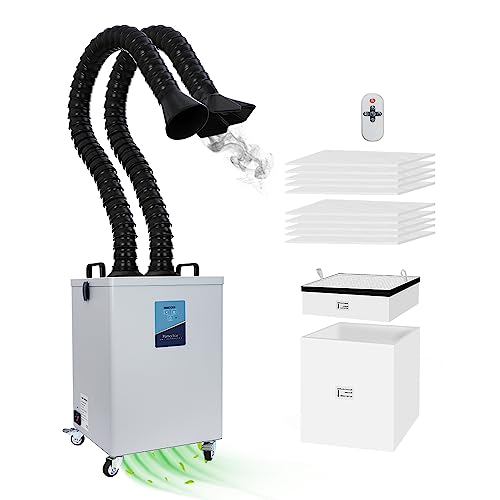
- Dual-port design can support two stations at once
- 330 m³/h suction for stronger smoke capture
- 3-stage filtration with 12 included filters
Best For: Shared laser engraving and workshop setups that need one extractor to serve multiple stations.
Best for Small Spaces
Creality Falcon AP1 Smart Smoke Purifier

- WiFi/app control with PM2.5 monitoring
- HEPA composite + activated carbon filtration
- Auto Mode syncs with compatible Falcon engravers
Best For: Laser engravers who want a smart, app-connected purifier with automated control.
Best for Desktop Odor Control
Desktop Fume Extractor for Laser Engraving

- Strong 128–168m³/h suction for desktop engraving jobs
- 3-stage filtration with HEPA and activated carbon
- Includes adapters for Sielux, xTool F1, and more
Best For: Home studios and small workshops that need compact smoke and odor capture.
Best for High-Power Laser Engravers
FumeClear FC-2004 Fume Extractor

- 420m³/h suction for heavier smoke output
- 3-layer filtration with HEPA and carbon stages
- Extra pre-filter cottons add long-term value
Best For: Owners of 30W to 70W laser engravers who need strong odor and smoke control.
Best for Indoor Laser Studios
BlazeX M3 Laser Fume Extractor
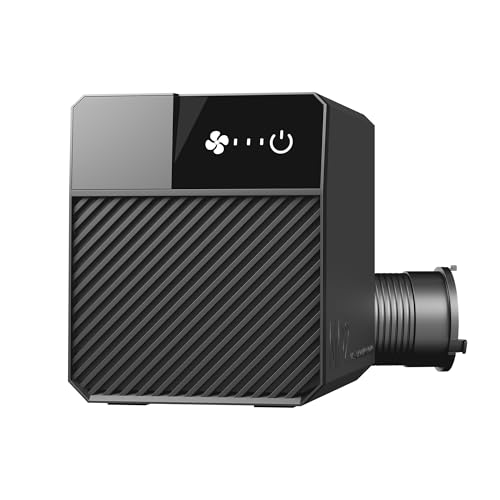
- 3-stage HEPA + carbon filtration
- Compact, quiet indoor-ready design
- Tool-free filter changes
Best For: Indoor engravers who need compact smoke and odor control for home studios or classrooms.
Best for Odor Reduction
MN02 200W Laser Fume Extractor

- 177 CFM airflow from a 200W motor
- 4-layer HEPA filtration captures 99.97% of fine dust
- Includes remote, LED alert, and extra filters
Best For: Makers who need stronger odor control and flexible smoke extraction for laser engraving and bench work.
Best for Light-Duty Laser Smoke Cleanup
FES150 150W Laser Smoke Purifier

- 163 CFM suction with a 150W brushless motor
- H13 HEPA and activated carbon help reduce smoke and odor
- Modular filters and clog alerts simplify upkeep
Best For: Small shops and makers using 5W to 20W laser engravers who want source-capture smoke and odor control.
Best for Small Laser Benchtops
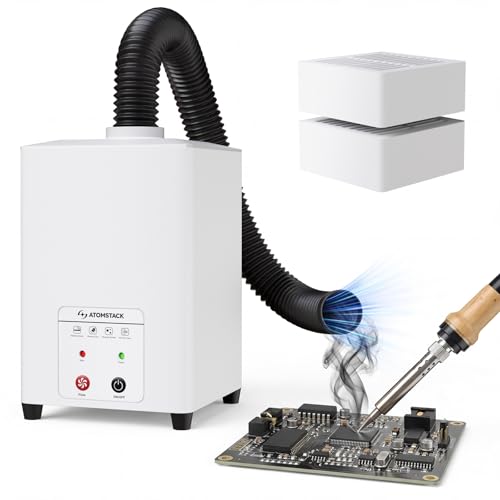
- 1400Pa suction with 7500RPM motor
- 3-stage filtration with activated carbon
- Lightweight desktop design with 3-speed control
Best For: Small workbenches, hobby laser engravers, and electronics makers.
Best for Strong Suction – FumeClear FC-2002A Laser Fume Extractor
If you need laser engraving odor control systems that can keep up with a busy desktop setup, the FumeClear FC-2002A is built around strong suction, multi-stage filtration, and quieter operation. It targets smoke, dust, and odors from 10W to 40W laser engravers, plus 3D printing and soldering work, making it a practical pick for mixed-use makerspaces.
Best For: Makers and small workshops that want high suction and solid odor removal for laser engraving, cutting, and 3D printing.
Pros:
- 260m³/h suction helps capture smoke and debris quickly near the source.
- 3-stage filtration with HEPA and activated carbon supports 99.97% purification.
- Low-noise design stays under 55 dB for more comfortable indoor use.
- Includes replaceable pre-filters and a long-life carbon filter for better value.
Cons:
- Bulkier than compact hobby units, so it may take more desk space.
- Filter replacements will add ongoing maintenance cost over time.
For buyers comparing laser engraving odor control systems, the FC-2002A stands out for balancing suction power, filtration depth, and noise control. It is a good fit if you want a more serious fume extractor without moving up to a full industrial setup.
Best for Smart Monitoring – Creality Falcon AP1 Smoke Purifier
If you want one of the more connected laser engraving odor control systems, the Creality Falcon AP1 is built to handle smoke, fumes, and fine dust with a 360° intake, app control, and live PM2.5 monitoring. It’s a practical pick for makers who want cleaner air plus visibility into how well the purifier is working.
Best For: Laser engraver owners who want automatic syncing, real-time air monitoring, and strong odor capture in a compact workspace.
Pros:
- 360° airflow and high suction help pull fumes from the source quickly
- 5-layer filtration targets odors, smoke, and fine particles down to 0.1 microns
- PM2.5 display and app control make it easy to monitor air quality and runtime
- Long filter life can reduce maintenance and replacement frequency
Cons:
- Best suited to Falcon laser users if you want automatic start/stop syncing
- Higher-feature design may be more than you need for occasional engraving
- Replacement filters are an ongoing cost to factor in
Overall, the AP1 stands out for users who value smart controls and visibility as much as filtration performance. Among laser engraving odor control systems, it makes the most sense for workflow-focused setups where convenience and real-time air tracking matter.
Best for Multi-Machine Studios – FumeClear FC-2003 Dual-Port Fume Extractor
If you need one unit to handle multiple workstations, the FumeClear FC-2003 is a practical pick for laser engraving odor control systems in shared studios, small factories, and salon setups. Its dual-port design, strong airflow, and 3-stage filtration make it better suited to larger or busier spaces than basic single-port desktop extractors.
Best For: Multi-machine laser engraving spaces, soldering benches, and studios that want one extractor to serve two stations at once.
Pros:
- Dual ports can run simultaneously for multi-station use
- 330 m³/h suction helps capture smoke and odor quickly
- 3-stage filtration with 12 included filters improves particle and gas capture
- Low-noise design is easier to live with in shared work areas
Cons:
- Likely more machine than a single small desktop laser needs
- Replacement filters add ongoing operating cost
- Best performance depends on keeping the filter stack maintained
For buyers comparing laser engraving odor control systems, this model stands out for versatility and capacity rather than compact simplicity. It makes the most sense when you want one extractor to cover multiple tools or workspaces and value stronger suction over a minimal footprint.
Best for Small Spaces – Creality Falcon AP1 Smart Smoke Purifier
If you want a connected purifier that actively manages laser engraving odor control systems, the Creality Falcon AP1 stands out for its app-based controls, PM2.5 monitoring, and auto-start/stop syncing with compatible Falcon engravers. Its multi-stage HEPA and activated carbon filtration is designed to reduce smoke, particles, and odors in one unit.
Best For: Laser users who want a WiFi-connected purifier with real-time air monitoring and automatic operation.
Pros:
- Smart Auto Mode can sync with compatible Falcon machines for hands-free operation.
- HEPA composite plus activated carbon filtration targets both particles and odors.
- App control adds PM2.5 tracking, filter alerts, and delay shutdown settings.
- 250m³/h airflow with relatively quiet 62dB operation suits home and studio use.
Cons:
- Works best within the Falcon ecosystem, so compatibility may be limited for some engravers.
- Smaller workshops may still need to manage ducting and filter maintenance carefully.
For buyers comparing laser engraving odor control systems, the AP1 is a strong fit when smart automation matters as much as filtration. It is less about being the simplest purifier and more about giving you measurable, connected control over workshop air quality.
Best for Desktop Odor Control – Desktop Fume Extractor for Laser Engraving
If you want one of the more practical laser engraving odor control systems for a desktop setup, this extractor is built to pull smoke and fumes right from the work area while keeping noise relatively low. Its 3-stage filter stack and strong suction make it a solid fit for small studios that engrave wood, acrylic, leather, MDF, and coated materials.
Best For: Home makers, Etsy sellers, and small workshop users who need compact smoke and odor capture with broad machine compatibility.
Pros:
- 128–168m³/h suction helps capture smoke, dust, and fumes quickly.
- H13 HEPA plus activated carbon filtration targets fine particles and odor.
- Includes multiple adapters for Sielux, xTool F1, and other desktop lasers.
- Quiet 58dB operation and 110V–220V support suit everyday use.
Cons:
- Best suited to desktop machines rather than larger enclosed laser cutters.
- Activated carbon filters will need periodic replacement to stay effective.
Overall, this is a well-rounded option if you want laser engraving odor control systems that balance filtration, compatibility, and noise control without moving up to a large industrial unit.
Best for High-Power Laser Engravers – FumeClear FC-2004 Fume Extractor
If you need one of the more capable laser engraving odor control systems for a busy workshop, the FumeClear FC-2004 is built for higher-wattage machines and heavier smoke output. It pairs strong airflow with multi-stage filtration to help reduce odor, soot, and fine particulate during engraving, soldering, and other fume-heavy tasks.
Best For: Owners of 30W to 70W laser engravers who want strong suction and serious filtration for daily use.
Pros:
- Strong 420m³/h suction is well-suited to high-output laser work.
- Three-layer filtration targets smoke, dust, and fine particles under 0.2 microns.
- High-iodine coconut shell carbon filter is designed for longer service life and better odor adsorption.
- Includes extra pre-filter cottons for better value over time.
Cons:
- More of a workshop solution than a compact desktop unit.
- May be overkill for light-duty engraving or small craft machines.
For buyers comparing laser engraving odor control systems, the FC-2004 stands out for matching strong suction with a filtration setup aimed at higher smoke loads. It is a practical pick when you want more than basic fume capture and need something that can keep up with frequent engraving sessions.
Best for Indoor Laser Studios – BlazeX M3 Laser Fume Extractor
If you need a practical upgrade for laser engraving odor control systems, the BlazeX Air Purifier is built to pull smoke, dust, and lingering fumes away from your workspace. Its 3-stage filtration setup is aimed at everyday indoor engraving and cutting, with a focus on keeping the air clearer in home studios, classrooms, and compact workshops.
Best For: Indoor laser engravers who want a space-saving fume extractor with strong odor reduction and easy filter maintenance.
Pros:
- 3-stage filtration with HEPA and activated carbon for smoke, dust, and odor capture
- Designed for indoor laser cutting and engraving, including acrylic and wood projects
- Brushless motor helps deliver strong suction with lower noise
- Tool-free filter replacement makes upkeep simpler
Cons:
- Made for tabletop use, so it may not suit larger production setups
- Filter replacements add ongoing maintenance cost
Overall, this is a solid fit for makers who want a compact, purpose-built option among laser engraving odor control systems without adding much noise or clutter. It’s especially appealing if you prioritize cleaner indoor air over maximum industrial throughput.
Best for Odor Reduction – MN02 200W Laser Fume Extractor
If you want one of the more practical laser engraving odor control systems for a bench setup, the MN02 focuses on strong smoke capture, multi-stage filtration, and easy day-to-day adjustment. Its 200W motor and 177 CFM airflow make it a solid fit for hobby laser work, soldering, and light welding where fumes and smell can build up quickly.
Best For: Makers and small workshop users who want stronger odor control plus flexible smoke extraction for laser engraving, soldering, and light bench work.
Pros:
- 177 CFM airflow with a 200W motor for strong source capture
- 4-layer filtration with HEPA-rated 99.97% fine dust capture
- Helps reduce odors up to 90% in suitable applications
- LED display, remote control, filter alert, and extra filter media included
Cons:
- Odor reduction can vary based on material, smoke load, and filter condition
- Bulkier than simple desktop fans or basic smoke absorbers
- Best results depend on proper hose placement and filter maintenance
Overall, the MN02 stands out as a capable option for laser engraving odor control systems when you want a mix of airflow, filtration, and convenience features rather than just basic smoke movement. It is especially appealing for users who need a portable extractor that can move between workstations without giving up too much performance.
Best for Light-Duty Laser Smoke Cleanup – FES150 150W Laser Smoke Purifier
If you need practical laser engraving odor control systems for a small shop, the FES150 is built to pull smoke at the source with strong 163 CFM suction and a 3-layer filter stack. It’s a good fit for light-duty laser work, soldering, and other bench-top tasks where capturing fine particles and odor matters more than sheer industrial capacity.
Best For: Makers and small workshop users running 5W to 20W laser engravers who want a compact smoke and odor purifier for lighter-duty jobs.
Pros:
- 150W brushless motor delivers strong 163 CFM airflow for source capture
- H13 HEPA plus activated carbon helps reduce fine particles and odors
- Modular filters can be replaced separately to help control maintenance cost
- Clog alert and dual safety features add convenience and peace of mind
Cons:
- Best suited to light-duty use rather than thick, heavy smoke loads
- Can be more machine than needed for very small hobby setups
- Replacement filters will still add ongoing operating cost
For buyers comparing laser engraving odor control systems, this model stands out for its blend of suction power, HEPA filtration, and odor reduction in a compact multi-use extractor. It makes the most sense if you want cleaner air for lighter laser engraving without stepping up to a heavier industrial unit.
Best for Small Laser Benchtops – ATOMSTACK D5 Fume Extractor
If you need a compact option for laser engraving odor control systems, the ATOMSTACK D5 is built for desktop work with strong suction, a 3-stage filter stack, and adjustable airflow. It is a practical fit for hobby laser users, soldering stations, and small DIY setups where smoke management matters but floor space is limited.
Best For: Small workbenches, hobby laser engravers, and electronics makers who want a compact smoke extractor with simple airflow control.
Pros:
- 1400Pa suction with a 7500RPM motor helps pull smoke from close-range bench work
- 3-stage filtration combines pre-filter, medium filter, and activated carbon for broader smoke capture
- Lightweight 1.1kg desktop design is easier to place in tight workshop spaces
- 3-speed control lets you match airflow to soldering, engraving, or light cutting jobs
Cons:
- Best suited to small desktop tasks rather than larger enclosed laser systems
- Filter maintenance will be more frequent if used heavily with smoke-producing jobs
For buyers comparing laser engraving odor control systems, the D5 stands out as a compact, easy-to-place extractor rather than a heavy-duty industrial unit. It makes sense if you want a straightforward desktop smoke solution for mixed craft, electronics, and light laser work.
How We Picked the Best Laser Engraving Odor Control Systems
We looked for Laser Engraving Odor Control Systems that balance airflow, multi-stage filtration, and day-to-day usability. Priority went to models with strong extraction rates, HEPA and activated carbon filtration, and features that make upkeep easier, such as filter alerts, display screens, and remote monitoring.
Compatibility also mattered. The best choice depends on whether you use a compact desktop engraver, a mid-power hobby machine, or a higher-output laser that produces more smoke and odor.
Quick Comparison: What Matters Most
If you want the simplest shortlist, compare airflow first, then filtration depth, then noise. Higher airflow helps clear smoke faster, while better filter stacks handle fine particulates and odors more effectively. Lower noise is especially useful in home studios, small workshops, and shared spaces.
Also check hose and port options. Some setups benefit from single-port units for compact machines, while dual-port or higher-capacity extractors are better for larger enclosures or heavier-duty engraving.
Key Buying Factors for Laser Engraving Odor Control Systems
Airflow and Static Pressure
Look for enough suction to keep smoke moving before it escapes the enclosure. Airflow ratings are useful, but static pressure matters too because it affects how well the unit pulls through filters and ducting.
Filtration Quality
A good system should combine pre-filtration with HEPA-grade filtration and activated carbon or similar odor-absorbing media. This helps capture fine dust, visible smoke, and the smells often produced by wood, acrylic, leather, and coated materials.
Noise and Placement
Quiet operation is important if your laser sits near your desk or in a home environment. Consider where the extractor will live, how much vibration it creates, and whether the hose length will fit your layout without reducing performance too much.
Maintenance and Filter Cost
Filters eventually clog, and odor control weakens as they load up. Choose a system with clear filter replacement guidance and an upkeep schedule that matches your production volume.
Who Should Buy Which Laser Engraving Odor Control Systems?
Light-duty users and first-time buyers usually do well with compact, quieter units that emphasize ease of use. Hobbyists who engrave often should consider systems with stronger airflow and better filtration life. Heavy users and larger machines should prioritize higher-capacity Laser Engraving Odor Control Systems with stronger suction, smarter monitoring, and more robust filter stacks.
If your main concern is smell, lean toward stronger carbon filtration and a sealed setup. If smoke buildup is the bigger issue, airflow and capture efficiency should come first.