Choosing a pulse laser welder for jewelry comes down to precision, control, and the type of work you do most often. The right machine can make delicate repairs cleaner, faster, and less risky for finished pieces.
Below, we’ve rounded up 10 options suited to jewelry repair, gold and silver work, and permanent jewelry applications so you can compare features before you buy.
Best 10 Pulse Laser Welder for Jewelry Picks for 2026
Heavy-Duty Studio Pick
150W Laser Welder for Jewelry Repairs

- 150W laser with adjustable pulse and frequency settings
- Microscope with crosshairs for precise welding
- Air cooling, shielding, and blowpipe help protect finishes
Best For: Jewelers needing a powerful desktop machine for detailed repairs
Permanent Jewelry Starter

- Designed for clasp joining and permanent jewelry work
- 110V setup with included tungsten needles and collets
- Best results depend on stable positioning and careful timing
Best For: Permanent jewelry artists working with small clasp connections
Compact Bench Choice
60W Boost Jewelry Laser Welder

- Compact 25kg desktop unit with built-in water tank
- Binocular microscope supports detailed work
- Ideal for rings, pendants, bracelets, and hole patching
Best For: Small-shop jewelers needing a space-saving precision machine
Value Permanent Jewelry Kit

- Fits 0.5mm-4mm jewelry ring-mouth welding
- Includes tungsten pins, copper collets, and accessories
- Can run without an argon bottle
Best For: Users who want an accessory-rich permanent jewelry welder
High-Power Bench Choice
200W Jewelry Laser Welder with Microscope
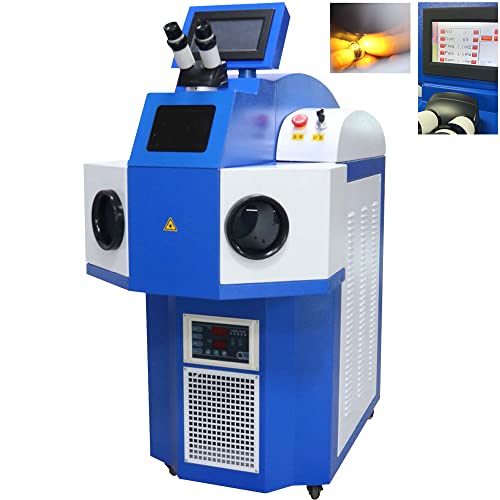
- 0.3mm to 2.5mm spot range
- Adjustable 0.1-20ms pulse widths
- Microscope, LED light, and foot switch
Best For: Precision jewelry repair shops needing speed and fine control
Permanent Jewelry Specialist
100A Pulse Arc Welder for Permanent Jewelry

- Works with 0.8-3mm caliber pieces
- Includes 10 needles and 4 copper collets
- Argon bottle not included
Best For: Permanent jewelry makers focused on small chain and connector welds
Mid-Power Bench Pick
150W Jewelry Spot Welder for Fine Repairs

- 0.2mm to 2mm spot range
- Adjustable 0.1-15ms pulse widths
- Microscope, LED light, and foot switch
Best For: Bench jewelers who want precise repair capability in a smaller package
Flexible Bench Spot Welder
Automatic CNC Pulse Argon Arc Tig Jewelry Spot Welding Machine

- Works with or without argon gas
- Compact 21.26 x 12.6 x 14.76-inch footprint
- 15.91-pound AC-powered setup
Best For: jewelers wanting an argon-capable bench spot welder
Precision Jewelry Repair Pick
30 A Precisely Weld Jewelry Pulse Arc Welder
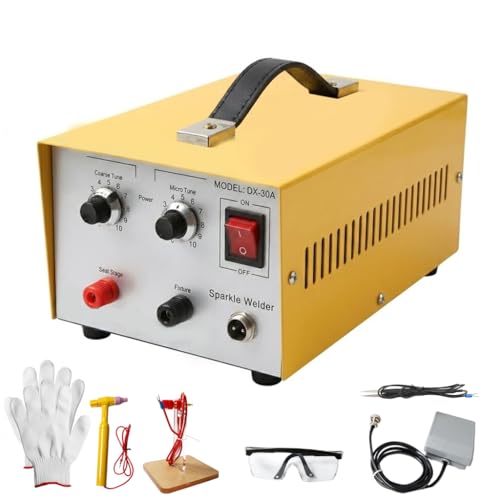
- Works on gold, silver, and platinum
- Foot pedal supports two-handed stability
- Compact 110V portable bench machine
Best For: studio or DIY jewelers doing precise metal repairs
Most Versatile Mode Set
Jewelry Automatic Spot Welding Machine

- Five modes for gold, titanium, and more
- Automatic current/voltage matching
- Strong safety protection package
Best For: buyers wanting a multi-mode jewelry spot welder
Heavy-Duty Studio Pick – 150W Laser Welder for Jewelry Repairs
If you want a pulse laser welder for jewelry that can handle a wide range of repair tasks, this 150W machine is built for serious bench work. It uses a 1064nm laser with adjustable pulse width, frequency, and spot size, making it suitable for detailed welding on gold, silver, platinum, and other metals.
Best For: Jewelers who want a high-power desktop welder with microscope viewing and adjustable controls for repair work.
Pros:
- 150W output with 0.1-15ms pulse width and adjustable 0-50Hz frequency
- Microscope observation system with crosshairs for precise alignment
- Capacitive touch screen and built-in joystick for easier parameter control
- Air cooling, shielding system, and blowpipe designed to reduce overheating and oxidation
Cons:
- Requires 220V single-phase power
- Likely more machine than casual or occasional users need
- Best suited to bench-based repair work rather than portable jobs
This model stands out if you need a feature-rich pulse laser welder for jewelry with the tooling and visibility to support consistent repairs. Its broad metal compatibility and adjustable welding parameters make it a practical choice for experienced users.
Permanent Jewelry Starter – Orion Pulse Arc Welder Kit
This pulse laser welder for jewelry option is actually a pulse arc welder designed for permanent jewelry work, especially joining clasps and similar small connections. It is meant for spot welding with workpieces in the 0.8-3mm range, so it fits a very specific use case rather than general metal fabrication.
Best For: Permanent jewelry makers who need a compact spot welder for clasps and small jewelry connections.
Pros:
- Made specifically for permanent jewelry and clasp joining
- Works on 110V power for standard setup
- Includes tungsten welding needles and copper collets
- Can also be used for dental materials and eyeglass frames
Cons:
- Limited to 0.8-3mm welding diameter range
- Cannot be used for metal bars or drilling holes
- Requires stable positioning and careful adjustment for best results
If your work is focused on permanent jewelry, this kit offers the right kind of targeted functionality. The included consumables are useful, but buyers should pay close attention to its size limits and intended application.
Compact Bench Choice – 60W Boost Jewelry Laser Welder
For buyers comparing a pulse laser welder for jewelry, this 60W desktop model offers a compact footprint and a focused set of bench-friendly features. It uses a 1064nm laser, adjustable pulse settings, and a binocular microscope, making it practical for small precision jobs on rings, pendants, bracelets, and similar pieces.
Best For: Jewelers who want a smaller desktop laser welder for precise gold and silver repair work.
Pros:
- 60W output with 40J max pulse energy and adjustable settings
- Compact 25kg machine with built-in water tank saving bench space
- Binocular microscope supports longer observation with less fatigue
- Suitable for rings, pendants, bracelets, and hole patching on gold and silver jewelry
Cons:
- Lower 0-10Hz frequency range than larger machines
- Requires 220V single-phase power
- Less powerful than 150W alternatives for heavier workloads
This model is a sensible fit when space matters and the work is mostly precision jewelry repair. It gives you the core tools needed for small-part welding without the bulk of a larger industrial setup.
Value Permanent Jewelry Kit – 110V Pulse Arc Welder
If you need a pulse laser welder for jewelry work focused on ring closures and permanent connections, this 110V pulse arc welder is aimed at that exact job. It supports a reasonable welding caliber of 0.5mm-4mm and comes with replacement pins, collets, and other spot-welding accessories.
Best For: Permanent jewelry users who want a 110V spot welder with included accessories and replacement parts.
Pros:
- Supports 0.5mm-4mm welding caliber for jewelry ring mouths
- Includes tungsten steel welding pins and four sizes of copper collets
- Can be used without an argon bottle
- Backed by a 30-day return service
Cons:
- Not intended for metal bars or drilling holes
- Requires careful stabilization of the workpiece during welding
- Welding pins need grinding before first use
This kit is a practical pick if you want the essentials for permanent jewelry without extra complexity. Its value comes from the included accessories and the clear focus on small jewelry welding tasks.
High-Power Bench Choice – 200W Jewelry Laser Welder with Microscope
If you’re comparing a pulse laser welder for jewelry work, this 200W desktop model is built for detailed repairs and higher-throughput use. Its 0.3mm to 2.5mm spot range, adjustable 0.1-20ms pulse widths, and 20Hz frequency make it a practical fit for fine welding on rings, bracelets, watches, and other delicate pieces.
Best For: Jewelers who want a high-precision desktop welder for gold, silver, platinum, and other small repairs.
Pros:
- 0.3mm to 2.5mm spot size range supports detailed jewelry repair work.
- Adjustable 0.1-20ms pulse widths help dial in delicate welds.
- 20Hz frequency supports faster workflow in busy settings.
- Microscope, LED ring light, foot switch, and air cooling add control and convenience.
Cons:
- Requires 220V single-phase power.
- Large desktop footprint may be more than a small bench needs.
- Best suited to precision work rather than general-purpose repairs.
Overall, this model stands out if you need a feature-rich jewelry laser welder for controlled, repetitive precision work. The safety shielding and 24-hour cooling support also make it a stronger choice for extended use.
Permanent Jewelry Specialist – 100A Pulse Arc Welder for Permanent Jewelry
This pulse laser welder for jewelry is aimed at permanent jewelry workflows that need a simple spot-welding setup. It supports workpieces in the 0.8-3mm caliber range and is designed for welding the workpiece close to the needle for proper results, so it fits focused chain and jewelry assembly tasks better than general metal repair.
Best For: Permanent jewelry makers who want a compact spot-welding machine for small, specific workpieces.
Pros:
- Designed for permanent jewelry spot welding.
- Works within a 0.8-3mm workpiece caliber range.
- Includes 10 welding needles and 4 copper collets.
- Compatible with an argon bottle if better results are needed.
Cons:
- Not intended for iron bars, drilling holes, or complex workpieces.
- Workpiece must be held very close to the welding needle during use.
- Argon bottle is not included.
In practice, this machine is best viewed as a specialized tool for permanent jewelry rather than a broad workshop welder. The included accessories help you get started, but its narrow use case is the main thing to keep in mind.
Mid-Power Bench Pick – 150W Jewelry Spot Welder for Fine Repairs
For buyers looking for a pulse laser welder for jewelry without jumping to the highest-powered desktop unit, this 150W model offers a more compact precision setup. With a 0.2mm to 2mm spot range, 0.1-15ms pulse widths, and 20Hz frequency, it is geared toward careful ring, bracelet, and watch repairs in gold, silver, platinum, and similar metals.
Best For: Jewelers who want a mid-power desktop welder for precise repairs and everyday bench use.
Pros:
- 0.2mm to 2mm spot size range supports fine-detail work.
- Adjustable 0.1-15ms pulse widths help control delicate welds.
- 20Hz frequency supports efficient, repeated welding.
- Microscope, LED ring light, foot switch, and air cooling improve usability.
Cons:
- Requires 220V single-phase power.
- Not as powerful as the 200W version in the same lineup.
- Still best suited to precision jewelry tasks rather than broader fabrication.
This is a sensible middle-ground choice if you want the same style of jewelry laser welding setup in a lower-power package. It keeps the precision-focused features that matter most while staying centered on fine repair work.
Flexible Bench Spot Welder – Automatic CNC Pulse Argon Arc Tig Jewelry Spot Welding Machine
If you’re looking for a pulse laser welder for jewelry alternative that focuses on spot welding, this automatic CNC pulse argon arc TIG machine is built for controlled repair work and bench use. It can run with or without argon gas, and the notes say argon can be connected through the pressure gauge for better welding results, making it a practical option for jewelers who want more flexibility in setup.
Best For: Bench jewelers who want a compact, argon-capable spot welder for controlled jewelry repair.
Pros:
- Can work normally without argon gas, with argon available for improved results.
- Compact enough for workshop use at 21.26 x 12.6 x 14.76 inches.
- Lightweight at 15.91 pounds compared with larger bench machines.
- Includes one set and runs on AC power for straightforward setup.
Cons:
- Argon gas is not included and must be purchased separately.
- Spelling and naming suggest a spot-welding workflow, not a true laser welder.
- No detailed feature list is provided for fine-tuning controls.
Overall, this is a practical choice if you want a jewelry welding machine that can be used with or without argon and fits a workshop-style repair setup. It’s best viewed as a controlled spot welder for bench tasks rather than a laser system.
Precision Jewelry Repair Pick – 30 A Precisely Weld Jewelry Pulse Arc Welder
This pulse laser welder for jewelry search may lead you to a pulse arc machine instead, and this 30A model is aimed at precise jewelry repair with localized molten pools for gold, silver, and platinum. The foot pedal design helps keep both hands free for delicate alignment, and the compact iron-cased body is made for studio or DIY bench use.
Best For: Jewelry makers who need precise, hands-free spot welding for fine metal repairs.
Pros:
- Designed for gold, silver, and platinum jewelry work.
- Localized micro-arc approach helps reduce broad heat exposure.
- Integrated foot pedal supports stable two-handed positioning.
- Compact 28.5 x 16.5 x 12.5 cm footprint with a portable handle.
Cons:
- It is a pulse arc welder, not a laser welder.
- The notes do not include detailed wire-size or mode specifications beyond the described use cases.
- Requires 110V power, so it is best suited to compatible workspaces.
For jewelers who want precision without the complexity of a larger system, this model focuses on controlled repairs and steady handling. The included support and warranty terms also make it appealing for studio users who want backup after purchase.
Most Versatile Mode Set – Jewelry Automatic Spot Welding Machine
If you need a pulse laser welder for jewelry replacement that covers more than basic repair, this automatic pulse argon arc spot welder offers multiple modes and broad material support. The machine is built around automatic current matching, safety protections, and a control system that aims to make jewelry repair easier for beginners while still offering manual adjustment for experienced users.
Best For: Users who want a versatile, safety-focused jewelry spot welder with multiple welding modes.
Pros:
- Five modes include gold welding, mixed welding, titanium welding, and orthodontic mode.
- Automatic current and voltage matching simplifies operation for beginners.
- Safety features include overload, over-temperature, over-current, and voltage compensation protection.
- Includes accessories such as tungsten needles, a welding loop clamp, and a pedestal with handle.
Cons:
- Bulky at 16.57 pounds, so it is less portable than smaller bench tools.
- The notes describe spot-welding functionality rather than a true laser welder.
- Best suited to 110V setups, limiting use in incompatible environments.
This model stands out for its broad mode selection and safety-oriented design, which may appeal to jewelry repair users who also work with other metals or small workpieces. It’s a capable bench machine if you want flexibility more than ultra-compact size.
How We Picked the Best Pulse Laser Welder for Jewelry
For this roundup, we focused on welders that better match real jewelry-work needs: fine control, compatibility with common precious metals, practical voltage requirements, and setup that suits bench or small-shop use. We also favored models marketed for jewelry repair, spot welding, or permanent jewelry work, since those uses demand accuracy more than raw industrial power.
Quick Comparison
When comparing a Pulse Laser Welder for Jewelry, start with the work style. Higher-power desktop laser units are generally better for heavier repair and broader metal compatibility, while pulse arc and spot welders can be a smarter fit for permanent bracelets, chain work, and lighter bench tasks. Also compare input power, duty expectations, and whether the machine is designed for gold, silver, platinum, or mixed-metal repairs.
Key Buying Factors for Pulse Laser Welder for Jewelry
Power and Output Control
Look for enough output to handle your most common jobs without overburning delicate settings. Fine power adjustment matters more than maximum wattage for most jewelry work.
Metal Compatibility
Make sure the machine suits the metals you work with most often. Gold, silver, platinum, and stainless components each respond differently, especially on thin chains and small links.
Precision and Heat Management
The best jewelry welders deliver tight spot control and minimal heat spread. That helps protect stones, finishes, and nearby solder joints.
Voltage and Shop Fit
Check whether the unit runs on 110V or 220V and whether your workspace can support it. Larger desktop laser welders often need more dedicated space and stronger electrical planning.
Workflow and Ease of Use
For busy benches, simple controls, stable positioning, and quick setup can matter as much as specs. If you do frequent permanent jewelry work, speed and repeatability are especially important.
Who Should Buy Which Pulse Laser Welder for Jewelry?
If you mainly do fine repairs and bench work, a compact laser or spot welding setup is usually the best starting point. If your focus is permanent jewelry, a pulse arc welder or dedicated kit may offer the fastest workflow. For shops handling heavier-duty restoration or broader metal repair, a higher-power desktop laser model is often the better long-term investment.
In short, choose the machine that matches your volume, materials, and precision needs—not just the highest wattage on the list.