Choosing the right screen printing exposure light box can make a big difference in sharpness, consistency, and how quickly you can move from setup to print.
Below, we focus on the features that matter most for clean burns, easier workflow, and better value across beginner and shop-ready options.
Best 10 Screen Printing Exposure Light Box Picks for 2026
Fast 100W Exposure with Timer

- 100W, 216 LEDs at 395nm
- Timer from 0.5 to 9.5 minutes
- Fits 10 x 14 to 20 x 24 inch frames
Best For: Fast, adjustable exposure for larger screen-printing frames
Compact 25W Starter Unit
Dorhui UV Screen Printing Exposure Light

- 25W 395nm UV light for diazo emulsion
- Simple on/off switch operation
- Sturdy base with non-slip feet
Best For: Beginners needing a basic, compact emulsion exposure light
Programmable Plate-Making Unit

- Timer runs from 1 second to 99 hours
- Four 395nm LEDs with tempered glass
- 18 x 13 inch exposure area
Best For: Users who want programmable, repeatable exposure control
Adjustable Stand Workhorse
Dorhui 60W UV LED Exposure Unit

- 60W 395 nm light reduces exposure to about 3-5 minutes
- Retractable stand with height, angle, and 360° rotation
- Works for screen printing, cyanotypes, and resin curing
Best For: Flexible setups that need adjustable UV exposure
Heavy-Duty Pick
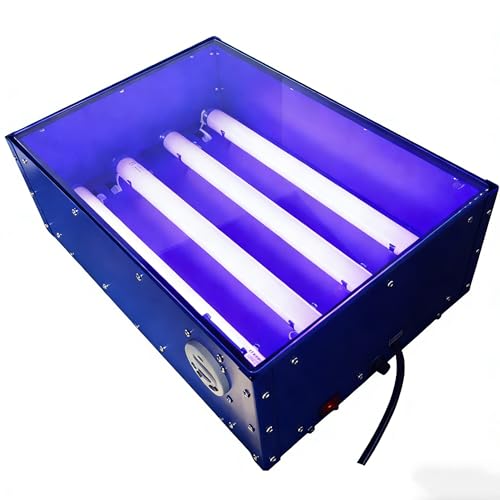
- 18 x 13 inch exposing area
- High-density sponge improves film contact
- Timer remembers saved settings
Best For: Small-screen exposure work with a durable, timer-based setup
Value-Friendly Pick

- 18 x 12 inch exposure size
- Four LED tubes rated for 50,000 hours
- Includes shading cloth for operator protection
Best For: DIY and small-shop exposure jobs with saved timing
Pro Vacuum Pick
Vacuum UV Exposure Unit with Pump
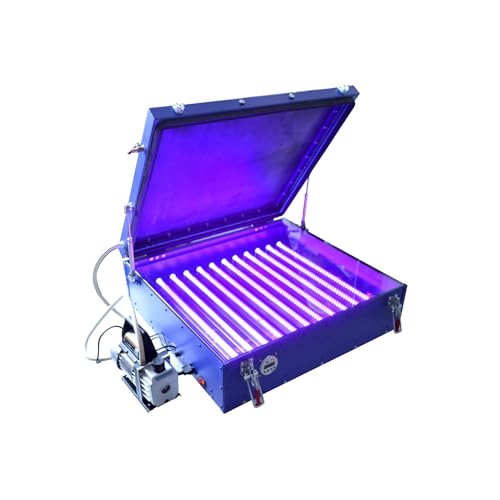
- 24 x 26 inch exposing area
- External 400W vacuum pump tightens film contact
- Countdown timer with memory function
Best For: Larger screens and users who want vacuum-assisted exposure
Precision Timer Exposure Unit
60W 18x13" UV Light Box for Small Screens

- 1-second to 99-hour timer with memory
- High-density sponge improves film contact
- Blackout cloth and tempered glass included
Best For: Small-screen shops and makers needing precise, repeatable exposure
Large-Format LED Exposure Unit
20x24" Screen Printing Light Box

- Large 21x25-inch maximum exposure area
- 8 LED UV lights for even exposure
- Digital timer with memory and auto shutoff
Best For: Larger screens and table-top exposure setups
Durable Shop Exposure Machine
18x13" LED UV Light Box with Timer
- Countdown timer with memory and auto shutoff
- High-density sponge improves film contact
- 4 LED UV lamps with tempered glass top
Best For: DIY plate makers and small-screen users
Fast 100W Exposure with Timer – Caydo 216 LEDs UV Light 395nm
If you want a screen printing exposure light box that cuts exposure time without giving up coverage, this Caydo 100W UV unit is built for faster workflow. The 395nm LEDs are aimed at screen printing, and the adjustable stand plus timer make it easier to dial in repeatable burns for different emulsion thicknesses and frame sizes.
Best For: Makers who want a high-power UV exposure setup with a built-in timer and adjustable stand for larger screen frames.
Pros:
- 100W, 216-LED 395nm output is designed to shorten exposure to about 1.5 minutes.
- Timer runs from 0.5 to 9.5 minutes in 0.5-minute steps and shuts off automatically.
- Wide exposure area supports frames from 10 x 14 inches to 20 x 24 inches.
- Adjustable height and angle help reduce light dead corners during curing.
Cons:
- Exposure time still varies with emulsion thickness, so it may take some testing.
- Larger footprint may be more than needed for very small screen-printing setups.
This is a practical pick if you want a stronger, more flexible exposure unit for screen printing, plus enough area to handle a range of frame sizes. The timer and adjustable stand make it easier to get consistent results without constant babysitting.
Compact 25W Starter Unit – Dorhui UV Screen Printing Exposure Light
This screen printing exposure light box is a straightforward low-power option for users who want simple controls and a compact footprint. The 395nm light is aimed at diazo photo emulsion work, and the on/off switch makes it easy to control curing time without extra setup.
Best For: Beginners or small-scale users who want a basic, easy-to-operate exposure light for photo emulsion screens.
Pros:
- 25W 395nm UV light is designed for diazo photo emulsion screens.
- On/off button switch keeps operation simple and energy-conscious.
- Claims 10-15 minute curing for screen emulsion.
- Sturdy base with non-slip feet adds stability during use.
Cons:
- Lower wattage means it is not the fastest option in this roundup.
- Exposure control is manual rather than timer-based.
For a simple entry-level setup, this unit covers the basics without adding complexity. It should suit users who mainly need a stable light source for standard emulsion work and do not need a larger, more automated system.
Programmable Plate-Making Unit – 60W 395nm LED Exposure System
If repeatability matters in your screen printing exposure light box, this 60W unit stands out for its programmable timer and memory function. It is designed for plate making and smaller screen work, with tempered glass, even light distribution, and a protective blackout cloth to help keep the process controlled.
Best For: Hobbyists, small studios, and professional plate-making workflows that need automated timing and consistent exposure.
Pros:
- Programmable countdown timer runs from 1 second to 99 hours with auto memory.
- Four 395nm UV LEDs and tempered glass are designed for even exposure.
- Includes blackout cloth, sponge, and installation accessories.
- 18 x 13 inch exposure area suits small screens and plate-making tasks.
Cons:
- Exposure area is smaller than some larger-format screen printing units.
- Heavier build at 21.7 pounds may be less portable.
This is the most automation-focused option here, making it a strong fit if you want repeatable results from a set-and-forget timer. The included accessories and safety-minded construction add convenience for regular use.
Adjustable Stand Workhorse – Dorhui 60W UV LED Exposure Unit
This screen printing exposure light box is a flexible 60W option for users who want adjustable positioning and broad compatibility. The 395 nm light is intended for burning screens, and the retractable stand gives you height and angle control to help even out exposure across the plate.
Best For: Screen printers and crafters who want adjustable positioning for screens, cyanotypes, and resin curing.
Pros:
- 60W 395 nm UV light is designed to reduce emulsion exposure to about 3-5 minutes.
- Retractable stand adjusts height and angle, with 360° rotation for better coverage.
- Can also be used in a DIY UV light box setup.
- Heavy-duty base and rubber anti-slip pad improve stability.
Cons:
- Exposure time still depends on emulsion thickness.
- Open stand design may be less enclosed than a true box-style unit.
If you want a versatile exposure light that can adapt to different setups, this model has a lot going for it. The adjustable stand and wide-use support make it a practical tool for screen printing and related UV curing tasks.
Heavy-Duty Pick – LED Exposure Unit with Timer
If you want a screen printing exposure light box that feels built for regular shop use, this LED unit focuses on stable pressure, safety, and simple timing. The 18 x 13 inch exposing area gives you room for small screens and hot stamping plates, while the included sponge helps press film more tightly for cleaner exposure.
Best For: Makers who want a sturdy, easy-to-maintain exposure unit with timed operation and added pressure support.
Pros:
- 18 x 13 inch exposing area suits screen printing and hot stamping plates
- High-density sponge helps improve film contact during exposure
- 8mm tempered glass adds friction resistance and safety if broken
- Automatic timer memory saves your settings between uses
Cons:
- Heavier build at 21.7 pounds
- Focused on smaller-format work rather than large screens
- No vacuum system for pulling the film tight
This is a practical screen printing exposure light box for users who value durability and repeatable timing over extra automation. The iron plate body, UV lamps, and simple wipe-clean surface make it a straightforward choice for ongoing plate exposure work.
Value-Friendly Pick – 18×12 LED Exposure Unit
This screen printing exposure light box is a solid pick if you need a compact UV unit with practical extras. It offers an 18 x 12 inch exposure size, four 15W LED tubes, and an intelligent timer with automatic memory, making it easy to repeat exposure settings from job to job.
Best For: DIY screen printers and small shops wanting a compact exposure unit with safety features and saved timer settings.
Pros:
- 18 x 12 inch exposure size works for small screens and printing plates
- Four LED tubes are rated for about 50,000 hours of use
- Sponge helps press film more tightly for better exposing quality
- Includes a shading cloth to help block UV damage to the operator
Cons:
- Smaller exposure area than larger-format units
- Built for small-screen work rather than bigger frames
- At 29.7 pounds, it is still not especially lightweight
For buyers comparing a screen printing exposure light box on features and lifespan, this model stands out for its long-rated LED tubes and operator protection extras. The steel construction and tempered glass also support durability without complicating the workflow.
Pro Vacuum Pick – Vacuum UV Exposure Unit with Pump
If your priority is tighter film contact, this vacuum-style screen printing exposure light box adds a major advantage: an external high-speed vacuum pump. The 24 x 26 inch exposing area is meant for larger screen frames, and the vacuum chamber helps pull the screen and transparency film close to the glass for more consistent exposure.
Best For: Larger-format screen printers who want vacuum-assisted film contact and a wider exposing area.
Pros:
- 24 x 26 inch exposing area handles larger screen frames
- External 400W silent vacuum pump helps tighten film contact
- Countdown timer supports long, repeatable exposure settings
- 8mm tempered glass and corner protectors add durability and safety
Cons:
- Very heavy at 120 pounds
- Larger footprint than compact units
- More elaborate setup because of the external vacuum pump
This model is the most specialized option here for users who want the added control of vacuum exposure. If your work benefits from a larger exposure area and tighter contact between film and screen, it offers a more production-oriented setup than basic LED light boxes.
Precision Timer Exposure Unit – 60W 18×13" UV Light Box for Small Screens
If you need a screen printing exposure light box for small screens, hot stamping plates, or transfer steel plates, this 60W unit is built around control and contact quality. The timer runs from 1 second to 99 hours 59 minutes 59 seconds, and the memory function helps speed up repeated jobs. Its sponge press, tempered glass, and blackout cloth are all aimed at cleaner, more consistent exposure work.
Best For: Small-screen shops and makers who want precise countdown control and tighter film contact.
Pros:
- Timer supports very fine exposure control and remembers the last setting.
- High-density sponge helps press film tightly against the plate.
- 8 mm tempered glass and iron body add durability for regular use.
- Blackout cloth helps block stray UV light during exposure.
Cons:
- Designed mainly for small screens and plate work, not larger formats.
- Uses four 395 nm UV lamps, which is more specialized than a simple desk light.
This is a practical pick if your priority is repeatable exposure on smaller screen printing and plate projects. The included blackout cloth and pressure sponge make it more process-focused than basic light boxes, especially for users who want tighter results.
Large-Format LED Exposure Unit – 20×24" Screen Printing Light Box
INTBUYING UV Exposure Unit Silk Screen Printing LED Light Box 20x24 Inches 110V
Check Price On AmazonFor buyers comparing a screen printing exposure light box for bigger frames, this INTBUYING unit stands out for its 20×24-inch tabletop format and evenly spaced LED UV lights. The digital timer offers exact countdown control from 1 second to 99 hours 59 minutes 59 seconds, and it can remember the last setting for repeated use. The tempered glass top and all-metal shell are built for a sturdier, more workshop-ready setup.
Best For: Shops and makers working with larger screens who want a table-top exposure unit with digital timing.
Pros:
- Large 21×25-inch maximum exposure area supports bigger screen work.
- 8 LED UV lights are designed to expose more evenly.
- Digital timer includes memory and automatic shutoff.
- 8 mm tempered glass and all-metal shell add durability.
Cons:
- Very heavy at 79 lb, so it is less portable.
- Requires checking screen frame size limits before buying.
This model is geared toward users who need more working space and a more substantial build. Its larger exposure area and even LED layout make it a strong fit for higher-capacity screen printing setups, especially where consistent timing matters.
Durable Shop Exposure Machine – 18×13" LED UV Light Box with Timer
This screen printing exposure light box is a straightforward choice for smaller screen and plate jobs where durability and simple timing are priorities. The 60W unit uses four LED UV exposure lamps, a countdown timer with automatic shutoff, and a memory function that keeps the last setting. Its tempered glass top and dense sponge are intended to improve film contact and support cleaner exposure results.
Best For: DIY plate makers and small-screen users who want a durable exposure machine with easy repeat timing.
Pros:
- Timer automatically shuts off and remembers the last setting.
- High-density sponge helps press film more tightly.
- 8 mm tempered glass adds strength and safety.
- Four LED UV lamps are rated for long service life.
Cons:
- Exposure area is limited to 18 x 13 inches.
- Best suited to small screens, hot stamping plates, and similar projects.
Overall, this is a practical mid-sized option for users who want the core features without extra complexity. It focuses on the essentials: stable build, repeatable timing, and better contact for more reliable exposure work.
How We Picked the Best Screen Printing Exposure Light Box
For this roundup, we looked for exposure units that balance even UV output, practical exposure area, built-in timing controls, and screen-printing-friendly construction. A good Screen Printing Exposure Light Box should help you expose photo emulsion consistently without guesswork, hot spots, or awkward setup.
We also favored models that fit common screen sizes, offer stable light placement, and include useful extras such as vacuum support, adjustable stands, blackout cloth, or tempered glass when those features improve reliability.
Quick Comparison
Most buyers will find the best value in compact 18 x 13-inch units for hobby work and small batches. If you print larger garments, oversized art, or want more flexibility, a 20 x 24-inch class unit is worth considering. Vacuum units are the most controlled option, especially for detailed halftones or when you need perfect contact between film and screen.
Wattage matters, but it is not the only factor. A well-designed 60W exposure unit may outperform a weaker or poorly distributed higher-output light if the UV coverage is more even and the timer is more accurate.
Key Buying Factors for a Screen Printing Exposure Light Box
Exposure Area
Match the bed size to your largest common screen. If you mostly print small to medium jobs, an 18 x 13-inch unit is usually enough. Bigger frames save time later if you plan to scale up.
UV Wavelength and Light Distribution
Look for 395nm UV LEDs or an equivalent exposure source designed for photo emulsion. Even light spread matters as much as raw brightness, because uneven coverage can lead to underexposed edges or overexposed centers.
Timer and Repeatability
A built-in timer is more than a convenience. It helps you repeat exposures accurately, which is essential when you are dialing in new emulsion, mesh counts, or artwork density.
Contact Quality
If your positives lift even slightly, your image can blur. Glass tops, blackout cloth, and especially vacuum systems improve contact and are worth paying for if you need crisp detail.
Build and Workflow Features
Consider stand adjustability, portability, heat management, and how easy the unit is to store or move. A compact Screen Printing Exposure Light Box is often better for home users, while a heavier-duty unit suits frequent production.
Who Should Buy Which Screen Printing Exposure Light Box?
Beginners and casual makers should prioritize straightforward controls, a moderate exposure area, and dependable UV output. If you are building a small home setup, a simple 60W tabletop unit is usually the safest starting point.
Growing shops should look for larger beds, better contact control, and sturdier construction. If you print detailed work, multiple screens, or larger artwork, choose the most even and controlled system your budget allows. That usually means moving up to a larger LED unit or a vacuum exposure model for the highest consistency.
In short, the best Screen Printing Exposure Light Box is the one that matches your screen size, detail level, and production pace while keeping exposures fast, repeatable, and easy to manage.