Choosing the right air feed paper folding machine can save serious time when you need clean, consistent folds at scale. The best models balance speed, sheet capacity, and reliable feeding without constant adjustments.
In this roundup, we focus on machines that make sense for real-world office and production workflows, from compact desktop options to high-volume floor models.
Best 10 Air Feed Paper Folding Machine Picks for 2026
High-Volume Air-Feed Folder

- Air suction feed table for coated and uncoated stock
- Up to 27,500 sheets per hour
- 18 preset fold settings across six common fold types
Best For: High-volume folding in commercial mailrooms and print shops
Booklet Folding and Binding Combo
A3 Free Standing Booklet Maker

- Folds and binds in one machine or separately
- Handles up to 200-300 booklets per hour
- Supports A3 sheets and multiple booklet formats
Best For: Schools and offices making booklet-style documents
Air-Assist Stack Prep
MBM AJ700 Floor Model Air Feed Jogger

- Uses air and vibration to separate and align stacks
- Three operating modes for different paper types
- Foot pedal, timer, and casters support production workflows
Best For: Preparing paper stacks before folding, collating, or mailing
Compact Desktop Folder
My Office Products P6500 Desktop Paper Folder

- Automatic folding for letter and half-fold jobs
- Handles 1-3 sheets and stapled sets
- Up to 1,800 sheets per hour on standard 8.5 x 11 paper
Best For: Small offices with simple letter-size folding needs
Air-Feed Jogger

- Air-feed separation reduces jogging time.
- Helps cut misfeeds and double feeds.
- 1000-sheet capacity with all-metal build.
Best For: Print shops needing faster stack prep and fewer feed problems.
High-Volume Folder
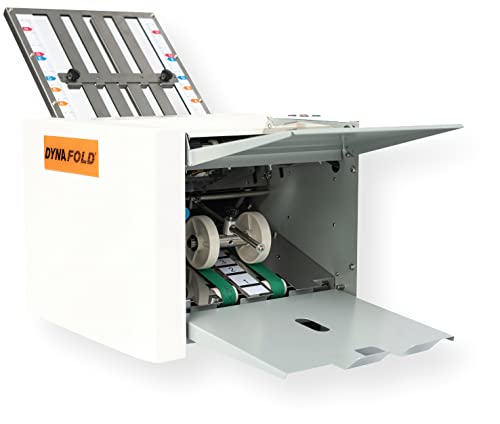
- Folds up to 8,000 sheets per hour.
- Push-button operation with resettable counter.
- Multiple fold styles plus output stacker.
Best For: Batch folding of standard letter-size documents.
Wide-Format Electric Folder
JARYANNIX 4-Tray Folding Machine
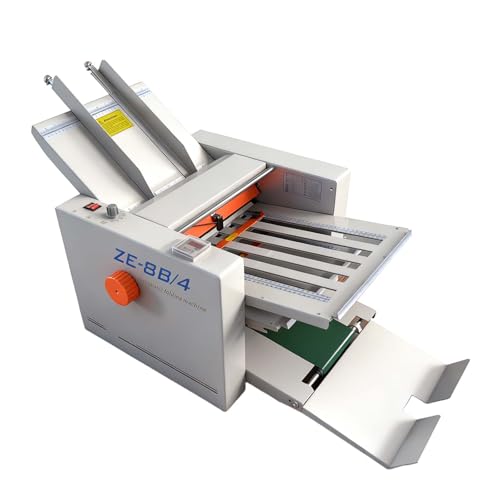
- Handles paper from 2" x 3" to 12" x 27".
- Up to 80 meters per minute with counting.
- Nearly 10 fold methods and adjustable speed.
Best For: Mixed-size batch folding with wide-format versatility.
High-Volume Desktop Choice
Martin Yale P7500 Automatic Feed Folder

- 4,000 sheets per hour output
- Multiple fold options for office jobs
- Loads up to 50 sheets per tray
Best For: Small offices and mailrooms needing fast, simple folding
Reliable Mid-Capacity Pick
United Office Products F100 Auto Folder

- Up to 156 sheets per minute
- 200-sheet hopper for fewer reloads
- LCD controls with resettable counter
Best For: Regular folding in offices, schools, and churches
Compact Hand-Feed Option
Martin Yale P6500 Desktop Letter Folder

- Compact desktop footprint
- Up to 1,800 sheets per hour
- Tri-fold and half-fold support
Best For: Small spaces with routine letter-size folding needs
High-Volume Air-Feed Folder – FORMAX Atlas AS
If you need an air feed paper folding machine for busy production work, the FORMAX Atlas AS is built for speed and flexibility. Its air suction feed table handles coated and non-coated stock, while pre-programmed fold settings cover common paper sizes and six standard fold types.
Best For: Mail rooms, print shops, and office teams that need fast, high-capacity folding on a range of paper stocks.
Pros:
- Air suction feed table supports coated and non-coated stock up to 26.5 inches long.
- Up to 27,500 sheets per hour and a hopper capacity of up to 500 sheets of 22# bond.
- Six standard folds with 18 preset fold settings for common letter, legal, and ledger sizes.
- Pull-out cassette fold rollers and belt-driven outfeed stacker are designed for easier operation.
Cons:
- Built for commercial use, so it is likely more machine than a small office needs.
- Perforating/scoring is handled through an optional plug-in accessory.
This is a strong choice when throughput and paper versatility matter more than compact size. If your workflow involves frequent folding runs and mixed stock, the Atlas AS is set up for that kind of workload.
Booklet Folding and Binding Combo – A3 Free Standing Booklet Maker
This air feed paper folding machine is aimed at users who want folding and binding in one setup. It handles booklet-style work, lets you fold and bind together or separately, and supports a range of paper sizes from small sheets up to A3-format material.
Best For: Schools, offices, and small production teams making booklets that need folding and binding in one machine.
Pros:
- Two-in-one design supports folding and binding together or separately.
- Can produce about 200-300 booklets per hour, depending on operator speed.
- Handles up to 20 sheets of 80g paper for edge binding and 14 sheets for folding.
- Steel and silicone construction is described as rust-resistant and durable.
Cons:
- Throughput depends heavily on the operator’s proficiency.
- Its booklet-focused design is less specialized than a dedicated high-speed production folder.
For buyers who want one machine to cover basic booklet workflows, this model offers a practical mix of folding, binding, and size flexibility. It makes the most sense when convenience matters more than pure production speed.
Air-Assist Stack Prep – MBM AJ700 Floor Model Air Feed Jogger
If your folding or mailing workflow starts with uneven stacks, this air feed paper folding machine helper is designed to prep paper quickly. The MBM AJ700 uses air and vibration to separate and align sheets, which can reduce misfeeds and double feeds before finishing tasks.
Best For: Print shops and production teams that need cleaner stack alignment before folding, collating, or mailing.
Pros:
- Air feed and vibration modes help separate sheets and align stacks.
- Three operating modes let you choose air only, vibration only, or both.
- 4-inch V tray holds up to 1000 sheets depending on paper type.
- Foot pedal control, timer, and casters support repeat production use.
Cons:
- It is a jogger, not a folder, so it does not fold documents by itself.
- Floor model size may be more machine than a cramped office can comfortably store.
This is a smart support tool if your main issue is paper prep rather than the folding step itself. For shops that want smoother feeding and cleaner stacks, it can improve the workflow around a folding machine.
Compact Desktop Folder – My Office Products P6500 Desktop Paper Folder
For simple office jobs, this air feed paper folding machine keeps things focused on basic letter and half folds. It is hand-fed, accepts 1 to 3 sheets at a time, and is designed for 8.5 x 11 inch paper in common bond weights.
Best For: Small offices that need a straightforward desktop folder for standard letter-size documents.
Pros:
- Automatic folding when paper is inserted keeps operation simple.
- Supports letter or half fold for common office mail pieces.
- Handles 1-3 sheets and even stapled sets, based on the supplied notes.
- Rated up to 1,800 sheets per hour for routine folding tasks.
Cons:
- Limited to 8.5 x 11 inch paper and 18lb to 24lb bond stock.
- Only offers letter and half-fold options.
If you only need a compact folder for standard office documents, the P6500 is easy to understand and easy to place. It is best treated as a basic productivity tool rather than a high-flexibility finishing machine.
Air-Feed Jogger – MBM AJ700 Floor Jogger
If you want an air feed paper folding machine support tool for preparing stacks before folding, the MBM AJ700 is built to speed up jogging and reduce feeding issues. Its air-feed feature forces air between sheets to help reduce powder buildup, while the V-shaped, adjustable-angle table and foot pedal or continuous operation make it practical for routine bindery work.
Best For: Print shops and offices that need fast stack preparation, fewer double feeds, and immediate air drying for press sheets or digital copies.
Pros:
- Air-feed design helps separate sheets and reduce jogging time.
- Can help eliminate powder buildup and air dry press sheets or digital copies immediately.
- Reduces misfeeds and double feeds in printers, folders, and collators.
- All-metal build with casters and a 1000-sheet capacity tray.
Cons:
- It is a floor jogger, not a folding machine.
- At 84 pounds, it is a substantial piece of equipment.
- Best suited to print-finishing workflows rather than basic home use.
This model makes sense when sheet preparation is the bottleneck, especially if you need cleaner stacks before feeding a folder or collator. The adjustable-angle table and optional continuous mode add convenience, but the real value is the air-assisted reduction in feed problems.
High-Volume Folder – Dynafold 102N Letter Folder
The Dynafold 102N is a practical choice if you need an air feed paper folding machine alternative for standard letter jobs and batch runs. It folds up to 8,000 sheets per hour, uses push-button operation, and self-adjusts for paper thickness, which helps keep repetitive folding work simple and consistent.
Best For: Offices, churches, and mail rooms that fold letter-size paper in batches and want a straightforward, high-speed machine.
Pros:
- Up to 8,000 folds per hour for fast batch processing.
- Push-button operation with a resettable counter.
- Output conveyor stacker supports organized output handling.
- Offers multiple fold styles, including letter, zig-zag, gate, and double fold.
Cons:
- Supported paper size is limited to letter (8.5 x 11 inches).
- Less versatile than machines built for wide-format paper.
- Requires batch workflow planning for best results.
For standard letter folding, this model covers the essentials without adding complexity. The self-adjusting thickness handling and conveyor stacker make it a solid pick when speed and simple operation matter more than broad paper-size support.
Wide-Format Electric Folder – JARYANNIX 4-Tray Folding Machine
This automatic paper folding machine is built for users who need a flexible air feed paper folding machine-style workflow with broad size support and quick batch handling. It processes up to 80 meters per minute, includes automatic paper counting, and uses adjustable speed plus tray alignment marks to help keep folds consistent.
Best For: Offices, schools, and churches that handle both small and wide-format paper and want multiple fold options.
Pros:
- Supports a wide size range from 2″ x 3″ up to 12″ x 27″.
- One-click start/stop with an accurate counter simplifies operation.
- Stepless speed control adapts to different paper thicknesses.
- Offers nearly 10 folding methods, including half fold, tri-fold, Z-fold, gate fold, and French fold.
Cons:
- At 113 pounds, it is a heavy machine.
- Large size range may be more than needed for simple letter-only jobs.
- Best suited to users who will actually use the advanced fold options.
Overall, this is the most versatile option in the group when paper size flexibility matters. It is especially useful if you need one machine for varied folding tasks and want more control over speed, counting, and alignment.
High-Volume Desktop Choice – Martin Yale P7500 Automatic Feed Folder
If you need an air feed paper folding machine for steady office work, the Martin Yale P7500 is built for fast, automatic tabletop folding with simple operation. It handles letter and legal-size documents and offers multiple fold styles, making it a practical fit for routine mailings and document prep.
Best For: Small offices, mailrooms, churches, and business users who want fast, easy folding without a complicated setup.
Pros:
- Up to 4,000 sheets per hour for high-output folding jobs
- Supports letter, half, Z-fold, and double parallel folding
- Loads up to 50 sheets in the feed tray for convenience
- Easy-to-use design that does not require training
Cons:
- Designed for 20lb bond paper and specific sheet sizes
- Bulkier than a manual tabletop folder
- Best suited to recurring office tasks rather than occasional use
Overall, the P7500 stands out when speed and simplicity matter most. It is a solid choice for workplaces that want a dependable folding machine with enough flexibility for common document jobs.
Reliable Mid-Capacity Pick – United Office Products F100 Auto Folder
For buyers comparing an air feed paper folding machine for everyday document handling, the United Office Products F100 offers high-speed automatic folding with a straightforward setup. It supports letter and legal paper, includes multiple fold types, and is aimed at offices, schools, and churches that need neat, repeated folding jobs.
Best For: Offices, schools, and churches that want a user-friendly folder with a larger hopper and clear controls.
Pros:
- Processes up to 156 sheets per minute for fast folding
- 200-sheet hopper capacity reduces frequent reloading
- Supports C, Z, half, and double parallel folds
- LCD control panel and resettable counter simplify use and tracking
Cons:
- Only backed by a 6-month warranty
- Less compact than smaller desktop folders
- Primarily aimed at standard letter and legal-size jobs
The F100 is a practical middle-ground option if you want speed, capacity, and easy controls in one machine. Its sequential stacking and support resources make it especially appealing for regular volume work.
Compact Hand-Feed Option – Martin Yale P6500 Desktop Letter Folder
If you want an air feed paper folding machine alternative for lighter office use, the Martin Yale P6500 is a compact desktop model with manual feed and automatic folding. It is designed for letter-size paper and focuses on simple tri-fold and half-fold workflows, which makes it a sensible pick for smaller spaces.
Best For: Small work areas, mailrooms, and office users who need a compact folder for routine letter-size jobs.
Pros:
- Compact desktop design fits smaller work areas
- Handles up to 1,800 sheets per hour
- Folds 8.5 x 11 paper into tri fold or half fold
- Can process stapled or unstapled documents when hand-fed
Cons:
- Manual feed, so it is not a fully automatic hopper-fed unit
- Limited to letter-size paper tasks
- Fewer fold options than larger machines
The P6500 makes sense when space is tight and your folding needs are straightforward. It is less about maximum throughput and more about convenient, everyday document handling in a small footprint.
How We Picked the Best Air Feed Paper Folding Machine Options
We prioritized practical factors buyers actually feel day to day: feed reliability, fold consistency, throughput, paper size support, setup simplicity, and maintenance demands. We also looked at whether each machine suits light office use, recurring mail jobs, or heavier production environments.
Quick Comparison
Desktop folders are best for smaller mailings and occasional use. Midrange automatic folders handle recurring office jobs with better speed and capacity. High-output air feed and floor models are better when you need batch processing, larger stacks, or minimal downtime between runs.
Key Buying Factors for an Air Feed Paper Folding Machine
Feed Capacity and Throughput
Check both hopper capacity and hourly output. A larger stack reduces reloading, while higher throughput matters most if you fold frequently or in bulk. If your jobs are small and occasional, speed may matter less than simple operation.
Paper Sizes and Fold Types
Make sure the machine handles the paper sizes you use most, such as letter or legal, and supports the fold styles required by your documents. Some models are limited to basic folds, while others can handle more formats and settings.
Document Quality and Paper Range
Not all folders handle the same stock weight well. If you work with mixed paper weights, coated sheets, or multi-page sets, look for clearer specs on supported paper range and feeding tolerance.
Ease of Use and Workflow Fit
Controls, counters, tray adjustments, and stackers affect how efficiently the machine fits into your process. An Air Feed Paper Folding Machine is most useful when it reduces manual handling rather than adding setup complexity.
Who Should Buy Which Air Feed Paper Folding Machine?
If you run a small office and only fold occasional documents, a desktop or manual-feed automatic folder is usually the most cost-effective choice. If you process regular mailers, invoices, or flyers, step up to a faster automatic model with stronger batch handling. For print rooms, mailrooms, and production settings, choose a high-capacity air-feed or floor model that can sustain longer runs with fewer interruptions.
Match the machine to your actual volume and paper types first. That is the easiest way to avoid overbuying or ending up with a folder that slows your workflow instead of improving it.