A small workshop needs a band saw that earns its space. The right choice depends less on the biggest motor number and more on what you cut, how much room you have, and whether the saw must move between jobs.
These 10 picks include compact benchtop models for woodworking and handheld deep-cut saws for metalworking. Here’s how to tell which style—and which specifications—fit your work.
Best 10 Band Saws for Small Workshops Picks for 2026
Most Flexible Metal Cutter
MAXXT 10-Amp Portable Band Saw

- Handheld or base-supported cutting
- 60–420 ft/min variable blade speed
- Auto-stop and LED cut light
Best For: Metal stock and pipe in space-limited shops
Quiet Woodworking Pick
9-Inch Two-Speed Benchtop Band Saw

- 2.8-amp induction motor
- 1,700/2,500 ft/min speeds
- 12-inch tilting table and dust port
Best For: Compact DIY woodworking setups
Handheld-to-Bench Option
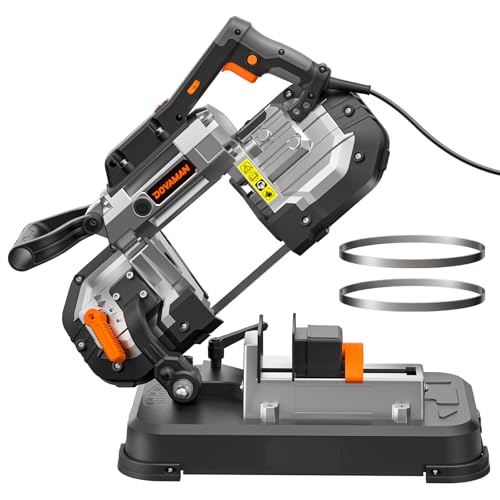
- Detachable base for two working modes
- Six speeds from 2.3–7.9 ft/s
- 0°–45° angles; two blades included
Best For: Mixed-position metal-cutting jobs
Compact Woodworking Setup

- 3-1/2-inch depth, 9-inch width
- Fence and miter gauge included
- 45° bevel and two-year warranty
Best For: Small-shop woodworking with included guides
Best for Detailed Woodwork
SEESII 8-Inch Benchtop Band Saw

- 8-inch cutting width; 3-1/8-inch height
- Tilting table, fence, and miter gauge
- 12-by-12-inch steel table with dust port
Best For: Hobbyists making detailed wood projects on a compact bench
Best for Deeper Cuts
WEN BA3962 10-Inch Band Saw with Stand
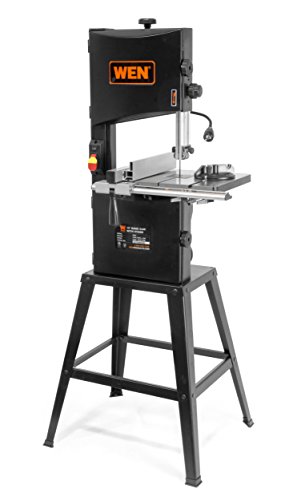
- Cuts up to 6 inches deep
- Two speeds and a 45° beveling table
- Stand, fence, miter gauge, and work light
Best For: Woodworkers with floor space who need deeper cuts
Best for Compact Multi-Material Projects
ExploreHorizon 8-Inch Band Saw

- 8-inch cutting width
- 0–45° tilt with fence and miter gauge
- 2-inch dust port; cutting-height specs conflict
Best For: Small bench projects across wood, plastic, and nonferrous metals
Best with Extra Features
SHOPMAX 10-Inch Benchtop Band Saw

- 4.5-inch depth; 10-inch cutting width
- 4.2-amp induction motor
- 45-degree adjustable worktable
Best For: Woodworkers needing greater benchtop cutting capacity
Best for Easy Adjustments
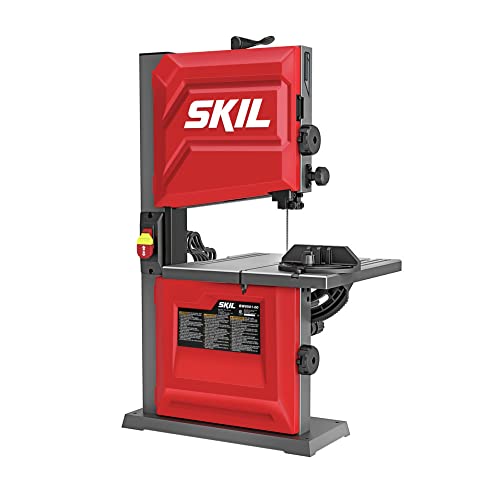
- Two-speed drive system
- Quick blade-tension setting
- Rack-and-pinion table adjustment
Best For: Woodworkers who value convenient setup and angle changes
Best for Versatile Setups
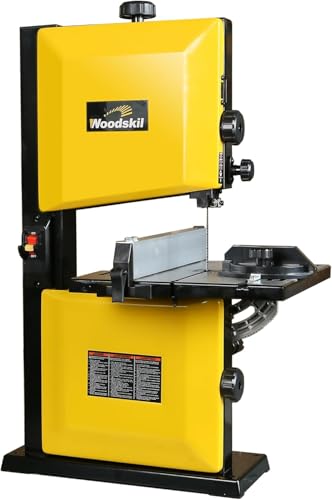
- 3.5-inch depth; 9-inch cutting width
- Fence and miter gauge included
- Table tilts from 0 to 45 degrees
Best For: Woodworkers wanting included guides for varied cuts
Most Flexible Metal Cutter – MAXXT 10-Amp Portable Band Saw
For band saws for small workshops, this MAXXT model offers a practical way to cut metal without dedicating permanent floor space to a saw. Use it handheld or with its aluminum base for supported cuts.
Best For: Small shops cutting pipe, steel, aluminum, and other stock that need both handheld access and base-supported operation.
Pros:
- 10-amp motor and variable blade speed from 60 to 420 ft/min.
- Base supports 0°–45° angles and automatic stopping after a cut.
- Carrying wheels, LED cut light, and tool-free blade-change lever add convenience.
Cons:
- Maximum stated capacity drops when used with the base: 115 mm round or 100 × 100 mm square versus 120 mm handheld.
- Includes one 10/14-TPI metal blade; other tooth counts require separate blades.
The base makes repeatable shop cuts easier, while handheld use helps with material that is awkward to bring to a bench. Check the base-mounted capacity against your usual stock before buying.
Quiet Woodworking Pick – 9-Inch Two-Speed Benchtop Band Saw
Among band saws for small workshops, this 9-inch benchtop option prioritizes compact woodworking and a low-vibration 2.8-amp induction motor. Its two speeds and tilting table cover everyday straight, curved, and angled cuts.
Best For: DIY woodworkers who want a compact benchtop saw with two blade speeds and dust-collection hookup.
Pros:
- Switches between 1,700 and 2,500 ft/min blade speeds.
- 12 × 12-inch aluminum table tilts to 45° and includes a miter gauge.
- 2-inch dust port, blade-tracking window, and removable safety key support workshop use.
Cons:
- At 38 pounds, it is compact but still takes effort to move.
- Appropriate blades for some listed materials are sold separately.
The two-speed setup is useful if your projects vary, but its stated applications focus on wood, plywood, and plastic. Although a product detail mentions metal, the supplied cutting guidance does not establish it as a metal-cutting choice.
Handheld-to-Bench Option – DOVAMAN 10A Deep-Cut Band Saw
If band saws for small workshops need to serve more than one work position, the DOVAMAN combines a handheld saw with a detachable base. Its 10-amp motor and six speed settings are intended for metal as well as wood and plastic with suitable blades.
Best For: Shops that want one portable metal-cutting saw for handheld jobs and base-supported angled cuts.
Pros:
- Detachable base allows handheld or benchtop-style operation.
- Six speed settings span 2.3–7.9 ft/s.
- Adjustable 0°–45° cutting angle and two included blades.
Cons:
- Six preset speed settings offer less granular adjustment than continuously variable control.
- The supplied notes do not specify separate handheld and base-mounted cutting capacities.
This is a versatile fit when you alternate between working on installed material and bringing stock to a bench. Confirm the capacity for your usual pipe or bar sizes, since the notes give a 5-inch deep-cut description but not mode-specific limits.
Compact Woodworking Setup – WEN BA3959 9-Inch Band Saw
For buyers comparing band saws for small workshops, the WEN BA3959 puts a useful set of woodworking accessories in a 9-inch benchtop format. Its stated cutting capacity is 3-1/2 inches deep and 9 inches wide.
Best For: Woodworkers who want a compact saw with a fence, miter gauge, and dust port included.
Pros:
- 2.8-amp motor drives the blade up to 2,500 ft/min.
- Worktable bevels to 45° for angled cuts.
- Includes a rip fence, miter gauge, 2-1/2-inch dust port, and two-year warranty.
Cons:
- 3-1/2-inch maximum cut depth limits thicker workpieces.
- Uses 59-1/2-inch blades in a specified 1/8- to 3/8-inch width range.
The included guides make it easier to get started with controlled wood cuts. Choose it if its capacity fits your projects rather than expecting the reach of a larger band saw.
Best for Detailed Woodwork – SEESII 8-Inch Benchtop Band Saw
For band saws for small workshops, the SEESII offers an 8-inch cutting width and a compact benchtop design. Its 3-1/8-inch maximum cutting height suits smaller woodworking projects, while the included fence and miter gauge help guide straight and angled cuts.
Best For: Hobbyists making detailed wood projects on a compact workbench.
Pros:
- 0–45° tilting table supports bevel cuts.
- Includes a double-sided fence and miter gauge.
- 12-by-12-inch steel table and dust collection port.
Cons:
- 3-1/8-inch cutting-height limit restricts thicker stock.
- 8-inch throat limits the width of larger workpieces.
The SEESII is a practical pick when guided cuts and a small bench footprint matter more than cutting capacity for thick or wide stock.
Best for Deeper Cuts – WEN BA3962 10-Inch Band Saw with Stand
Among band saws for small workshops, the WEN BA3962 is the option here for woodworkers who need more cutting height: its 3.5-amp motor supports cuts up to 6 inches deep and 9-3/4 inches wide. It comes with a stand, so plan for a dedicated floor spot rather than bench space.
Best For: Small-shop woodworkers who need deeper cuts and have room for a standing saw.
Pros:
- Two blade speeds: 1,520 and 2,620 FPM.
- 14-1/8-by-12-1/2-inch table bevels up to 45°.
- Includes a fence, miter gauge, work light, and 3-in-1 dust port.
Cons:
- At 26.5 by 21 by 58.5 inches, it takes more space than a benchtop model.
- 9-3/4-inch cutting-width limit still constrains wider workpieces.
Choose the WEN if six inches of cutting depth and a larger worktable justify giving up floor space; its included accessories make it ready for a range of guided cuts.
Best for Compact Multi-Material Projects – ExploreHorizon 8-Inch Band Saw
The ExploreHorizon is a benchtop choice among band saws for small workshops, with an 8-inch cutting width and an 11.81-by-11.81-inch work surface. Its listing describes use with wood, plastic, and nonferrous metals such as aluminum; match the blade and setup to the material before cutting.
Best For: Bench-based hobbyists working on small projects in several materials.
Pros:
- Table tilts from 0–45° for angled cuts.
- Includes a fence and miter gauge.
- 2-inch dust port and saw-wheel dust brush help manage debris.
Cons:
- 8-inch cutting width limits larger workpieces.
- The supplied specifications give conflicting maximum cutting heights: 80 mm at 90° and 3-1/2 inches.
This model offers useful guides and a compact work surface, but confirm its cutting-height capacity before buying if your projects approach the stated limit.
Best with Extra Features – SHOPMAX 10-Inch Benchtop Band Saw
Among band saws for small workshops, this SHOPMAX model is worth considering when cutting capacity matters. Its 4.2-amp motor supports cuts up to 4.5 inches deep and 10 inches wide, while the steel construction provides a sturdy benchtop setup.
Best For: Woodworkers who need more cutting capacity in a benchtop saw.
Pros:
- 4.5-inch cutting depth and 10-inch cutting width.
- Worktable adjusts for angles up to 45 degrees.
- Ball-bearing guides and a fence support controlled cuts.
- Connects to a SHOPMAX dust extractor, sold separately.
Cons:
- At 54.7 pounds, it is relatively heavy to move around the workshop.
- A compatible dust extractor is an additional purchase.
Choose this saw if capacity and a sturdy build take priority over easy portability. It arrives partially assembled, so allow time for setup before your first cut.
Best for Easy Adjustments – SKIL 9-Inch 2-Speed Band Saw
For shoppers comparing band saws for small workshops, the SKIL BW9501-00 offers several features that simplify setup and angle changes. It pairs a 2.8-amp induction motor with a two-speed drive system, quick blade-tension setting, and a rack-and-pinion table adjustment.
Best For: Woodworkers who want convenient blade and table adjustments for varied cuts.
Pros:
- Two-speed drive system allows tool-free belt tensioning.
- Quick blade-tension setting, guides, and a tracking sight window help with blade setup.
- Rack-and-pinion table adjustment makes angle changes straightforward.
- Includes a miter gauge and a dust port that accepts standard 2½-inch vacuum hoses.
Cons:
- The supplied specifications do not state a maximum cutting depth or width.
- The dust port requires a separate vacuum for collection.
This is a practical pick if adjustment features matter more to you than a published capacity figure. Check the cut dimensions you need before committing to a project.
Best for Versatile Setups – WOODSKIL 9-Inch Band Saw
Among band saws for small workshops, this WOODSKIL model combines a 9-inch cutting width with accessories for straight and angled work. Its stated capacity is 3.5 inches deep, and the cast-aluminum table tilts from 0 to 45 degrees.
Best For: Woodworkers seeking a benchtop saw with an included fence and miter gauge.
Pros:
- 3.5-inch cutting depth and 9-inch cutting width.
- Includes a rip fence and 120-degree miter gauge.
- Tilting cast-aluminum table supports angled cuts.
- Steel base and 2½-inch dust port suit a workshop setup.
Cons:
- Maximum cutting depth is 3.5 inches.
- At 40 pounds, it still takes effort to relocate.
The included guides make this a flexible option for straight cuts, crosscuts, and angles. Note that the supplied details conflict on power source, listing both a 120-volt motor and battery power; confirm the power requirement before buying.
How We Picked the Best Band Saws for Small Workshops
We focused on models that could make sense where floor space and storage are limited: 8- to 10-inch benchtop woodworking saws, a compact model with a stand, and handheld deep-cut saws. We compared stated cutting capacity, motor and speed options, included guides, portability, and the space each setup needs. Listed specifications are a starting point, not a substitute for checking the current manual, blade requirements, and owner feedback. We did not treat a handheld metal-cutting saw as interchangeable with a benchtop woodworking saw.
Quick Comparison: Which Style Fits?
- 8- or 9-inch benchtop saw: Best for small wood parts, curves, and light shop work when bench space is tight. Compare throat width and maximum cutting height before choosing.
- 10-inch benchtop saw or saw with stand: Worth considering when you want a larger table or more room around the blade. Measure the full installed footprint, including space needed to feed stock.
- Handheld deep-cut saw: The practical choice for cutting metal pipe, conduit, and bar stock at the workpiece. It is not a replacement for a table-guided saw used to shape wood.
Key Buying Factors for Band Saws for Small Workshops
Start with the Material and Cut
Woodworking and portable metal-cutting models call for different blades and handling. For wood, prioritize a stable table, useful fence or miter-gauge setup, and enough throat width for the shapes you plan to cut. For metal, check the saw’s stated capacity against the outside dimensions of your stock and look for speed control suited to the material.
Check Capacity and Real-World Space
Throat width limits how far material can extend past the blade; cutting height limits stock thickness. Neither tells you whether a long board will clear a wall or whether a workpiece has adequate support. Measure your bench, storage spot, and infeed and outfeed area. A stand can free bench space, but it still claims floor space.
Plan for Blades, Setup, and Cleanup
Confirm blade length and compatible widths before buying replacements. A narrower blade helps with tighter curves; a wider, properly tensioned blade is generally better suited to straighter cuts within the saw’s limits. Check that blade guides, tracking, and table angle can be adjusted without excessive hassle. For woodworking, consider how you will manage dust; for handheld metal cutting, plan to secure stock and handle sharp offcuts.
Who Should Buy Which Band Saws for Small Workshops?
Choose a compact 8- or 9-inch benchtop model if you mainly cut small wood projects and must store the saw between uses. Consider a 10-inch model if your projects need more working room and you have a dedicated spot for it. Choose a portable deep-cut model if your regular jobs involve metal stock or cuts away from the bench. If you need both shaped wood cuts and portable metal cuts, budget for separate tools rather than expecting one of these saws to do both jobs equally well.