Choosing the right grinder can make knife making faster, cleaner, and far more consistent. The best setups balance belt size, speed control, and stability for the kind of steel removal and edge shaping you do most.
Below, we’ve narrowed the field to eight bench belt grinders for knife making that suit everything from compact sharpening stations to heavier stock-removal work.
Best 8 Bench Belt Grinders for Knife Making Picks for 2026
Best Belt-and-Disc Combo

- 2-in-1 belt and disc sanding setup
- 90° belt holder for horizontal/vertical use
- Steel build with LED light and stable base
Best For: Knife makers who want a compact combo grinder for general shaping and finishing.
Best for Heavy-Duty Material Removal

- 1 HP induction motor for strong, consistent grinding
- 2 x 48 setup handles flat and curved sanding
- Cast-iron table and platen improve stability and control
Best For: Knife makers and metalworkers who want a powerful 2 x 48 bench grinder for fast stock removal and shaping.
Best 2-in-1 Combo

- 2"x42" belt format fits knife-making workflows
- Runs vertically or horizontally for flexibility
- Includes a 6" disc sander for precision finishing
Best For: Knife makers who want a versatile belt-and-disc benchtop sander.
Best for Variable Speed Control
Bucktool 2×42 Variable Speed Belt Sander
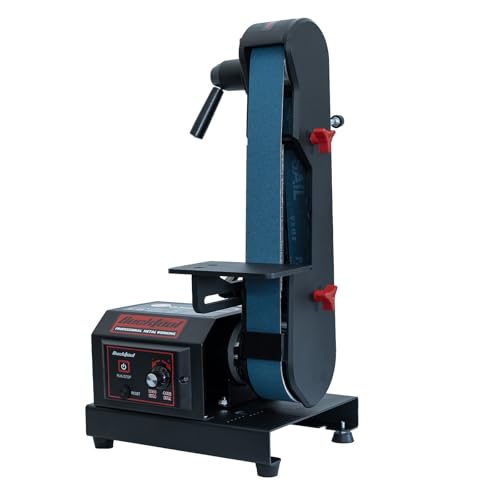
- 1240–4480 FPM variable speed range
- Quick-release belt changes
- Vertical, horizontal, or wall-mountable
Best For: Knife makers and DIY metalworkers who want flexible speed control in a compact grinder.
Best Combo Starter Pick
Bucktool 2 x 42 Belt Sander & 6in Grinder
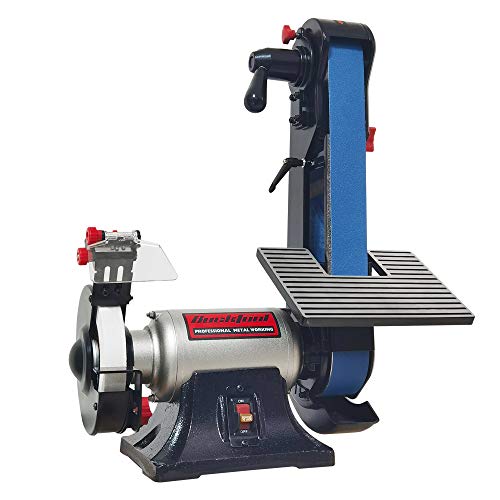
- 2" x 42" belt plus 6" grinder in one compact combo
- 0 to 90 degree belt tilt helps with knife-making angles
- Two worktables and quick-release belt changes add convenience
Best For: Beginners and hobbyists who want an affordable all-in-one grinder for knife making and shop work.
Best for Variable-Speed Control – 2×72 VFD Belt Grinder Sander
If you want one of the more flexible bench belt grinders for knife making, this 2×72-inch machine stands out for its VFD-controlled speed range, reverse function, and included grinding tools. The 1500W motor and steel frame make it a solid pick for builders who want reliable tracking and enough power for shaping, deburring, and finishing.
Best For: Knife makers and metalworkers who want adjustable speed control, reverse operation, and a sturdy 2×72 platform for multi-stage grinding.
Pros:
- VFD variable speed makes it easier to switch from aggressive stock removal to finer finishing
- Reverse function can help improve polishing and belt management
- Includes 3 grinding tool sets plus coarse-to-fine zirconia belts
- Heavy steel construction adds stability during grinding
Cons:
- 220V motor may require a transformer if your shop only has 110V power
- Bulky setup is better suited to a dedicated workshop than a small bench
For buyers comparing bench belt grinders for knife making, this model is appealing because it combines a standard 2×72 format with speed control and accessory variety. It is a practical choice if you want one grinder that can cover rough shaping through finishing without moving to a more expensive industrial setup.
Best Belt-and-Disc Combo – VEVOR 2IN1 2" Belt Grinder
If you want a compact, multi-purpose option in bench belt grinders for knife making, this VEVOR 2-in-1 setup gives you both belt and disc sanding in one sturdy machine. It’s a practical pick for shaping, cleanup, and finishing tasks where a small shop tool needs to do more than one job.
Best For: Knife makers who want a budget-friendly bench grinder with both belt and disc sanding, plus horizontal and vertical belt use.
Pros:
- 2-in-1 belt and disc design adds versatility for grinding and finishing.
- 90° belt holder supports both horizontal and vertical sanding setups.
- Heavy-duty steel build and rubberized base help reduce movement during use.
- LED work light improves visibility on detail work.
Cons:
- 250W motor is better for light to medium work than aggressive stock removal.
- Compact size may not suit larger knife-making projects.
For builders comparing bench belt grinders for knife making, this model stands out more for versatility than raw power. It’s a sensible choice if you want a stable, space-saving grinder for sharpening up workflow without moving into a larger industrial machine.
Best for Heavy-Duty Material Removal – Bucktool 2 x 48 Belt Sander
If you want bench belt grinders for knife making that can also handle stock removal and general metalwork, this Bucktool 2 x 48 belt sander is built around power and stability. The 1 HP induction motor, 4,500 FPM belt speed, and cast-iron worktable give it the kind of controlled, aggressive sanding many knife makers want in a shop grinder.
Best For: Knife makers and metalworkers who need a sturdy 2 x 48 machine for fast stock removal, flat grinding, and occasional curved sanding.
Pros:
- 1 HP induction motor delivers strong, consistent sanding for demanding shop use.
- 2 x 48 design supports both flat and curved sanding with quick switching.
- Cast-iron table and solid platen help improve stability, control, and finish quality.
- Quick belt change and tracking adjustment make setup and belt swaps simple.
Cons:
- Bulkier than compact benchtop grinders, so it needs dedicated space.
- More power than beginners may need for light-duty hobby work.
Overall, this is a strong pick for bench belt grinders for knife making if your priority is power, control, and the versatility to move from rough shaping to finishing without changing machines.
Best 2-in-1 Combo – 2×42 Belt & 6in Disc Sander
If you want one compact machine that can handle grinding, shaping, and finishing, this combo is a practical pick for bench belt grinders for knife making. The 2″x42″ belt setup gives you a familiar knife-shop format, while the 6″ disc sander adds extra control for refining edges and flats.
Best For: Knife makers and hobby metalworkers who want a versatile benchtop sander with both belt and disc capability.
Pros:
- 2″x42″ belt is well-suited to knife making and sharpening tasks
- Dual-position belt setup works vertically or horizontally
- 6″ disc sander with adjustable table adds precision for detail work
- Includes useful setup accessories like tool rest, miter gauge, and hex keys
Cons:
- 3.5A bench platform may feel limited for heavy production use
- Combo design takes more space than a single-purpose grinder
- Not as powerful as dedicated industrial knife-making grinders
For bench belt grinders for knife making, this model stands out as a flexible starter-to-intermediate option: the 2″x42″ belt format is useful for shaping blades, while the added disc sander helps with cleanup and accuracy. It’s a solid choice if you want more than a basic grinder without jumping to a much larger machine.
Best for Variable Speed Control – Bucktool 2×42 Variable Speed Belt Sander
If you want one of the more adaptable bench belt grinders for knife making, this Bucktool 2×42-inch sander stands out for its wide speed range, quick belt changes, and multiple mounting options. It’s a practical pick for grinding, sharpening, and light metalworking when you need better control than a fixed-speed machine.
Best For: Knife makers and DIY metalworkers who want variable speed, a compact footprint, and flexible bench or wall-mounted installation.
Pros:
- Variable speed control from 1240 to 4480 FPM for dialing in different materials and finishes
- Quick-release belt tension handle makes belt swaps fast and tool-free
- Supports vertical, horizontal, and wall-mounted setups for space-saving flexibility
- Adjustable leveling foot and rubber feet help reduce vibration and improve stability
Cons:
- 3.5A motor is better suited to hobbyist and light-duty shop use than heavy production work
- 2×42-inch belt size limits abrasive and accessory availability compared with larger grinders
- May need careful setup to get the best tracking and alignment for precision work
For bench belt grinders for knife making, this model is appealing because it balances control, versatility, and shop-friendly mounting options without taking up much room. If you need a compact grinder that can handle sharpening, profiling, and finishing tasks, it’s a solid all-around choice.
Best Combo Starter Pick – Bucktool 2 x 42 Belt Sander & 6in Grinder
If you want one compact machine that can handle grinding, sanding, and basic sharpening, this Bucktool combo is a practical fit for bench belt grinders for knife making. The 2″ x 42″ belt setup, 6″ grinder, and adjustable belt angle give you enough flexibility for rough profiling, edge shaping, and finishing work without taking up much bench space.
Best For: Beginners and hobbyists who want an affordable all-in-one belt grinder/grinder combo for knife making, woodworking, and general shop use.
Pros:
- 2″ x 42″ belt plus 6″ grinder covers multiple shop tasks in one unit
- Belt tilts from 0 to 90 degrees for more comfortable knife-making angles
- Quick-release tension and tracking make belt changes easier
- Two worktables help support both metal and wood projects
Cons:
- 1/2 HP motor is suitable for light to moderate work, not heavy production grinding
- The included setup is more entry-level than a dedicated knife-making grinder
- Bench footprint may still be sizable for very small workspaces
For shoppers comparing bench belt grinders for knife making, this Bucktool stands out as a versatile starter machine rather than a specialized pro-level grinder. It is a solid value if you want a combo tool that can sharpen, shape, and finish without committing to a larger dedicated setup.
Best for Small Shops – 1×30" 550W Knife Making Belt Grinder
If you want one of the more compact bench belt grinders for knife making, this 1″×30″ machine is built for light shop use, sharpening, and detail grinding. Its 550W brushless motor, adjustable worktables, and 90° rotation give it more flexibility than a basic mini sander, while still keeping the footprint manageable.
Best For: Hobby knife makers, DIY metalworkers, and small workshops that need a versatile grinder for sharpening, polishing, and light shaping.
Pros:
- 550W brushless motor with stepless speed control for more precise grinding
- 90° rotating body plus multiple worktable angles for flexible setup
- Compact footprint that suits benches with limited space
- Includes multiple belt grits support for shaping through finishing
Cons:
- 1″×30″ belt size is better for light to moderate work than heavy stock removal
- Not as fast or rugged as larger 2″×72″ knife-making grinders
- Some setup and accessory changes may be needed for different tasks
This is a practical choice if you want bench belt grinders for knife making without jumping to a full-size shop machine. It’s especially appealing for users who value compact size, lower noise, and enough adjustment to handle grinding, sharpening, and finishing tasks in one tool.
Best for Controlled Grinding – Bucktool 1×30 Low-Speed Grinder Combo
If you want one of the more controlled bench belt grinders for knife making, this Bucktool combo is built around a low-speed 1×30 belt and 6-inch grinder that favors precision over aggressive stock removal. The 1/3 HP motor and direct-drive layout should appeal to users who want steady performance for sharpening, small knife work, and detailed sanding in a compact footprint.
Best For: Hobbyists and small-shop makers who need a compact, low-speed grinder combo for knife making, sharpening, and light metal or wood work.
Pros:
- Low-speed 1790 RPM operation is better suited to controlled grinding and sharpening
- Direct-drive motor design helps deliver consistent power under load
- Quick belt release and one-button cover removal make belt changes easier
- Compact combo design adds 6-inch grinder versatility without taking much bench space
Cons:
- 1×30 belt size is more limited than larger knife-making grinders
- Best for light to moderate duty rather than heavy stock removal
Overall, this is a practical pick if you value control, compact size, and simple operation over raw power. For bench belt grinders for knife making, it makes the most sense for beginners, hobbyists, and anyone shaping smaller blades or doing detail work on a tight workspace.
How We Picked These Bench Belt Grinders for Knife Making
We focused on practical workshop features that matter most for knife makers: belt size, motor power, speed range, stability, platen quality, and how easily each machine supports common grinding tasks. We also favored models that can handle both rough shaping and finer finishing without feeling overly specialized.
Quick Comparison: Which Type Fits Your Shop?
If you want maximum versatility and serious stock removal, a 2×72 machine is the strongest choice. For smaller shops or tighter budgets, 2×42 and 1×30 models offer a more compact footprint and simpler setup. Combo machines can add value if you also want disc sanding or bench grinding in one station.
Key Buying Factors for Bench Belt Grinders for Knife Making
Belt Size and Availability
Larger belts generally run cooler, last longer, and give you more working surface for blade bevels and handle shaping. Common sizes like 2×72 and 2×42 are popular because belts and accessories are easier to source.
Speed Control
Variable speed is especially useful for Bench Belt Grinders for Knife Making because it helps you switch from aggressive removal to controlled finishing. Lower speeds can improve control on thin edges and reduce heat buildup during critical passes.
Motor Strength and Stability
A stronger motor helps maintain consistent belt speed under pressure, which matters when working hardened steel. A solid base and minimal vibration also improve accuracy, reduce fatigue, and make the grinder safer to use.
Versatility and Adjustability
Look for adjustable belt angles, quick belt changes, and accessory support if you plan to do more than one task. Features like horizontal operation, disc attachments, and platen adjustments can expand what one machine can do in a small shop.
Who Should Buy Which Bench Belt Grinders for Knife Making?
Choose a 2×72 grinder if you want the most room to grow and expect frequent knife shaping or heavy stock removal. Choose a 2×42 model if you want a practical middle ground for hobby or part-time knife making. Choose a 1×30 grinder if you need a budget-friendly, space-saving option for lighter work, sharpening, and small blade projects. Combo units are best for makers who want one machine to cover grinding, sanding, and sharpening without adding more tools to the bench.