If you need clean, repeatable results in brass, the machine matters as much as the toolpath. A good benchtop CNC machine for brass should be rigid, accurate, and stable enough to handle light metal cutting without chatter.
In this roundup, we focus on compact machines that make sense for home shops, prototyping, and small-batch production. The best choice depends on your work area, spindle power, control system, and how much brass you plan to cut.
Best 10 Benchtop CNC Machine for Brass Picks for 2026
Precision All-Metal Starter
LUNYEE 3020 Nova 800W Desktop CNC

- All-metal frame with 1204 ball screws and HG-15 guides
- 800W spindle with 6,000–30,000 RPM range
- Fully assembled and ready for desktop projects
Best For: Small brass projects where precision and easy setup matter
Safety-Focused Smart Desktop
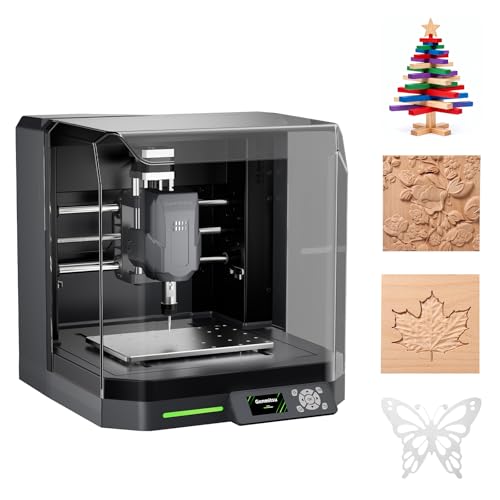
- Ready to use out of the box with no assembly
- Auto Z-probing and surface adjustment simplify setup
- Enclosure adds safety and helps reduce dust and noise
Best For: Beginners wanting an enclosed CNC for light brass work
Upgradeable Metal-Cutting Pick

- Rigid all-metal build with dual linear guides
- Claims ±0.01mm repeatability and ±0.05mm aluminum accuracy
- Upgradeable from 800W router to 1.5kW spindle
Best For: Light brass cutting with room to upgrade later
Large-Format Workhorse
FoxAlien XE-Ultra 8080 Desktop CNC

- Huge 33" x 33" x 4.72" workspace
- Ball screws and HG-15 rails on all axes
- 2.6 N.m closed-loop motors with step-loss protection
Best For: Large brass-compatible projects that need more workspace
Precision 4-Axis Desktop
Artsian 01 CNC Router for Brass and Metal

- 0.01mm repeat accuracy for fine detail
- 4-axis controller with CNC/laser switching
- 12,000rpm spindle handles brass and PCB
Best For: Precision brass engraving and compact professional desktop work
Stable Metal-Capable 4040
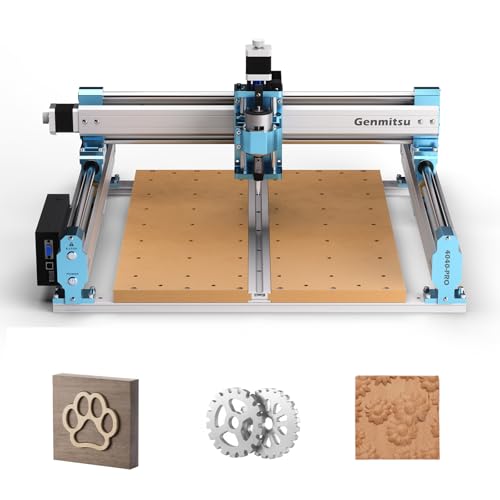
- Steel HSS frame adds rigidity and stability
- Supports 300W spindles with included mounts
- Fast 15-minute setup with safety controls
Best For: Light-duty brass engraving and upgrade-friendly desktop use
Longer-Bed Metal CNC
3060-Evo Max for Brass Cutting

- 300×600mm bed for larger parts
- 800W router with 8,000–24,000 RPM range
- Dual linear guides and upgradeable motion
Best For: Larger brass cutting jobs and upgrade-focused desktop use
Compact All-Metal Starter Router
FoxAlien Masuter Pro 3-Axis CNC Router Machine

- All-metal frame with linear rail Z-axis
- Quick 10–15 minute setup
- Spindle clamp options and upgrade paths
Best For: Beginners who want a compact desktop CNC with upgrade flexibility
Feature-Rich Desktop Workshop Machine
Twotrees TTC450 Pro CNC Router Machine

- Large 460 x 460 x 80 mm workspace
- Touch screen with upgrade ports
- Listed support for copper and stainless steel
Best For: Small workshops that want a larger, more expandable desktop CNC
Precision All-Metal Starter – LUNYEE 3020 Nova 800W Desktop CNC
If you want a benchtop CNC machine for brass that leans toward precision over brute size, the LUNYEE 3020 Nova is built around an all-metal frame, 1204 ball screws, and HG-15 linear guides on every axis. It pairs that motion system with an 800W spindle and a 6,000–30,000 RPM range, making it a practical pick for small metal work, including brass, as well as wood, acrylic, MDF, and plastics.
Best For: Buyers who want a fully assembled desktop CNC with precise motion and a metal-capable spindle for small brass projects.
Pros:
- All-metal frame with ball screws and linear guides for backlash-free motion
- 800W spindle with constant torque control and six speed settings
- Claims ±0.05mm accuracy and up to 5000mm/min travel speed
- Arrives fully assembled with wiring pre-connected
Cons:
- Best suited to desktop-scale jobs rather than large brass parts
- Z-axis module still needs to be installed before first use
Overall, this is a strong choice if your priority is a compact, ready-to-run machine with tighter motion hardware for detailed brass engraving and light cutting. It should appeal most to users who value setup simplicity and precision in a small footprint.
Safety-Focused Smart Desktop – Genmitsu Cubiko Enclosed CNC
The Genmitsu Cubiko is a compact benchtop CNC machine for brass users who want a beginner-friendly setup with more automation. It supports automatic tool height adjustment, surface measuring, and enclosed operation, while the notes also call out reliable metal cutting at 0.5mm depth per pass and ±0.1mm precision for detailed work.
Best For: Beginners or home users who want an enclosed desktop CNC with guided setup and light brass-capable cutting.
Pros:
- No assembly required; ready to use out of the box
- Auto Z-probing and smart surface adjustment reduce manual setup
- Enclosure helps contain dust and debris and adds safety
- Supports app control plus Fusion 360, Easel, Candle, and Carveco
Cons:
- Metal cutting is limited to 0.5mm depth per pass
- Lower 96W spindle power than larger metal-focused machines
For brass work, the Cubiko makes the most sense if you plan on shallow, careful cuts and want to reduce setup friction. Its enclosure and automatic height features make it especially appealing for a small workshop or desktop environment.
Upgradeable Metal-Cutting Pick – 3030-Evo Max Brass-Ready CNC
If you need a benchtop CNC machine for brass with a stronger metal-cutting focus, the 3030-Evo Max stands out for its rigid build, dual linear guides, and support for upgrade paths. It ships with an 800W trim router, claims repeatability accuracy of ±0.01mm, and is described as capable of handling metals such as aluminum and copper, which makes it a credible fit for light brass work as well.
Best For: Users who want a compact CNC with upgrade options and a more rigid setup for light metal cutting.
Pros:
- Rigid all-metal structure with dual linear guides on each axis
- Claims very tight repeatability accuracy of ±0.01mm
- 800W router with upgrade path to a 1.5kW spindle
- ESP32-based control with WiFi, macro buttons, and GRBL 1.3a support
Cons:
- Speed changes require manual dial control
- Metal cutting is still positioned as light-duty work
This model is a smart fit if you want to start with an accessible desktop machine and leave room to grow into heavier cutting later. Its combination of rigidity, precision claims, and upgradeability makes it especially attractive for small brass jobs where control matters.
Large-Format Workhorse – FoxAlien XE-Ultra 8080 Desktop CNC
The FoxAlien XE-Ultra 8080 is aimed at buyers who need a larger benchtop CNC machine for brass and other materials, rather than a small desktop engraver. Its 33″ x 33″ x 4.72″ workspace, ball screws, HG-15 linear rails, and 2.6 N.m closed-loop motors give it a heavy-duty profile for bigger projects, while the open spindle system lets you choose the cutting setup that fits your workflow.
Best For: Makers who need a large work area and a rigid platform for bigger brass-compatible projects.
Pros:
- Very large 33″ x 33″ x 4.72″ workspace
- Ball screws and HG-15 rails on all axes for smooth, accurate motion
- 2.6 N.m closed-loop motors with step-loss protection
- Open spindle ecosystem supports 65mm routers and FoxAlien spindle/module options
Cons:
- Spindle is not included in the package
- Large size and 40kg weight make it less compact than other desktop options
This is the pick for users who value working area and rigidity as much as cutting capability. For brass projects that need more room than a typical mini CNC offers, the XE-Ultra 8080 provides a sturdier and more scalable base.
Precision 4-Axis Desktop – Artsian 01 CNC Router for Brass and Metal
If you want a benchtop CNC machine for brass with strong precision and fast setup, the Artsian 01 is built for that kind of work. Its 0.01mm repeat positioning accuracy, 4-axis control, and 12,000rpm spindle make it suitable for detailed engraving, small metal stamping jobs, and mixed-material projects where consistency matters.
Best For: Makers and professionals who want a compact, high-precision desktop CNC for brass, aluminum, PCB, and other small-format jobs.
Pros:
- Up to 0.01mm repeat positioning accuracy and ±0.1mm machining precision
- 4-axis intelligent controller with XYZ + 4th axis linkage and software limits
- 12,000rpm spindle supports brass, aluminum, wood, plastic, PVC, POM, and PCB
- 95% pre-assembled, with handwheel control and CNC/laser mode switching
Cons:
- 300W spindle limits it to lighter-duty brass work rather than heavy metal removal
- Workspace is compact at 420×420mm, so it suits small parts best
- Premium feature set may be more than casual hobby users need
The Artsian 01 stands out as a precision-focused desktop option for users who value accuracy, flexibility, and quick setup. For brass engraving and other fine detail work, it offers a strong balance of rigidity, control, and versatility.
Stable Metal-Capable 4040 – Genmitsu 4040-PRO Desktop CNC
For buyers looking for a benchtop CNC machine for brass with a stronger frame and straightforward controls, the Genmitsu 4040-PRO is a practical pick. Its steel HSS structure, lead screw drive system, and support for 300W spindles make it a sensible desktop machine for small metal cutting and engraving tasks.
Best For: Hobbyists and small workshop users who want a stable, upgrade-friendly desktop CNC for light brass and metal work.
Pros:
- Steel HSS frame with dual 16mm linear tubes on each axis for added stability
- Lead screw motion drivers and dual Y-axis rails for controlled movement
- Compatible with original spindles and 300W spindles via included mounts
- Easy setup in about 15 minutes, with emergency stop and home buttons on the control box
Cons:
- Working area is relatively small at 15.7″ x 15.7″ x 3.1″
- Materials listed are aluminum and acrylic, so brass work should stay light-duty
- Some useful upgrades, like rotary and Wi-Fi modules, are sold separately
The 4040-PRO is a good fit if you want a stable desktop platform that can be expanded over time. It is best viewed as a light-duty brass-capable machine rather than a heavy metal cutter.
Longer-Bed Metal CNC – 3060-Evo Max for Brass Cutting
If you need a benchtop CNC machine for brass with more workspace and stronger motion hardware, the 3060-Evo Max is designed for that role. Its 300×600mm bed, all-metal axis design, dual linear guides, and included 800W trim router make it better suited to cutting and shaping brass than lighter desktop engravers.
Best For: Users who want a larger desktop CNC for brass, aluminum, and other metal projects with upgrade potential.
Pros:
- Larger 300×600mm processing area for bigger or multiple parts
- 800W trim router with 8000–24000 RPM speed range
- Dual linear guides and T8 lead screws on each axis for rigidity
- Upgradeable to a 1.5kW spindle kit, ball screws, and closed-loop motors
Cons:
- Speed adjustment on the included router is manual, not software-controlled
- Weighs 21kg, so it is less portable than smaller desktop units
- Best for metal cutting work, but still a bench machine rather than a full industrial CNC
For brass work that benefits from a larger bed and sturdier motion system, the 3060-Evo Max is the most capable option in this group. Its upgrade path also makes it a smart choice if you want more cutting capacity later.
Compact All-Metal Starter Router – FoxAlien Masuter Pro 3-Axis CNC Router Machine
If you want a benchtop CNC machine for brass only in the lightest sense of the term, the FoxAlien Masuter Pro is better viewed as a compact hobby router with an upgraded all-metal frame. Its aluminum structure, linear rail Z-axis, and optional spindle upgrades make it a practical pick for small, detailed work where stability and simple setup matter.
Best For: Hobbyists who want a compact, easy-to-set-up desktop CNC for small projects and future spindle upgrades.
Pros:
- All-metal frame and linear rail Z-axis improve stability for detailed engraving.
- Quick 10–15 minute assembly with pre-wired components and a step-by-step manual.
- Supports spindle clamp options and upgrade paths for more advanced use.
- Compact 15.75″ x 15.75″ workspace suits a benchtop setup.
Cons:
- Supplied notes focus on wood, acrylic, MDF, and nylon rather than brass-specific milling.
- 300W spindle class and beginner positioning may limit more demanding metal cutting.
- Smaller work area than larger desktop machines.
For makers who want an accessible desktop machine first and a potential metal-capable upgrade path later, this FoxAlien is a sensible entry point. It is strongest as a stable beginner router, not a dedicated brass production machine.
Feature-Rich Desktop Workshop Machine – Twotrees TTC450 Pro CNC Router Machine
The Twotrees TTC450 Pro is a larger, more feature-packed benchtop CNC machine for brass-related experimentation, especially if you need a stable desktop platform and open expansion options. Its all-metal construction, touch-screen control, and support for aluminum, copper, and stainless steel make it the most versatile option here for users who want to move beyond basic hobby routing.
Best For: Makers and small workshops that want a larger desktop CNC with touch control and expansion options.
Pros:
- Large 460 x 460 x 80 mm work area handles bigger projects and batch work.
- 3.5-inch capacitive touch screen and expansion ports improve usability and upgrade potential.
- High-precision Z-axis is rated up to 0.0025 mm positioning accuracy.
- Notes list compatibility with aluminum, copper, and stainless steel.
Cons:
- Still a desktop machine, so heavy brass cutting will depend on tooling, feeds, and setup.
- Heavier and less compact than smaller benchtop alternatives.
- Requires more space and a bit more commitment than an entry-level hobby router.
If you want the most capable desktop platform in this group, the TTC450 Pro stands out for size, control, and expansion. It is the strongest fit for users planning broader material use while keeping a benchtop footprint.
Budget Desktop Engraver for Small Parts – TTC3018 Pro CNC Router Machine
The TTC3018 Pro is a compact benchtop CNC machine for brass when your goal is small parts, test cuts, or light sheet processing rather than full-size milling. Its all-metal Z-axis, 0.1 mm claimed accuracy, and desktop-friendly footprint make it a practical low-space option for careful hobby work.
Best For: Users who need a small, budget-friendly desktop CNC for compact projects and light metal sheet work.
Pros:
- Compact 300 x 180 x 40 mm work area fits easily on a desk.
- All-metal Z-axis with backlash-eliminating lead screws improves stability.
- Notes say it supports aluminum/brass sheet processing.
- Includes cutters, ER11 collet, spindle motor, and assembly tools.
Cons:
- Small work area limits part size and production throughput.
- USB-wired operation only; no wireless or standalone file transfer.
- Best suited to light-duty use rather than more demanding brass machining.
For small brass pieces, nameplates, or learning the basics of CNC on a tight budget, the TTC3018 Pro offers the most space-efficient setup here. It is a compact starter machine, so expectations should stay aligned with its size and light-duty design.
How We Picked the Best Benchtop CNC Machine for Brass
We looked for benchtop CNC platforms with enough rigidity for brass, solid linear motion hardware, dependable control options, and practical work envelopes. For brass specifically, stiffness and precision matter more than raw speed. Machines with all-metal frames, linear rails, ball screws, and stronger stepper systems earned extra attention because they are better suited to maintaining accurate cuts in harder materials.
We also considered ease of setup, enclosure or chip control options, and whether the machine is better suited to engraving, light milling, or more general-purpose use. Not every model here is a dedicated metal-cutting beast, so matching the machine to your brass projects is key.
Quick Comparison
For smaller brass parts, compact machines with tighter footprints can be enough if you are mainly engraving, PCB milling, or doing shallow profiling. If you need more consistent brass cutting performance, look at models with a heavier frame, dual linear guides, and a stronger spindle or router. Larger work areas help with flexibility, but only if the machine stays rigid across the full travel range.
Key Buying Factors for a Benchtop CNC Machine for Brass
Rigidity and Frame Design
Brass cuts best on a machine that resists flex. Look for all-metal construction, reinforced gantries, and linear rails or dual-guide systems. Light frames can work for engraving, but they are more likely to chatter during deeper or faster brass cuts.
Motion System and Accuracy
Ball screws generally offer better precision and reduced backlash than basic belt-driven designs. For brass, that extra control can improve surface finish and repeatability, especially on small features and tight tolerances.
Spindle Power and Tooling
A stronger spindle or router helps maintain chip load in brass, but more power does not automatically mean better results. Pair the machine with sharp cutters, conservative feeds, and proper lubrication or chip clearing. A Benchtop CNC Machine for Brass should be able to deliver controlled cutting, not just maximum RPM.
Control, Probing, and Workflow
Features like auto Z-probing, touchscreens, and software support can make setup easier, especially for repeat jobs. If you are new to metal cutting, a more user-friendly controller can reduce mistakes and improve consistency.
Who Should Buy Which Benchtop CNC Machine for Brass?
If you are a beginner or mainly need a compact machine for light brass engraving and occasional shallow milling, choose a smaller, easier-to-use desktop model. If you want a more serious Benchtop CNC Machine for Brass with better rigidity and larger work capacity, prioritize all-metal frames, linear rails, and ball screws. Makers working across mixed materials may prefer a versatile machine that can handle wood and plastics too, while small shops focused on metal should lean toward the stiffest and most precise option in the group.
In short, the right choice depends on your brass workload: engraving and prototypes need convenience, while deeper cutting and repeat production demand rigidity and motion accuracy first.