The best card reader stands for classrooms keep vocabulary cards, phonics prompts, math facts, and visual reminders upright and easy to see. The right format can make small-group instruction, centers, and desk displays more organized.
This roundup compares compact tabletop pocket-chart stands, acrylic holders, and mini anchor-chart displays in several sizes and pack quantities, so you can match the stand to your lesson setup and classroom budget.
Best 10 Card Reader Stands for Classrooms Picks for 2026
Compact Card Organizer

- Double-sided pockets display cards and sentence strips
- Foldable, lightweight design for easy storage
- Reusable format suits desks and small-group teaching
Best For: Portable tabletop organization of small classroom cards
Clear Multi-Display Set

- Includes six transparent acrylic easel stands
- Supports cards, books, artwork, photos, and tablets
- Rounded corners and triangular support design
Best For: Multiple visible displays across classroom stations
Magnetic Teaching Display
Double-Sided Pocket Chart Stand

- Combines magnetic and pocket-chart surfaces
- Folds flat and includes handles for transport
- Includes six clear PVC film inserts
Best For: Portable lessons using magnetic tools and cards
Interactive Card Ring Set

- Six compact 4-by-6-inch card holders
- Includes 14 openable metal binding rings
- Useful for vocabulary and interactive card displays
Best For: Rearrangeable card sets for interactive instruction
Best Double-Sided Capacity
Essex Wares Tabletop Pocket Chart

- Three-pack supports multiple display areas
- Double-sided pockets increase capacity
- Folds flat for storage and transport
Best For: Teachers organizing cards and sentence strips across several classroom stations
Best Compact Card Display
Geelin Mini Anchor Chart Stand

- Designed for 4 x 6-inch cards
- Includes two 1-inch binder rings
- Lightweight and easy to place on a desk
Best For: Small-group instruction, tutoring, and compact study-card displays
Best Flip-Through Design
LUTTY Tabletop Pocket Chart Stand

- Three-page design offers up to eight sides
- Flip through materials without removing inserts
- Waterproof-coated Oxford fabric folds flat
Best For: Lessons using multiple flashcards, worksheets, or rotating classroom charts
Compact Flip-Card Display
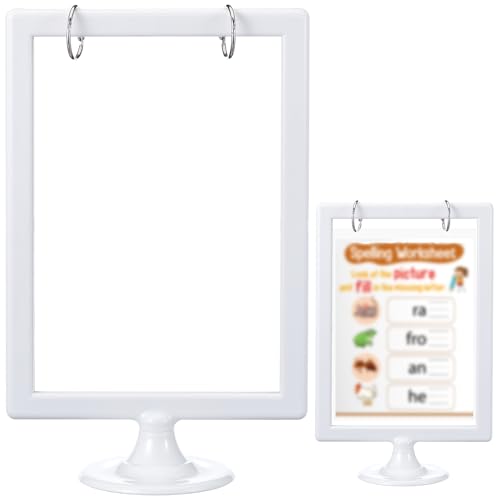
- Fits 6 x 8-inch cards or paper
- Includes two 1-inch loose-leaf rings
- Supports tabletop display and card flipping
Best For: Small educational card sets and desk-based lessons
Group Classroom Organizer

- Two stands with 40 dry-erase cards
- Displays materials on both sides
- Folds flat for convenient storage
Best For: Schedules, centers, and shared classroom activities
Small-Group Card Station
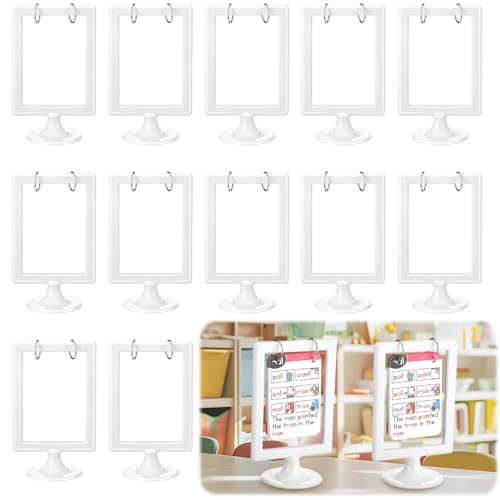
- Includes 12 holders and 24 rings
- Fits 4 x 6-inch cards or paper
- Useful for multiple stations or learners
Best For: Classroom centers and distributed card displays
Compact Card Organizer – Tabletop Pocket Chart Stand
For teachers comparing card reader stands for classrooms, this compact tabletop pocket chart offers an easy way to keep cards, sentence strips, and small charts visible and organized. Its lightweight, foldable design works well when desk space and storage room are limited.
Best For: Teachers who need a portable, double-sided card and sentence-strip display for desks or small-group instruction.
Pros:
- Double-sided design provides display pockets on both sides.
- Lightweight and foldable for convenient transport and storage.
- Reusable pockets make it simple to insert and replace cards or sentence strips.
- Plastic and polyester construction is suited to routine classroom use.
Cons:
- The 13-by-17-inch format is intended for smaller materials rather than large charts.
- It is a tabletop display, so it does not provide a freestanding floor stand.
This is a practical choice when the main priority is quick access to small teaching materials. The double-sided layout adds capacity without requiring a larger classroom display.
Clear Multi-Display Set – Acrylic Book and Card Stands
Among card reader stands for classrooms, this six-pack of clear acrylic easels is useful when several cards, books, pictures, or learning materials need to be displayed at once. The transparent construction keeps the supported item visible from the front.
Best For: Classrooms, libraries, and activity stations that need multiple compact stands for cards, books, photos, or tablets.
Pros:
- Six stands provide several display points for group activities or stations.
- Clear acrylic minimizes visual obstruction.
- Triangular structure is designed to support items of different weights.
- Smooth, rounded corners help reduce the risk of scratches during handling.
Cons:
- These are open easel stands, not pocket organizers for storing multiple cards.
- The clear finish may show classroom fingerprints or marks more readily.
This set is best when visibility and quantity matter more than enclosed storage. Its multipurpose format lets teachers reuse the stands for books, artwork, postcards, phones, and tablets.
Magnetic Teaching Display – Double-Sided Pocket Chart Stand
For teachers seeking card reader stands for classrooms with more than one teaching surface, this foldable tabletop chart combines a magnetic side with a pocket side. It can support small-group activities, demonstrations, and quick card-based lessons.
Best For: Teachers who want a portable easel with both a magnetic writing or tool surface and pockets for cards and text.
Pros:
- Double-sided design combines a magnetic surface with card pockets.
- Folds for storage and includes handles for transport.
- Includes six clear PVC film inserts for added flexibility.
- Suitable for classroom, school, and home learning environments.
Cons:
- Its 15-by-12.5-inch display is designed for tabletop use and smaller lessons.
- The package includes only two pockets for teaching tools.
This stand is a strong fit for instructors who alternate between magnetic materials and pocket-chart activities. Its self-standing format keeps demonstrations portable without requiring a wall-mounted display.
Interactive Card Ring Set – Mini Anchor Chart Holders
Teachers comparing card reader stands for classrooms may prefer this six-piece mini anchor chart set for organizing vocabulary, alphabet, number, or discussion cards. The included metal rings let instructors assemble, rearrange, and flip through card groups quickly.
Best For: Interactive lessons that use grouped word cards, vocabulary lists, visual prompts, or classification cards.
Pros:
- Includes six 4-by-6-inch holders and 14 metal binding rings.
- Openable rings make it easy to add, remove, and rearrange cards.
- Clear plastic keeps displayed words easy to read.
- Compact pieces are easy to stack and store between lessons.
Cons:
- The mini 4-by-6-inch size limits the amount of information on each card.
- Assembly is required before use, even though it can be completed without complicated tools.
This set stands out for teachers who want an interactive, flip-through card system rather than a stationary pocket chart. The rings support fast lesson changes and organized card handling across classroom activities.
Best Double-Sided Capacity – Essex Wares Tabletop Pocket Chart
For classrooms comparing card reader stands for classrooms, this three-pack tabletop pocket chart stand is a practical choice for organizing cards, sentence strips, and teaching charts. Its double-sided design adds display capacity while the foldable construction makes storage and transport easier.
Best For: Teachers who need multiple portable stands for small cards, sentence strips, or classroom charts.
Pros:
- Includes three tabletop chart stands.
- Double-sided design provides pockets on both sides.
- Foldable, lightweight, and portable for classroom or office use.
- Pockets allow cards and sentence strips to be inserted and replaced.
Cons:
- The 13 x 17-inch format is intended for smaller materials rather than large charts.
- At 3.72 pounds for the package, it may be less convenient than a single compact stand.
This option stands out when you want several reusable displays and extra two-sided capacity. It is especially useful for rotating cards or keeping multiple teaching materials visible at once.
Best Compact Card Display – Geelin Mini Anchor Chart Stand
Among card reader stands for classrooms, this mini anchor chart holder is the most compact option for 4 x 6-inch cards or paper. It includes two 1-inch loose-leaf rings, allowing educators to display cards from the top or attach punched materials for flipping.
Best For: Teachers, tutors, and parents who need a small desktop holder for study cards, posters, or lesson prompts.
Pros:
- Compact 4 x 6-inch format fits easily on a desk or learning surface.
- Includes two 1-inch loose-leaf rings.
- Supports top insertion or ring-mounted cards.
- Lightweight ABS plastic construction weighs 5.6 ounces.
Cons:
- Materials may need holes punched before using the loose-leaf rings.
- Its small size is limited to 4 x 6-inch cards or paper.
This holder is a good fit when desk space is limited and lessons rely on small, flip-through cards. Its ring system adds flexibility, but it requires some preparation for materials that are not already punched.
Best Flip-Through Design – LUTTY Tabletop Pocket Chart Stand
For classrooms seeking card reader stands for classrooms with more visual capacity, this LUTTY tabletop pocket chart uses a three-page flip design with up to eight sides for displaying materials. The 13 x 17-inch stand is sized for desks and learning centers, while its Oxford fabric is described as tear-resistant, waterproof-coated, and wipe-clean.
Best For: Educators who want to switch between flashcards, worksheets, vocabulary materials, or behavior charts without removing every insert.
Pros:
- Multi-page flip design supports smooth transitions between displayed materials.
- Up to eight sides provide substantial display space.
- Waterproof-coated Oxford fabric is designed for easy wipe-clean maintenance.
- Fold-flat structure supports storage and transport.
Cons:
- The larger multi-page design may take more setup space than a mini holder.
- At 2.42 pounds, it is heavier than the compact Geelin option.
This is the strongest choice for lessons that move through several sets of cards or worksheets. Its flip-through format keeps materials organized and visible while reducing the need to remove inserts between activities.
Compact Flip-Card Display – Mini Anchor Chart Stand
For teachers seeking card reader stands for classrooms, this compact 6 x 8-inch holder offers a simple way to display and flip study cards, posters, alphabets, numbers, or vocabulary pages. It includes two 1-inch loose-leaf rings and can sit on a desk or tabletop.
Best For: Teachers or parents who need a portable stand for small card sets and educational displays.
Pros:
- Includes the stand and two 1-inch rings.
- Supports cards or paper up to 6 x 8 inches.
- Allows cards to be inserted from the top or attached with rings.
- Compact ABS plastic design fits easily into learning spaces.
Cons:
- Cards or posters require punched holes for ring attachment.
- Designed for smaller materials rather than full-size charts.
This is a practical choice when portability and easy card flipping matter more than capacity. Its small footprint works well for desk-based lessons, individual practice, and compact classroom stations.
Group Classroom Organizer – Tabletop Pocket Chart Stand
Among card reader stands for classrooms, this two-pack tabletop pocket chart setup is suited to schedules, center activities, and visible card displays. Each self-supporting stand includes 20 double-sided dry-erase cards and folds flat when not in use.
Best For: Classrooms, small groups, or home learning areas that need larger, reusable tabletop displays.
Pros:
- Includes two stands and 40 double-sided dry-erase cards.
- Measures approximately 17 x 13 inches for easy viewing on a desk.
- Double-sided transparent pocket design displays cards on both sides.
- Folds flat for storage in a drawer or cupboard.
Cons:
- Larger and heavier than a compact individual card stand.
- Dry-erase cards are white and may require your own writing materials.
This set is the most flexible option for shared activities and schedule displays. Its two-sided format and included cards make it ready for repeated classroom use, while the fold-flat design helps simplify storage.
Small-Group Card Station – 12-Pack Mini Anchor Stands
For classrooms needing multiple card reader stands, this 12-pack provides a set of compact 4 x 6-inch holders for stations, partners, or individual learners. Each holder comes with two 1-inch rings, allowing prepared cards or posters to be displayed and flipped.
Best For: Teachers organizing multiple learning stations or distributing small card displays across a classroom.
Pros:
- Includes 12 holders and 24 loose-leaf rings.
- Fits compact 4 x 6-inch cards or paper.
- Useful for multiple students, centers, or learning areas.
- Cards can be inserted from the top or attached with rings.
Cons:
- Smaller card size limits the amount of visible content.
- Cards need punched holes when using the included rings.
- A 12-pack may be more than needed for a single learner.
This bulk option stands out for classroom organization: it gives teachers enough holders to create several simultaneous displays. Choose it when quantity and compact station setup are more important than large-format visibility.
How We Picked the Best Card Reader Stands for Classrooms
We focused on practical classroom display needs: stability on desks and tables, visibility from a useful teaching distance, card capacity, portability, and flexibility for different activities. The selection includes single stands for focused instruction, multipacks for learning stations, double-sided designs for more content, and larger pocket-chart formats for cards or visual schedules.
Because classroom materials vary, we also considered whether each style works best for flash cards, anchor charts, reading prompts, classroom labels, or rotating center activities. Product dimensions and included accessories should be checked carefully before purchase, especially when matching a stand to existing cards.
Quick Comparison
| Stand Type | Best For | Main Advantage |
|---|---|---|
| Mini anchor-chart stand | Individual desks and small groups | Compact, focused displays |
| Acrylic book stand | Books and upright visual materials | Simple, open display design |
| Tabletop pocket-chart stand | Flash cards and lesson sequences | Multiple cards in one organized display |
| Double-sided stand | Two-part lessons and centers | More viewing options in limited space |
| Multipack | Stations and shared classrooms | Several displays for one purchase |
Key Buying Factors for Card Reader Stands for Classrooms
Size and Viewing Distance
Choose a mini 4-by-6-inch or 6-by-8-inch holder for a student desk, partner work, or a small table. Larger 13-by-17-inch pocket-chart stands are better when several learners need to view cards together.
Capacity and Organization
Pocket charts are useful when you need to arrange a sequence, sort vocabulary, or rotate cards during instruction. Open acrylic holders are better for displaying one book, worksheet, or prominent card without adding pockets.
One-Sided Versus Double-Sided Use
A double-sided stand can show two lessons, support quick transitions, or reduce the need to turn a display around. Confirm that both sides remain readable in the intended position and that the base is stable when fully loaded.
Quantity and Classroom Value
Single stands suit targeted instruction, while three-, six-, or twelve-piece packs can equip centers, small groups, or multiple classrooms. Multipacks are most valuable when every station needs its own display rather than when storage space is limited.
Portability and Storage
For teachers who frequently rearrange rooms, prioritize lightweight designs that fold, stack, or store easily. Also consider whether the stand will be left out daily, since a wider footprint may offer better stability but consume more desk space.
Who Should Buy Which Card Reader Stands for Classrooms?
- Choose a mini anchor-chart stand for individual practice, student desks, and small-group prompts.
- Choose a larger pocket-chart stand for shared displays, flash-card sequences, and whole-table activities.
- Choose an acrylic book stand when you primarily need to prop up books or flat visual materials.
- Choose a double-sided model for quick lesson changes or two-view displays.
- Choose a multipack when outfitting learning centers, intervention groups, or several classrooms.
Before ordering, measure your cards and available tabletop space, then select the smallest stand that provides clear visibility and enough capacity for your routine.