Choosing among DTG printers for shirts can be confusing, especially when listings mix DTG, DTF, and hybrid features in one machine. The right choice depends on your print volume, garment types, and how much maintenance you can handle.
This roundup focuses on practical buying decisions: print quality, white ink handling, reliability, and ease of use for real-world shirt printing workflows.
Best 5 DTG Printers for Shirts Picks for 2026
Best for High-Resolution Printing

- 2800 × 1440 DPI for sharp text and vivid artwork
- White ink mixing engine with semi-automatic cleaning
- Includes sprayer, ink, pre-treatment liquid, and cleaning kit
Best For: Small shops and creators printing detailed full-color shirts and cotton apparel.
Best for Bulk Sheets
100-Pack DTF Transfer Film A4 Sheets

- 100-sheet pack supports batch printing and testing
- Compatible with many fabrics and compatible DTG/DTF setups
- No-weeding workflow helps speed up shirt production
Best For: Makers who need a large, versatile transfer-film supply for shirt printing.
Best for DTF/DTG Versatility
A3 Multifunction DTF & DTG Printer

- Dual DTF and DTG-style workflow support
- A3 flatbed size for shirts and transfer film
- White ink stirring helps reduce clogging risk
Best For: Small shops and creators who need one machine for shirts, transfers, and mixed apparel jobs.
Best for Small Shops
R1390 A3 DTF Printer with Oven
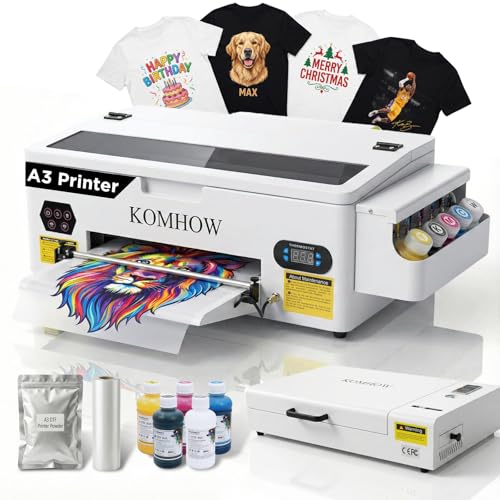
- White ink circulation and self-cleaning simplify upkeep.
- Starter kit includes printer, oven, inks, film, and powder.
- Good fit for small-batch shirt transfers with detailed graphics.
Best For: Small apparel shops and creators who want a ready-to-print DTF starter setup.
Best for Versatile Fabric Printing

- Handles both DTG and DTF workflows
- High-resolution Epson L805-based printhead
- White ink circulation and auto cleaning help reduce clogs
Best For: Small shops that need one printer for cotton shirts, dark garments, and mixed-fabric apparel orders.
Best for High-Resolution Printing – DXZ A3 DTG Printer
If you want one of the more capable DTG printers for shirts in a compact A3 format, the DXZ model focuses on detail, color richness, and everyday usability. Its 2800 × 1440 DPI output, white ink mixing engine, and semi-automatic cleaning system make it a practical fit for custom apparel shops that need sharp results without a steep learning curve.
Best For: Small shops and creators printing detailed full-color shirts, hoodies, and cotton apparel with a focus on crisp image quality and soft-hand results.
Pros:
- High-resolution 2800 × 1440 DPI output for fine text and vibrant graphics
- White ink mixing engine and semi-automatic cleaning help streamline maintenance
- Includes sprayer, print holder, DTG ink, pre-treatment liquid, and cleaning kit
- Water-based inks are non-toxic and suitable for sensitive-skin apparel use
Cons:
- Heavy 149-pound machine that needs dedicated space
- Better suited to cotton-based garments than broad fabric experimentation
- More of a production tool than a casual entry-level desktop printer
Overall, the DXZ A3 is a strong pick if your priority is sharp, professional-looking output from DTG printers for shirts and you want a package that includes the basics to get started. It makes the most sense for buyers who value print quality and workflow support over portability.
Best for Bulk Sheets – 100-Pack DTF Transfer Film A4 Sheets
If you need transfer film for DTG printers for shirts, this 100-sheet A4 pack is a practical option for fast, no-weeding production. It’s made for direct printing with compatible inkjet DTG/DTF setups and works across a wide range of fabrics when used with the right inks and process.
Best For: Makers who want a large, all-fabric transfer-film supply for testing, batch runs, or everyday shirt printing.
Pros:
- 100-sheet pack is useful for frequent printing and small-batch production
- Works on many fabric types, including cotton, polyester, blends, and more
- Double-sided coating and cold/hot peel support give more flexibility
- No weeding required, which saves time on detailed designs
Cons:
- Dark garments need a printer with white ink for vivid results
- Performance depends heavily on printer, ink, and heat-press technique
- It’s a transfer film, not a finished printer solution by itself
For buyers comparing DTG printers for shirts, this is more of a consumable-first pick than a machine recommendation, but it stands out if you want versatile sheets and a straightforward workflow. If your setup is compatible, it can be a solid, lower-fuss way to keep shirt production moving.
Best for DTF/DTG Versatility – A3 Multifunction DTF & DTG Printer
If you want one machine that can handle both direct-to-garment work and DTF transfers, this A3 flatbed option is worth a look. Among DTG printers for shirts, it stands out for its multifunction setup, compact footprint, and support for a wider range of apparel and hard-to-print items.
Best For: Small shops or creators who want a single printer for shirts, hoodies, hats, shoes, and transfer-film workflows.
Pros:
- Handles both DTF and DTG-style printing for more flexible production.
- A3 suction platform supports transfer film and heat-transfer workflows.
- White ink stirring and automatic timing can help reduce clogging.
- Compact machine size is easier to fit into a small workspace.
Cons:
- Not as straightforward as a single-purpose shirt printer for beginners.
- May require regular maintenance to keep ink systems running smoothly.
- Customer review count is still relatively modest.
For buyers comparing DTG printers for shirts, this machine makes the most sense when you want versatility over simplicity. It is better suited to mixed apparel and transfer jobs than to a plug-and-play desktop printer.
Best for Small Shops – R1390 A3 DTF Printer with Oven
If you’re comparing DTG printers for shirts but want an easier entry point for small-batch apparel production, this A3 DTF setup is built for that kind of workflow. It targets creators who need colorful, detailed transfers without a steep learning curve, and it comes as a starter package with the core supplies included.
Best For: Small apparel shops, brand owners, and independent creators that need a ready-to-run DTF setup for multi-color shirt transfers.
Pros:
- White ink circulation, mixing, and self-cleaning help reduce maintenance hassles.
- Includes the printer, curing oven, inks, film, powder, and essential tools.
- Produces sharp details and vibrant colors for logos and complex graphics.
- Guided setup and ongoing technical support can help first-time users get started.
Cons:
- RIP software compatibility is Windows-only.
- Requires routine maintenance to keep performance consistent.
- DTF is a different workflow than direct-to-garment printing, so expectations should match the process.
For buyers focused on practical production rather than a pure DTG machine, this kit offers a useful all-in-one path into shirt decorating. Among DTG printers for shirts alternatives, it stands out for small business readiness, support, and the fact that you can start printing with minimal extra purchases.
Best for Versatile Fabric Printing – A3 L805 DTG/DTF Printer
If you want one machine that can cover more than one garment-printing workflow, this A3 DTG/DTF printer is worth a look. It’s designed for creators comparing DTG printers for shirts who also need transfer-print flexibility for mixed fabrics, darker garments, or seasonal production runs.
Best For: Small shops or home businesses that need both direct-to-garment and DTF options in one printer, especially for cotton shirts and multi-fabric apparel orders.
Pros:
- Supports both DTG and DTF printing for greater fabric and color flexibility
- High-resolution Epson L805-based printhead helps produce sharp, vivid results
- White ink circulation and semi-automatic cleaning help reduce clogging issues
- Vacuum platform keeps films and materials aligned during printing
Cons:
- DTG use is mainly suited to cotton, while other fabrics rely on DTF workflow
- White ink maintenance and setup may be more involved than simpler printers
- Inks are not included, so startup costs can be higher than expected
This is a practical hybrid option for buyers who want flexibility more than a pure DTG-only setup. For shops comparing DTG printers for shirts, its ability to switch between direct printing and film transfer makes it appealing when orders vary by fabric and garment color.
How We Picked the Best DTG Printers for Shirts
We looked for printers and printer systems that fit small apparel businesses, home-based sellers, and DIY users who want direct-to-garment or closely related shirt-printing capability. Priority went to print quality, white ink support, cleaning and circulation systems, and overall versatility for cotton apparel.
Because many DTG Printers for Shirts are sold alongside DTF-capable models, we also considered whether each option is better for direct printing, transfers, or mixed workflows.
Quick Comparison
In simple terms: dedicated DTG-style machines are best when you want to print directly onto shirts, while hybrid DTF/DTG printers offer more flexibility across fabrics and product types. If your goal is mostly T-shirts and hoodies, a model with strong white ink management and stable flatbed printing usually makes the most sense.
Key Buying Factors for DTG Printers for Shirts
Print Quality and Resolution
Look for consistent droplet control and enough resolution for sharp text, clean gradients, and detailed graphics. Higher resolution can help, but real output quality depends just as much on ink delivery and calibration.
White Ink Handling
White ink is essential for dark garments. A printer with white ink mixing, circulation, or anti-clog features can save time and reduce wasted prints.
Maintenance Requirements
DTG systems need regular upkeep. Semi-automatic cleaning, capping station access, and reliable ink circulation matter if you want fewer interruptions and less clogging.
Garment and Product Flexibility
If you plan to print only shirts, a focused DTG setup may be enough. If you also want hoodies, hats, shoes, or other items, a multifunction flatbed or hybrid machine can give you more room to grow.
Workflow and Operating Costs
Consider pretreatment needs, ink usage, film or transfer material requirements, and how much manual work each print will need. Lower upfront cost is not always the lowest long-term cost.
Who Should Buy Which DTG Printers for Shirts?
If you are a beginner or side hustler making custom tees in small batches, choose the most straightforward printer with dependable white ink support and manageable maintenance. If you sell across multiple garment types, a hybrid DTF and DTG option may be the better investment.
For shops focused on speed and broader versatility, multifunction flatbed systems can be more practical than a single-purpose printer. If you want the best fit among DTG Printers for Shirts, match the machine to your daily production volume, garment mix, and comfort with upkeep.