Choosing an entry level CNC plasma cutter is really about balancing cut quality, CNC compatibility, and ease of use. The right machine should be simple to set up, dependable on common shop power, and accurate enough to support repeatable results.
Below, we focus on beginner-friendly models that offer practical features like pilot arc or blowback starts, dual-voltage options, and CNC-ready controls without pushing you into a full industrial price bracket.
Best 10 Entry Level CNC Plasma Cutter Picks for 2026
Entry-Level Pick
Bestarc Pilot Arc Plasma Cutter 50A Dual Voltage

- Dual 110/220V input for flexible use
- Pilot arc starts on rusted or painted metal
- LED display shows pressure, voltage, current
Best For: Beginners and DIY users wanting an easy-to-use dual-voltage cutter
CNC-Compatible Choice
PowerPlasma 52i 50Amp CNC-Compatible Plasma Cutter
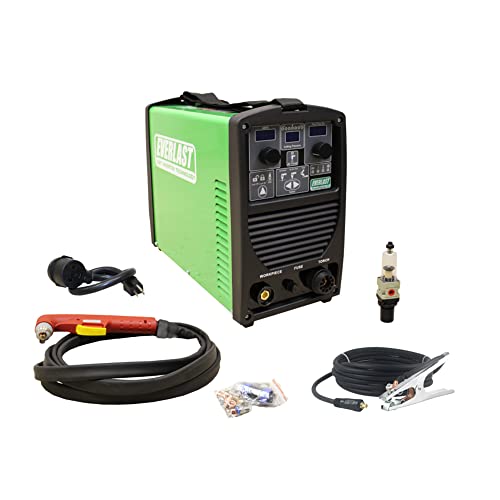
- CNC compatible with continuous pilot arc mode
- Dual 120/240V adds portability
- Digital displays for amps, air pressure, post flow
Best For: CNC users who want a portable, feature-rich 50A cutter
High-Cut CNC Option
Lotos Supreme LTP7500CNC Digital CNC Plasma Cutter

- Pre-installed CNC interface with THC output
- Non-HF start avoids CNC interference
- Up to 1" ideal clean cut and 1.5" severance
Best For: CNC table operators who want built-in interface support and strong cutting capacity
Budget CNC Table Match
Eastwood Versa-Cut 40 CNC Plasma Cutter with Machine Torch
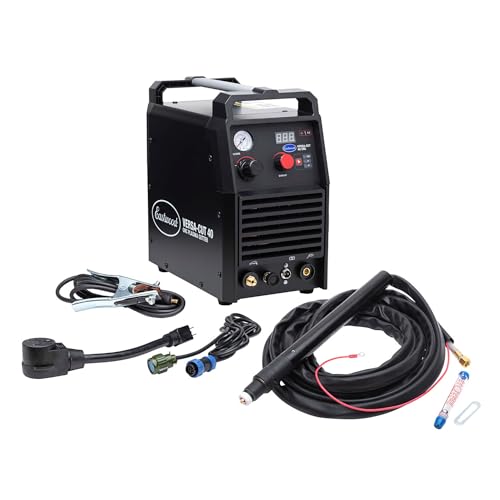
- Machine torch is made for CNC table use
- Dual 120V/240V input for flexibility
- 40A output handles up to 3/8" material
Best For: Beginners building a CNC table setup for light fabrication and sheet cutting
Versatile 4-in-1 Starter Pick
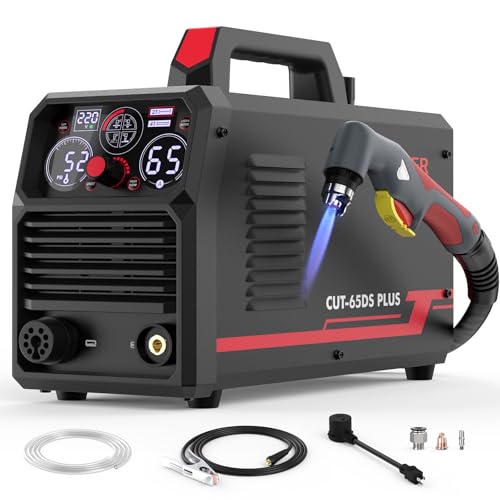
- 4-in-1 cutting, gouging, and marking
- Non-HF blowback start reduces interference
- Digital display shows key operating data
Best For: DIY users and beginners who want one machine for multiple metalworking tasks
CNC-Ready Heavy-Duty Option

- CNC interface with THC and ARC OK output
- Up to 1 inch clean cut on thicker plate
- Drag-cut ready with non-HF blowback start
Best For: Beginner CNC table owners who want a ready-to-connect 80A cutter
High-Power Beginner CNC Choice

- 85A output with CNC-compatible ports
- Dual-voltage 110V/220V operation
- PT/2T/4T controls with LED display
Best For: Beginners who want strong cutting power and future CNC compatibility
Budget CNC Ready Entry Level

- CNC-ready with non-HF pilot arc
- Dual-voltage 110V/220V design
- Adjustable pilot arc and post-flow
Best For: Beginners wanting CNC-ready cutting with low interference
Most CNC-Focused Pick

- Straight torch built for CNC tables
- 2-pin and 5-pin CNC connections
- Non-HF blowback pilot arc
Best For: Beginners who want the easiest CNC table integration
Feature-Rich Value Choice

- CNC enabled with non-HF pilot arc
- 4.05" display for PSI, voltage, current
- ECO mode supports continuous cutting
Best For: New users who want CNC compatibility and clear monitoring
Entry-Level Pick – Bestarc Pilot Arc Plasma Cutter 50A Dual Voltage
If you’re shopping for an entry level CNC plasma cutter or a first manual plasma cutter for shop use, the Bestarc 50A keeps the setup approachable while still offering useful cutting power. Its dual-voltage design, pilot arc start, and front-panel air/readout features make it a practical choice for beginners who want more capability without a complicated machine.
Best For: Beginners, DIY users, and small shops that want an easy-to-read dual-voltage cutter with pilot arc convenience.
Pros:
- Dual voltage 110/220V adds flexibility for home, garage, or shop use.
- Pilot arc start helps with rusted, painted, or dirty metal surfaces.
- LED screen shows air pressure, voltage, current, and error codes.
- Built-in regulator and air sensor make setup more straightforward.
Cons:
- Air compressor is required and sold separately.
- Air pressure is manually adjusted, not automatically controlled.
- Maximum cutting performance depends on proper amperage, pressure, and clean compressed air.
This is a strong entry point if you want a user-friendly plasma cutter with helpful status feedback and no-touch arc starting. It is aimed more at accessible DIY and small-shop cutting than at advanced automated CNC workflows.
CNC-Compatible Choice – PowerPlasma 52i 50Amp CNC-Compatible Plasma Cutter
The PowerPlasma 52i is a strong option if you want an entry level CNC plasma cutter with CNC compatibility and a more professional feature set. It pairs dual-voltage operation with large digital displays and a CNC-ready design, making it a sensible bridge between a portable shop cutter and a machine intended for automated work.
Best For: Users who want CNC compatibility, portable dual-voltage operation, and a cutter with extra durability features.
Pros:
- CNC compatible design with a pilot arc tip saver and continuous pilot arc mode.
- Dual voltage 120/240V improves portability and shop flexibility.
- Large digital displays show amps, air pressure, and post flow.
- Adjustable post-flow timer helps extend consumable and torch life.
Cons:
- 220V operation is the primary setup reference in the listing details.
- Requires adequate clean power when used with a generator.
- More of a specialty CNC-ready machine than a general beginner tool.
For buyers focused on CNC work, this model stands out for practical controller-friendly features and clear operating feedback. It leans toward serious shop use rather than the simplest plug-and-play beginner experience.
High-Cut CNC Option – Lotos Supreme LTP7500CNC Digital CNC Plasma Cutter
If you need an entry level CNC plasma cutter that is built specifically for CNC workflows, the Lotos Supreme LTP7500CNC is the most obviously CNC-ready option here. It includes a pre-installed CNC interface with THC signal output and a non-HF blowback start, which is useful when you want clean integration without high-frequency interference on a CNC computer.
Best For: CNC table users who want a pre-installed interface, THC signal support, and a higher-capacity cutting setup.
Pros:
- Pre-installed CNC interface with THC signal output.
- Non-HF blowback start helps avoid interference with CNC electronics.
- Rated for up to 1″ ideal clean cut and 1 1/2″ maximum severance.
- Setup is designed to be quick with a built-in filter regulator and 1/4″ NPT plug.
Cons:
- Requires 220~250V AC and a 50A breaker setup.
- Air compressor requirements are more demanding than smaller hobby units.
- Heavier than the most portable options at about 40.8 pounds.
This is the clearest pick for a CNC-focused buyer who wants features aimed at machine cutting rather than general hand-held use. It offers strong capability and better CNC integration, but it also expects a more serious power and air setup.
Budget CNC Table Match – Eastwood Versa-Cut 40 CNC Plasma Cutter with Machine Torch
The Eastwood Versa-Cut 40 is a practical entry level CNC plasma cutter for buyers who want a machine torch and a straightforward path to CNC table use. With dual-voltage input, a dedicated machine torch, and a 40-amp output, it fits small fabrication tasks and controlled sheet cutting more naturally than general-purpose hand cutting.
Best For: CNC table users and sheet-fabrication beginners who want a compact dual-voltage cutter with a machine torch.
Pros:
- Dedicated machine torch is designed for CNC table integration.
- Dual voltage 120V/240V supports different shop setups.
- 40-amp output is suitable for materials up to 3/8″ thick.
- Includes a 20′ torch cable and 10′ ground cable for setup flexibility.
Cons:
- Best CNC performance is listed at 1/4″ when used on a CNC table.
- CNC plasma cutting table is sold separately.
- More focused on sheet fabrication than heavy industrial cutting.
Among CNC-oriented options, this one is easy to understand and well matched to a starter table setup. It is best viewed as a precision-focused machine torch cutter for modest fabrication work rather than a high-output production unit.
Versatile 4-in-1 Starter Pick – YESWELDER CUT-65DS PLUS
If you want an entry level CNC plasma cutter that can do more than simple straight cuts, the YESWELDER CUT-65DS PLUS brings a lot of flexibility to the table. Its non-HF blowback start, non-touch pilot arc, and 4-in-1 functions make it a practical option for hobby metalwork, repair work, and light fabrication where cleaner starts and easier handling matter.
Best For: DIY users, repair shops, and beginner fabricators who want multi-function cutting capability in a compact machine.
Pros:
- 4-in-1 design handles plate cutting, grid cutting, gouging, and marking.
- Non-HF blowback start helps reduce interference around other equipment.
- Non-touch pilot arc improves cutting on rusty, painted, or rough surfaces.
- Digital display shows air pressure, voltage, and current for easier monitoring.
Cons:
- 220V performance is stronger than 110V for cutting thickness.
- Best cut capacity still depends on proper air supply and setup.
- May be more machine than a user needs if only basic cutting is planned.
This model stands out for beginners who want room to grow into different metalworking tasks. It balances useful cutting power with features that make setup and day-to-day use more approachable.
CNC-Ready Heavy-Duty Option – LOTOS LTP8050 CNC
The LOTOS LTP8050 CNC is a strong fit if you are shopping for an entry level CNC plasma cutter that can connect cleanly to a table or controller. It offers CNC interface support with THC and ARC OK output, a non-HF blowback start, and drag-cut capability, making it useful for thicker fabrication jobs and users who want a more automation-friendly setup.
Best For: Beginner CNC table owners and small shops that need a ready-to-connect 80A plasma cutter.
Pros:
- CNC-ready interface includes Torch Height Control and ARC OK signals.
- Non-HF blowback start is designed to reduce EMI near CNC electronics.
- Up to 1″ clean cut and 1.5″ severance for thicker material.
- Drag-cut ready with smart LED controls for pilot-arc time and post-flow.
Cons:
- 220V input only, so it is not as plug-and-play as dual-voltage units.
- Drag consumables are sold separately.
- Requires a suitable compressor setup and dry air supply.
For users prioritizing CNC integration, this model is the most straightforward fit in the group. It combines thicker-cutting capability with the interface features needed to move from manual work toward table-based cutting.
High-Power Beginner CNC Choice – SILATU STC850P MAX
The SILATU STC850P MAX is aimed at buyers who want an entry level CNC plasma cutter with substantial power and useful control options. Its non-HF blowback pilot arc, CNC-compatible ports, dual-voltage input, and large LED display make it appealing for beginners who want to start manual and still have CNC integration available later.
Best For: Beginners and DIY users who want high cutting power plus CNC compatibility in one machine.
Pros:
- 85A output with up to 1″ clean cut and 7/5″ max cut.
- Non-HF blowback pilot arc supports CNC use with less interference risk.
- 110V/220V dual-voltage input adds flexibility for different shops.
- PT/2T/4T controls and post-flow adjustment help tailor operation.
Cons:
- CNC straight torch is optional, not included as standard.
- Air pressure must be set manually with the regulator.
- Higher-power operation demands the right breaker and air setup.
This is the most power-focused option here, but it also expects the user to manage setup details carefully. That makes it a solid match for beginners who want headroom and are comfortable with a little more configuration.
Budget CNC Ready Entry Level – HITBOX 65A Non-HF Pilot Arc
If you’re looking for an entry level CNC plasma cutter that can handle both shop work and table integration, the HITBOX HBC65 is a practical dual-voltage option. It uses a non-HF, non-touch pilot arc for cleaner starts on rusty or painted metal, and the CNC-ready design makes it easier to pair with a cutting table.
Best For: Beginners and small shops that want CNC-ready cutting with low electronic interference.
Pros:
- CNC-ready with non-HF, non-touch pilot arc for better compatibility around electronics.
- Dual-voltage 110V/220V operation with up to 1″ max cut on 220V.
- Adjustable pilot arc and post-flow help extend consumable life.
- Large digital display plus 2T/4T modes add straightforward control.
Cons:
- Requires an external air compressor rated at least 80 PSI and 6.36 CFM.
- Clean-cut thickness is much lower on 110V than on 220V.
Overall, this model stands out as a compact, CNC-ready cutter with useful protection features and easy operation, but it is best matched to users who already have a suitable air supply and understand its voltage-dependent cut capacity.
Most CNC-Focused Pick – Bestarc 80A CNC Torch
The Bestarc 80A is a strong entry level CNC plasma cutter if your priority is table use and repeatable cuts. It comes with a straight CNC torch, 2-pin arc voltage output, and a 5-pin CNC interface, so it is built to integrate with common CNC systems while keeping non-HF blowback start interference low.
Best For: Beginners who want a CNC-ready machine with the most direct setup for a cutting table.
Pros:
- Supplied with a straight torch designed for CNC table use.
- 2-pin arc voltage output and 5-pin CNC interface support integration with many systems.
- Non-HF blowback pilot arc helps reduce interference with controllers and electronics.
- Air sensor, LED display, and 2T/4T/PA/PT controls simplify day-to-day use.
Cons:
- Air compressor is required and sold separately.
- Larger and heavier than some compact entry-level cutters.
For buyers focused on CNC work first and manual cutting second, this model is especially compelling because the torch and interface hardware are already aimed at automated use. The tradeoff is size, but the setup benefits may be worth it for a beginner building around a cutting table.
Feature-Rich Value Choice – ANDELI 65A CNC Enabled
The ANDELI Cut-65DS is an entry level CNC plasma cutter that leans into convenience and monitoring. It combines non-HF pilot arc operation, CNC enabled compatibility, and a large 4.05″ LED display, making it a solid option if you want more feedback and automation support in one machine.
Best For: New users who want CNC compatibility plus extra display and efficiency features.
Pros:
- CNC enabled with non-HF operation to reduce interference near controllers and electronics.
- Large 4.05″ LED display shows PSI, voltage, and current in separate zones.
- ECO mode is designed for strong continuous output at reduced power.
- Dual-voltage 110V/220V support with 2T/4T and intelligent post-blow.
Cons:
- Uses an external air supply and depends on proper air setup for best results.
- Voltage-based cut capacity varies significantly between 110V and 220V.
This model offers a nice blend of beginner-friendly controls and CNC-ready features, especially if you value a clearer display and built-in monitoring. It is a practical pick for users who want a little more visibility and refinement without moving into a more complex industrial setup.
How We Picked These Entry Level CNC Plasma Cutter Options
We prioritized machines that make sense for first-time CNC plasma users: straightforward setup, stable arc starting, clear digital controls, and compatibility with common CNC workflows. We also looked for useful details such as dual-voltage input, non-touch starting, air-sensor protection, and torch height control support where available.
Quick Comparison: What Matters Most
For a starter CNC plasma setup, the most important differences usually come down to amperage, duty cycle, cut thickness, and how well the cutter integrates with your table or controller. Lower-amperage models can be easier to power and more affordable, while higher-amperage units may offer more cutting headroom for thicker steel. CNC-ready outputs and torch height control support are especially valuable if you want cleaner, more consistent cuts.
Key Buying Factors for an Entry Level CNC Plasma Cutter
CNC Compatibility
Not every plasma cutter labeled CNC-ready is equally easy to integrate. Look for clear CNC interface support, arc OK output, and torch height control compatibility if your machine will be mounted on a table.
Power and Voltage
Dual-voltage units are often the most flexible choice for a beginner. A 110V option can be convenient in a garage or small shop, while 220V typically gives you more consistent performance and better cutting capacity.
Arc Starting Type
Non-high-frequency pilot arc and blowback-start designs are popular because they help reduce interference and improve reliability. If you plan to connect the cutter to CNC electronics, this can be a major advantage.
Cut Quality and Thickness
Pay attention to clean-cut ratings rather than just maximum severance numbers. An Entry Level CNC Plasma Cutter should deliver predictable results on the thickness you plan to cut most often, not only occasional maximum passes.
Ease of Use and Protection Features
Large LED displays, air-sensor warnings, post-flow, and simple 2T/4T controls can make the machine easier to live with, especially if you are still learning settings and consumable management.
Who Should Buy Which Entry Level CNC Plasma Cutter?
If you are new to CNC plasma cutting and want the easiest path into the hobby or a small shop workflow, choose a dual-voltage, non-touch model with clear controls and basic CNC readiness. If your focus is thicker material or heavier shop use, step up to a higher-amperage machine with stronger CNC integration and torch height control support. For the most budget-conscious buyers, a lower-amperage plasma cutter with reliable arc start and clean-cut performance is usually the best place to begin.