Choosing the right exposure setup can make or break your screen printing results. The best options deliver even UV output, reliable timing, and enough coverage for your emulsion and frame size.
In this roundup, we focus on practical choices for beginners, hobby shops, and growing print setups that want cleaner detail with less trial and error.
Best 9 Exposure Unit Bulbs for Screen Printing Picks for 2026
Best for Easy Setup
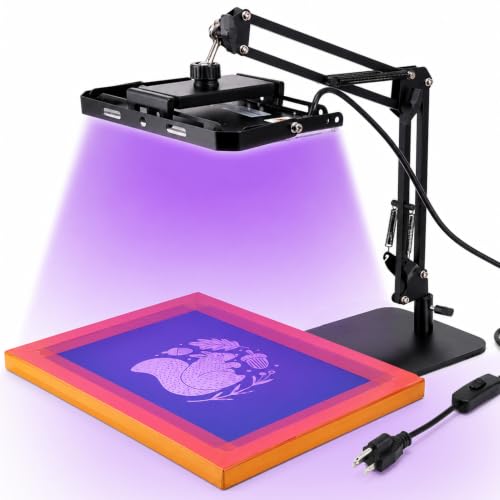
- 395nm UV light helps speed up emulsion exposure
- Adjustable stand and angle for flexible positioning
- Stable base and compact footprint for tabletop use
Best For: Beginners and hobbyists who want a simple, adjustable screen printing exposure light.
Best LED Upgrade
Speedball 30W UV Exposure Lamp

- 395-400nm UV-A output tuned for Diazo emulsion
- 180° swivel mount for flexible hands-free positioning
- Long-life LED design reduces bulb replacements
Best For: Screen printers who want a compact, efficient UV exposure lamp for Diazo emulsion.
Best for Dual-Size Setups
Caydo 2-Pack 50W UV Exposure Light Kit

- Two-light design handles small or larger screen frames
- 395nm UV LEDs support faster emulsion exposure
- Includes stands, hooks, and cable ties for setup stability
Best For: Beginners or small shops needing a flexible UV exposure kit for screen printing and cyanotypes.
Best for Timed Exposures
60W 395nm Screen Printing Exposure Unit

- Auto-memory countdown timer for repeatable exposures
- Even 395nm UV LED coverage in an 18 x 13 inch area
- Includes tempered glass, sponge pad, and blackout cloth
Best For: Small studios and hobbyists needing consistent, timer-based screen exposure.
Best for Fast 2-Lamp Coverage
Ecoofor 2-Pc 50W LED UV Exposure Kit

- Dual 50W UV lamps for wider, more even exposure
- Includes stands, hooks, and manual for easy setup
- Good for screen printing, photo emulsion, and cyanotypes
Best For: Beginners and DIY printers who want a quick two-light UV exposure setup.
Best for Fast Exposure

- 100W 395nm UV output for faster emulsion exposure
- Timer adjusts from 0.5 to 9.5 minutes
- Adjustable stand supports screens up to 20 x 24 inches
Best For: Screen printers and makers who want a timed UV exposure unit with adjustable positioning.
Best for Fast 395nm Exposure
Dorhui 25W LED UV Exposure Light

- 395nm UV output for diazo emulsion exposure
- 25W LED design targets 10–12 minute curing
- Compact, simple on/off light for small setups
Best For: Screen printers who want a compact UV exposure light for emulsion, cyanotypes, and light curing.
Best for Small Screen Frames
VIHOSE 50W LED UV Exposure Kit

- Complete kit with light, stand, hooks, and cable ties
- Compact enough for smaller screen printing spaces
- 395nm UV output helps speed up emulsion exposure
Best For: Small workshops and hobbyists using screen frames under 16 inches wide.
Best for Fast Emulsion Curing

- 60W 395nm UV light for quicker emulsion curing
- 120-degree spread for more even screen coverage
- Adjustable bracket and simple switch for easy setup
Best For: Makers and small print shops needing a simple adjustable UV exposure light for emulsions and stencil work.
Best for Easy Setup – Caydo 60W LED Exposure Unit
If you want a compact UV light that can handle small-batch screen printing without much fuss, the Caydo 60W unit is a practical pick. It uses 395nm light to speed up emulsion exposure, and it’s also useful if you’re comparing exposure unit bulbs for screen printing and want a more complete plug-in setup instead of a bare bulb.
Best For: Beginners and hobbyists who want a simple, adjustable exposure light for screen printing, cyanotypes, or resin projects.
Pros:
- 60W, 395nm UV output designed to shorten emulsion exposure times
- Adjustable stand lets you change angle and height for different setups
- Stable weighted base helps keep the unit from tipping during use
- Works for screen printing, blueprints, cyanotypes, and resin curing
Cons:
- Exposure time and results vary by emulsion thickness and setup
- Recommended run time is limited to 15 minutes per session
- More of a compact tabletop tool than a large-format exposure system
This is a good fit if you want a straightforward exposure light with built-in adjustability and a small footprint. For buyers comparing exposure unit bulbs for screen printing, it’s a more complete and beginner-friendly option than piecing together loose parts.
Best LED Upgrade – Speedball 30W UV Exposure Lamp
If you want a reliable, lower-maintenance alternative to traditional exposure unit bulbs for screen printing, the Speedball 30W LED UV Exposure Lamp is a practical upgrade. It uses 395-400nm UV-A output tuned for Diazo photo emulsion, with a 180° swivel mount that makes setup easier in small home studios or busy print shops.
Best For: Screen printers who want a compact, hands-free UV exposure light for Diazo emulsion and consistent stencil development.
Pros:
- 30W LED UV output is more efficient than many 250W photo flood bulbs
- 180° swivel bracket supports flexible, hands-free positioning
- Long LED lifespan helps reduce replacement and maintenance needs
- Compact build works well in tight workspaces
Cons:
- Designed specifically around Diazo photo emulsion use
- Not a broad-purpose lighting solution for all exposure setups
For printers comparing exposure unit bulbs for screen printing, this lamp stands out for its efficiency, simple controls, and long-term consistency. It’s a strong choice if you want a more durable exposure light without giving up the familiar results of a traditional photo bulb setup.
Best for Dual-Size Setups – Caydo 2-Pack 50W UV Exposure Light Kit
If you want a flexible setup for exposure unit bulbs for screen printing, this Caydo 2-pack is built to handle both small and larger frames without buying a separate system. The 395nm UV LEDs are designed to speed up emulsion exposure, while the included stands and cable ties make the setup more controlled and tidy than a bare-bulb arrangement.
Best For: Beginners or small shops that need a dual-light UV exposure kit for screen printing and cyanotypes.
Pros:
- Two 50W UV lights let you use one unit for small screens or pair both for bigger frames.
- 395nm output is aimed at faster, more even emulsion exposure.
- Includes stands, hooks, and ties for a cleaner, more stable setup.
- Works for both screen printing and cyanotype projects.
Cons:
- Not as powerful or large-format as dedicated pro exposure cabinets.
- Requires careful timing, with a recommended 15-minute usage limit per session.
Overall, this is a practical pick if you need exposure unit bulbs for screen printing in a compact, configurable format. It’s especially appealing for users who want a simple two-light solution that can adapt to different frame sizes without much setup complexity.
Best for Timed Exposures – 60W 395nm Screen Printing Exposure Unit
If you want a compact UV exposure setup that feels more like a small production tool than a hobby light box, this unit is built for repeatable results. It combines 395nm LEDs, a fixed 18 x 13 inch exposure area, and programmable timing, making it a practical pick for buyers comparing exposure unit bulbs for screen printing.
Best For: Small studios, hobbyists, and plate makers who want automated, consistent screen exposure in a compact setup.
Pros:
- Programmable countdown timer with auto memory for repeatable exposure settings
- Four 395nm UV LED lamps provide even light coverage across the 18 x 13 inch area
- Tempered glass, sponge pressure pad, and blackout cloth help improve contact and safety
- Useful for screens, transfer steel plates, hot stamping plates, and similar jobs
Cons:
- Better suited to small-format work than larger commercial screens
- At 60W, it is not the fastest option for high-volume production
- Timer setup may take a moment to learn at first
This is a strong choice if you value consistency over raw power: the automatic timer, UV LED layout, and enclosed design make it easier to get reliable results than basic exposure unit bulbs for screen printing. For small-scale workflows, it offers a solid balance of control, safety, and convenience.
Best for Fast 2-Lamp Coverage – Ecoofor 2-Pc 50W LED UV Exposure Kit
If you want a compact exposure setup that works like a ready-to-use kit, this Ecoofor pair is a practical option for exposure unit bulbs for screen printing, photo emulsion, and cyanotypes. The dual 50W lamps, included stands, and simple on/off controls make it easier to get consistent results without building a custom rig.
Best For: Beginners and DIY printers who want a quick, adjustable two-light UV exposure setup for small to medium screen printing jobs.
Pros:
- Dual 50W 395 nm lamps provide broad, even exposure coverage
- Includes stands and hanging hardware for faster setup
- Works with both standard and larger frames for flexible use
- Simple controls and included guide make it beginner-friendly
Cons:
- Continuous use is limited, so it is not ideal for long production runs
- Best suited to tabletop or DIY setups rather than dedicated shop equipment
Overall, this is a strong value pick if you want exposure unit bulbs for screen printing with a little more coverage and convenience than a single-lamp setup. It is especially appealing for makers who want to start exposing screens quickly without a lot of extra accessories.
Best for Fast Exposure – Caydo 100W LED Exposure Unit
If you want a compact UV setup that speeds up stencil work, the Caydo 100W LED exposure unit is a practical option to consider. It’s designed to shorten exposure times, deliver even coverage, and provide a simple timer—useful if you’re comparing exposure unit bulbs for screen printing and want a more controlled workflow.
Best For: Screen printers, resin crafters, and cyanotype users who want faster exposures with a built-in timer and adjustable stand.
Pros:
- 100W, 395nm UV output is aimed at quicker emulsion exposure
- Built-in timer from 0.5 to 9.5 minutes helps avoid overexposure
- Adjustable stand and angle make it easier to get even light coverage
- Wide exposure area suits screens from 10 x 14 inches to 20 x 24 inches
Cons:
- Exposure timing still depends on emulsion thickness and setup
- Not the smallest or simplest choice if you only need a basic bulb
- Best results will require careful positioning for larger screens
Overall, this is a solid pick if you want a more complete exposure station rather than separate exposure unit bulbs for screen printing. The timer, stand, and broad coverage make it especially appealing for users who value convenience and repeatable results over a bare-bones light source.
Best for Fast 395nm Exposure – Dorhui 25W LED UV Exposure Light
If you want a simple light source for emulsion work, this Dorhui unit is built around 395nm output and a 25W LED setup that helps speed up screen exposure. It’s a practical option to compare against other exposure unit bulbs for screen printing when you want shorter curing times, basic on/off control, and a compact footprint for a small shop or home setup.
Best For: Screen printers and hobbyists who want a compact 395nm UV exposure light for diazo emulsion, cyanotypes, and light curing tasks.
Pros:
- 395nm UV wavelength is suited to diazo photo emulsion exposure.
- 25W LED design aims to shorten curing time to about 10–12 minutes.
- Simple on/off switch makes timing and workflow easy to manage.
- Compact size and claimed 50,000-hour lamp life add convenience.
Cons:
- Single-light design may not be as even as larger multi-bulb exposure setups.
- Best results depend on matching your emulsion and exposure distance carefully.
This is a straightforward choice if you need an affordable, focused UV source rather than a full exposure cabinet. For buyers comparing exposure unit bulbs for screen printing, the Dorhui stands out for ease of use and a fast, no-frills workflow.
Best for Small Screen Frames – VIHOSE 50W LED UV Exposure Kit
If you want a compact, ready-to-use setup for screen printing, this VIHOSE kit is a practical option. It combines the light, stand, hooks, and cable ties in one package, so you don’t have to piece together separate exposure unit bulbs for screen printing or figure out mounting hardware on your own.
Best For: Small workshops, hobbyists, and anyone working with screen frames under 16 inches wide who wants a simple UV exposure setup for screens and cyanotypes.
Pros:
- Includes the 50W 395nm UV light plus stand, hooks, and cable ties for a complete starter kit.
- Compact size works well for tighter workspaces and smaller screen frames.
- Uniform light output can help shorten emulsion curing time by a few minutes.
- Switch control keeps operation straightforward for quick setups.
Cons:
- Best suited to smaller frames rather than large-format screen printing.
- The stand requires assembly before use.
- Exposure time needs care, since the light should not be run continuously for long periods.
Overall, this is a straightforward choice if you want a compact UV exposure kit with useful included accessories instead of hunting for separate exposure unit bulbs for screen printing. It’s especially appealing for smaller studios that value an easy setup and organized workspace.
Best for Fast Emulsion Curing – Dorhui 60W UV Exposure Unit
If you want a straightforward exposure option for small-shop workflows, this Dorhui unit is built around 395nm output and a wide light spread for screen printing, photo emulsion, and cyanotypes. It’s a practical pick when you’re comparing exposure unit bulbs for screen printing and want quicker, more even curing without a complicated setup.
Best For: Makers and small print shops that need a simple, adjustable UV exposure light for emulsions, stencils, and other 395nm curing tasks.
Pros:
- 60W 395nm UV output with claimed 3-5 minute exposure times for many emulsions
- Wide 120-degree projection angle helps cover larger screens more evenly
- 180-degree adjustable bracket and built-in power switch make setup easy
- Long rated LED life up to 50,000 hours
Cons:
- May still require test exposures to dial in timing for different emulsions
- Not a full enclosed exposure unit, so light control depends on your setup
Overall, this is a solid utility-first choice if you want a focused UV light rather than a bulky all-in-one cabinet. For buyers comparing exposure unit bulbs for screen printing, its adjustable stand and broad UV coverage make it a flexible option for small and medium projects.
How We Picked the Best Exposure Unit Bulbs for Screen Printing
We looked for Exposure Unit Bulbs for Screen Printing that balance UV wavelength, wattage, exposure consistency, and practical setup features like adjustable stands, timers, and wide enough exposure areas. We also favored units that are easier to position evenly over the screen, since uneven light coverage can lead to soft edges or incomplete stencil burns.
Quick Comparison
For most buyers, the main differences come down to power, coverage, and convenience. Higher-wattage units can shorten exposure times, but they also need good distance control and even light distribution. Lower-wattage options may suit smaller screens or occasional use, while dual-light kits can improve coverage for larger formats or more flexible setups.
Key Buying Factors for Exposure Unit Bulbs for Screen Printing
UV Wavelength and Light Type
Look for UV-A output in the 395–400nm range, which is commonly used for photo emulsion work. LED-based exposure units are popular because they run cooler, last longer, and provide more consistent output than older bulb styles.
Coverage Area and Distance
Make sure the light can cover your largest screen without hot spots or dim corners. Adjustable stands and mounting angles help you dial in the correct distance, which is especially important when working with larger frames or fine halftones.
Power and Exposure Speed
More wattage can mean faster exposures, but only if the light is even and properly controlled. If you print often, a timer can save time and improve repeatability from one burn to the next.
Build and Setup
Consider how easy the unit is to assemble, store, and align. Cable management, stable stands, and swivel or height adjustment are useful quality-of-life features, especially in smaller workspaces.
Who Should Buy Which Exposure Unit Bulbs for Screen Printing?
If you are just starting out, a lower-watt or midrange single-light unit is usually the simplest way to learn exposure testing without overcomplicating setup. Small studios and hobbyists may prefer compact models with adjustable stands and timers for everyday convenience.
If you need faster exposures, larger coverage, or more flexibility for different screen sizes, look at higher-watt options or dual-light kits. For the most consistent workflow, prioritize even UV coverage and easy positioning over raw power alone.
Ultimately, the best Exposure Unit Bulbs for Screen Printing are the ones that match your screen size, production pace, and space. A well-matched unit will save time, reduce failed burns, and help you get sharper prints with less guesswork.