Choosing the right gem testing equipment can make the difference between a confident ID and an expensive mistake. Whether you’re checking diamonds, separating moissanite, or verifying unknown stones, the right tool should match your skill level and testing needs.
Below, we’ve selected practical options for beginners, jewelry sellers, and serious gem enthusiasts who want better accuracy, speed, and portability in 2026.
Best 10 Gem Testing Equipment Picks for 2026
Best for Portable Manual Testing
Presidium Gem Tester II with ATC
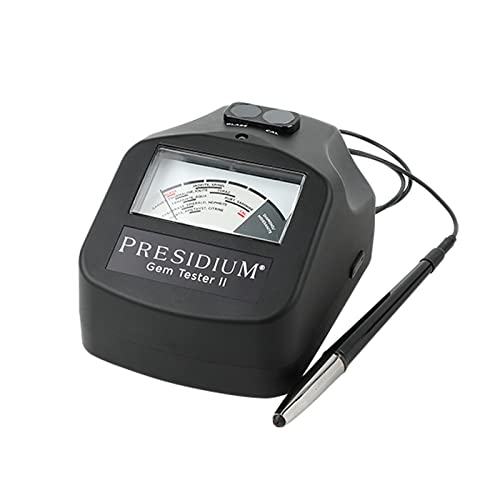
- Assisted Thermal Calibration for easier self-calibration
- Thin retractable probe tip for more precise testing
- Identifies diamonds, moissanites, and 16 gemstone types
Best For: Jewelers and hobbyists who want a compact manual gemstone tester for quick identification.
Best for Beginners
HMKIS Diamond Tester Pen with 60X Loupe

- Simple diamond testing with LCD, LED, and audible alerts
- Includes a 60X loupe for close inspection of stones and settings
- Type-C power option improves stability, though the unit is non-rechargeable
Best For: Novice users who want a simple diamond tester and magnifier combo for quick screening.
Best for Pleochroism Checks
Heavy Duty Calcite Dichroscope Tester

- Shows dichroic and trichroic color behavior clearly
- Helps separate similar stones by optical properties
- Durable metal-bodied build for regular use
Best For: Gemologists and jewelers who need a simple optical tool for pleochroism and stone comparison.
Fastest Beginner-Friendly Pick
Valkynos Diamond Tester Pen with UV

- 0.5-second detection for quick screening
- 365nm UV light plus thermal sensor
- Battery included and easy to carry
Best For: Novice buyers and jewelry sellers who want a fast, portable gem checker.
Best for Small Stones
SmartPro SPGE-I Gem & Diamond Tester

- Ultra-thin 0.48 mm probe tip
- Tests diamonds as small as 0.01 ct
- Portable with instant results and no wait time
Best For: Jewelers and buyers who need a compact tester for quick diamond screening.
Best for Quick Diamond Checks
HMKIS Diamond Tester Pen with 60X Loupe

- Simple pen-style testing with beep and light alerts
- Includes a 60X LED loupe for close inspection
- Type-C power option helps improve consistency
Best For: Novices or jewelers who want a portable diamond tester with a magnifier for quick checks.
Best for Refractive Index Checks
RHG181 Portable Gem Refractometer

- 1.30-1.81 RI range for many common gemstones
- Portable, non-destructive testing setup
- Includes torch, manual, and refractive fluid
Best For: Jewelers and hobbyists who need a compact refractometer for quick gemstone ID checks.
Best with Extra Features

- Fast light-and-beep diamond screening
- Includes 10x loupe, tweezers, and battery
- Portable kit for novice or expert use
Best For: Shoppers who want a compact diamond tester for fast, basic verification.
Best for Gem Identification
Ade Chelsea Filter for Gemstone Testing

- Screens select gemstones by visible light response
- Portable foldable design for field or shop use
- Helps flag some treated, dyed, or synthetic stones
Best For: Gemologists, jewelers, and hobbyists who need a portable screening tool for gemstone identification.
Best for Jewelry-Only Testing
Professional Diamond Tester Pen
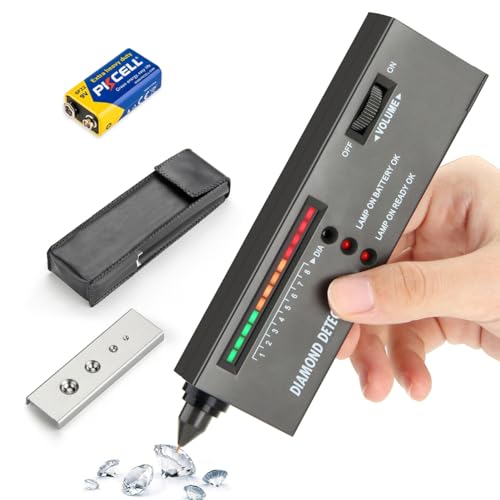
- Checks diamonds, moissanite, jade, crystal, and glass
- Includes battery, manual, platform, and video guidance
- Not for gold or metal testing; gemstone-only use
Best For: Jewelers and resellers who need a dedicated gemstone tester for jewelry-only checks.
Best for Portable Manual Testing – Presidium Gem Tester II with ATC
If you want practical gem testing equipment for quick at-the-counter checks, the Presidium Instruments Gem Tester II is a compact analog tool built for identifying diamonds, moissanites, and common colored gemstones. Its Assisted Thermal Calibration helps you self-calibrate to your environment, which is especially useful if you need a dependable tester that’s easy to carry and simple to operate.
Best For: Jewelers, appraisers, and hobbyists who want a portable, manual gemstone tester for fast identification.
Pros:
- Assisted Thermal Calibration makes setup easier in changing environments
- Thin retractable probe tip improves precision on small stones
- Analog dial is straightforward to read and use
- Can differentiate 16 gemstone types, including diamonds and moissanites
Cons:
- Calibration can be affected during shipping and may need adjustment
- Manual analog testing is less advanced than digital multi-test systems
For buyers comparing gem testing equipment, this model stands out for portability, familiar hands-on operation, and a useful calibration feature that helps it stay practical for everyday sorting and verification. It’s a strong fit if you want a trusted, no-frills tester rather than a more complex lab-style setup.
Best for Beginners – HMKIS Diamond Tester Pen with 60X Loupe
If you want straightforward gem testing equipment for quick diamond checks at home or in a shop, the HMKIS Diamond Tester Pen is built for simple, fast use. It combines a diamond selector with a 60X loupe, giving you both basic verification and close-up inspection in one kit.
Best For: Novice buyers, casual jewelry owners, and anyone who wants an easy-to-use tester for quick diamond screening.
Pros:
- Easy to use with clear LCD, LED, and audible test feedback
- Includes a 60X LED loupe for inspecting gems, settings, and small details
- Type-C power option helps deliver more stable, precise output
- Compact kit is useful for home, hobby, or light jewelry work
Cons:
- Non-rechargeable design may be inconvenient for frequent use
- Requires correct stone-size selection and proper contact for reliable results
- Not ideal for testing metals or non-gem surfaces
As gem testing equipment, this set stands out more for convenience than advanced lab-grade analysis. It’s a practical choice if you want a beginner-friendly tester and a loupe in one affordable package.
Best for Pleochroism Checks – Heavy Duty Calcite Dichroscope Tester
If you need gem testing equipment that can quickly show whether a stone is dichroic or pleochroic, this heavy-duty calcite dichroscope is a practical choice. It helps compare axis-specific colors side by side, making it easier to distinguish similar-looking gems during identification and evaluation.
Best For: Gemologists, jewelers, and hobbyists who want a straightforward tool for viewing pleochroic colors and separating similar stones.
Pros:
- Reveals two or three directional colors for dichroic and trichroic stones
- Helps compare stones that share the same apparent color
- Metal-bodied design is made for repeated shop or field use
- Useful for rotating and checking mixed color behavior from multiple angles
Cons:
- Specialized tool, so it is less useful for general-purpose gemstone testing
- Requires some familiarity with optical properties to interpret results well
For buyers focused on optical identification, this is a focused piece of gem testing equipment rather than an all-in-one tester. It is most valuable when color behavior matters and you want a simple way to inspect stones for pleochroism without extra complexity.
Fastest Beginner-Friendly Pick – Valkynos Diamond Tester Pen with UV
If you want gem testing equipment that feels simple but still adds useful versatility, the Valkynos diamond tester pen is built around fast readouts and a portable design. Its 365nm UV light and thermal sensor make it a practical pick for quick checks at home, in a shop, or while sourcing stones on the go.
Best For: Novice buyers, jewelry sellers, and experts who want a quick, portable tester for everyday gem checks.
Pros:
- 0.5-second detection helps speed up routine testing.
- Combines thermal sensing with a 365nm UV light for added utility.
- Portable pen-style design is easy to carry and store.
- Battery included, so it’s ready to use out of the box.
Cons:
- Designed for quick screening, not lab-level certification.
- Works best as part of a broader gem testing equipment toolkit.
Overall, this Valkynos pen is a strong fit if you value speed, simplicity, and portability over advanced analysis. For everyday gem testing equipment needs, it offers a convenient middle ground between basic novelty tools and more specialized testers.
Best for Small Stones – SmartPro SPGE-I Gem & Diamond Tester
If you need gem testing equipment that can quickly separate diamonds, simulants, and certain metals in a portable format, the SmartPro SPGE-I is built for fast, straightforward use. Its ultra-thin probe tip is designed to handle very small stones, making it a practical choice for on-the-spot checks.
Best For: Jewelers, appraisers, and buyers who want a compact tester for quick diamond and gem screening.
Pros:
- Thin 0.48 mm probe tip can test diamonds as small as 0.01 ct
- Identifies diamonds, simulants, and metals instantly
- Portable design with no waiting time between tests
Cons:
- Focused more on quick screening than advanced lab-level analysis
- Best results depend on proper contact and technique
For shoppers comparing gem testing equipment, this model stands out for speed and portability rather than broad feature depth. It is a solid pick if you want a compact tester that can handle small stones and keep up with busy counter or field use.
Best for Quick Diamond Checks – HMKIS Diamond Tester Pen with 60X Loupe
If you need practical gem testing equipment for fast at-home or shop-side checks, the HMKIS Diamond Tester Pen is built for straightforward use. It pairs a diamond selector pen with a 60X loupe, so you can verify stones and inspect details with one compact kit.
Best For: Novice and experienced users who want a simple, portable way to test diamonds and inspect jewelry details.
Pros:
- Easy-to-use tester with clear light and beep feedback for diamond identification
- Includes a 60X LED loupe for inspecting gems, coins, watches, and other small items
- Type-C power option can provide steadier voltage for more consistent results
- Useful for distinguishing diamonds from glass, crystal, and cubic zirconia
Cons:
- Non-rechargeable design may be less convenient for frequent use
- Requires correct stone-size selection and proper contact to avoid inaccurate readings
- Primarily a diamond tester, not a full gemstone identification lab tool
This is a solid choice if you want gem testing equipment that stays simple, portable, and useful for quick verification. The added loupe makes it more versatile, but the tester itself still works best when you follow the setup instructions carefully.
Best for Refractive Index Checks – RHG181 Portable Gem Refractometer
If you need gem testing equipment that focuses on refractive index readings, the RHG181 gives you a straightforward way to assess loose stones and solid materials without damage. It’s built for quick visual testing, with a 1.30-1.81 RI range and a compact body that’s easy to bring to a bench or field kit.
Best For: Jewelers, appraisers, and hobbyists who want a portable refractometer for identifying common gemstones and checking single vs. double refraction.
Pros:
- Measures refractive index from 1.30 to 1.81 RI for many common gemstones
- Compact, portable design makes it easy to store or carry
- Non-destructive testing helps preserve stones during inspection
- Includes torch, manual, and refractive fluid to get started
Cons:
- Requires practice to read the eyepiece accurately
- Battery for the torch is not included
- Works best with flat contact surfaces and stones over 2 mm
For buyers comparing gem testing equipment, this model is most useful when refractive index is the main value you want, rather than a multi-function tester. It’s a practical pick for basic gemstone identification, especially if you want a compact tool that covers a broad range of everyday stones.
Best with Extra Features – MIUONO Diamond Tester Pen
If you want simple gem testing equipment for fast at-home screening, the MIUONO Diamond Tester is built for quick pass/fail checks on diamonds versus common simulants. It includes a 10x loupe and tweezers, and the battery is included so you can start testing right away.
Best For: Novice and experienced users who need a portable, non-destructive diamond tester for basic verification.
Pros:
- Simple indicator lights and beep make results easy to read
- Includes a 10x magnifier, tweezers, battery, and carrying cases
- Portable design is convenient for home use or travel
- Non-destructive testing keeps stones intact during inspection
Cons:
- Focused mainly on diamond testing, not full gem identification
- Readings can be less useful on very small or mounted stones
- Requires learning the light/beep pattern for accurate use
Overall, this is practical gem testing equipment if you mainly want a compact, affordable tool for quick diamond screening rather than a more advanced gem lab setup. It offers a strong mix of portability and simplicity for everyday checks.
Best for Gem Identification – Ade Chelsea Filter for Gemstone Testing
If you need gem testing equipment for quick visual screening, the Ade Advanced Optics Chelsea Filter is a practical, low-tech option for distinguishing certain natural and synthetic stones. It’s especially useful when checking emeralds, aquamarine, and blue spinel, or when you want a fast first-pass look at possible treatments and dyeing.
Best For: Gemologists, jewelers, and hobbyists who want a portable filter for screening gemstone identity and enhancements.
Pros:
- Helps differentiate select gemstones by transmitted light response
- Compact, foldable design is easy to carry into the field or shop
- Useful for spotting some dyed, treated, or synthetic stones
- Simple tool that fits into a broader gem-testing workflow
Cons:
- Not a full-featured gem lab instrument
- Works best on certain stone types, not every gemstone
- Requires user interpretation rather than giving a definitive readout
As gem testing equipment goes, this Chelsea Filter is best viewed as a screening aid rather than a complete authentication system. It’s a smart buy if you want a durable, portable tool for narrowing down gemstone identities before moving to more advanced testing.
Best for Jewelry-Only Testing – Professional Diamond Tester Pen
If you want focused gem testing equipment for jewelry work, this diamond tester pen is built for checking diamonds, moissanite, jade, crystal, and glass with a straightforward pen-style format. It is not a metal or gold tester, so it fits buyers who need gemstone-only detection rather than an all-in-one kit.
Best For: Jewelers, resellers, and hobbyists who need quick gemstone checks without paying for multi-purpose gold-testing features.
Pros:
- Detects several common gemstones, including diamonds, moissanite, jade, and glass.
- Includes a 9V battery, testing platform, manual, and video guidance.
- Clear operating steps help improve accuracy when preheated and calibrated correctly.
- Compact pen design is easy to keep on hand for bench or counter use.
Cons:
- Requires careful setup, including a 30-second preheat and calibration before each test.
- Will not test metals or gold, so it is limited to gemstone-only use.
- Environmental conditions and probe angle can affect results.
Overall, this is a practical pick if you need gem testing equipment for jewelry inspection and are willing to follow the setup steps closely. It’s best suited to gemstone identification, not casual all-purpose testing.
How We Picked the Best Gem Testing Equipment
We focused on tools that solve real buying problems: quick screening, clearer stone identification, and ease of use for both novices and experienced users. Important factors included measurement method, portability, reading clarity, calibration needs, and overall usefulness across common jewelry and gemstone testing tasks.
Because Gem Testing Equipment ranges from simple pen-style testers to more specialized instruments, we prioritized products that offer a sensible balance of accuracy, convenience, and value.
Quick Comparison of Gem Testing Equipment Types
Pen-style testers are best for fast diamond and moissanite screening. Refractometers and optical tools are better for broader identification work and more advanced evaluation. Specialty tools like dichroscopes and Chelsea filters serve narrower purposes, but they can be extremely useful when you need to distinguish between similar-looking stones.
If you want the most versatile setup, many buyers start with a fast tester for screening and add a more specialized tool for verification.
Key Buying Factors for Gem Testing Equipment
Stone Types You Need to Test
Not every tester handles every stone. Some are designed mainly for diamonds and moissanites, while others help with broader gemstone identification. Match the device to the materials you handle most often.
Accuracy and Confirmation Methods
Look for devices with clear indicators, stable calibration, and repeatable results. For higher confidence, especially with mixed or high-value stones, it helps to use more than one testing method.
Ease of Use
If you’re new to Gem Testing Equipment, choose a tool with straightforward readings, good instructions, and minimal setup. Professionals may prefer instruments with more control and deeper analytical capability.
Portability and Build Quality
For travel, fieldwork, or retail counter use, compact tools with solid construction are ideal. If a device will be used often, prioritize durability and ergonomic handling.
Who Should Buy Which Gem Testing Equipment?
Beginners usually do best with simple tester pens and combo kits that add magnification. Jewelry sellers and resellers may prefer fast screening tools they can use at the counter. More advanced users, collectors, and gemology students may benefit from refractometers, dichroscopes, and optical filters for better identification confidence.
If your goal is fast sorting, buy for speed and simplicity. If your goal is deeper identification, choose Gem Testing Equipment that adds more than one way to evaluate a stone.