Large stained-glass projects demand consistent pattern cuts, clean allowances, and tools that remain comfortable through repeated use. The right scissors can make fitting, foiling, and assembling each section more predictable.
This roundup compares 10 options, from purpose-built stained-glass pattern shears to versatile heavy-duty fabric scissors, so you can match cutting performance to your project size and materials.
Best 10 Glass Pattern Scissors for Large Projects Picks for 2026
Precision Foil Cutter

- Removes a 1/32-inch strip
- Triple-blade single-pass cutting
- Stainless steel, ambidextrous design
Best For: Copper-foil stained-glass patterns
Lead Pattern Specialist

- Matches paper removal to lead thickness
- Designed to reduce grinding
- Comfort-focused ambidextrous design
Best For: Lead-came stained-glass patterns
Foil Allowance Tool
Blue Stained-Glass Pattern Shears

- Three-blade pattern-cutting design
- Removes a .036-inch strip
- Polished stainless-steel blades
Best For: Foil patterns needing a slightly wider allowance
Heavy-Duty Fabric Alternative
Fiskars 8-Inch RazorEdge Scissors

- 8-inch stainless-steel RazorEdge blades
- Smooth pivot for fabric cutting
- Sheath and ergonomic SoftGrip handle
Best For: Large fabric pattern pieces
Comfort-Focused Foil Cutting

- Removes paper to foil thickness
- Precisely cuts stained-glass patterns
- Ambidextrous, comfort-focused design
Best For: Accurate foil pattern preparation
Precise Three-Blade Spacing
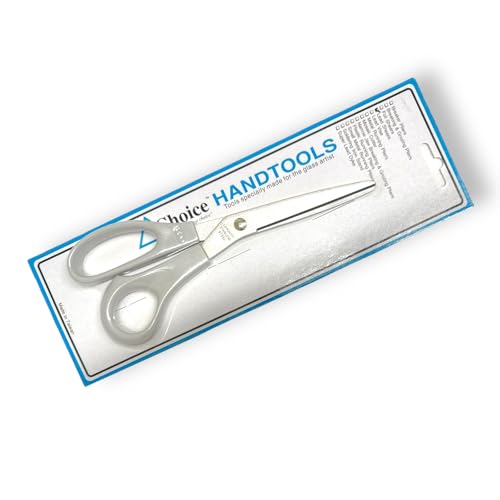
- Three-blade lead pattern design
- Removes about .072 inch
- High-carbon steel blades
Best For: Leaded stained-glass patterns
Heavy-Duty General Cutting

- 8-inch high-carbon steel blades
- Cuts fabric, leather, and thick layers
- Ergonomic right-hand handle
Best For: Large mixed-media craft projects
Stained Glass Expansion Control

- Three blades remove the proper pattern allowance.
- Designed for copper-foil stained-glass patterns.
- Ambidextrous design for either hand.
Best For: Preparing copper-foil patterns for large stained-glass projects
Decorative Material Cutting

- Stainless-steel zigzag blades cut decorative edges.
- Handles support comfortable, controlled cutting.
- Suitable for fabric, paper, leather, and crafts.
Best For: Large craft projects needing decorative zigzag edges
Thin Foil Allowance

- Removes a slim 0.8 mm strip.
- Handles slide under the pattern sheet.
- Reinforced lower blade helps limit ragged edges.
Best For: Foiled stained-glass patterns needing a thin allowance
Precision Foil Cutter – Triple-Blade Pattern Shears
For stained-glass makers comparing glass pattern scissors for large projects, these triple-blade shears are designed to remove a consistent paper strip in one pass. Their 1/32-inch calibration corresponds to standard copper foil, helping prepare patterns for closer-fitting glass pieces.
Best For: Stained-glass patterns using standard copper foil, especially projects where consistent cuts can reduce later grinding.
Pros:
- Triple-blade design removes a thin strip in a single pass.
- Calibrated to remove exactly 1/32 inch.
- Precision-ground stainless-steel blades help prevent snagging and tearing.
- Ambidextrous nylon-style handles suit either hand.
Cons:
- Designed specifically for paper pattern preparation rather than general fabric cutting.
- Only one pair is included.
This is a focused choice when accurate foil-pattern allowances matter more than general-purpose versatility. The calibrated cut and clean blade action make it practical for repeatable stained-glass pattern work.
Lead Pattern Specialist – Studio Pro Lead Shears
These Studio Pro shears are a practical option among glass pattern scissors for large projects when patterns need an allowance matching the thickness of lead. The design is intended to produce precisely cut patterns and help eliminate grinding time.
Best For: Stained-glass work using lead came, where pattern spacing should correspond to the lead’s thickness.
Pros:
- Designed to remove the same amount of paper as the thickness of lead.
- Precisely cut patterns can help reduce grinding time.
- Built for comfort, durability, and performance.
- Ambidextrous handling accommodates either hand.
Cons:
- Its lead-specific spacing makes it less suitable for copper-foil pattern needs.
- The supplied details do not specify the exact strip width.
Choose these shears when your construction method uses lead rather than foil. Their stated focus on lead-thickness allowances makes them a targeted tool for accurately preparing compatible patterns.
Foil Allowance Tool – Blue Stained-Glass Pattern Shears
For shoppers seeking glass pattern scissors for large projects, these foil pattern shears use a three-blade layout to create a repeatable allowance for stained-glass patterns. The center blade removes .036 inch, or slightly more than 1/32 inch, to match the thickness of foil and help limit grinding.
Best For: Foil-based stained-glass patterns requiring a slightly-over-1/32-inch paper removal.
Pros:
- Three-blade construction removes the center strip during cutting.
- Removes .036 inch, slightly more than 1/32 inch.
- Designed to eliminate grinding time with a precisely cut pattern.
- Polished stainless-steel blades have a beveled edge.
Cons:
- The specified .036-inch allowance may not suit every foil or pattern preference.
- The supplied details do not identify a handle material suited to extended use.
This model is a straightforward foil-pattern specialist. Its defined .036-inch removal makes it useful when you want a little more than a standard 1/32-inch allowance and consistent results across numerous pieces.
Heavy-Duty Fabric Alternative – Fiskars 8-Inch RazorEdge Scissors
Unlike dedicated stained-glass pattern shears, these Fiskars scissors are general-purpose fabric cutters to consider only if your large-project patterns are made from fabric or flexible material. Their 8-inch RazorEdge blades and smooth pivot are built for clean fabric cuts, not for removing a calibrated strip from paper patterns.
Best For: Large fabric pattern pieces and heavy-duty fabric cutting rather than foil- or lead-specific stained-glass patterns.
Pros:
- Ultra-sharp stainless-steel blades are honed for clean cuts to the tip.
- Advanced pivot design supports smooth cutting action through fabric.
- Ergonomic loops and SoftGrip touchpoints improve control and comfort.
- Protective sheath is included.
Cons:
- Not described as triple-blade or calibrated pattern shears.
- Right-hand orientation may not suit left-handed users.
- Designed for fabric rather than stained-glass foil or lead allowances.
This is a useful large-format cutting alternative, but not a direct substitute for stained-glass pattern shears. Pick it when clean fabric cutting and hand comfort are the priority; choose a dedicated three-blade model for foil or lead pattern allowances.
Comfort-Focused Foil Cutting – Studio Pro Foil Shears
For glass pattern scissors for large projects, the Studio Pro Foil Shears emphasize comfortable handling and consistent foil removal. Their design removes material equal to the foil thickness and produces a precisely cut pattern, which can help reduce preparation time.
Best For: Stained-glass users who need comfortable shears for accurate foil pattern preparation.
Pros:
- Designed for comfort, durability, and performance.
- Removes the same amount of paper as the foil thickness.
- Precisely cut patterns can eliminate grinding time.
- Ambidextrous design suits either hand.
Cons:
- The supplied specifications list a glass handle material, which may not suit shoppers seeking a conventional grip.
- Its stated function is specialized pattern and foil preparation rather than general-purpose cutting.
This is a focused option for users who value repeatable pattern cuts and reduced grinding. Its comfort-oriented, ambidextrous design adds flexibility for extended project work.
Precise Three-Blade Spacing – Lead Pattern Shears
When choosing glass pattern scissors for large projects, these Lead Pattern Shears provide a specialized three-blade design. The center blade removes .072 inch, or slightly more than 1/16 inch, to create spacing in stained-glass patterns.
Best For: Stained-glass pattern work requiring a defined lead allowance.
Pros:
- Three-blade construction is made for lead pattern work.
- Removes approximately .072 inch from the pattern.
- High-carbon steel blades support the specialized cutting task.
- Ambidextrous design works for either hand.
Cons:
- The fixed .072-inch spacing may not match every project’s lead width.
- Its specialized design is less suitable for general cutting tasks.
- Only one pair is included.
This is the more purpose-built choice for leaded stained-glass layouts. Confirm that the specified center-blade spacing matches your project before buying.
Heavy-Duty General Cutting – Professional Fabric Scissors
These professional fabric scissors are not specialized stained-glass pattern shears, but they may suit large craft projects that involve fabric, leather, or paper patterns. The 8-inch high-carbon steel blades are designed for thick, multilayer materials and feature an adjustable bolt for controlled cutting.
Best For: Large mixed-media projects involving fabric, leather, and pattern cutting rather than lead-spacing work.
Pros:
- Sharp blades are designed for multilayer fabric and leather.
- Adjustable bolt supports precise cutting.
- Ergonomic, non-slip handle is intended to reduce hand fatigue.
- Suitable for sewing, quilting, alterations, and art projects.
Cons:
- Designed for fabric and craft materials, not dedicated stained-glass pattern spacing.
- Right-hand orientation may not suit left-handed users.
- Its 0.23 kg weight may feel heavier during extended cutting.
Choose these when versatility and heavy-duty material cutting matter more than specialized glass-pattern allowances. For leaded stained-glass templates, a dedicated pattern shear is likely the better fit.
Stained Glass Expansion Control – Copper Foil Pattern Shears
For large stained-glass projects, these three-bladed copper foil pattern shears are designed to remove the proper amount of material from each pattern piece. That can help account for foil and reduce the risk of pattern pieces making the finished project expand.
Best For: Stained-glass makers preparing copper-foil pattern pieces for larger projects.
Pros:
- Three-bladed design removes the intended amount of pattern material.
- Designed specifically for copper foil stained-glass patterns.
- Ambidextrous handling suits either hand.
Cons:
- Purpose-built for stained-glass pattern work rather than general cutting.
- Supplied as a single pair of shears.
Choose these when accurate foil allowances are more important than versatility. Their specialized design makes them a focused option for planning large copper-foil projects.
Decorative Material Cutting – JISTL Pinking Shears
These JISTL pinking shears are a versatile alternative for large craft projects that need zigzag edges rather than stained-glass-specific pattern allowances. Their serrated stainless-steel blades are intended for fabric, paper, leather, PU, ribbon, and other craft materials.
Best For: Large sewing, dressmaking, and craft projects requiring decorative zigzag cuts.
Pros:
- Hardened stainless-steel blades create even zigzag edges.
- Works with fabric, linings, paper, leather, PU, ribbon, and crafts.
- ABS inner-ring handles are designed for comfortable, controlled cutting.
- Ambidextrous design accommodates either hand.
Cons:
- The shears may feel large and heavy during extended use.
- The screw cannot be adjusted or loosened.
- They are pinking shears, not dedicated stained-glass pattern shears.
These are best viewed as heavy-duty decorative-edge scissors. They suit broad craft applications, but buyers specifically cutting stained-glass patterns should choose a purpose-built pattern shear instead.
Thin Foil Allowance – Thinline Pattern Shears
For glass pattern scissors for large projects, these Thinline Pattern Shears focus on a narrow, consistent allowance for foiled stained-glass work. The handles slide beneath the pattern sheet, while the reinforced lower blade is designed to help prevent spreading and ragged edges.
Best For: Foiled stained-glass patterns where a slimmer 0.8 mm strip is preferred.
Pros:
- Removes a 0.8 mm strip for foiled projects.
- Handles are designed to slide under pattern sheets.
- Double-strong bottom blade helps resist spreading and ragged edges.
- Lightweight at approximately 0.11 kg.
Cons:
- Designed for foiled stained-glass patterns rather than general-purpose cutting.
- The thinner allowance may not suit projects requiring a wider removal.
These shears are a strong fit when precise, thin material removal matters. Their under-sheet handles and reinforced lower blade are especially useful for keeping pattern cuts controlled across larger foiled layouts.
How We Picked the Best Glass Pattern Scissors for Large Projects
We focused on scissors that support accurate, repeatable pattern cutting across demanding stained-glass and craft workflows. The selection includes specialized foil and lead pattern shears, as well as robust fabric scissors that may suit paper templates, cardboard, fabric, leather, or mixed-material projects.
Our comparison emphasizes blade design, cutting consistency, handle comfort, material compatibility, and suitability for extended sessions. Purpose-built pattern shears are evaluated for their ability to remove a narrow, consistent strip, while general-purpose scissors are considered for versatility and durability.
Quick Comparison
| Scissor type | Best suited for | Main advantage |
|---|---|---|
| Foil pattern shears | Stained-glass templates | Consistent foil or lead allowance |
| Lead shears | Lead came pattern preparation | Clean, controlled strip removal |
| Heavy-duty fabric scissors | Paper, fabric, leather, and craft materials | Versatility and strong cutting power |
| Pinking shears | Textile and decorative cutting | Zigzag edge that helps limit fabric fraying |
Key Buying Factors for Glass Pattern Scissors for Large Projects
Blade Design and Allowance
For stained-glass templates, the most important feature is a predictable cut. Triple-blade or offset pattern shears can remove a narrow strip between template pieces, helping account for the space occupied by copper foil or lead came. Check the intended allowance before buying, since different tools may remove different widths.
Material Compatibility
Choose dedicated stained-glass shears when the primary task is cutting paper patterns for foil or lead construction. If your project also involves fabric, leather, cardboard, or heavy craft paper, sharp fabric shears offer broader utility, but they may not create the specialized allowance needed for glass templates.
Comfort and Control
Large projects involve many repeated cuts, so ergonomic handles, smooth operation, and a blade length suited to your hand matter. A tool that feels stable and does not require excessive force can reduce fatigue and improve consistency.
Maintenance and Intended Use
Keep scissors dry, use them only on suitable materials, and store them closed or protected. Avoid using precision pattern shears on glass itself; they are designed for template materials, not for cutting or scoring the glass.
Who Should Buy Which Glass Pattern Scissors for Large Projects?
Choose foil pattern shears if you primarily build copper-foil projects and need a repeatable allowance for fitting glass pieces. Choose lead pattern shears if your templates are intended for lead came construction and you want a tool designed around that workflow.
Choose heavy-duty fabric scissors if versatility is more important than a specialized stained-glass allowance. They are useful for large paper patterns, fabric, leather crafts, and household sewing, but confirm that their cut meets your template requirements.
Choose pinking shears mainly for fabric projects or decorative zigzag edges rather than as a replacement for dedicated stained-glass pattern shears. For the most demanding large-panel work, a specialized pair paired with a versatile general-purpose pair may provide the best combination of precision and flexibility.