Bulky folds and uneven edges can make an otherwise careful leather project look unfinished. The right skiver helps thin leather where it needs to bend, overlap, or join.
These picks span hand-operated tools, bench-mounted splitters, and electric machines. The best choice depends on whether you need occasional edge thinning, consistent strap work, or faster production.
Best 10 Leather Skiving Machines Picks for 2026
Widest Capacity
WUTA Large Manual Leather Skiver

- 18 cm stated width capacity
- Adjustable depth and blade lock
- G-clip and 20 blades included
Best For: Wider leather pieces and clamp-mounted manual skiving
Compact Strap Pick
WUTA Black Manual Leather Skiver
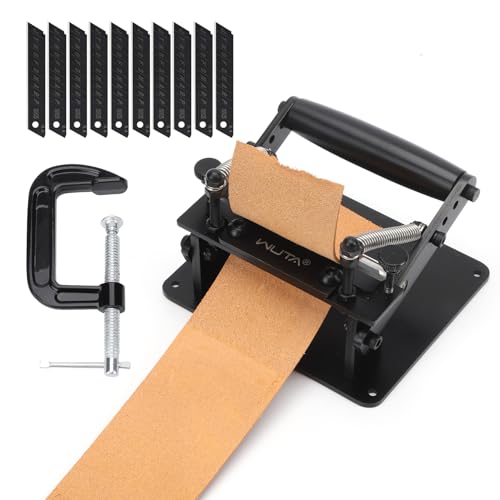
- 8 cm maximum skiving width
- Dual-bearing rollers and wooden handle
- G-type clip and 10 blades included
Best For: Narrow straps and compact bench setups
Firm-Leather Option

- For strips under roughly 7–8 cm
- Adjustable thickness control
- Not suited to ultra-soft skins
Best For: Controlled splitting of firm, narrow leather strips
Repeatable Skives
Weaver Leathercraft 6-Inch Skiver

- Adjustable stop for repeated skives
- 6-inch precision-ground blade
- Ready to use with little setup
Best For: Repeatable level and lap skiving
Compact Manual Pick
YaeTek Leather Skiver Splitter

- Metal construction
- 18 blades and three rollers included
- Manual, beginner-friendly design
Best For: Crafters seeking an accessorized manual skiver
Powered Workshop Pick
SM-801 Electric Leather Skiving Machine
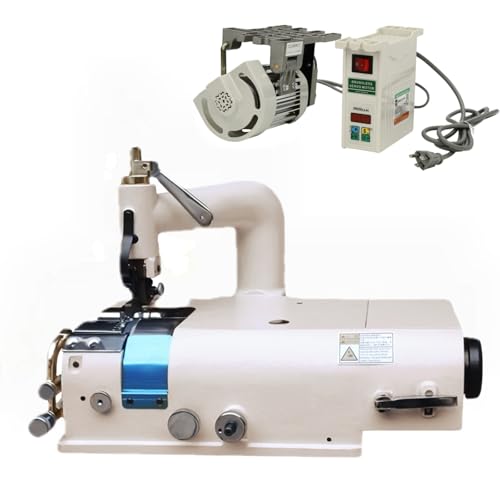
- 110-volt electric operation
- Adjustable starting speed
- Listed low-noise servo drive
Best For: Workshops wanting adjustable electric operation
Clamp-On Detail Pick
Manual Leather Splitter with Clamp
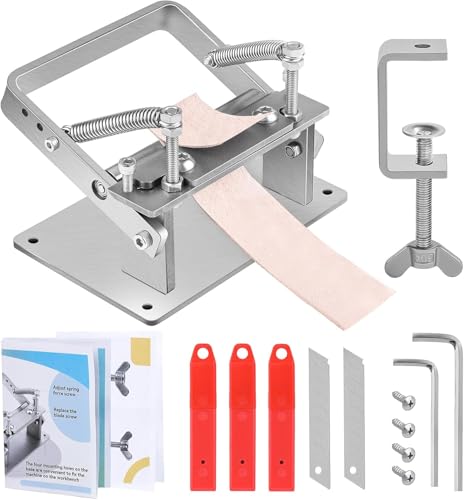
- Fits desktops 5–38 mm thick
- Handles leather up to 8 cm wide
- 30 blades included
Best For: Narrow leather projects on a compatible desktop
Motor-Included Industrial Pick

- Includes a 110V, 600W brushless servo motor
- Three presser-foot widths up to 1.57 inches
- Automatic sharpening and chip removal
Best For: Leatherworkers seeking a motor-included electric skiver
Manual Starter Kit
Adjustable Leather Splitter Set

- Hand-pulled splitter with adjustable thickness
- Includes knives and replacement blades
- Accepts leather up to 3.15 inches wide
Best For: Beginners thinning narrow straps and small leather pieces
Head-Only Workshop Pick

- Skiving head sold without a motor
- Works with leather, felt, plastic, and rubber
- Three presser feet; 1.57-inch maximum width
Best For: Workshops equipped to add a motor to an industrial skiving head
Widest Capacity – WUTA Large Manual Leather Skiver
Among these leather skiving machines, this larger WUTA model stands out for its stated 18 cm (7.08-inch) width capacity. It is designed to thin leather for straps, belts, and watch bands, with a wooden handle and dual-bearing rollers for manual operation.
Best For: Leatherworkers who need to thin wider pieces and want a clamp-mounted manual tool.
Pros:
- Adjustable skiving depth, with thinning down to about 0.5 mm under suitable conditions.
- Blade-lock system helps keep the blade positioned during use.
- Includes a G-clip for mounting and 20 blades.
Cons:
- Manual operation requires you to pull the leather through.
- At 7.41 pounds, it is heavier than the smaller WUTA model listed here.
Choose this version primarily for its wider stated capacity; check that your bench has room for the clamp and the leather you plan to feed through it.
For narrower strap work, this WUTA option is one of the more compact leather skiving machines in the roundup. Its stated maximum skiving width is 8 cm (3.15 inches), making it a practical choice for belts, small straps, and watch straps rather than wider panels.
Best For: Leatherworkers thinning narrow strips who want a smaller manual skiver with a table clamp.
Pros:
- Adjustment screws at both ends let you set the thinning thickness.
- Dual-bearing rollers and a wooden handle support smoother manual feeding.
- Includes a G-type clip, a blade-positioning device, and 10 blades.
Cons:
- Its 8 cm maximum skiving width limits wider projects.
- The stated ability to thin to about 0.5 mm depends on the leather; harder, less-greased leather may remain thicker.
This is the better fit when bench space and strap-sized work matter more than maximum width. Set expectations for the final thickness according to the leather you use.
The YaeTek is a manual choice among leather skiving machines for controlled thinning of strips, particularly plant-tanned leather. Despite its approximately 6-inch blade, the stated working application is for strips under roughly 7–8 cm (about 3 inches) wide.
Best For: Leatherworkers splitting relatively firm, narrow strips who are comfortable operating a manual machine.
Pros:
- Adjustable thickness control helps set the desired split.
- Stainless steel construction is intended for workshop use.
- Includes a handle, two L-keys, and four screws for assembly.
Cons:
- Not suitable for ultra-soft skins, according to the supplied specifications.
- Requires manual material lifting and assembly.
Do not mistake the blade width for the recommended strip width. If your work is primarily firm, narrow leather, this model’s adjustable setup is more relevant than its 6-inch blade measurement.
For repeatable edge preparation, this Weaver model takes a different approach from the other leather skiving machines here: an adjustable stop supports repeated level skives, while an adjustable handle controls blade depth for lap skiving. It arrives ready to use with virtually no setup.
Best For: Leatherworkers making repeated level skives or lap skives for belts, bags, wallets, and similar accessories.
Pros:
- 6-inch precision-ground blade is designed to cut even leather shavings.
- Stainless steel hold-down bar helps keep leather in place.
- Adjustable stop aids consistency across repeated level skives.
Cons:
- The supplied specifications do not state a maximum workable leather width or minimum finished thickness.
- Its listed 10.5 x 13 x 6.5-inch dimensions call for dedicated bench space.
Its main draw is the combination of lap-skiving depth control and a repeatable level-skiving stop. Check the available workspace and your required leather width before choosing it.
Compact Manual Pick – YaeTek Leather Skiver Splitter
Among manual leather skiving machines, the YaeTek is a compact option for trimming and paring without an electric setup. Its metal construction and included rollers and blades make it a practical starter kit.
Best For: Crafters who want a manual skiver with replacement blades and roller options included.
Pros:
- Sturdy metal construction.
- Includes 18 blades, three special rollers, and a spanner.
- Described as easy to use for beginners and experienced users.
Cons:
- Manual operation may not suit buyers seeking a powered machine.
- Supplied details do not specify a maximum leather width or thickness range.
This is a straightforward choice if you value included accessories; check your project dimensions before buying, since working limits are not listed.
For buyers comparing leather skiving machines for an electric workshop setup, the SM-801 offers 110-volt power and a brushless servo motor. Its adjustable starting speed is useful when you need to match the machine’s response to the job.
Best For: Workshops seeking an electric skiving machine with adjustable motor speed.
Pros:
- Adjustable starting speed with quick start and braking.
- Drive is described as low-noise and producing almost no vibration.
- Listed dimensions are 22.06 x 14.17 x 16.14 inches for planning bench space.
Cons:
- Requires a 110-volt electrical setup.
- Supplied details do not specify skiving width or thickness capacity.
This is the powered option in the group, but confirm its cutting capacity and fit with your workspace before ordering.
Among clamp-on leather skiving machines, this manual splitter gives you defined setup limits: its clamp fits desktops 5–38 mm thick, and it accepts leather up to 8 cm (3.15 inches) wide. Side screws let you adjust the thinning thickness.
Best For: Narrow projects such as watch straps or belts on a compatible desktop.
Pros:
- Stainless steel construction and an included fixed clamp.
- Includes 30 blades and instruction manuals.
- Thickness adjusts using screws on both sides.
Cons:
- Not suitable for leather wider than 8 cm (3.15 inches).
- Requires you to pull the leather through manually; very soft leather can be difficult to handle.
Choose it when its width and clamp limits match your bench and materials. The supplied guidance suggests beginners start with leather of moderate hardness, such as vegetable-tanned leather.
Motor-Included Industrial Pick – SM-801 600W Electric Skiver
Among leather skiving machines, this SM-801 is the motor-included option for buyers seeking an electric setup. It pairs a 110V, 600W brushless servo motor with a cast-iron machine head for leather thinning.
Best For: Leatherworkers who want an electric skiver with the motor included and a choice of presser-foot widths.
Pros:
- Automatic sharpening keeps the round knife sharp while the machine runs.
- Includes 1.57-, 0.98-, and 0.59-inch presser feet; maximum single-pass skiving width is 1.57 inches.
- Automatic chip removal and a round-knife finger guard add protection during operation.
Cons:
- Requires a 110V electrical connection.
- The 1.57-inch maximum skiving width limits how much material it can thin in one pass.
Choose this version if an included motor matters more than a head-only purchase. Its presser-foot options offer flexibility, but check the working width against your projects.
Manual Starter Kit – Adjustable Leather Splitter Set
If you are comparing leather skiving machines for smaller craft projects, this manual set offers an adjustable splitter plus several handheld leatherworking knives. You pull the leather through by hand, and an included instruction manual explains the process.
Best For: Beginners and hobbyists thinning narrow pieces for watch straps, belts, and similar projects.
Pros:
- Side screws let you adjust the thinning thickness.
- Includes a splitter, multiple skiving and cutting tools, and replacement blades.
- Stainless-steel construction is designed to resist rust.
Cons:
- Manual operation requires you to pull the material through.
- Not suitable for leather wider than 3.15 inches; very soft leather can also be difficult to handle.
This is a useful kit when you want to try several leatherworking tools without an electric machine. Start with leather of moderate firmness while learning to control the cut.
Head-Only Workshop Pick – SM-801 Electric Skiver Head
For shoppers considering industrial leather skiving machines, this SM-801 listing supplies the skiving head without a motor. It is intended for edge and flat thinning of materials including leather, felt, plastic, and rubber.
Best For: Workshops prepared to supply a motor and wanting an industrial skiving head for varied materials.
Pros:
- Automatic sharpening maintains the round knife during operation.
- Three presser feet—1.57, 0.98, and 0.59 inches—provide working-width options.
- Includes automatic chip removal and a round-knife finger guard.
Cons:
- Motor is not included, so this is not a complete motorized setup.
- Maximum single-pass skiving width is 1.57 inches.
This head-only option makes sense if you are planning a compatible powered setup. Confirm what else your installation needs before buying; the listing’s stated operating speed does not change the fact that the motor is excluded.
How We Picked These Leather Skiving Machines
We compared the listed tools by operating style, stated features, likely use case, and setup requirements. The selection covers manual skivers and splitters as well as SM-801-style electric machines, so it is more useful to compare them by the jobs they suit than to treat them as interchangeable. Some listings use “skiver” and “splitter” loosely: check the actual cutting method and capacity before buying. We did not independently test cutting consistency, durability, or seller specifications.
Quick Comparison: Which Type Fits Your Work?
Hand-operated skivers are compact choices for occasional thinning and localized work, but results depend heavily on blade condition and technique. Clamp-mounted splitters can be a better fit for repeatable passes on straps or small panels, provided the material fits their stated width. Electric skivers make more sense for frequent edge preparation and production workflows, though they demand more space, adjustment, maintenance, and attention to safety.
Several products in this roundup have similar names, including multiple SM-801 listings and a repeated WUTA listing. Compare the exact seller listing, included parts, voltage, and specifications rather than assuming similar titles describe identical packages.
Key Buying Factors for Leather Skiving Machines
Cutting Task and Material Size
First decide whether you need to thin an edge for a folded seam or reduce the thickness of a longer strip. An edge-skiving setup and a strap splitter solve different problems. Check usable cutting width and clearance against the leather pieces you actually make; a stated overall tool width is not necessarily its working width.
Control, Blades, and Adjustments
Look for a practical way to set depth or thickness and to keep the cut even across your material. Blade sharpness matters as much as machine size: a dull blade can drag, stretch, or mark leather. Before purchase, confirm whether replacement blades, sharpening guidance, and consumable parts are available for the specific model.
Workspace, Power, and Total Cost
Manual tools may need a stable bench or clamp even if they require no electricity. Electric models need appropriate power, a secure work area, and time to learn their adjustments; verify the listing’s voltage against your outlet. Include blades, accessories, and any mounting or servicing needs in your budget. Also check the return policy, especially when a listing provides limited dimensions or unclear package contents.
Who Should Buy Which Leather Skiving Machines?
Occasional hobbyists should start with a manual option if their work involves small projects and they are comfortable practicing on offcuts. Strap and belt makers should prioritize a splitter with enough usable width and a secure mounting method. Frequent makers and small workshops may benefit from an electric skiver when consistent edge preparation justifies the extra setup and cost. Whatever type you choose, test settings on scrap from the same leather before cutting a finished piece.