Good airbrush work depends on a steady, controllable air supply. The right compressor helps you maintain fine lines, even coverage, and consistent pressure through longer sessions.
These 10 options range from compact hobby compressors to higher-capacity setups with tanks, cooling fans, or dual outlets. Use the guide below to match their features to your airbrushes and working style.
Best 10 Professional Airbrush Compressors Picks for 2026
Best for Two Airbrushes
Master Airbrush TC-96T Twin-Piston Compressor

- 40 L/min twin-piston airflow
- 1.5-gallon storage tank
- Regulator and water trap included
Best For: Studios running two airbrushes
Best Complete Studio Kit
Master Airbrush TC-426 Three-Airbrush System

- Three airbrushes included
- 3-liter tank and dual cooling fans
- 10-foot hose and acrylic paints
Best For: Building a versatile airbrushing setup
Best for Interchangeable Tips
Master Airbrush Cool Runner II G22 Kit
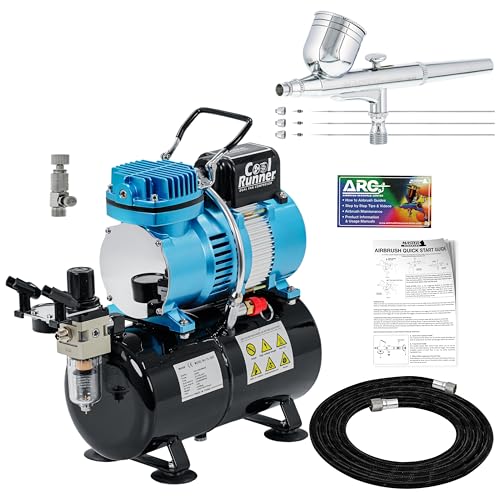
- 0.2, 0.3, and 0.5 mm tips
- 3-liter tank for steady pressure
- Dual cooling fans and water trap
Best For: Using one airbrush across varied detail work
Best for Compact Workspaces
XJ600 85 PSI Airbrush Compressor
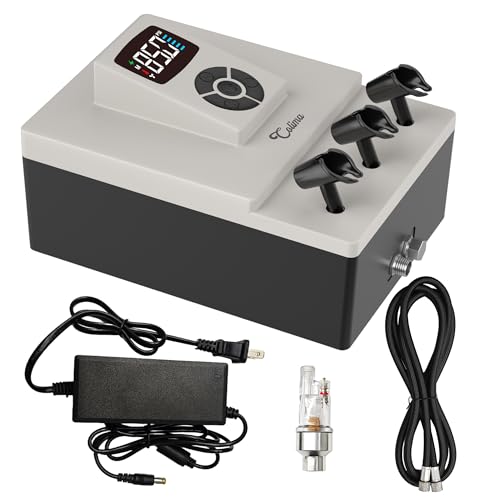
- 20-step pressure adjustment
- Dual 1/8-inch outlets
- Digital display and temperature sensor
Best For: Compact workspaces needing adjustable pressure
Best for Easy Setup
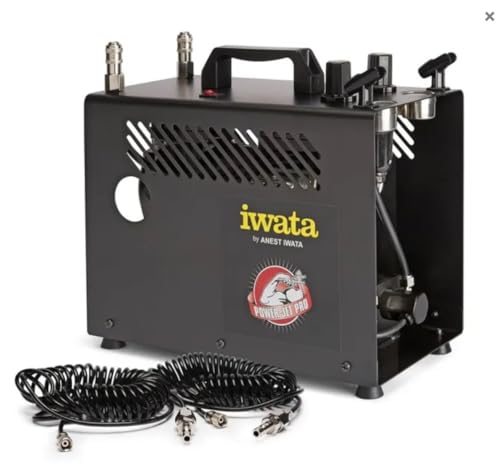
- Two independently regulated outlets
- 2-liter tank and dual moisture filters
- Includes two hoses and brand adapters
Best For: Studios and artists using two airbrushes at different pressures
Best for Higher Pressure

- Two air outlets
- 2.5-liter tank and 60 PSI maximum
- Regulator, moisture trap, and airline included
Best For: Users seeking two outlets and a 60 PSI maximum
Best for Cooling Features
Cool Tooty Airbrush Compressor

- Two cooling fans
- 3-liter tank with auto start/stop
- Moisture trap, handle, and suction-cup feet
Best For: Airbrush users prioritizing cooling and tank capacity
Best for Pressure Control
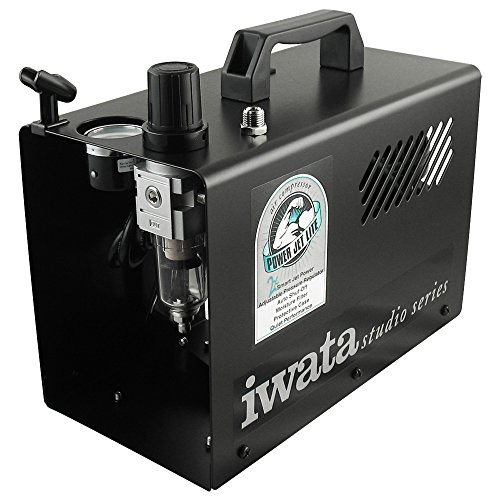
- Adjustable regulator and mounted gauge
- Moisture filter and airbrush holder
- Polyurethane air hose included
Best For: Artists prioritizing pressure adjustment and an included hose
Best for Added Cooling
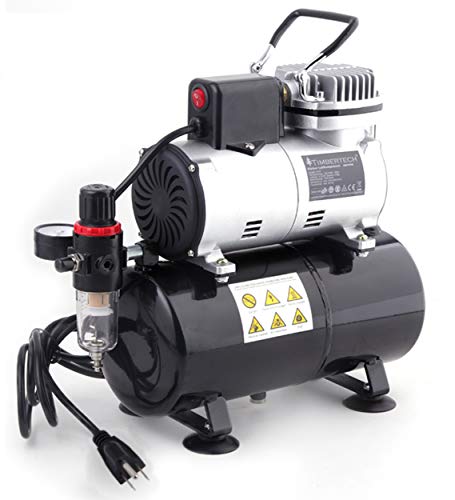
- Cool-down fan
- 3-liter tank for pulse-free output
- Regulator, gauge, and water trap
Best For: Airbrush users seeking tank storage and added cooling
Best for Automatic Cycling

- Automatic start at 3 bar, stop at 4 bar
- 3-liter tank
- Regulator, gauge, and water trap
Best For: Airbrush users prioritizing automatic cycling and tank-supported airflow
Best for Two Airbrushes – Master Airbrush TC-96T Twin-Piston Compressor
Among professional airbrush compressors, the Master Airbrush TC-96T stands out for its 40 L/min airflow and 1.5-gallon tank. Its twin-piston design is specified to support two airbrushes, making it a practical choice for a busy studio.
Best For: Studio artists who need steady air for two airbrushes.
Pros:
- 1.5-gallon tank helps deliver constant pressure without pulsation.
- Built-in cooling fans support longer runs.
- Includes a regulator, gauge, water-trap filter, and 6-foot braided hose.
Cons:
- At 18.2 pounds, it is heavier than the smaller compressors in this roundup.
- Specified noise level is 62 dB.
Choose this model when airflow capacity and a substantial tank matter more than a lightweight setup. Its listed maximum pressure is 57 psi.
Best Complete Studio Kit – Master Airbrush TC-426 Three-Airbrush System
If you are shopping for professional airbrush compressors and also need the tools to start spraying, this TC-426 system packages a 3-liter tank compressor with three different airbrushes. It adds a 10-foot hose, acrylic paints, cleaning brushes, and other setup accessories.
Best For: Artists building a setup with both gravity-feed and siphon-feed airbrushes.
Pros:
- Includes two dual-action gravity-feed airbrushes and one single-action siphon-feed airbrush.
- Dual cooling fans, a regulator, and a water-trap filter are included.
- Specified at 25 L/min airflow and 47 dB.
Cons:
- The 25 L/min airflow is lower than the TC-96T’s listed 40 L/min.
- Its three-airbrush bundle may be more equipment than an owner replacing only a compressor needs.
The appeal is the breadth of the kit: it covers several airbrush styles without requiring separate initial purchases. The compressor is specified to cycle automatically between 51 and 65 psi.
Best for Interchangeable Tips – Master Airbrush Cool Runner II G22 Kit
The Cool Runner II is a useful option among professional airbrush compressors when you want a tank-equipped compressor paired with one adaptable airbrush. Its included G22 has 0.2, 0.3, and 0.5 mm tips for changing spray patterns without buying another airbrush.
Best For: Artists who want one gravity-feed airbrush for both fine detail and broader coverage.
Pros:
- Three included nozzle sizes cover patterns from hairline to 1-1/2 inches, according to the supplied specifications.
- 3-liter tank helps maintain constant pressure without pulsation.
- Two cooling fans, a regulator, and a water-trap filter support longer sessions and air control.
Cons:
- Includes one airbrush rather than multiple airbrush styles.
- The supplied specifications do not state an airflow rate or maximum pressure.
This kit prioritizes tip flexibility over a large accessory bundle. The 6-foot braided hose and dual airbrush holder round out a practical stationary setup.
Best for Compact Workspaces – XJ600 85 PSI Airbrush Compressor
For buyers comparing professional airbrush compressors for a small desk or mobile workspace, the XJ600 offers a compact alternative with a stated 85 psi maximum, 23 L/min airflow, and 20-step pressure adjustment. Its digital display makes the selected pressure easier to monitor.
Best For: Artists who need adjustable pressure and two outlets in a compact setup.
Pros:
- Dual 1/8-inch threaded outlets and a built-in three-airbrush stand.
- Digital pressure display and high-temperature sensor.
- Specified operating noise is 40 dB.
Cons:
- No air storage tank is specified in the supplied notes.
- Weight information conflicts: the bullets say 1 kg, while the details list 1.97 kg.
This is the space-saving pick if outlet access and fine pressure adjustment are priorities. Check its weight and the fittings needed for your airbrush before purchasing.
Best for Easy Setup – Iwata Power Jet Pro
Among professional airbrush compressors, the Iwata Power Jet Pro stands out for its two independently regulated outlets. Each airbrush gets its own pressure gauge and adjustable output, so two users—or two setups—can work at different pressures.
Best For: Studios, instructors, and artists who need to run two airbrushes with separate pressure settings.
Pros:
- Independent regulators and gauges offer adjustable 1–50 PSI output for each outlet.
- A 2-liter tank reduces pulsation, while dual moisture filters help deliver dry air.
- Auto shut-off, two included hoses, and adapters for Badger, Aztek, and Paasche airbrushes add convenience.
Cons:
- At 22 pounds, it is relatively substantial to carry between workspaces.
- Its 50 PSI maximum may not suit applications that require higher pressure.
Choose this model when independent control matters more than a lightweight setup; its included connections also make a two-airbrush workspace easier to assemble.
Best for Higher Pressure – Sparmax TC-620X
The Sparmax TC-620X is worth a look among professional airbrush compressors if you want two air outlets and a listed maximum pressure of 60 PSI. Its metal housing, handle, and 2.5-liter tank make it a practical option for a dedicated airbrushing station.
Best For: Airbrush users who want a two-outlet compressor with a 60 PSI maximum and a built-in tank.
Pros:
- Can operate two airbrushes at once.
- The 2.5-liter tank helps provide stored air between motor cycles.
- Includes a pressure regulator, moisture trap, and airline.
Cons:
- The supplied details list a 63 dB noise rating, despite the product’s silent designation.
- The listing states no warranty and notes that international-product terms may differ.
This is a straightforward dual-outlet choice, but check the applicable warranty and product terms before ordering, especially if noise level is a deciding factor.
Best for Cooling Features – Cool Tooty Airbrush Compressor
For buyers comparing professional airbrush compressors for longer painting sessions, the Cool Tooty pairs a 3-liter metal tank with two cooling fans: one inside the motor housing and one at the piston radiator. Its oil-free, 1/6 HP motor is rated for 20–23 liters of airflow per minute.
Best For: Airbrush users who prioritize cooling features, a larger tank, and a compact workstation setup.
Pros:
- Dual cooling fans are designed to help manage heat during use.
- The 3-liter tank, auto start/stop, and moisture trap support consistent spraying.
- A carry handle and suction-cup feet aid transport and stability.
Cons:
- The supplied information does not specify a maximum pressure.
- The listing does not describe independent outlets for running two airbrushes.
Its cooling setup is the main differentiator here. If your work requires a particular PSI or simultaneous airbrush connections, confirm those requirements before choosing it.
Best for Pressure Control – Iwata Power Jet Lite
Among professional airbrush compressors, the Iwata Power Jet Lite is a practical choice when adjustable pressure and moisture control matter. Its regulator, mounted gauge, and moisture filter put key controls within reach.
Best For: Airbrush artists who want precise pressure adjustment and a hose included with the compressor.
Pros:
- Regulator and gauge support precise pressure adjustment.
- Moisture filter helps manage water in the air supply.
- Includes a polyurethane air hose and built-in airbrush holder.
Cons:
- At 16.3 pounds, it is heavier to move than the two listed Timbertech models.
- Its listed 55 dB noise level may be noticeable in a quiet workspace.
The included hose makes this a convenient setup if you need one; weigh that against its size and noise when planning your workspace.
Best for Added Cooling – Timbertech ABPST08
The Timbertech ABPST08 stands out among professional airbrush compressors for its cool-down fan and 3-liter receiver tank. It is an oil-free, portable option built for airbrush work rather than spray guns or other air tools.
Best For: Airbrush users who want a tank-equipped compressor with a cooling fan for painting, nail art, or similar projects.
Pros:
- Cool-down fan helps reduce compressor temperature.
- 3-liter tank supports a steadier, pulse-free air supply.
- Regulator with gauge, water trap, and air filter provides useful air-control features.
Cons:
- Not intended for spray guns or other air tools.
- Listed air delivery is 20–23 L/min, so check your airbrush’s requirements.
Choose this model if the cooling fan is worth having alongside a tank; confirm your tool’s airflow needs before buying.
Best for Automatic Cycling – Timbertech AS186
For buyers comparing professional airbrush compressors, the Timbertech AS186 offers a 3-liter tank and specified automatic start-stop operation. Its oil-free piston and carry handle make it a straightforward option for varied airbrush projects.
Best For: Model painters, cake decorators, and other airbrush users who want a tank with automatic compressor cycling.
Pros:
- Automatically starts at 3 bar and stops at 4 bar.
- 3-liter tank helps deliver pulse-free airflow.
- Regulator, gauge, water trap, and air filter are included.
Cons:
- Listed airflow is 20–23 L/min; check it against your airbrush’s needs.
- No cooling fan is listed for this model.
The AS186 is a sensible fit if tank-supported airflow and automatic cycling are your priorities; the listed nozzle compatibility is 0.2–0.8 mm.
How We Picked These Professional Airbrush Compressors
We compared the listed models on the features that matter most at the workbench: adjustable output pressure, tank capacity, moisture control, cooling, and support for one or two airbrushes. We also considered whether each package includes accessories you need or assumes you already own them. Published specifications can describe different operating conditions, so check current listings and manuals before relying on a quoted noise level, airflow rate, or maximum PSI.
Quick Comparison by Setup
For a tank-equipped, single-airbrush setup, the Timbertech ABPST08 and AS186, Master Airbrush Cool Runner tank models, and Cool Tooty are useful starting points. If you want to run two airbrushes with separate pressure settings, look closely at the Iwata Power Jet Pro’s dual regulators and outlets. The Iwata Power Jet Lite and Sparmax TC-620X are worth comparing if you prefer a compressor-focused purchase over a bundled airbrush kit. The 85 PSI model may appeal when higher stated pressure is a priority, but confirm its usable regulated range for fine work.
Bundles can simplify a first purchase, though the included airbrush may not suit every technique. Compare the compressor itself before treating extra accessories as a deciding factor.
Key Buying Factors for Professional Airbrush Compressors
Pressure and Regulation
Look for a regulator that makes small, repeatable adjustments at the pressures you actually use. Maximum PSI alone tells you little about control during detail work. Confirm that the gauge is easy to read and that your preferred hoses and fittings are compatible.
Tank, Airflow, and Runtime
A storage tank can buffer pressure fluctuations and let the motor cycle off between fills. A 2L or 3L tank is convenient for many workbenches, but tank size does not replace adequate airflow. For broad spraying or extended sessions, compare the stated airflow, duty-cycle guidance, and motor cooling. If you regularly use a larger nozzle, verify that the compressor can maintain your chosen pressure while spraying.
Moisture, Noise, and Workspace
A moisture trap helps limit water reaching your airbrush, particularly in humid conditions or during long runs; you will still need to drain the tank where applicable. Check where the trap sits and whether it is easy to inspect. Noise ratings, when provided, are best treated as a comparison point rather than a guarantee in your room. Measure your workspace, allow room for ventilation, and consider the weight if you move the compressor often.
Who Should Buy Which Professional Airbrush Compressors?
Choose a tank-equipped single-outlet model if you mainly paint miniatures, models, or illustrations with one airbrush. Consider a dual-outlet setup such as the Iwata Power Jet Pro if you switch between two airbrushes and need independent adjustments. A kit can be a practical starting point if you lack an airbrush and accessories; an established compressor-only setup makes more sense if you already have tools you like. For frequent, lengthy sessions, prioritize sustained airflow, cooling, and the manufacturer’s runtime guidance over the highest advertised PSI.