Choosing the right sheet metal bead roller machine can make the difference between clean, controlled forming and wasted material. The best options give you enough throat depth, solid frame support, and the right dies for the work you do.
In this roundup, we focus on practical buying value: capacity, build quality, manual or powered operation, and how well each machine suits fabrication, restoration, and shop use.
Best 10 Sheet Metal Bead Roller Machine Picks for 2026
Industrial Power Bead Roller
Eastwood Metal Fabrication Bead Roller with Dies
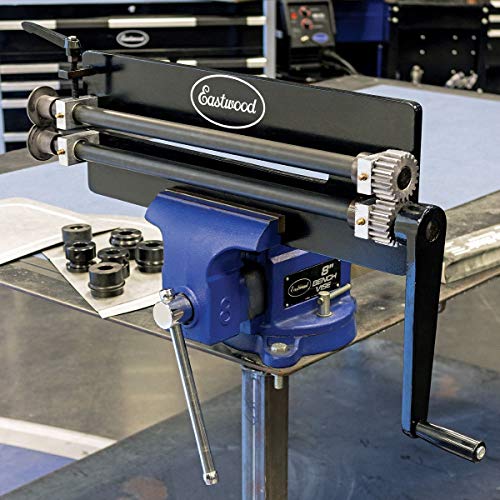
- Gear-driven for strong forming with low handle force.
- 19-inch throat reaches the center of a 38-inch panel.
- Includes offset dies for channels, flanges, and profiles.
Best For: Large-panel fabrication and custom auto body work.
Heavy-Rigidity Manual Roller
19” Metal Bead Roller with Dies

- Solid steel plate construction adds rigidity.
- 19-inch throat supports large-panel forming.
- Includes 1/4, 3/8, and 1/2 inch bead mandrels.
Best For: General fabrication in a vise or on a stand.
Versatile Shop Roller
Manual Bead Roller Sheet Metal Machine

- 18-inch throat and 18-gauge capacity cover common jobs.
- Includes 6 dies: step dies and bead matrices.
- Forward/reverse crank offers controlled manual operation.
Best For: Auto body repair and general sheet metal forming.
Powered Forming Upgrade
Eastwood 19 Inch Metal Forming Bead Roller

- 1/6hp reversible motor reduces manual cranking.
- Variable speed control adds forming precision.
- Handles up to 38-inch workpieces and 18-gauge steel.
Best For: Solo fabrication work on larger panels.
Compact Manual Rotary Beader
Sheet Metal Bead Roller Machine with 6 Dies

- Manual crank control for slower, safer forming
- Includes 6 dies for stepping, beading, and heads
- Fits sheet work up to 1.2mm thick
Best For: Automotive panel work and light shop fabrication
Shop-Ready Manual Former

- 18 gauge mild steel capacity
- 12 inch throat reaches deeper into panels
- Comes with 6 bead and flanging die sets
Best For: Shop work on roofs, hoods, HVAC parts, and repair panels
Deep-Throat Manual Beader
Professional 1.2mm Sheet Metal Roller

- 19.3 inch throat depth for larger panels
- Manual crank control for safer speed management
- Includes 6 dies for stepping and beading
Best For: Larger roof, deck, and hood panels
Compact Manual Pick
18-Inch 1.2mm Sheet Metal Bead Roller

- Six included die sets for beading, wiring, and crimping.
- Hand-crank operation gives direct control over pressure and speed.
- 18-inch throat depth suits panels used in automotive and shop work.
Best For: Users who want a simple manual bead roller for lighter fabrication tasks.
Workshop Standout
Manual Bead Roller with Stand and 12 Dies
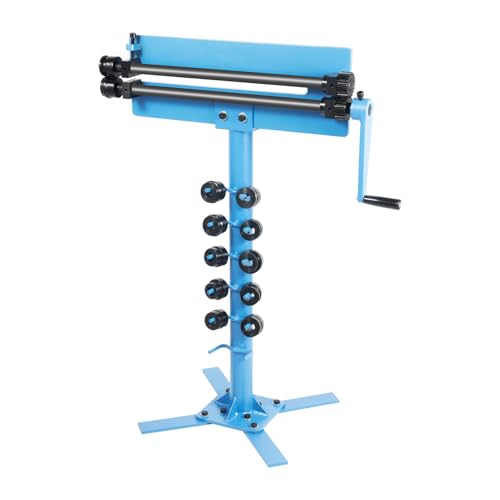
- Includes a stand plus storage, which helps keep the setup stable and organized.
- Twelve dies support beading, wiring, flanging, and bending.
- Gear-assisted manual crank is built for controlled, consistent forming.
Best For: Users who want a stable, stand-mounted bead roller for regular shop use.
Gear-Drive Choice
19-Inch Manual Bead Roller Bender

- Gear-driven design aims to boost forming power while reducing handle effort.
- 19-inch throat depth helps with larger panels and deeper access.
- Six dies handle beading, wiring, flanging, crimping, and ogee beading.
Best For: Users who want a manual gear-drive roller for larger panel work.
Industrial Power Bead Roller – Eastwood Metal Fabrication Bead Roller with Dies
This sheet metal bead roller machine is built for users who want serious forming power without excessive hand effort. The Eastwood unit combines a gear-driven design with a 19-inch throat, making it practical for strengthening ribs, channels, flanges, and decorative profiles on larger panels.
Best For: Builders and fabricators working on floor pans, firewalls, trunk floors, and custom panels.
Pros:
- Gear-driven design delivers maximum forming power with minimal handle force.
- 19-inch throat depth reaches the center of a 38-inch panel.
- Handles steel up to 18 gauge, aluminum up to 16 gauge, and stainless up to 20 gauge.
- Includes offset dies for channels, flanges, and multiple profiles.
Cons:
- Manual operation may be slower than a powered setup for high-volume work.
- At 50 pounds, it is a substantial tool to mount and move.
Overall, this is a strong choice if you want a durable bead roller focused on control, throat reach, and versatile panel forming. The included dies and Eastwood support make it a practical fit for both shop and enthusiast use.
Heavy-Rigidity Manual Roller – 19” Metal Bead Roller with Dies
For shoppers comparing a sheet metal bead roller machine with a focus on rigidity, this 19-inch model stands out for its solid steel plate construction and broad forming range. It is designed to add strength to panels while handling common fabrication tasks like floor pans, firewalls, truck floors, and decorative shapes.
Best For: Users who want a rigid, vise- or stand-mounted manual bead roller for general fabrication.
Pros:
- Built from 9/16-inch solid steel plate for strength and rigidity.
- 19-inch throat capacity supports forming from the center of a 38-inch panel.
- Uses industry-standard 22mm shafts to accept professional dies.
- Includes bead mandrels in 1/4, 3/8, and 1/2 inch sizes.
Cons:
- Manual, hand-powered operation may not suit fast production work.
- Heavier build can make setup and mounting less convenient.
This model is a solid pick if rigidity and compatibility matter more than automation. Its standard shafts and included mandrels make it a straightforward option for common forming jobs.
Versatile Shop Roller – Manual Bead Roller Sheet Metal Machine
This sheet metal bead roller machine is aimed at buyers who want a straightforward manual tool with a useful die set included. With an 18-inch throat and 18-gauge capacity, it is set up for auto body repair, crimping, and a range of common forming tasks.
Best For: Fabricators who want a manual bead roller with multiple dies ready out of the box.
Pros:
- Heavy-duty carbon steel construction is built for long-term use.
- 18-inch throat and 18-gauge capacity cover many sheet metal jobs.
- Includes 6 interchangeable dies: 3 step dies and 3 bead matrices.
- Forward and reverse manual crank operation gives precise control.
Cons:
- Lower throat depth than 19-inch competitors.
- Manual vice mounting may require a stable setup before use.
For a budget-conscious workshop setup, this model offers a practical mix of capacity and included tooling. The die package and manual control make it useful for users who want flexibility without extra purchases.
Powered Forming Upgrade – Eastwood 19 Inch Metal Forming Bead Roller
If you want a sheet metal bead roller machine that reduces hand cranking, this Eastwood power-drive system is the standout option in the group. It pairs a reversible 1/6hp electric motor with variable speed control, making it easier for one person to form channels, flanges, and strengthening ribs.
Best For: Solo users who want powered bead rolling on larger workpieces.
Pros:
- 1/6hp 120v reversible motor supports powered operation.
- Infinitely variable speed control helps match forming pace to the job.
- Handles up to a 38-inch wide workpiece with a 19-inch throat.
- Forms steel up to 18 gauge and aluminum up to 16 gauge.
Cons:
- More expensive than a standard motorized bead roller, according to the product notes.
- Requires power, so it is less portable than manual-only models.
This is the best pick if you want to cut down on manual effort while keeping solid forming capacity. The powered drive and variable speed control make it especially useful for one-person shop work.
Compact Manual Rotary Beader – Sheet Metal Bead Roller Machine with 6 Dies
If you want a sheet metal bead roller machine for controlled hand forming, this manual rotary model is built around simplicity and safety. It offers a 50mm roller center distance, 490mm sheet insertion depth, and a 1.2mm sheet thickness limit, making it suited to light fabrication and automotive sheet work.
Best For: Manual bead rolling, flanging, and burring on automotive panels and shop sheet metal.
Pros:
- Manual crank operation gives you direct control over feed speed and forming pressure.
- Includes 6 die sets: 1/16″, 1/8″, 1/4″ step dies plus 1/4″, 3/8″, and 1/2″ head molds.
- Throat cast iron head roll is described as lightweight and easy to center.
- Designed for tasks like edges, elbows, flanging, flats, and burr removal.
Cons:
- Max sheet thickness is limited to 1.2mm.
- Manual operation means all feed and forming force comes from the crank.
This is a practical pick if you value a straightforward bench-style bead roller with included dies and predictable hand control. It looks especially useful for users who need a compact manual setup for automotive and general sheet metal finishing.
Shop-Ready Manual Former – 12 in Throat Bead Roller
This sheet metal bead roller machine is a straightforward manual forming tool for builders who need dependable control on bench-mounted work. With an 18 gauge mild steel capacity, 12 inch throat depth, and six included die sets, it is geared toward beading and flanging on larger panels.
Best For: Roofs, decks, hoods, HVAC parts, repair panels, and custom sheet metal work.
Pros:
- Handles up to 18 gauge mild steel or equivalent.
- 12 inch throat depth reaches farther into panels.
- Includes six forming rolls: R4, R6, R7.5 bead dies and 1/16″, 1/8″, 1/4″ flanging dies.
- Manual crank control lets you pause, adjust, and feed at your own pace.
Cons:
- Manual operation is slower than powered alternatives.
- Bench-mounted, steel-body construction is more shop-oriented than portable-use focused.
For users who need a capable manual bead roller with a deeper throat, this KAKA INDUSTRIAL model stands out for panel access and included tooling. It should fit well in fabrication or repair environments where repeatable hand control matters more than automation.
Deep-Throat Manual Beader – Professional 1.2mm Sheet Metal Roller
For buyers comparing a sheet metal bead roller machine with more reach, this manual model offers a 19.3 inch throat depth and a 1.2mm maximum sheet thickness. Its crank-driven design keeps the forming speed under your control, which is useful when working on panels that need careful strengthening or edge forming.
Best For: Larger panels like roofs, decks, and hoods that need manual beading support.
Pros:
- Full 19.3 inch throat depth for better panel reach.
- Manual crank operation gives controlled, safer feed speed.
- Includes 6 roll sets: 1/16″, 1/8″, and 1/4″ step dies plus 1/4″, 3/8″, and 1/2″ bead dies.
- Supplied with setting key and multiple profile rollers for different bead shapes.
Cons:
- Maximum sheet thickness is limited to 1.2mm.
- At 36kg, it is a heavier manual machine to handle and position.
This is a strong option if throat depth is a priority and you want a manual bead roller with a broad die set included. The long reach and hand-crank control make it a practical fit for larger sheet metal jobs in a fabrication setting.
Compact Manual Pick – 18-Inch 1.2mm Sheet Metal Bead Roller
If you need a sheet metal bead roller machine for light fabrication, this 18-inch manual model is built around control and straightforward setup. It uses hand power, includes six die sets, and is sized for reinforcing panels, crimping wires, and shaping common automotive or shop sheet metal up to 1.2mm/18Ga.
Best For: Hands-on users who want a simple manual bead roller for smaller fabrication jobs, panel reinforcement, and occasional shop work.
Pros:
- Six die options cover step dies and bead dies for multiple forming tasks.
- Manual crank control lets you adjust pressure, speed, and direction by hand.
- 18-inch throat depth helps reach into panels like roofs, hoods, and floors.
- Carbon steel construction with plastic spraying is aimed at durability and wear resistance.
Cons:
- Vice mount setup may not suit users wanting a fully freestanding solution out of the box.
- 1.2mm/18Ga capacity limits it to lighter sheet metal work.
- Best suited to manual operation rather than high-volume production.
Overall, this is a practical sheet metal bead roller machine if you value simple control, decent throat depth, and a broad set of dies without moving into a more complex powered setup.
Workshop Standout – Manual Bead Roller with Stand and 12 Dies
This sheet metal bead roller machine is designed for users who want a more complete workshop setup, including a stand and 12 total dies. It combines manual crank control with a gear-assist feel, an 18-inch throat depth, and a stated capacity for sheet metal up to 0.05 inches thick, making it suitable for beading, wiring, flanging, and bends on larger panels.
Best For: Hobbyists and shop users who want a stable, stand-mounted manual bead roller with organized die storage and wider forming options.
Pros:
- Includes six complete die sets for a wide range of forming tasks.
- Heavy-duty stand improves stability and adds storage for the dies.
- Gear and crank design is intended to reduce effort and improve consistency.
- Built from Q235 and 45# steel with corrosion-resistant finishing.
Cons:
- Heavier setup at 55 pounds, so it is less portable than bench-only units.
- Manual operation still depends on user effort for every pass.
- Best suited to users who have floor space for the included stand.
If you want a more complete and stable setup, this model stands out as a practical sheet metal bead roller machine for repeat workshop use and broader panel-forming jobs.
Gear-Drive Choice – 19-Inch Manual Bead Roller Bender
For buyers comparing a sheet metal bead roller machine with a bit more throat reach, this manual gear-drive model offers a 19-inch throat depth and six forming roll sets. It is built for hand-cranked operation, with the gear-driven design aimed at delivering maximum forming power while keeping handle force low for more accurate work on panels and sheet metal.
Best For: Users who want a manual gear-drive bead roller for controlled shaping on larger panels and general fabrication tasks.
Pros:
- Gear-driven layout is designed for more forming power with less handle force.
- Six die sets support beading, wiring, flanging, crimping, and ogee beading.
- 19-inch throat depth is useful for strengthening larger panels like roofs, decks, and hoods.
- Manual operation gives the user full control over working speed.
Cons:
- No stand is mentioned in the supplied details, so mounting setup may need extra planning.
- Manual crank operation still requires steady user input for every job.
- Best suited to users comfortable with hand-powered fabrication tools.
As a sheet metal bead roller machine, this model is a solid fit if you want longer reach and gear-assisted control without stepping up to an electric unit.
How We Picked the Best Sheet Metal Bead Roller Machine
We prioritized machines that offer useful shop capacity, reliable die sets, and clear forming versatility. For a Sheet Metal Bead Roller Machine, throat depth and material thickness matter as much as the frame design, because they determine how easily you can reach panels and keep bends consistent.
We also looked for options that support common fabrication tasks such as beading, flanging, wiring, and light shaping. Models with better accessory bundles and stronger drive setups earned extra attention for users who want fewer add-on purchases.
Quick Comparison
In general, 18-inch and 19-inch throat machines give more working room for larger panels, while shorter-throat units are often better for smaller parts and tighter shops. Manual bead rollers are usually the best value for occasional use, while gear-drive and power-drive setups are better if you expect repetitive work or thicker material.
Die count is another useful differentiator. A more complete die set can improve versatility right out of the box, but the most important factor is whether the included dies match the type of work you plan to do.
Key Buying Factors for a Sheet Metal Bead Roller Machine
Throat Depth
Throat depth determines how far into a panel you can work. If you plan to bead door skins, body panels, or larger fabricated pieces, a deeper throat is usually the smarter choice.
Material Capacity
Check the stated thickness rating carefully. Many machines are listed around 1.2 mm or 18 gauge, but real-world performance depends on the material type, die selection, and how much force the machine can apply without flexing.
Drive Style
Manual models are simpler and more affordable, while gear-drive and powered units improve control and reduce fatigue. If you expect long sessions or repeat production, the extra drive assistance can be worth it.
Included Dies and Adjustability
A wider die assortment increases what you can fabricate without buying extra tooling. Adjustability also matters, especially if you want to switch between beading, flanging, and other forming tasks.
Frame Stability
A rigid frame helps keep beads straight and consistent. Flex in the stand, arms, or mounting points can reduce accuracy, especially on longer panels.
Who Should Buy Which Sheet Metal Bead Roller Machine?
If you are a hobbyist or weekend fabricator, a manual machine with a solid die kit is usually the best starting point. If you restore cars or work on larger sheet metal projects, look for deeper throat depth and better frame rigidity.
For frequent shop use, a power-drive or gear-drive Sheet Metal Bead Roller Machine is often the most practical choice because it improves repeatability and reduces operator fatigue. Buyers who want maximum versatility should favor models with more dies and a broader forming range, while budget-minded shoppers can focus on a dependable manual unit with the core dies they will actually use.