If your projects involve curves, cutouts, or small inside corners, the right sander can save time and improve the finish fast. Spindle sanders are especially useful for refining edges that standard sanders struggle to reach.
Below, we’ve narrowed the field to 10 practical options for different shop sizes, budgets, and sanding needs so you can choose with confidence.
Best 10 Spindle Sanders for DIY Projects Picks for 2026
Compact Shop Sander
WEN 6510T 3.5 Amp Oscillating Spindle Sander
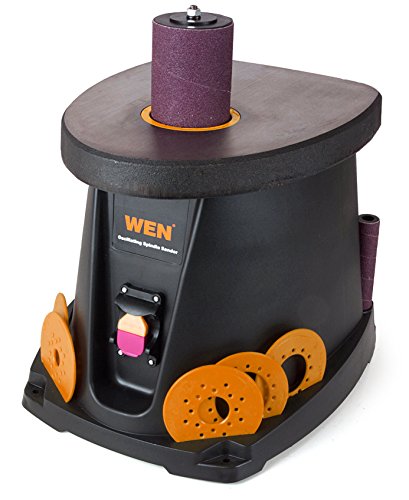
- 3.5 amp motor; 58 OPM and 2000 RPM
- Onboard accessory storage
- Dust collection port for cleaner sanding
Best For: DIYers needing a dedicated benchtop spindle sander for curves and edges
Precision Detail Kit
100PCS Micro Detail Sander Kit

- 100 sandpapers in 10 grits from 60 to 800
- Compact 3.5 x 1-inch sanding block
- Hook-and-loop backing for quick swaps
Best For: Detail sanding in tight spaces on wood, crafts, plastic, resin, or metal
All-In-One Workshop Sander
WEN 6524 Oscillating Belt and Spindle Sander
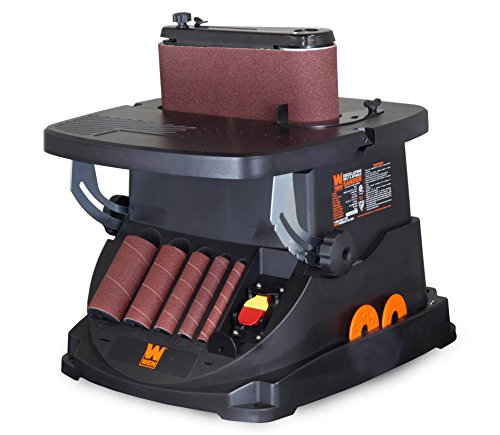
- Combines spindle sanding with a 4 x 24 inch belt
- Five spindle sizes and 58 oscillations per minute
- Onboard storage plus beveling work table
Best For: DIY woodworkers who want one machine for spindle and belt sanding
Drill-Press Detail Kit
POWERTEC 20-Piece Sanding Drum Kit

- 20-piece kit with 4 arbors and 16 sanding bands
- For sanding holes, contours, and irregular shapes
- Includes molded carrying case
Best For: DIYers using a drill press or 1/4-inch tool for sanding attachments
Portable Shop-and-Field Pick
WEN HA5932 Variable Speed Portable Spindle Sander
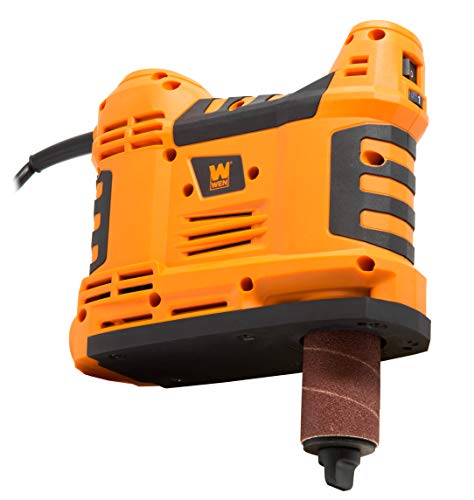
- Portable handheld use for tight spots
- Clamps to a bench for stationary sanding
- Variable speed with 4 spindle diameters
Best For: DIYers who need portability and benchtop flexibility
Accessory Value Pack
18 Pack Spindle Sander Sleeves Assorted Grit Kit

- 18 sleeves with 80/150/240 grits
- Six diameters from 1/2 inch to 3 inch
- Accessory-only pack for standard oscillating sanders
Best For: DIYers needing mixed replacement sleeves
Powerful Benchtop Choice
Woodskil Variable Speed Oscillating Spindle Sander

- 2/3HP 4-amp motor for tougher sanding
- 1000 to 1800 RPM variable speed control
- Dust port and 6 included sleeves
Best For: Woodworkers who want a compact benchtop model with more power
Drill-Ready Kit

- 4 drum sizes for varied contours
- 80 and 120 grit sleeves included
- Fits 1/4-inch drills and rotary tools
Best For: DIYers who need a versatile sanding drum set for drills and presses
Wide-Table Finisher

- 2400 RPM for smooth sanding
- 6 sleeve sizes from 1/2" to 3"
- Wide cast-iron table with dust port
Best For: Woodworkers who want a dedicated oscillating spindle sander with a spacious table
Combo Shop Sander
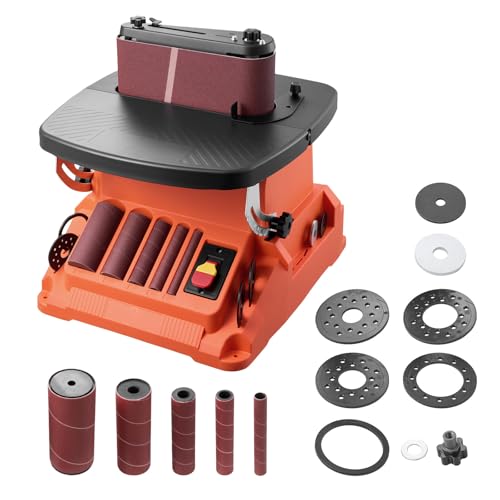
- Belt and spindle sanding in one machine
- 24-inch belt plus 5 spindle sleeves
- 0-45° tilting worktable for angle work
Best For: DIY woodworkers who want a combo machine for both belt sanding and spindle sanding
Compact Shop Sander – WEN 6510T 3.5 Amp Oscillating Spindle Sander
If you want a straightforward spindle sander for DIY projects, the WEN 6510T is built for smoothing curves, contours, and inside edges without taking up a huge amount of space. Its 3.5 amp motor delivers 58 oscillations per minute and up to 2000 RPM, making it a practical fit for common workshop sanding tasks.
Best For: DIYers who want a dedicated benchtop spindle sander for shaping and smoothing curved or awkward edges.
Pros:
- 3.5 amp motor with 58 OPM and up to 2000 RPM for steady sanding performance.
- Onboard storage helps keep accessories organized between projects.
- Dust collection port supports cleaner sanding with a connected extractor.
Cons:
- Single-purpose benchtop tool, so it is not as versatile as combo sanders.
- At 30.2 pounds, it is not designed for easy portability.
This is a solid pick if you want a dedicated oscillating spindle sander with basic shop conveniences and a compact footprint. It focuses on core sanding performance rather than extra features.
Precision Detail Kit – 100PCS Micro Detail Sander Kit
For spindle sanding tasks that call for hand-level control, this micro detail sander kit is aimed at tiny surfaces, tight spots, and finishing work. It includes a compact sanding block plus 100 sandpapers from 60 to 800 grit, so you can move from rough shaping to finer refinement without switching systems.
Best For: Detail-oriented DIYers working on crafts, resin, plastic, metal, or small wood projects in hard-to-reach areas.
Pros:
- Includes 100 sandpapers across 10 grits from 60 to 800.
- Compact 3.5 x 1-inch size is suited to narrow and hard-to-reach spaces.
- Hook-and-loop backing allows quick sandpaper changes and secure hold.
Cons:
- It is a hand sanding kit, not a powered spindle sander.
- Best suited to detailed work rather than large surface removal.
This kit makes sense when the project is small and precision matters more than speed. It gives you a broad grit range in a very compact format for finishing-focused DIY work.
All-In-One Workshop Sander – WEN 6524 Oscillating Belt and Spindle Sander
If you want spindle sanders for DIY projects but also need belt sanding in the same machine, the WEN 6524 combines both jobs in one benchtop unit. It includes multiple spindle sizes, a 4 x 24 inch belt, and oscillation at 58 times per minute, which makes it useful for curved parts, contours, and general sanding cleanup.
Best For: DIY woodworkers who want one corded machine for both spindle and belt sanding tasks.
Pros:
- Includes five spindle sizes plus a 4 x 24 inch belt for added versatility.
- 3.5 amp motor reaches up to 2000 RPM and 58 oscillations per minute.
- Onboard storage helps keep sandpapers and accessories organized.
- Includes a beveling work table and multiple throat plates for setup flexibility.
Cons:
- Heavier benchtop tool at 27 pounds.
- Single grit assortment included is 80-grit, so additional abrasives may be needed.
This model is the most flexible option here if your DIY work moves between spindle sanding and belt sanding. It is a practical workshop choice when you want one machine to cover more shaping and smoothing tasks.
Drill-Press Detail Kit – POWERTEC 20-Piece Sanding Drum Kit
For spindle sanders for DIY projects when you already have a drill press or compatible drill, this POWERTEC drum kit offers a compact way to sand holes, contours, and irregular shapes. The set includes four drum arbors, sixteen sanding bands, and two grit options, giving you a practical accessory kit for precision smoothing work.
Best For: DIYers who want sanding drum attachments for a drill press or 1/4-inch tool setup.
Pros:
- Includes 20 pieces with four long sanding barrel arbors and 16 sanding bands.
- Designed for sanding holes, contours, rough edges, and irregular shapes.
- Works with wood, plastics, and metals for general-purpose DIY use.
- Comes with a molded carrying case for storage and transport.
Cons:
- Requires a drill press or compatible 1/4-inch tool rather than operating as a standalone machine.
- Kit is focused on accessory sanding, not a full benchtop spindle sander.
This is a smart budget-minded route if you need spindle-style sanding capability without buying a dedicated machine. It is especially useful for small shops that already rely on a drill press for precision work.
Portable Shop-and-Field Pick – WEN HA5932 Variable Speed Portable Spindle Sander
For DIY projects that need spindle sanders for DIY projects with both mobility and bench support, the WEN HA5932 is built to do both. Its lightweight, portable form is easy to carry into tight spaces, and it can also be clamped to a workbench to act like a stationary spindle sander. The variable-speed motor and multiple spindle diameters make it a flexible option for curved edges, detail work, and touch-up sanding.
Best For: DIYers who want one sander they can use handheld on awkward spots or clamp down for benchtop work.
Pros:
- Lightweight portable design helps reach hard-to-access areas
- Can be clamped to a workbench with included mounting hardware
- 5-amp variable speed motor runs from 1800 to 3200 RPM and 50 to 90 oscillations per minute
- Includes four spindle sizes: 1/2 inch, 3/4 inch, 1 inch, and 1-1/2 inch
Cons:
- Uses 80-grit sleeves in the included kit, so finer finishing may require extra sleeves
- Smaller 1-1/2 inch disc diameter may not suit larger surface sanding needs
Overall, this WEN model stands out if you want a practical, portable spindle sander with enough flexibility for typical DIY shaping and contour work. The included dust port, guide plate, clamps, and sleeves add useful value for a home shop setup.
Accessory Value Pack – 18 Pack Spindle Sander Sleeves Assorted Grit Kit
If you already own spindle sanders for DIY projects, this 18-pack sleeve kit is a straightforward way to keep your machine ready for different stages of sanding. It includes three grit levels and six diameter sizes, so you can swap sleeves to match rough shaping, smoothing, or finer surface prep. The aluminum oxide construction is aimed at general workshop use across wood, metal, and plastic.
Best For: DIYers and workshop users who need replacement sleeves in multiple grits and sizes.
Pros:
- 18-pack includes 80, 150, and 240 grit sleeves
- Six diameters cover 1/2 inch through 3 inch spindle sizes
- 4.5-inch sleeve length offers broad compatibility with standard oscillating spindle sanders
- Aluminum oxide material is designed for efficient material removal and resurfacing
Cons:
- Accessory-only kit, so it does not include a sander
- Compatibility depends on your machine’s spindle size and sleeve length requirements
This kit makes sense as a practical refill pack for general sanding jobs, especially if you switch between coarse and finer grits often. It is best viewed as a convenience purchase for owners who want a mix of common sizes on hand.
Powerful Benchtop Choice – Woodskil Variable Speed Oscillating Spindle Sander
For woodworkers comparing spindle sanders for DIY projects, the Woodskil model focuses on power, control, and workshop cleanup. Its 4-amp motor is aimed at tougher sanding jobs, while the 1000 to 1800 RPM range gives you more measured control for curved edges, slots, and detail work. The included dust port and compact footprint make it a sensible fit for a small shop.
Best For: DIY woodworkers who want a compact benchtop sander with stronger sanding power and vacuum hookup.
Pros:
- 2/3HP, 4-amp motor is built for heavier sanding tasks
- Variable speed from 1000 to 1800 RPM supports more controlled finishing
- Includes 6 sanding sleeves from 1/2 inch to 3 inch
- Dust port can connect to a vacuum system for cleaner sanding
Cons:
- Lower maximum speed than some other variable-speed options
- Bulky benchtop format is less portable than handheld-style sanders
This is a strong choice if you want a stable, compact machine with enough power for hardwood and larger projects. It leans more toward controlled workshop sanding than grab-and-go portability.
Drill-Ready Kit – 20PCS Sanding Drum Kit
If you want spindle sanders for DIY projects without buying a full benchtop machine, this sanding drum kit is a practical way to smooth holes, contours, and irregular edges. It includes multiple drum diameters, two common grits, and a simple expansion-style setup that works with 1/4-inch tools.
Best For: DIYers who need a versatile sanding drum set for drills, drill presses, and rotary tools.
Pros:
- Includes 4 drum sizes: 1/2″, 3/4″, 1″, and 1-1/2″.
- Comes with 80- and 120-grit sleeves for rough shaping and finer finishing.
- Fits 1/4-inch tools, including drill presses, hand drills, and rotary tools.
- Rubber drum expands to tighten sleeves without adhesives.
Cons:
- Maximum operating speed is limited to 3000 rpm/opm.
- Not a full spindle sander machine, so it depends on a compatible tool.
- Best suited to smaller sanding jobs rather than large surfaces.
For light shop work and detailed shaping, this kit covers a lot of everyday sanding needs in one package. The mix of sizes and the included case make it a straightforward add-on for general DIY finishing tasks.
Wide-Table Finisher – Oscillating Spindle Sander
This benchtop spindle sander is built for DIY projects that need smooth, controlled sanding on flat, curved, and contoured surfaces. With 2400 RPM, six sleeve sizes, and a roomy cast-iron worktable, it gives you the setup needed for furniture finishing and craft sanding.
Best For: Woodworkers who want a dedicated oscillating spindle sander with a spacious table and multiple sleeve sizes.
Pros:
- 2400 RPM rotation supports efficient sanding on curved and contoured parts.
- Includes 6 sleeve sizes from 1/2″ to 3″ plus matching table inserts.
- 5/8-inch stroke helps handle both thin and thick workpieces.
- Dust port is designed for connection to vacuum hoses.
Cons:
- Benchtop design requires dedicated workspace.
- Primarily focused on spindle sanding rather than belt sanding.
- Best suited to woodworking and furniture tasks, not general-purpose shop cutting.
If your priority is a stable machine for repeatable sanding, this model brings useful size coverage and workspace into one package. The organized storage and dust collection support make it especially practical for regular DIY finishing sessions.
Combo Shop Sander – Belt and Spindle Sander
For DIY projects that call for both edge cleanup and contour sanding, this oscillating belt and spindle sander gives you two tools in one benchtop machine. It runs at 2400 RPM, includes five spindle sleeves, and adds a 24-inch sanding belt for more flexible workshop use.
Best For: DIY woodworkers who want a combo machine for both belt sanding and spindle sanding.
Pros:
- Combines belt sanding and spindle sanding in one machine.
- Includes a 24 x 3.86 inch sanding belt and 5 spindle sleeves.
- 0-45° tilting worktable supports more precise angle adjustments.
- Dust port helps connect to a vacuum hose for cleaner sanding.
Cons:
- Uses fewer spindle sleeve sizes than the full spindle-only model.
- Benchtop footprint still requires dedicated shop space.
- Primarily aimed at woodworking and furniture finishing tasks.
This is the most versatile pick in the group if you want one machine for more than contour sanding alone. The belt-plus-spindle layout and tilting table make it a strong fit for everyday DIY finishing work.
How We Picked the Best Spindle Sanders for DIY Projects
We focused on Spindle Sanders for DIY Projects that offer a useful mix of stability, sanding range, ease of setup, and value. For benchtop machines, we looked for enough table support, sleeve size flexibility, and oscillation features that help reduce burn marks and improve edge quality. For accessory kits, we prioritized grit variety, sleeve diameter options, and compatibility with common drill press or spindle setups.
Quick Comparison
Benchtop oscillating spindle sanders are best if you regularly shape wood parts, trim templates, or smooth curved edges. Combo belt-and-spindle models are the most versatile when you want one machine for both profiles and flat or edge sanding. Portable and drill-press-based options make more sense for lighter-duty work, small shops, or buyers who already own compatible tools. Replacement sleeve kits are the lowest-cost choice when you only need consumables or occasional detail sanding support.
Key Buying Factors for Spindle Sanders for DIY Projects
Motor Power and Speed Control
More power helps the machine stay consistent under load, especially on hardwoods or thicker stock. Variable speed is a plus because it lets you match sanding intensity to the material and reduce scorching on delicate parts.
Stroke and Oscillation
Oscillation helps spread wear across the sleeve and improves sanding quality by reducing heat buildup. A larger stroke can be helpful for faster shaping, while smaller, controlled movement may be better for fine finishing.
Sleeve Sizes and Accessories
Check the included spindle diameters and grit range before buying. The best setup is one that covers the curve sizes you actually cut most often, with easy access to replacement sleeves when the originals wear out.
Table Size and Stability
A wider, flatter worktable makes curved sanding safer and more accurate. Stable bases matter just as much, since vibration can affect control and finish quality.
Dust Management
Dust collection is not just a cleanup feature; it also improves visibility and can help sleeves last longer. If your shop is small, this becomes even more important.
Who Should Buy Which Spindle Sanders for DIY Projects?
If you want a straightforward benchtop setup for furniture parts, toys, signs, or cabinet details, choose a full-size oscillating machine. If you need maximum flexibility for both edge shaping and flatter stock, a belt-and-spindle combo is often the smartest upgrade. If you’re working on occasional detail jobs or already own a drill press, a sanding drum kit may be enough. And if you’re simply replenishing consumables, sleeve packs are the most cost-effective route.
For most buyers, the best choice is the machine that matches your most common cuts, not the one with the most features on paper. That approach keeps Spindle Sanders for DIY Projects practical, affordable, and easy to use over time.