A variable-speed belt grinder lets you slow down for controlled sharpening and finishing, then speed up for more aggressive stock removal. The right machine depends on whether you maintain finished knives or shape blades from raw steel.
These 10 picks span compact 1×30-inch setups and larger 2×72-inch machines. Several listings describe similar configurations, so check the exact belt size, included attachments, and electrical requirements before buying.
Best 10 Variable Speed Knife Belt Grinder Picks for 2026
Compact Versatility

- 550W motor with VFD speed control
- Flat and circular grinding setups
- Includes 100/180/240-grit belts
Best For: Small-workshop knife making with adjustable speed
Bevel Control Pick
1x30 Grinder with KSAG-5 Guide

- Includes KSAG-5 bevel angle guide
- Forward/reverse belt direction
- VFD and welded-steel frame
Best For: Repeatable knife bevels and direction control
Full-Size Workhorse
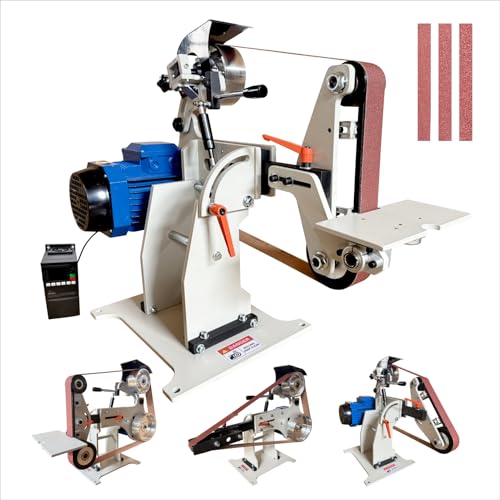
- 2x72-inch belt and 1500W motor
- VFD adjusts from 0–2800 rpm
- Three grinding methods; three belts included
Best For: Full-size knife shaping and varied grinding profiles
Reversible Compact Pick

- 550W brushless motor and VFD
- 200–5000 rpm; forward/reverse rotation
- Two workbenches and three belts included
Best For: Compact knife work needing reversible belt direction
Flexible Belt Fit
GOLDSAND 2x72 Variable-Speed Grinder

- Fits 72–82-inch-long, 2-inch-wide belts
- Stepless VFD control with reverse
- Three grinding setups and included belts
Best For: Makers needing belt-length flexibility and multiple grinding setups
Steel-Frame Pick

- 1500W motor with VFD speed control
- Includes 100-, 180-, and 240-grit belts
- Welded steel frame; listed at 110.7 lb
Best For: A dedicated bench setup with several finishing-grit options
Coarse-to-Fine Kit

- Includes 60-, 100-, and 180-grit belts
- Stepless VFD adjustment, listed 0–2900 rpm
- Vertical/horizontal operation; listed at 150 lb
Best For: Rough shaping through finer finishing in a stationary shop setup
Standard 2 x 72 Pick

- VFD stepless speed control
- Flat, arc, and circular grinding
- Three included 2 x 72-inch belts
Best For: Knife makers seeking a versatile 2 x 72-inch setup
Flexible Belt-Length Pick
VEVOR Vertical/Horizontal Grinder

- Fits 72- to 82-inch-long belts
- Vertical or horizontal operation
- Three grinding modes
Best For: Shops needing belt-length and working-position flexibility
Guarded Reversible Pick

- 600–6000 RPM stated adjustment
- Forward and reverse rotation
- Cover, eye shield, and spark deflector
Best For: Users prioritizing reversible control and built-in guards
Compact Versatility – VEVOR 1×30 550W Belt Grinder
If you want a variable speed knife belt grinder without moving up to a larger belt format, this VEVOR 1×30 model pairs a 550W motor with VFD speed control. Its flat and circular grinding setups give you options for shaping and finishing.
Best For: Small-workshop knife makers who want adjustable speed and multiple grinding positions.
Pros:
- VFD provides stepless speed adjustment for coarse and fine work.
- Supports flat and circular grinding in vertical or horizontal positions.
- Includes 100-, 180-, and 240-grit belts plus a detachable workbench.
Cons:
- Accepts 1×30-inch belts rather than the longer 2×72-inch format.
- Included belts start at 100 grit, so a coarser belt would be an additional purchase.
At 17.4 pounds, this is a relatively compact way to get VFD control and two grinding modes. Choose it for flexible bench-top work rather than a 2×72 setup.
Bevel Control Pick – 1×30 Grinder with KSAG-5 Guide
This variable speed knife belt grinder stands out for its included KSAG-5 angle guide and switchable forward/reverse belt direction. The VFD lets you adjust speed across shaping, sharpening, and finishing tasks.
Best For: Knife makers prioritizing repeatable bevel angles and control over belt direction.
Pros:
- KSAG-5 guide helps maintain consistent grinding angles.
- Forward/reverse rotation lets you choose the belt direction for the task.
- Welded all-steel frame supports stable tracking; included attachments cover flat and contact-wheel grinding.
Cons:
- Uses 1×30-inch belts, which may not suit buyers seeking a 2×72 grinder.
- The supplied notes do not specify included sanding belts.
The angle guide makes this a more targeted choice for bevel work than a basic variable-speed sander. Check what belts are included before planning your first session.
Full-Size Workhorse – JLD 2×72 1500W Belt Grinder
For buyers seeking a full-size variable speed knife belt grinder, this JLD uses 2×72-inch belts, a 1500W motor, and a 2.2kW VFD rated for stepless adjustment from 0–2800 rpm. Its two grinding kits support circular, flat, and arc grinding.
Best For: Knife makers who want a 2×72 platform for substantial shaping and varied grinding profiles.
Pros:
- 1500W motor and adjustable VFD suit both heavy grinding and finer work.
- Two kits provide circular, flat, and arc grinding options.
- Includes 60-, 100-, and 180-grit belts and supports vertical or horizontal operation.
Cons:
- Its listed 30 x 24 x 18-inch dimensions demand more workspace than the 1×30 models here.
- The supplied electrical setup includes a 110V-to-220V transformer, adding a component to manage.
This is the clearest fit in the group if belt length and grinding capacity matter most. Account for its footprint and transformer when planning your workstation.
Reversible Compact Pick – VEVOR 1×30 Brushless Grinder
This VEVOR variable speed knife belt grinder combines a 550W brushless motor with a VFD-adjustable 200–5000 rpm range. Unlike the other listed VEVOR 1×30 model, its supplied features explicitly include forward/reverse rotation.
Best For: Bench-top knife work where reversible belt direction and flexible positioning are priorities.
Pros:
- Forward/reverse control adds positioning flexibility while grinding.
- Supports flat or circular grinding and vertical or horizontal use.
- Includes 100-, 180-, and 240-grit belts plus two workbenches.
Cons:
- Limited to 1×30-inch belts rather than a longer 2×72-inch format.
- Included belts start at 100 grit; rougher stock removal requires another belt.
At a listed 17.2 pounds, this is a compact option with a notably broad stated speed range. It makes particular sense if reversing the belt is useful in your workflow.
Flexible Belt Fit – GOLDSAND 2×72 Variable-Speed Grinder
If you want a variable speed knife belt grinder that can also accommodate longer belts, this GOLDSAND model accepts 2-inch-wide belts from 72 to 82 inches long. Its 1500W motor and VFD support speed adjustment for shaping and finer finishing.
Best For: Makers who want variable speed, multiple grinding setups, and flexibility in belt length.
Pros:
- Accepts 72- to 82-inch-long, 2-inch-wide belts.
- VFD offers stepless speed control and forward/reverse rotation.
- Includes flat, arc, and circular grinding setups plus 100-, 180-, and 240-grit belts.
Cons:
- Its 220V motor requires the accompanying step-up transformer when used with a 110V supply.
- The supplied belts start at 100 grit, so a coarser belt would be a separate purchase.
The wider belt-length range is its clearest advantage. Before buying, plan for the stated voltage setup and choose additional grits if your work calls for heavier stock removal.
Steel-Frame Pick – 1500W 2×72 Belt Grinder
This variable speed knife belt grinder pairs a 1500W motor with a VFD and standard 2×72-inch belts. Its welded steel frame and thickened base make it a practical option for a dedicated bench setup.
Best For: Buyers who want a 2×72 grinder with a steel frame and belts for several finishing stages.
Pros:
- VFD provides adjustable speed for coarse work and finer sanding.
- Includes 100-, 180-, and 240-grit 2×72-inch belts.
- Supports flat, arc, and circular grinding on a welded steel frame.
Cons:
- At a listed 110.7 pounds, it is not an easy machine to move around the shop.
- The motor is rated for AC 220V; a 110V supply requires the included step-up transformer.
The included grits and three grinding modes cover a useful range of tasks. Check your available space and power arrangement before committing to this heavier bench machine.
Coarse-to-Fine Kit – JLD Professional 2×72 Grinder
For a variable speed knife belt grinder with a coarser starting belt, the JLD Professional includes 60-, 100-, and 180-grit belts. Its 1500W motor and 2.2kW VFD provide stepless speed adjustment across the listed 0–2900 rpm range.
Best For: Makers who want included belts for rough shaping through finer finishing and room for a substantial machine.
Pros:
- Includes 60-, 100-, and 180-grit belts for different work stages.
- Supports flat, arc, and circular grinding, plus vertical and horizontal operation.
- Thickened, powder-coated steel frame is built for a stable setup.
Cons:
- Its listed 150-pound weight makes relocation difficult.
- Its listed 29 x 18 x 24-inch dimensions call for ample shop space.
The 60-grit belt distinguishes this kit if rough shaping is part of your workflow. Its size and weight make it a better fit for a planned, stationary workspace.
Standard 2 x 72 Pick – VEVOR 1500W Belt Grinder
This variable speed knife belt grinder pairs a 1500W motor with VFD speed control for moving between material removal and finer sanding. Its 2 x 72-inch belt format and three grinding setups give knife makers several ways to approach a workpiece.
Best For: Knife makers who want a 2 x 72-inch grinder with flat, arc, and circular grinding options.
Pros:
- Stepless VFD adjustment lets you vary sanding speed.
- Includes 100-, 180-, and 240-grit belts.
- Welded steel frame and thickened base support stable operation.
Cons:
- At 110.7 pounds, it is not easy to move around a shop.
- The supplied belts cover only three grit choices.
The appeal here is a straightforward 2 x 72-inch setup with multiple grinding surfaces; plan for a dedicated bench space and additional belts if your process needs other grits.
Flexible Belt-Length Pick – VEVOR Vertical/Horizontal Grinder
If you want a variable speed knife belt grinder that accepts more than one belt length, this VEVOR model supports 72- to 82-inch-long, 2-inch-wide belts. Its VFD-controlled 1500W motor, three grinding modes, and vertical or horizontal positioning suit varied metalworking tasks.
Best For: Shops that want longer-belt compatibility and a choice of vertical or horizontal working positions.
Pros:
- Accepts 72- to 82-inch-long, 2-inch-wide belts.
- Supports vertical and horizontal use with a detachable workbench.
- Includes flat, arc, and circular grinding setups plus three grit options.
Cons:
- Its 184.5-pound weight makes repositioning difficult.
- Its 35.24-by-15.75-inch footprint calls for substantial workspace.
Choose this version when positioning and belt-length flexibility matter more than portability. The included 72-inch belts get you started, while other supported lengths are separate purchases.
Guarded Reversible Pick – VEVOR Brushless VFD Grinder
This variable speed knife belt grinder stands out for its 1500W brushless motor, stated 600–6000 RPM VFD adjustment, and forward/reverse rotation. It also combines three grinding modes with vertical or horizontal use for different approaches to knife-making and metalworking.
Best For: Users who want reversible operation and built-in guards alongside adjustable speed.
Pros:
- Forward/reverse control adds flexibility in handling a workpiece.
- Full protective cover, adjustable eye shield, and spark deflector are included.
- Accepts 72- to 82-inch-long, 2-inch-wide belts and includes three 72-inch belts.
Cons:
- Its 40.55-by-18.11-inch footprint needs a roomy station.
- At 158.7 pounds, it is better suited to a fixed location.
This is the more feature-focused choice of the three: reversal and guarding distinguish it, but check that your workspace can accommodate its size before ordering.
How We Picked the Best Variable Speed Knife Belt Grinder
We focused on the specifications buyers can use to narrow the field: belt dimensions, stated motor power, variable-speed controls, grinding attachments, and the work each format is suited to. The selected listings include closely related VEVOR and JLD configurations, so an extra attachment or a differently worded title should not be treated as proof of better performance. We have not independently verified motor output, speed ranges, or long-term durability; confirm those details with the seller before ordering.
Quick Comparison: 1×30 Vs. 2×72
1×30-inch models: The compact 550W VEVOR listings and the 1×30 forward/reverse option make more sense for space-conscious shops, sharpening, and lighter shaping. Narrow belts limit the working area and are less convenient for sustained stock removal.
2×72-inch models: The listed 1500W machines provide a larger abrasive surface for profiling, bevel work, and finishing. They generally need more bench or floor space and a larger budget, but the common belt format gives knife makers a broader range of abrasive choices.
Key Buying Factors for a Variable Speed Knife Belt Grinder
Speed Control and Direction
A variable-frequency drive (VFD) can help match belt speed to the task, but a listing that says “variable speed” does not tell you the usable minimum or maximum. Look for a published speed range, straightforward controls, and clear VFD setup instructions. Forward/reverse operation may help with certain sharpening approaches; check how tracking and work-rest use are handled in both directions.
Belt Size, Tracking, and Work Support
Choose 1×30 if compactness and light-duty sharpening matter most; choose 2×72 if you plan to make knives regularly. Regardless of size, look for accessible belt-tension and tracking adjustments, a rigid platen, and a work rest that suits your intended angles. Check whether replacement belts in your preferred grits are readily available.
Motor, Attachments, and Electrical Fit
Compare the stated motor rating with the actual tasks you expect to perform, rather than relying on wattage alone. Check which contact wheels, platens, and grinding kits are included: the JLD and VEVOR 2×72 listings vary in their stated kit counts and modes. Verify input voltage, plug type, VFD requirements, machine footprint, and assembly needs before checkout.
Who Should Buy Which Variable Speed Knife Belt Grinder?
Occasional sharpener: Start with a 1×30 option if you value a smaller footprint and will do limited shaping. Knife-making beginner: Consider a 2×72 machine if you expect to profile and grind multiple blades; prioritize a stable platen and usable speed control over a large accessory count. Frequent maker: Compare the 2×72 packages by their exact attachments, electrical compatibility, and replacement-part availability. When two listings appear nearly identical, choose based on confirmed contents, seller support, and total delivered cost.