Making art in VR is more enjoyable when you can see fine details clearly and move your hands comfortably. The right headset also depends on whether you paint entirely in virtual space or want your work to share the room with you.
These nine listings cover four Meta Quest models, with different storage capacities, bundles, and renewed options. Here’s how to separate meaningful hardware differences from listing extras.
Best 9 Vr Headsets for Digital Art Picks for 2026
Best Entry Point

- Wireless standalone VR
- Mixed-reality capability
- 128GB storage; 8GB RAM
Best For: Beginners exploring wireless VR creativity
Best for Visual Detail

- 2064 × 2208 pixels per eye
- Full-color mixed-reality passthrough
- 512GB onboard storage
Best For: Creators prioritizing clarity and storage
Best for Creative Workspaces
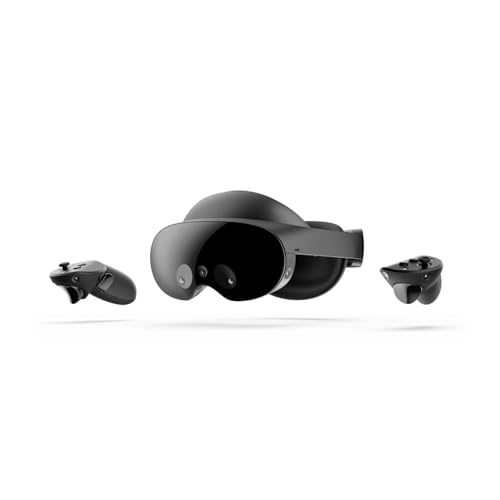
- Resizable virtual screens
- Self-tracking Touch Pro controllers
- 256GB storage; 12GB RAM
Best For: Mixed-reality multitasking and detailed input
Best Overall
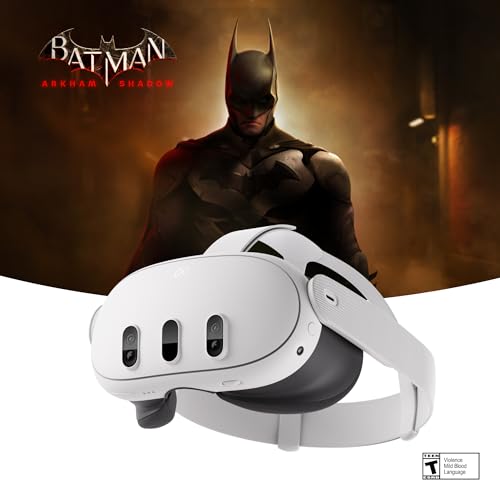
- Pancake lenses and high-resolution display
- Full-color mixed-reality passthrough
- 512GB storage; 8GB RAM
Best For: Clear visuals and mixed-reality creative sessions
Renewed Standalone Pick
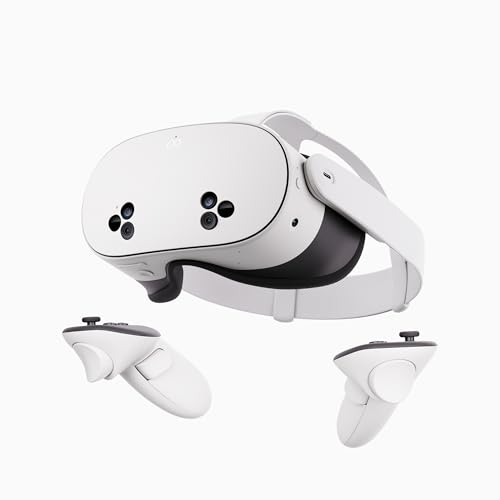
- Renewed, standalone headset
- Hand tracking and Touch controllers
- Full-color passthrough; 128GB storage
Best For: Wireless creative exploration with a renewed unit
Collaboration Pick

- Self-tracking Touch Pro controllers
- Facial-expression avatars and virtual screens
- Subscription duration needs verification
Best For: Detailed VR interaction and collaborative review
Best Standalone Upgrade
Meta Quest 3 512GB (Renewed Premium)

- 4K+ display and 110-degree field of view
- Full-color passthrough via dual RGB cameras
- 512GB storage; about 2.2 hours of battery life
Best For: Wireless creative exploration with sharper visuals
Best Lower-Storage Option

- Standalone, room-scale VR
- 1832 × 1920 resolution per eye
- 128GB storage; 90-day limited warranty
Best For: Standalone VR with modest storage needs
Best Controller-Grip Bundle

- 256GB onboard storage
- Grip covers and adjustable knuckle straps included
- 1832 × 1920 resolution per eye
Best For: Quest 2 users wanting more storage and secure controllers
Best Entry Point – Meta Quest 3S 128GB
For shoppers comparing vr headsets for digital art, the wireless Meta Quest 3S offers a standalone way to explore creative VR experiences. Its mixed-reality capability can bring virtual objects into your physical space, though the supplied details do not specify which art apps it supports.
Best For: Beginners who want a wireless headset for trying VR and mixed-reality creativity.
Pros:
- Standalone, wireless operation leaves you free to move.
- Snapdragon XR2 Gen 2 processor and 8GB of RAM support responsive performance.
- Includes two Touch Plus controllers and 128GB of storage.
Cons:
- 128GB offers less storage than the Quest 3 and Quest Pro listed here.
- Listed average battery life is 2.5 hours, so longer sessions may require charging.
The Quest 3S makes sense as a starting point if untethered movement matters more than maximum storage or display resolution. Check that your preferred art software supports the Meta Quest platform before buying.
Best for Visual Detail – Meta Quest 3 512GB
Among vr headsets for digital art, the Meta Quest 3 stands out for its stated 2064 × 2208 resolution per eye, pancake lenses, and full-color passthrough. Its standalone design and 512GB of storage make it a practical choice for exploring VR and mixed-reality projects without a required cable.
Best For: Creators who prioritize a sharper view, color passthrough, and ample onboard storage.
Pros:
- 2064 × 2208 resolution per eye and pancake lenses support a detailed view.
- Dual RGB cameras provide full-color passthrough for mixed-reality experiences.
- 512GB of storage and wireless standalone operation offer room and flexibility.
Cons:
- Listed average battery life is 2.2 hours.
- The supplied details do not identify compatible digital-art apps.
Choose the Quest 3 if visual clarity and storage are your main priorities. Confirm support for your preferred creation tools before treating it as a replacement for an existing art workflow.
Best for Creative Workspaces – Meta Quest Pro
For buyers looking at vr headsets for digital art alongside broader creative work, Meta Quest Pro emphasizes multitasking and precise interaction. It supports multiple resizable screens, full-color mixed-reality passthrough, and self-tracking Touch Pro controllers designed to translate detailed finger actions into VR.
Best For: Creators who want a standalone mixed-reality workspace with detailed controller input.
Pros:
- Multiple resizable screens help organize creative tasks.
- Touch Pro controllers offer self-tracking and precision controls.
- Full-color passthrough and pancake lenses support mixed-reality work and visual clarity.
- Includes 256GB of storage and 12GB of RAM.
Cons:
- Listed weight is 879g, heavier than the other two headsets here.
- Requires a Meta account, and the supplied details do not name specific art-app compatibility.
The Quest Pro is the most workspace-focused option in this group, especially if multitasking and nuanced controller input matter. Verify that your preferred art apps support it before committing to a workflow.
Best Overall – Meta Quest 3 512GB
Among vr headsets for digital art, the Meta Quest 3 is a strong standalone choice if you want sharp visuals and room for a growing app library. Its pancake lenses, full-color passthrough, and included Touch Plus controllers make it well suited to exploring virtual and mixed-reality creative spaces.
Best For: Artists who prioritize visual clarity, mixed reality, and generous onboard storage.
Pros:
- High-resolution display and pancake lenses help keep visual details clear.
- Dual RGB cameras support full-color passthrough for mixed-reality work.
- 512GB storage and 8GB RAM provide space and responsive performance for apps.
Cons:
- Listed average battery life is 2.4 hours, so longer sessions may need a charging break.
- The supplied details do not specify which digital-art apps are supported.
Choose this model for its combination of display clarity, untethered use, and storage; check your preferred creative app’s compatibility before buying.
Renewed Standalone Pick – Meta Quest 3S 128GB
The renewed Meta Quest 3S is worth considering among vr headsets for digital art if you want wireless, standalone access to virtual and mixed-reality spaces. It pairs Touch controllers and hand tracking with full-color passthrough, though the listing does not identify specific art apps.
Best For: Buyers comfortable with a renewed headset who want untethered creative exploration.
Pros:
- Standalone, wireless operation keeps movement free of a PC cable.
- Hand tracking and Touch controllers offer two ways to interact.
- Dual RGB cameras provide full-color passthrough.
Cons:
- 128GB storage leaves less onboard space than the 512GB Quest 3 listed here.
- Its 96-degree listed field of view is narrower than the Quest 3’s 110 degrees.
- This listing is for a renewed unit, not a new one.
This is a practical pick when wireless interaction matters more than maximum storage or field of view. Confirm that your preferred creative software works with Meta Horizon OS.
Collaboration Pick – Meta Quest Pro 256GB Bundle
For shoppers comparing vr headsets for digital art, this Meta Quest Pro bundle emphasizes precise interaction and shared virtual spaces. Self-tracking Touch Pro controllers, facial-expression avatars, and resizable virtual screens may appeal to artists who also review ideas or collaborate in VR.
Best For: Creators interested in detailed controller input, virtual multitasking, and social collaboration.
Pros:
- Touch Pro controllers track detailed finger actions and offer advanced haptics.
- Pancake lenses, local dimming, and quantum-dot technology support visual clarity.
- 256GB storage, 12GB RAM, and multiple resizable screens support virtual multitasking.
Cons:
- The included field-trip subscription is educational rather than a stated digital-art tool.
- The supplied listing gives conflicting subscription durations, describing both one month and 12 months.
Its interaction and collaboration features distinguish it from the other picks, but verify the subscription terms and compatibility with your art apps before ordering.
Best Standalone Upgrade – Meta Quest 3 512GB (Renewed Premium)
Among vr headsets for digital art, this renewed Meta Quest 3 is a strong pick for creators who want a wireless workspace with sharp visuals. Its 4K+ display, 512GB of storage, and full-color passthrough make it well suited to exploring immersive and mixed-reality creative apps.
Best For: Creators prioritizing standalone use, visual clarity, and room for large app libraries.
Pros:
- Wireless standalone design avoids a PC tether.
- 4K+ display and 110-degree field of view support detailed viewing.
- Dual RGB cameras provide full-color passthrough for seeing your physical space.
- 512GB storage and 8GB RAM offer ample capacity and responsive performance.
Cons:
- Listed battery life averages about 2.2 hours, so longer sessions may require a break to charge.
- Renewed Premium condition is worth considering if you prefer a new headset.
The Quest 3 offers the most capable display and mixed-reality feature set of these three options, though its battery life remains a practical limit for extended sessions.
Best Lower-Storage Option – Meta Quest 2 128GB (Renewed)
If you are comparing vr headsets for digital art and do not need extensive onboard storage, this renewed Meta Quest 2 offers a standalone starting point. It pairs inside-out, room-scale tracking with a listed 1832 × 1920 resolution per eye for exploring VR spaces.
Best For: Creators who want a standalone Quest 2 and expect 128GB of storage to meet their needs.
Pros:
- Standalone operation does not require a PC for supported VR experiences.
- Inside-out room-scale tracking supports movement through virtual spaces.
- Includes two Touch controllers, a charging cable, and a glasses spacer.
Cons:
- 128GB provides less storage than the other two headsets here.
- Renewed unit carries a listed 90-day limited warranty.
This is a straightforward way to try standalone VR creation experiences, provided its storage capacity and shorter listed warranty suit your plans.
Best Controller-Grip Bundle – Meta Quest 2 256GB (Renewed)
For shoppers considering vr headsets for digital art, this renewed Meta Quest 2 stands out for its 256GB capacity and included controller grip accessories. Its standalone setup and listed 1832 × 1920 resolution per eye provide a practical base for immersive creative experiences.
Best For: Creators who want more Quest 2 storage and controller straps for a more secure grip.
Pros:
- 256GB storage offers twice the capacity of the 128GB Quest 2 listed here.
- Included silicone grip covers help protect controllers and improve hold.
- Adjustable knuckle straps let you relax your hands without dropping the controllers.
Cons:
- Renewed unit has a listed 90-day limited warranty.
- Listed 90Hz refresh rate is lower than the 120Hz listed for the other two headsets.
Choose this version if extra storage and grip accessories matter more to you than the newer Quest 3’s display and passthrough features.
How We Picked These Vr Headsets for Digital Art
We focused on the things that affect an art session: image clarity, mixed-reality visibility, controller and hand-input options, comfort, available storage, and price. The nine selected listings represent four headset families, not nine distinct designs. A game offer, subscription, or renewed label may change the value of a listing, but it does not change the headset’s core display or optics.
App compatibility matters just as much as hardware. Before buying, check that your preferred painting, sculpting, or spatial-design app supports the exact Quest model you choose. If you intend to use PC VR software, check its connection requirements and whether your computer can run it.
Quick Comparison
Which Quest Model Fits Your Workflow?
Quest 3: The strongest all-around choice here for creators who value sharper viewing, pancake lenses, and color passthrough for mixed-reality work. The 512GB listings share the same core headset; compare their price, condition, and included extras.
Quest 3S: A lower-cost current-generation route into standalone art apps, with color passthrough but less refined optics than Quest 3. The standard and Renewed Premium 128GB listings should be weighed against each other on total cost and return terms.
Quest Pro: Worth considering when its eye and face tracking, included Touch Pro controllers, or fit suit your specific workflow. Its two listings differ by bundle, so confirm whether the subscription is useful to you. Do not assume its “Pro” name makes it the best default purchase for every artist.
Quest 2: The renewed 128GB and 256GB listings may appeal to strict budgets, but this older headset is a less future-facing choice. Verify that the apps you want still support it; choose extra storage only if you expect to keep enough projects and apps installed to need it.
Key Buying Factors for Vr Headsets for Digital Art
Clarity, Input, and Comfort
Fine linework and detailed menus benefit from clear optics. If possible, try a headset on: facial fit, glasses clearance, and lens positioning can affect what you see. For long sessions, consider headset balance and whether a compatible replacement strap would improve comfort.
Controllers provide buttons and more predictable input for many tools, while hand tracking can feel natural for direct manipulation. Check what your chosen app supports rather than assuming both methods work equally well. For room-aware art, compare passthrough quality as well as virtual-image clarity; for PC-based creation, budget for the required cable or suitable wireless setup.
Storage and Listing Condition
Storage is built in, so choose capacity based on the apps and media you plan to keep locally. With renewed units, inspect the warranty, return window, battery condition, controller inclusion, and lens condition. Check bundle eligibility and end dates before paying extra for a promotion.
Who Should Buy Which Vr Headsets for Digital Art?
Choose Quest 3 if visual clarity and mixed-reality creation are priorities. Pick Quest 3S to spend less while accessing compatible current-generation Quest apps. Consider Quest Pro only if its tracking features or included controllers serve a clear need at the price offered. Buy a renewed Quest 2 chiefly for a low-cost introduction—and only after confirming app support and acceptable return protection.