A laser cutter can speed up production, but the right machine depends on what you sell. Cutting acrylic signs, engraving personalized gifts, and processing sheet metal call for different lasers, work areas, and shop infrastructure.
These 10 options span enclosed desktop systems, larger CO2 machines, and a dedicated fiber cutter. Use the guide below to narrow the field by material, throughput, and the equipment your workspace can support.
Best 10 Commercial Laser Cutting Machines Picks for 2026
Best Equipped Bundle
WECREAT Vision Pro 45W Super Bundle

- 45W diode laser with BeamFocus optics
- Includes 137-inch conveyor feeder
- Includes AirGuard Ultra fume extractor
Best For: Small-batch production involving long pieces
Best Desktop Batch Cutter

- 22.83 × 15.75-inch laser bed
- LiDAR autofocus and HD camera
- Feeder and fume extractor sold separately
Best For: Repeat engraving in compact workshops
Best Automated CO2 Cutter
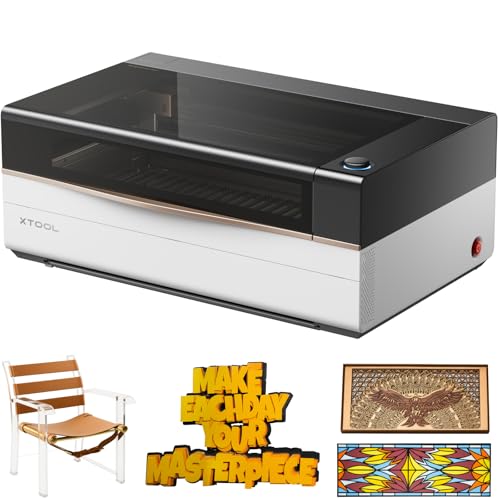
- 80W CO2 laser cuts clear acrylic
- 36 × 18-inch workspace
- LiDAR, dual cameras, and AutoLift base
Best For: Acrylic work and personalized batch production
Best Large-Format Hybrid

- Cuts listed metal and nonmetal materials
- 54 × 34-inch bed with four-way pass-through
- Dual autofocus heads and built-in chiller
Best For: Established shops handling oversized mixed-material work
Extended-Session Pick
OMTech Maker 90W with Water Chiller

- Bundled water chiller
- 20-by-28-inch work area
- Four-way pass-through doors
Best For: Extended nonmetal engraving sessions and larger pieces
Autofocus Pick
OMTech Pronto35 100W CO2 Laser

- One-button autofocus
- 28-by-20-inch work area
- RDWorks, CorelLaser, and LightBurn support
Best For: Shops prioritizing quick focusing and larger nonmetal projects
Pass-Through Pick
OMTech Maker 90W with LightBurn & Chiller

- Four-way pass-through doors
- 28-by-20-inch workspace
- Listed with LightBurn and water chiller
Best For: Long nonmetal projects and a bundled-accessory setup
Best for Metal Fabrication
OMTech 1500W Enclosed Fiber Laser Cutter

- Cuts stainless steel up to 0.2 inch
- 23.6-inch square work area with pass-throughs
- Built-in chiller and safety interlocks
Best For: Shops cutting stainless and carbon steel
Best for Versatile Materials
OMTech Maker 90W CO2 Laser Cutter

- Cuts wood up to 0.4 inch deep
- 28 x 20-inch workspace with pass-throughs
- Autofocus and built-in air assist
Best For: Wood cutting and mixed-material engraving
Best for High-Volume Engraving
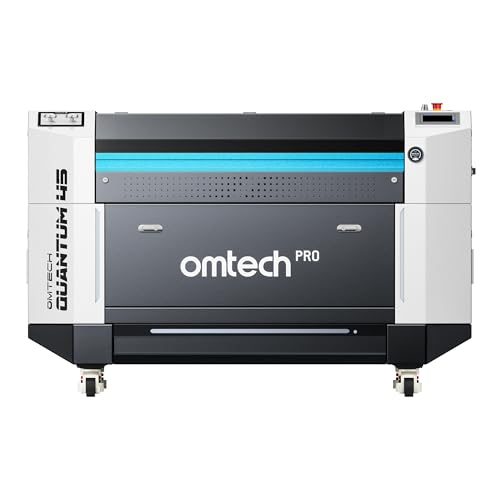
- Stated engraving speed of 4,200 mm/s
- 39.4 x 23.6-inch work area
- Integrated air assist and dust extraction
Best For: Fast engraving and wood or acrylic production
Best Equipped Bundle – WECREAT Vision Pro 45W Super Bundle
Among commercial laser cutting machines for small-batch production, this Vision Pro bundle stands out for its included 137-inch conveyor feeder and AirGuard Ultra fume extractor. Its 45W diode laser, BeamFocus optics, and 19.7 × 12.6-inch work area support repeated cutting and engraving jobs.
Best For: Small businesses processing long pieces or batches of wood, acrylic, and other compatible materials.
Pros:
- Includes a conveyor feeder for projects up to 137 inches long.
- Large work area accommodates more than 200 dog tags in one engraving pass, according to WECREAT.
- Class 1 metal enclosure and included fume extractor support a more contained workflow.
Cons:
- The switchable 2W infrared module is sold separately, despite its mention in the product title.
- The listed work area is smaller than those of the larger machines in this roundup.
Choose this bundle if the feeder and extraction system are useful from day one. Confirm the included accessories before ordering, particularly if infrared engraving is part of your plan.
Best Desktop Batch Cutter – WECREAT Vision Pro 45W
If you are comparing commercial laser cutting machines for a compact workshop, the Vision Pro 45W combines a 22.83 × 15.75-inch bed with autofocus, an HD positioning camera, and batch-oriented software. WECREAT states that its BeamFocus-equipped diode laser can cut 25mm wood or 20mm black acrylic in one pass.
Best For: Woodworkers and small shops producing repeat engraved items without moving to a floor-standing machine.
Pros:
- LiDAR autofocus and an auto-lifting system reduce manual setup across different material heights.
- HD camera, Smart Fill, and batch settings help position and repeat jobs.
- Enclosed Class 1 design stops operation when the lid opens.
Cons:
- The infrared module, conveyor feeder, and AirGuard Ultra extractor are not included.
- Its bed limits single-piece size without the optional feeder.
This is the more straightforward Vision Pro choice if you want the core cutter and can add production accessories as needed. Budget separately for extraction and any expanded-material or pass-through setup.
Best Automated CO2 Cutter – xTool P3 80W
The xTool P3 is a substantial desktop option among commercial laser cutting machines when clear acrylic capability and automated setup matter. Its 80W CO2 laser, 36 × 18-inch workspace, LiDAR autofocus, dual cameras, and AutoLift base are aimed at reducing handling between jobs.
Best For: Shops cutting acrylic and wood while managing varied layouts or personalized batches.
Pros:
- CO2 laser supports clear acrylic; xTool specifies cuts up to 20mm wood and 25mm acrylic.
- Dual cameras and LiDAR autofocus assist positioning and setup.
- Spreadsheet-based batch fill and smart nesting support repeat production.
- Enclosed Class 1 design includes lid interlocks and active detection and suppression.
Cons:
- At 317 pounds and 49.21 × 30.71 inches in footprint, it needs dedicated space.
- Conveyor, rotary attachment, infrared laser, and air purifier are sold separately unless bundled.
The P3 offers a useful middle ground between compact diode cutters and much larger hybrid equipment. Check the cost of the accessories your workflow requires rather than assuming they come with the base machine.
Best Large-Format Hybrid – OMTech Pro 150W
For buyers who need commercial laser cutting machines capable of handling both metal and nonmetal work, the OMTech Pro 150W hybrid offers a 54 × 34-inch work area and four-way pass-through doors. Its dual autofocus heads, servo drive, and built-in water chiller are designed for a more involved production setting.
Best For: Established shops with space and support for large-format cutting across metal, wood, and acrylic.
Pros:
- Hybrid laser handles the listed metal and nonmetal materials.
- Large bed and four-way pass-through accommodate oversized stock.
- Two autofocus heads, servo motion, and built-in cooling support extended workflows.
- Includes cover interlocks, water protection, air assist, and an emergency stop.
Cons:
- At 1,235 pounds, it requires substantial space and installation planning.
- Its listed Laser Class 2 designation calls for careful review of workplace safety procedures.
This is the most shop-scale choice here, particularly when both material range and bed size drive the purchase. Verify that its metal-cutting capabilities suit your specific material and thickness before committing.
Extended-Session Pick – OMTech Maker 90W with Water Chiller
Among commercial laser cutting machines for nonmetal materials, this 90W OMTech stands out for its bundled water chiller, which helps cool the machine during extended engraving sessions. Its 20-by-28-inch work area and four-way pass-through doors accommodate larger projects.
Best For: Shops cutting and engraving larger nonmetal pieces during extended sessions.
Pros:
- Includes a water chiller for extended engraving sessions.
- 20-by-28-inch work area with four-way pass-through doors.
- Built-in air assist, flame-retardant viewing window, and cover interlock.
Cons:
- Designed for nonmetallic materials, not metal cutting.
- At 227 pounds, it requires a suitable installation space.
Choose this model if cooling and pass-through access matter more to your workflow than a compact footprint.
Autofocus Pick – OMTech Pronto35 100W CO2 Laser
If you are comparing commercial laser cutting machines for larger nonmetal projects, the OMTech Pronto35 pairs a 100W CO2 laser with a 28-by-20-inch work area. One-button autofocus reduces manual focal-point adjustments, while its specified engraving speed reaches 1,000 mm/s.
Best For: Shops that want autofocus and a spacious work area for wood, acrylic, and other nonmetal projects.
Pros:
- One-button autofocus simplifies setup.
- Specified cutting capacity reaches 0.4 inch in wood and 0.8 inch in acrylic.
- Air-pressure and temperature sensors can pause operation; an air pump and 318 cfm exhaust fan help manage debris.
- Supports RDWorks, CorelLaser, and LightBurn.
Cons:
- Its stated material capabilities focus on nonmetals, not metal cutting.
- Its 28-by-20-inch work area may not fit pieces wider than the bed.
This is the strongest fit of the three when quick focusing and software flexibility are priorities; check your typical material sizes against the stated cutting limits.
Pass-Through Pick – OMTech Maker 90W with LightBurn & Chiller
For buyers browsing commercial laser cutting machines that can handle longer stock, this OMTech Maker 90W offers a 28-by-20-inch workspace and four-way pass-through doors. The listed package includes LightBurn and a water chiller, while the machine engraves nonmetals such as glass, acrylic, and leather.
Best For: Shops working with long nonmetal pieces that want a LightBurn-and-chiller package.
Pros:
- Four-way pass-through doors accommodate longer projects.
- Listed with LightBurn and a water chiller.
- 90W DC laser tube has a stated operating life of up to 12,000 hours.
- Includes air assist, a flame-retardant viewing window, and a cover interlock.
Cons:
- Stated material applications are nonmetallic; do not assume it cuts metal.
- Its stated wood-cutting depth is up to 0.4 inch.
This model makes sense when pass-through access and the listed accessories are more useful to you than the Pronto35’s autofocus feature.
Best for Metal Fabrication – OMTech 1500W Enclosed Fiber Laser Cutter
Among commercial laser cutting machines, this OMTech 1500W fiber model is the metal-focused choice. Its enclosed 23.6 x 23.6-inch work area and front-to-back pass-throughs accommodate sheet-metal projects without requiring an open-frame machine.
Best For: Shops cutting stainless or carbon steel for signage and metal fabrication.
Pros:
- Rated to cut stainless steel up to 0.2 inch and carbon steel up to 0.4 inch thick.
- Front and back pass-throughs accept material up to 24.8 inches wide.
- Built-in water chiller, OD6+ observation window, and safety interlocks.
Cons:
- The 23.6 x 23.6-inch enclosed work area limits the size of pieces that can sit fully inside.
- The stated cutting capabilities focus on metal, so it is not the clear choice for engraving glass, leather, or acrylic.
Choose this machine when metal-cutting capacity and an enclosed setup matter more than mixed-material engraving. Confirm your intended metal thickness against its stated limits before buying.
Best for Versatile Materials – OMTech Maker 90W CO2 Laser Cutter
If your search for commercial laser cutting machines includes wood cutting and engraving on varied materials, the OMTech Maker 90W CO2 model offers a practical alternative to a metal-focused fiber cutter. It pairs a 28 x 20-inch workspace with four-way pass-through doors.
Best For: Small shops making wood cutouts and engravings on glass, acrylic, or leather.
Pros:
- Rated to cut wood up to 0.4 inch deep and engrave glass, acrylic, and leather.
- One-button autofocus simplifies setting the working distance.
- Four-way pass-throughs, built-in air assist, and a cover interlock support varied workflows.
Cons:
- At 258 pounds, it requires a suitable location and help to move.
- The supplied notes do not specify metal-cutting capability.
This is the more flexible pick for the listed nonmetal materials, especially when autofocus and pass-through access are useful. For steel-cutting work, look to a machine with explicit metal-cutting specifications.
Best for High-Volume Engraving – OMTech Pro Quantum 60W RF CO2
For buyers comparing commercial laser cutting machines with a focus on fast engraving, the OMTech Pro Quantum combines a 60W RF CO2 laser with a stated 4,200 mm/s working speed and a 39.4 x 23.6-inch work area. Its integrated air assist and extraction equipment are aimed at sustained shop use.
Best For: Production shops prioritizing fast, detailed engraving and cutting wood or acrylic.
Pros:
- Stated 0.07 mm spot size supports fine engraving detail.
- Rated to cut wood up to 22 mm and acrylic up to 24 mm.
- Includes a dual-pressure air compressor, dust extraction fan, and integrated cooling.
- Wi-Fi and USB connections provide app or web-software control.
Cons:
- At 959 pounds, it presents substantial delivery and placement requirements.
- The supplied specifications do not establish metal-cutting capability.
This model makes the strongest case where engraving throughput, a broad work area, and integrated airflow justify a large, heavy machine. Check that its listed wood and acrylic cutting capacities match your production needs.
How We Picked the Best Commercial Laser Cutting Machines
We focused on the practical differences buyers need to check before investing: laser type, stated power, work area, material compatibility, pass-through capability, automation, and included accessories. We also considered how each configuration might fit a small production shop. Manufacturer specifications are a starting point, not a guarantee of cut speed or thickness; results vary with material, settings, optics, and maintenance. The list includes multiple configurations from the same product families, so compare package contents before paying for a duplicate machine with accessories you do not need.
Quick Comparison: Match the Laser to the Job
For wood, acrylic, and many nonmetal projects: Start with a CO2 machine such as the xTool P3 or an OMTech Maker or Pro model. Compare usable bed size and workflow features, not wattage alone. For a compact, accessory-led setup: the WECREAT Vision Pro bundles merit a look, particularly if feeder or fume-extraction options matter. For sheet-metal cutting: the enclosed OMTech 1500W fiber cutter belongs in a separate category from desktop engravers. For mixed-material plans: examine the OMTech Pro hybrid’s stated capabilities closely and confirm your specific metal, thickness, and finish with the seller.
Key Buying Factors for Commercial Laser Cutting Machines
Materials and Realistic Cutting Capacity
Choose the laser technology around your main revenue-producing material. CO2 systems are commonly used for wood and acrylic; a high-power fiber system is intended for metal cutting. A switchable or hybrid setup does not automatically replace a dedicated metal cutter. Ask for sample cuts on your actual stock and verify whether a quoted thickness applies to a single pass, multiple passes, or ideal conditions.
Work Area and Production Flow
Check the usable cutting area, not just the machine’s external dimensions. Pass-through openings can accommodate longer material but may require extra floor space and careful alignment. Conveyors and autofocus can reduce handling for repeat jobs; confirm that they support your stock sizes and software workflow.
Ventilation, Cooling, and Total Cost
Budget for effective fume extraction, air assist, cooling where required, consumables, maintenance, and electrical installation. Confirm what is included in the exact listing: similarly named packages may differ by chiller, extractor, or software. Review enclosure safeguards and local requirements before operating any laser, particularly a high-power metal-cutting system.
Who Should Buy Which Commercial Laser Cutting Machines?
Personalization businesses with smaller items should prioritize a manageable footprint, reliable setup, and accessories that save hands-on time. Sign and display shops should favor a CO2 work area and pass-through arrangement suited to their largest regular jobs. Higher-volume nonmetal shops should evaluate automation, service access, and repeatability. Metal fabricators should investigate the enclosed fiber cutter’s site requirements and support before committing. If your orders span several materials, buy for the material you process most often, then verify any secondary capability with test pieces rather than relying on a broad compatibility claim.