If you sew knits, activewear, or garments with professional-looking hems, the right coverstitch machine can make a big difference in your finish quality and workflow.
This roundup of the best coverstitch machines for home studios focuses on ease of use, stitch quality, threading convenience, and the features that matter most in a small sewing space.
Best 10 Coverstitch Machines for Home Studios Picks for 2026
Heavy-Duty Pick
Brother 2340CV Coverstitch Serger Sewing Machine

- Metal frame with internal parts
- 2-needle, 2-3-4 cover stitch functions
- Color-coded threading; up to 1,100 spm
Best For: Sturdy coverstitch finishing for hems and stretch fabrics
Speed Pick
Juki MCS-1500 Cover Stitch and Chain Stitch Machine

- Up to 1,350 stitches per minute
- 3-needle cover stitch plus chain stitch
- Color-coded guides simplify threading
Best For: Fast stitching with coverstitch and chain stitch flexibility
Flexible Stitch Pick
Janome CoverPro 2000CPX Coverstitch Machine
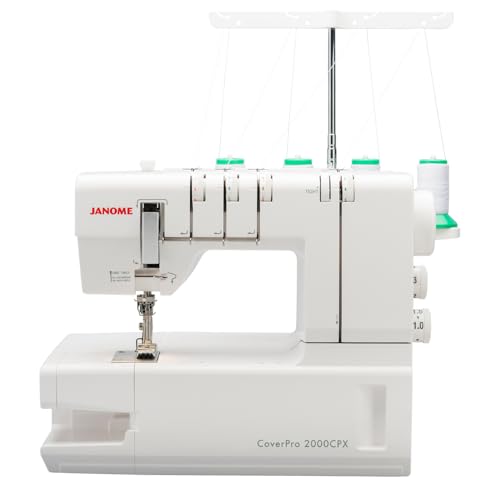
- Multiple needle and stitch configurations
- Differential feed from 0.5 to 2.25
- Free arm with extra-large bed space
Best For: Users who want versatile stitch options and adjustable controls
Simple Hemming Pick
Juki MCS-1700QVP Cover Stitch Machine

- For hems, cuffs, and necklines
- Chain stitch option for seams and decor
- Presser foot lifter helps with thick layers
Best For: Straightforward garment finishing with a useful chain stitch option
Home Studio Cover Hem Pick
CoverPro 900CPX Coverstitch Machine

- High-speed, long-arm design
- Heavy-duty home cover hem machine
- Easy to operate like a sewing machine
Best For: Sewists who want an industrial-inspired coverstitch machine for home studio use.
Best Value Bundle
Janome Cover Pro 1000CPX with Bonus Bundle

- Includes needles, seam guide, and threader
- Metal build with corded electric power
- Compact, 15-pound machine for home use
Best For: Sewists who want a coverstitch machine with helpful starter accessories included.
Most Versatile Finisher
Bernette B42 Funlock Coverstitch Machine

- Three coverstitches plus chain stitch
- Easy threading and adjustable settings
- LED light with extension table
Best For: Sewists who want a feature-rich coverstitch machine for stretch, knit, and finishing work.
Free-arm versatility

- Free arm for cuffs, necklines, and pant legs
- 2-thread chain, 3-thread cover, and 4-thread triple cover stitch
- Extra-large bed space with Seam Tightening System
Best For: Home studios that need flexible knit finishing and easy free-arm access
Easy-threading studio pick

- Three coverstitches plus chain stitch
- Separate needle threader and looper threading mechanism
- LED light with extension table for larger projects
Best For: Home or small pro studios that want easier threading and a roomy work area
Compact free-arm finishing

- Free arm for easy cuff and neckline stitching
- 2-thread chain and 3-thread cover stitch functions
- Extra-large bed with Seam Tightening System
Best For: Home studios that want a simpler free-arm coverstitch machine for everyday hems
Heavy-Duty Pick – Brother 2340CV Coverstitch Serger Sewing Machine
If you want one of the more straightforward coverstitch machines for home studios, the Brother 2340CV is built around practical basics: a metal frame, color-coded threading, and dedicated coverstitch functions for stretch fabrics, necklines, and hems. It’s a focused machine rather than an all-in-one solution, which can be a plus if your main goal is clean finishing work.
Best For: Home sewists who want a sturdy, coverstitch-dedicated machine for hems, necklines, and stretch projects.
Pros:
- Metal frame and internal parts for a sturdier build
- 2-needle, 2-3-4 cover stitch functions for stretch fabrics and hems
- Color-coded threading and lay-in threading help simplify setup
- Up to 1,100 stitches per minute for faster stitching
Cons:
- Dedicated coverstitch design means it is not a general-purpose machine
- US 120-volt use only, so it is limited to the specified market
The Brother 2340CV makes sense if you want dependable coverstitch performance without a lot of extra complexity. Its speed and threading aids are especially useful in a home studio where repeatable results matter more than versatility.
Speed Pick – Juki MCS-1500 Cover Stitch and Chain Stitch Machine
Among coverstitch machines for home studios, the Juki MCS-1500 stands out for speed and a simple threading setup. It handles 3-needle, 3-thread cover stitching plus 4-thread chain stitch work, making it a practical option when you want efficient finishing and a little more stitch flexibility.
Best For: Sewists who want a fast coverstitch and chain stitch machine with easy threading.
Pros:
- Up to 1,350 stitches per minute for high-speed sewing
- 3-needle, 3-thread cover stitch and 4-thread chain stitch options
- Color-coded guides make threading and looper setup easier
- US warranty coverage includes mechanical and electrical terms
Cons:
- Warranty coverage excludes consumable parts such as loopers and needles
- May be more machine than needed if you only want basic hemming
The MCS-1500 is a strong pick if speed is high on your list and you want both coverstitch and chain stitch capability. Its threading guides make it more approachable for regular home-studio use, especially on repeat garment projects.
Flexible Stitch Pick – Janome CoverPro 2000CPX Coverstitch Machine
For home studios that need more stitch options, the Janome CoverPro 2000CPX offers a broad range of coverstitch and chain stitch settings in one machine. It includes free arm convenience, a tension release device, adjustable foot pressure, and differential feed, making it a well-rounded choice for garment finishing.
Best For: Sewists who want a feature-rich coverstitch machine with multiple stitch widths and adjustable controls.
Pros:
- Supports 1, 2, or 3 needle stitching plus chain and triple cover stitch options
- Differential feed ratio from 0.5 to 2.25 for stretch-fabric control
- Free arm and extra-large bed space help with garment handling
- LED light and foot pressure adjustment add everyday convenience
Cons:
- Maximum speed of 1,000 spm is lower than some competitors
- Feature set may be more than a casual user needs
The CoverPro 2000CPX is appealing if you want control and versatility rather than just basic hemming. Its combination of stitch choices and adjustable settings makes it a practical fit for home studio projects that move between lightweight and stretch fabrics.
Simple Hemming Pick – Juki MCS-1700QVP Cover Stitch Machine
If you’re shopping coverstitch machines for home studios and mainly want clean finishing, the Juki MCS-1700QVP focuses on the essentials. It’s designed for hems, sleeve cuffs, and necklines on stretch fabric, and it also includes a chain stitch option for waist and side seams or decorative details.
Best For: Home sewists who want straightforward hemming and chain stitch capability for garment construction.
Pros:
- Makes simple hems, sleeve cuffs, and necklines on stretch fabric
- Chain stitch option works for waist and side seams or decorative stitching
- Presser foot lifter adds 2 mm to help feed thick layers
- Corded electric machine with a compact, white design
Cons:
- Supplied notes do not list speed or needle count details
- More focused on finishing work than broad feature variety
The MCS-1700QVP is a sensible choice if your home studio needs a coverstitch machine centered on clean garment finishing. Its thick-layer feeding aid is a useful touch when your projects move beyond lightweight knits.
Home Studio Cover Hem Pick – CoverPro 900CPX Coverstitch Machine
If you want coverstitch machines for home studios that feel closer to industrial gear than a basic home sewist tool, the Janome CoverPro 900CPX is built around that idea. It combines a heavy-duty, high-speed, long-arm design with easy home-machine-style operation, making it a practical choice for consistent cover hem results on everyday studio projects.
Best For: Sewists who want an industrial-inspired coverstitch machine for a home studio setup.
Pros:
- Heavy-duty design suited to more demanding use
- High-speed operation for faster hemming
- Long arm gives extra working room
- Built to deliver coverstitch results with simple operation
Cons:
- Focuses on cover hem work rather than broader sewing functions
- May be more machine than a casual user needs
Overall, the 900CPX stands out for home studios that prioritize speed, durability, and a more professional feel. It is especially appealing if you want a dedicated coverstitch machine that bridges the gap between home convenience and industrial-style performance.
Best Value Bundle – Janome Cover Pro 1000CPX with Bonus Bundle
For coverstitch machines for home studios, the Janome Cover Pro 1000CPX is a straightforward option that adds useful setup extras right in the box. The included bonus bundle makes it easier to get started, while the metal build, corded electric power, and compact listed dimensions suggest a dedicated machine made for regular home use.
Best For: Sewists who want a coverstitch machine with helpful starter accessories included.
Pros:
- Includes two packs of Schmetz ELx705 needles
- Adjustable seam guide and needle threader are bundled in
- Metal construction for a sturdy feel
- 15-pound weight may be manageable in a home studio
Cons:
- Requires corded electric power
- Primary appeal is in the included bundle rather than extra feature depth
The 1000CPX is a practical pick if you value convenience and want to avoid buying basic accessories separately. It fits well in a home studio where a ready-to-use package matters as much as the machine itself.
Most Versatile Finisher – Bernette B42 Funlock Coverstitch Machine
If your shortlist for coverstitch machines for home studios includes a model that can handle more than basic hemming, the Bernette B42 Funlock is worth a look. It offers three coverstitches, a chain stitch, adjustable settings, LED lighting, and a larger workspace, making it a flexible option for finishing stretch and knit fabric projects.
Best For: Sewists who want a feature-rich coverstitch machine for stretch, knit, and finishing work.
Pros:
- Three coverstitches plus a chain stitch
- Easy threading with separate needle threader and looper threading mechanism
- Adjustable presser foot and settings for different fabrics
- LED light and extension table support larger projects
Cons:
- More features may be more machine than a simple hemming setup needs
- Best suited to users who will take advantage of the extra workspace and adjustments
The B42 Funlock is strongest when you want one machine to cover a wider range of finishing jobs. Its combination of stitch options, threading aids, and workspace upgrades makes it a solid home studio tool for frequent knit and stretch-fabric work.
Free-arm versatility – Janome CoverPro 1000CPX
If you’re comparing coverstitch machines for home studios, the Janome CoverPro 1000CPX is built for sewists who want fast, clean finishing on cuffs, necklines, and hems without opening seams. Its free arm, extra-large bed space, and multiple stitch options make it a practical choice for garment work that needs a polished, professional edge.
Best For: Home studio sewists who want a versatile coverstitch machine with free-arm access and room to work.
Pros:
- Free arm makes it easier to stitch finished cuffs, necklines, and pant legs.
- Offers 2-thread chain stitch, 3-thread cover stitch, and 4-thread triple cover stitch options.
- Extra-large 4″ × 5.5″ bed gives more space to the right of the needle.
- Seam Tightening System and differential feed from 0.5 to 2.25 help with knit fabrics.
Cons:
- Best suited to garment finishing rather than all-purpose sewing.
- Threading and stitch setup may feel more involved than a basic sewing machine.
- Bulky footprint may take up more studio space than compact machines.
Overall, this model stands out for sewists who value free-arm convenience and flexible stitch choices in one machine. It is a strong pick if your home studio focuses on knits, hems, and clean finishing work.
Easy-threading studio pick – Bernette b42 Funlock
For shoppers focused on coverstitch machines for home studios, the Bernette b42 Funlock offers a straightforward setup with professional finishing features. It’s designed for durable hems and stretch-friendly seams, while the bright LED light and extension table help when you need a little more control over larger projects.
Best For: Home and small professional studios that want easy threading and dependable coverstitch results.
Pros:
- Provides three coverstitches plus a chain stitch for durable seams.
- Separate needle threader and looper threading mechanism make setup easier.
- LED light and extension table improve visibility and workspace.
- Adjustable presser foot and LCD display add convenience during stitching.
Cons:
- Not as specialized for free-arm cuff work as some competing models.
- Designed mainly for finishing tasks rather than general sewing.
- May be more machine than casual hobby sewists need.
This is a solid option if you want a capable coverstitch machine that prioritizes ease of use and workspace comfort. It’s especially appealing for sewists who move between knits, woven fabrics, and delicate materials.
Compact free-arm finishing – Janome CoverPro 900CPX
The Janome CoverPro 900CPX is a focused choice for coverstitch machines for home studios when you want clean hemming and reliable stretch-stitch finishing in a streamlined package. With a free arm, extra-large bed space, and seam-tightening support, it’s set up for knit garments, jerseys, and other fabrics that need smooth results.
Best For: Sewists who want a straightforward free-arm coverstitch machine for hems and garment finishing.
Pros:
- Free arm helps stitch cuffs, necklines, and pant legs without reopening seams.
- Switches between 2-thread chain stitch and 3-thread cover stitch.
- Extra-large bed offers more room to the right of the needle.
- Seam Tightening System and differential feed from 0.5 to 2.25 support smooth stitching on stretch fabrics.
Cons:
- Fewer stitch options than the 1000CPX model.
- More specialized for finishing than for multi-purpose sewing.
- May feel limited if you want advanced decorative coverstitch variety.
If your studio needs a dependable machine for hems, knits, and clean finishing, this model keeps the feature set focused and practical. It’s a good fit for sewists who prefer simplicity over extra stitch variety.
How We Picked the Best Coverstitch Machines for Home Studios
We focused on Coverstitch Machines for Home Studios that balance dependable stitch performance with practical features for everyday sewing. Priority went to models with strong thread handling, clear tension control, easy threading paths, free-arm versatility, and a layout that suits limited workspace.
We also looked for value across different budgets, since some sewists want a straightforward machine for hemming while others want more flexibility for decorative finishes and chain-stitch applications.
Quick Comparison
In this category, the biggest differences usually come down to threading ease, number of coverstitch configurations, free-arm access, and how forgiving the machine is with different knit weights. Some models are better for fast, frequent hemming, while others offer a broader feature set for mixed garment projects.
If you mostly sew T-shirts, leggings, and activewear, choose a machine that emphasizes smooth feed and simple setup. If you want more stitch options and future-proofing, look for broader coverstitch and chain-stitch capability.
Key Buying Factors for Coverstitch Machines for Home Studios
Threading and Setup
Threading is one of the biggest pain points with coverstitch machines. Look for color-coded paths, accessible looper areas, and thread features that reduce setup time. If you sew often, a faster setup can matter more than a long list of extras.
Stitch Options
Most buyers should check how many coverstitch widths are offered and whether the machine includes chain stitch. More options can help with hems, topstitch-like details, and flexible finishing on different fabrics.
Workspace and Free-Arm Use
For Coverstitch Machines for Home Studios, compact design matters. A free arm can make it easier to finish cuffs, sleeves, and small circular openings. Make sure the machine fits your table, lighting, and storage plan.
Fabric Range
Consider whether you sew lightweight jersey, medium-weight knits, or thicker athletic fabrics. Better presser foot control, differential feed, and stable stitch formation can help prevent tunneling, waviness, and skipped stitches.
Who Should Buy Which Coverstitch Machines for Home Studios?
If you are a beginner or occasional sewist, choose a machine that prioritizes simple threading and reliable everyday hemming. If you sew garments regularly, a midrange model with better ergonomics and more stitch flexibility is usually worth it.
Advanced home sewists and small-batch makers should focus on speed, consistency, and broader stitch capability, especially if the machine will be used for frequent knitwear production. The best choice is the one that matches how often you sew and the fabrics you use most.