Choosing the right coverstitch machine can make hemming, finishing, and stretch sewing faster and far more consistent on big garments and bulk projects.
Below, we focus on the best options for sewists who need smooth performance, durable construction, and fewer threading headaches.
Best 10 Coverstitch Machines for Large Projects Picks for 2026
Professional Everyday Power
Janome CoverPro 3000 Professional
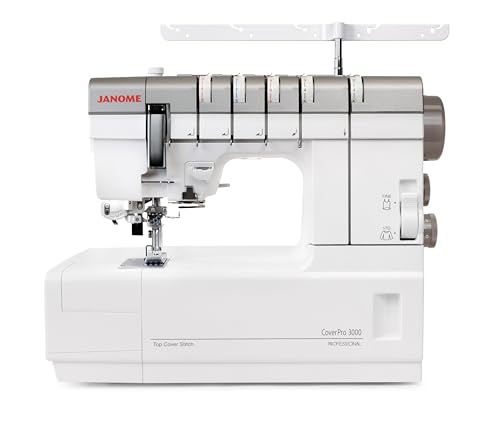
- Bright LED lighting for better visibility on large projects.
- Smooth and stable sewing with enhanced tension control.
- 5-thread / 3-needle setup with built-in cover stitch guide.
Best For: Sewers who want a stable, well-lit coverstitch machine with added control.
Fast Dual-Stitch Option
Juki MCS-1500 Cover Stitch and Chain Stitch Machine

- Up to 1,350 stitches per minute for faster sewing.
- Color-coded guides simplify threading the machine and loopers.
- Handles 3-needle cover stitch and 4-thread chain stitch work.
Best For: Sewers who want speed and simple threading on a dual-stitch machine.
Heavy-Duty Stretch Sewing
Brother 2340CV Coverstitch Serger Sewing Machine

- Metal frame and internal parts for a sturdy build.
- 1,100 stitches per minute for efficient sewing.
- Color-coded and lay-in threading for easier setup.
Best For: Sewers who want a sturdy, easy-to-thread coverstitch machine for stretch fabrics.
Thick-Layer Helper
Juki MCS-1700QVP Cover Stitch Machine

- Presser foot lifter adds 2 mm of extra clearance.
- Handles hems, cuffs, necklines, and chain stitching.
- Useful for thicker fabric sections and decorative necklines.
Best For: Sewers who frequently move between hems, cuffs, necklines, and thicker sections.
Heavy-Duty Multi-Stitch Pick
Janome CoverPro 2000CPX Coverstitch Machine
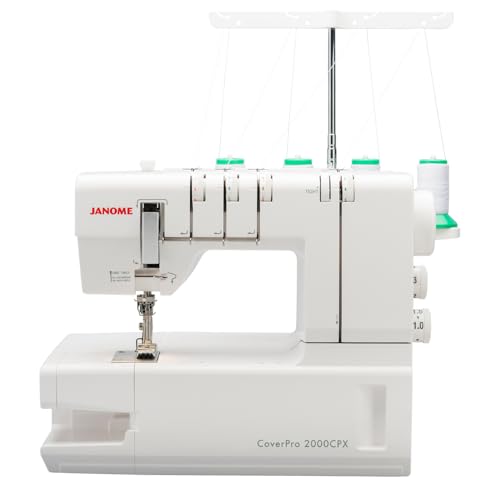
- Extra-large 4" x 5.5" bed space
- 1, 2, or 3-needle stitch options
- Up to 1,000 stitches per minute
Best For: Large hemming and finishing jobs with more workspace
Speed-Focused Chain Stitch Option
Juki MCS-1600 Cover Stitch and Chain Stitch Machine

- 1,350 stitches per minute for fast output
- Color-coded guides for easier threading
- 3-needle cover stitch plus 4-thread chain stitch
Best For: Fast hemming and chain-stitch work on larger sewing jobs
Workspace-Friendly Finishing Choice
Bernette b42 Funlock Coverstitch Machine

- Extension table adds room for large projects
- Three coverstitches plus a chain stitch
- LED light and LCD display for easier use
Best For: Roomy finishing and hemming on home or pro projects
Precision Covering
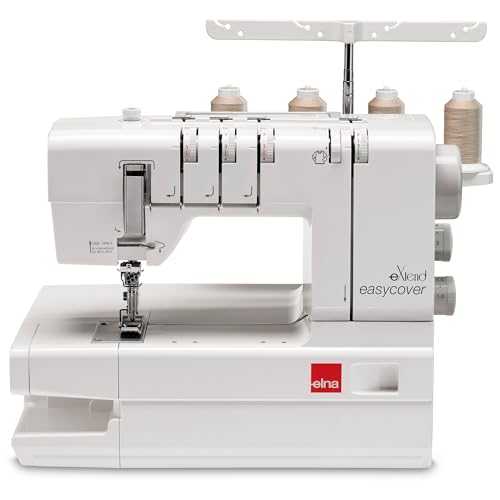
- 4 stitch programs for cover hem and chain stitch work
- Adjustable differential feed from 0.5 to 2.25
- Up to 1000 stitches per minute with easy-threading features
Best For: Sewists handling larger garment projects who want simple, reliable coverstitch finishing
Bundle Pick

- Includes ELx705 needles, seam guide, and needle threader
- Lightweight 15-pound build
- A compact option for coverstitch setup and finishing
Best For: Sewists who want a lighter machine with useful starter accessories
Pro Finishing

- 7 stitch programs with 2/3/4/5 thread sewing
- Built-in spreader and TLC for cover stitch control
- Free arm and extra-wide area for tubular and large projects
Best For: Sewists needing maximum versatility for bigger sewing and finishing jobs
Professional Everyday Power – Janome CoverPro 3000 Professional
If you want a coverstitch machine for large projects, the Janome CoverPro 3000 Professional is built for steady, repeatable sewing on bigger pieces. Its smooth, stable feel, bright LED lighting, and enhanced tension level control are all practical touches when you need consistent results across long hems and multiple layers.
Best For: Sewers who want a stable, well-lit coverstitch machine with added control for bigger garments and project runs.
Pros:
- Bright LED lighting helps when working on large or detailed projects.
- Smooth and stable operation supports consistent stitching.
- Enhanced tension level control adds flexibility for different fabrics.
- Includes a built-in top cover stitch guide and 3-position needle threader.
Cons:
- No speed figure is listed in the supplied notes.
- More of a focused coverstitch machine, so it is not described as a multi-purpose serger.
The CoverPro 3000 Professional looks like a strong fit when large projects call for control and clarity rather than extra complexity. Its 5-thread / 3-needle configuration and supportive threading features make it a practical pick for users who want dependable coverstitch performance.
Fast Dual-Stitch Option – Juki MCS-1500 Cover Stitch and Chain Stitch Machine
For coverstitch machines for large projects, the Juki MCS-1500 stands out with a fast 1,350 stitches per minute speed and easy color-coded threading guides. It combines cover stitch and chain stitch capability, which can be useful when you want to move efficiently through long runs and switch between stitch types.
Best For: Sewers who want speed and simple threading on a machine that handles both cover stitch and chain stitch work.
Pros:
- Up to 1,350 stitches per minute for faster project completion.
- Color-coded guides make threading the machine and loopers easier.
- Supports 3-needle cover stitch and 4-thread chain stitch use.
- Backed by a 5-year mechanical warranty and 2-year electrical warranty.
Cons:
- Warranty excludes consumable parts such as loopers, needles, and belts.
- No build or lighting details are provided in the supplied notes.
The MCS-1500 is a sensible choice if speed and setup simplicity matter most on larger sewing jobs. Its dual stitch capability adds flexibility, while the color-coded threading helps reduce frustration during repetitive project work.
Heavy-Duty Stretch Sewing – Brother 2340CV Coverstitch Serger Sewing Machine
The Brother 2340CV is a practical option if you are shopping coverstitch machines for large projects and need a sturdy machine with straightforward threading. Its metal frame, 1,100 stitches per minute speed, and cover stitch capabilities make it well suited to long seams, hems, and stretch-fabric work.
Best For: Sewers who want a sturdy, easy-to-thread coverstitch machine for stretch fabrics and larger sewing tasks.
Pros:
- Metal frame and internal parts add a sturdy feel.
- 1,100 stitches per minute supports efficient sewing.
- Color-coded threading and lay-in threading make setup easier.
- Includes a standard foot and a hem sewing presser foot.
Cons:
- Speed is lower than some competing coverstitch models.
- Designed for US 120-volt use only, with warranty voided outside that use.
This model is a solid pick when durability and ease of use matter more than advanced extras. It gives you the core coverstitch functions needed for hems and necklines without a steep learning curve.
Thick-Layer Helper – Juki MCS-1700QVP Cover Stitch Machine
When you need coverstitch machines for large projects that also deal with thicker sections, the Juki MCS-1700QVP is worth a close look. It is designed for simple hems, sleeve cuffs, necklines, and chain stitching, and its presser foot lifter adds extra clearance to help feed thick layers more easily.
Best For: Sewers who frequently move between hems, cuffs, necklines, and thicker layered fabric sections.
Pros:
- Presser foot lifter raises the foot an extra 2 mm for thicker layers.
- Works for simple hems, sleeve cuffs, and necklines.
- Chain stitch option is useful for waist and side seams.
- Can also handle decorative stitching for necklines.
Cons:
- No sewing speed is listed in the supplied notes.
- Detailed threading or lighting features are not provided in the notes.
The MCS-1700QVP is a good fit if your larger projects include bulky transitions or mixed stitching needs. The extra presser-foot lift is the standout feature here, especially when fabric thickness changes from section to section.
Heavy-Duty Multi-Stitch Pick – Janome CoverPro 2000CPX Coverstitch Machine
If you’re comparing coverstitch machines for large projects, the Janome CoverPro 2000CPX stands out for its extra-large bed space, fast 1,000 spm speed, and multiple stitch options. It’s built to handle bigger garments and hemming jobs with more room to manage fabric while still giving you flexibility in stitch width and feed control.
Best For: Sewers who want a versatile coverstitch machine with extra workspace for larger hemming and finishing projects.
Pros:
- Extra large bed space measures 4″ x 5.5″ for handling bigger projects.
- Offers 1, 2, or 3-needle stitch setups, including chain stitch and triple cover stitch.
- Speeds up to 1,000 stitches per minute help move through long runs efficiently.
- Includes differential feed, tension control, and foot pressure adjustment for finer control.
Cons:
- Maximum speed is lower than some competing coverstitch machines.
- Best suited to users who want manual adjustment controls rather than a simple one-setting approach.
This model makes sense if workspace and stitch flexibility matter most. The larger bed and broad stitch options are especially helpful for bulky hems, long seams, and projects that need consistent finishing.
Speed-Focused Chain Stitch Option – Juki MCS-1600 Cover Stitch and Chain Stitch Machine
For coverstitch machines for large projects, the Juki MCS-1600 is a strong pick if speed and simple threading are top priorities. It runs at 1,350 stitches per minute and uses color-coded guides to make threading its loopers easier, which can save time when you’re working through long garment batches or repeated hems.
Best For: Sewers who want a fast coverstitch machine with straightforward threading for bigger workloads.
Pros:
- High speed of 1,350 stitches per minute supports faster project completion.
- Color-coded guides and super-easy looper threading simplify setup.
- Supports 3-needle 3-thread cover stitch and 4-thread chain stitch.
- Differential feed adjustment adds control for different fabrics.
Cons:
- No large workbed size is listed in the supplied details.
- Focuses more on speed and threading ease than on expanded stitch variety.
If you want to move quickly through long finishing jobs, this machine is built for that workflow. Its combination of fast stitching and easier threading makes it practical for repetitive large-project sewing.
Workspace-Friendly Finishing Choice – Bernette b42 Funlock Coverstitch Machine
The Bernette b42 Funlock is a practical option for coverstitch machines for large projects because it combines a large workspace with a heavy-duty design. It offers three coverstitches, a chain stitch, and an extension table, which gives you more room when working on quilting, hemming, or finishing bigger fabric pieces.
Best For: Sewers who want a roomy coverstitch machine for home or professional finishing work.
Pros:
- Extension table provides extra room for handling larger projects.
- Offers three coverstitches with widths of 2.8mm and 5.6mm plus a chain stitch.
- Separate needle threader and looper threading mechanism simplify setup.
- LED light and LCD display support clearer stitching and easy adjustments.
Cons:
- Stitch range is more focused on core coverstitch tasks than on broad specialty options.
- As a heavy-duty machine, it may be more than casual users need.
This machine is a strong fit if you want room to work and dependable finishing stitches. The extension table and adjustable settings make it easier to manage larger sewing runs without feeling cramped.
Precision Covering – Elna eXtend Easy Cover V2
If you’re comparing coverstitch machines for large projects, the Elna eXtend Easy Cover V2 is built for steady finishing with practical controls and a generous 1000-stitch-per-minute maximum speed. Its 4 stitch programs, free arm, and adjustable differential feed help it handle a range of fabrics and hem finishes without making the setup feel overly complicated.
Best For: Sewists who want a straightforward coverstitch machine for bigger garment batches and clean hems on fine to standard fabrics.
Pros:
- 4 stitch programs, including cover hem stitch and chain stitch options.
- Adjustable differential feed from 0.5 to 2.25 for better fabric control.
- Automatic tension release, looper disengage, and color-coded guides support easier threading.
- Maximum speed up to 1000 stitches per minute for efficient sewing sessions.
Cons:
- Extension table is only available as an optional accessory.
- Focused on coverstitch functions rather than broad multi-thread versatility.
Overall, this model suits large projects best when you want dependable hem finishing, simple operation, and enough speed to keep up with repeated seams. The included free arm and tension features make it practical for consistent results across everyday garment work.
Bundle Pick – Janome Cover Pro 1000CPX
The Janome Cover Pro 1000CPX is a practical choice when you’re shopping for coverstitch machines for large projects and want a lighter, more manageable machine at 15 pounds. The included bonus bundle adds Schmetz ELx705 needles, an adjustable seam guide, and a needle threader, which gives you a useful head start for coverstitch setup and finishing.
Best For: Sewists who want a compact coverstitch machine with helpful extras for regular project work.
Pros:
- Includes two packs of Schmetz ELx705 needles.
- Bonus adjustable seam guide helps with steadier stitching.
- Needle threader adds convenience during setup.
- At 15 pounds, it is relatively easy to move and position.
Cons:
- Supplied details are limited compared with more feature-rich models.
- No speed, stitch-program count, or feed-control specs are listed in the notes.
This machine makes sense if you value a simpler package with useful accessories over a long list of built-in features. For large-project sewing, the lighter frame and included setup tools can help keep workflow efficient and less fussy.
Pro Finishing – Elna eXtend Covermax
For coverstitch machines for large projects that also need more stitch flexibility, the Elna eXtend Covermax stands out with 2/3/4/5 thread sewing programs and 7 stitch programs in total. It also adds a built-in spreader for the top cover stitch, a free arm for tubular items, and adjustable controls that support long sewing sessions with fine and standard fabrics.
Best For: Sewists who want a more versatile coverstitch machine for bigger projects, including sleeves, leggings, and mixed-fabric finishing.
Pros:
- 7 stitch programs with 2/3/4/5 thread sewing capability.
- Built-in spreader supports the top cover stitch function.
- TLC automatic tension adjustment helps with fine and standard fabrics.
- Extra-wide sewing area, free arm, and up to 1000 stitches per minute suit larger workloads.
Cons:
- More complex than a basic coverstitch-only machine.
- At 18.9 pounds, it is not the lightest model in the group.
In practical terms, this is the most feature-rich option here for users who want both flexibility and efficiency. The combination of multiple thread programs, accessible controls, and high speed makes it a strong fit for ambitious garment finishing.
How We Picked the Best Coverstitch Machines for Large Projects
For Coverstitch Machines for Large Projects, we prioritized stitch consistency, threading ease, differential feed control, speed, and setup convenience. We also looked for models that can handle long seams, heavier output, and frequent use without constant adjustment.
Extra points went to machines with clear thread paths, stable feeding on knits, adjustable stitch width and length, and a layout that supports efficient workflow when you are working through multiple garments or large yardage.
Quick Comparison
If you want the simplest path to dependable hems, choose a machine with easy looper threading and strong tension control. If you regularly switch between garments, activewear, and finishing work, a model with more stitch flexibility may be worth the upgrade. For the fastest productivity, look for higher sewing speeds and a machine that stays stable at those speeds.
Key Buying Factors for Coverstitch Machines for Large Projects
Threading and Setup
Threading complexity matters more on large jobs because every interruption slows you down. Look for color-coded paths, accessible loopers, and features marketed as easy threading or simplified looper threading.
Stitch Versatility
For large projects, versatility helps you move between hems, decorative finishes, and structural seams without changing machines. Chain stitch and multiple thread options add flexibility if you sew a variety of garments.
Differential Feed and Fabric Control
Differential feed helps prevent wavy hems and stretched-out seams on knits, lightweight fabrics, and longer runs. This is one of the most important features to check if you want clean results across big batches.
Speed, Stability, and Workspace
Higher speed can be a major advantage, but only if the machine remains stable and easy to control. A solid base, good presser-foot visibility, and enough room around the needle area can improve accuracy on larger items.
Maintenance and Reliability
Large projects expose weak machines quickly. Choose a model with a reputation for consistent tension, durable components, and easy cleaning so you spend more time sewing and less time troubleshooting.
Who Should Buy Which Coverstitch Machines for Large Projects?
Pick a streamlined model if you mostly hem knits and want minimal setup. Choose a more advanced machine if you handle frequent garment production, sew for clients, or need extra stitch options for different fabrics. If you are new to coverstitching but plan to tackle bigger projects soon, balance ease of use with enough power and adjustability to grow into.
In short, the best choice depends on whether you value speed, simplicity, or maximum flexibility. The right machine will keep large sewing sessions efficient, accurate, and far less frustrating.