Choosing one of the best desktop milling machines for aluminum comes down to more than spindle speed. For clean cuts, you need rigidity, repeatable motion, and enough power to handle light metal work without constant chatter.
We narrowed the field to 10 options that balance precision, usability, and real-world desktop size, so you can match the right machine to your budget and project goals.
Best 10 Desktop Milling Machines for Aluminum Picks for 2026
Best for Precision Aluminum Work
Genmitsu 3030-PROVer Ultra CNC Router

- 710W spindle improves cutting confidence on aluminum
- HG15 rails and ball screws boost rigidity and accuracy
- Fast setup and app control simplify day-to-day use
Best For: Makers and small shops needing a compact CNC for precise aluminum engraving and light milling.
Best for Compact Precision
Carvera Air Desktop CNC Machine
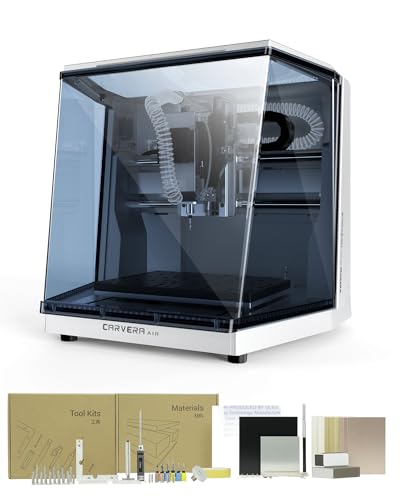
- Enclosed design reduces mess and noise
- Auto probing and leveling simplify setup
- Quick tool changes speed up multi-step jobs
Best For: DIY makers and small workshops needing a compact, accurate CNC for detailed parts.
Best for Beginners
Genmitsu 3018-PROVer V2 CNC Milling Machine

- Fast, beginner-friendly setup
- Safety features like limit switches and E-stop
- Good software compatibility and upgrade path
Best For: First-time CNC users who want an easy-to-learn desktop machine for light aluminum projects.
Best Starter Bit Set
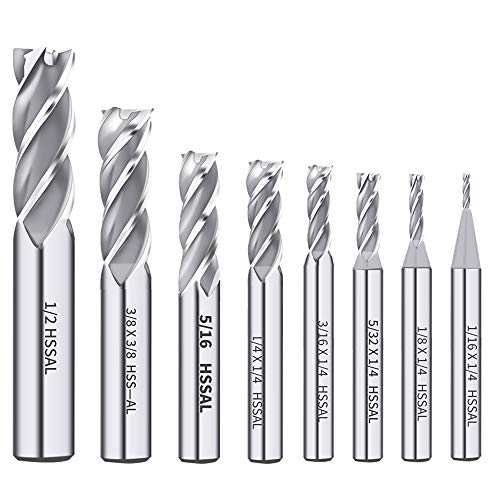
- 8 common sizes for everyday milling tasks
- 4-flute geometry supports cleaner chip evacuation
- Good value for light aluminum and general-purpose work
Best For: Beginners and hobbyists needing a versatile starter cutter set for light aluminum work.
Best for Ready-to-Use Aluminum Cutting

- All-metal frame with ball screws and linear guides
- 800W spindle with up to 30,000 RPM
- Fully assembled for quicker setup
Best For: Hobbyists and small shops wanting a ready-to-run desktop CNC for aluminum and mixed materials.
Best for Entry-Level Aluminum Work
CNCTOPBAOS 3018-PRO CNC Router

- Limit switches and E-stop improve safety
- Compact 3018 footprint for small benches
- Works with wood, PCB, acrylic, and soft aluminum
Best For: Beginners and hobbyists who need a compact, low-cost machine for light aluminum work.
Best for Taller Projects
Genmitsu PROVerXL 4030S CNC Router

- 710W spindle for stronger cutting and faster engraving
- 130mm Z-height for taller stock and rotary projects
- Upgraded rails and 32-bit control for smoother motion
Best For: Makers who want a compact CNC with extra clearance and better stability for mixed-material work.
Best Compact GRBL Starter

- Offline controller for computer-free operation
- GRBL 1.1f board with probe, limit, and E-stop support
- Compact footprint for small benches and hobby setups
Best For: Hobbyists who want a compact CNC for light aluminum work and everyday engraving tasks.
Best for Small Aluminum Projects
TTC3018 Pro All-Metal Desktop CNC Router

- All-metal Z-axis improves rigidity and stability
- Wi-Fi, USB, and TF card support for flexible operation
- Compact size with included cutters and setup tools
Best For: Hobbyists and classrooms needing a compact CNC for light aluminum and mixed-material projects.
Best for Easy Setup

- Simplified assembly with improved accuracy
- Works with soft aluminum, plastics, wood, and PCB material
- GRBL control plus offline controller and included software
Best For: Beginners who want an affordable CNC router for light aluminum and general hobby projects.
Best for Precision Aluminum Work – Genmitsu 3030-PROVer Ultra CNC Router
If you’re comparing desktop milling machines for aluminum, the Genmitsu 3030-PROVer Ultra stands out for its all-metal construction, 710W spindle, and rigid motion system. It’s aimed at users who want cleaner cuts, better repeatability, and a machine that feels more serious than a typical hobby CNC.
Best For: Makers, small shops, and advanced hobbyists who want a compact CNC with enough rigidity and spindle power for aluminum engraving and light milling.
Pros:
- 710W spindle gives a meaningful boost for aluminum and other tougher materials
- HG15 dual linear rails and ball screws help deliver strong rigidity and repeatable accuracy
- All-metal chassis and high-torque motors reduce vibration for cleaner results
- Quick 10-minute setup makes it easier to get started fast
Cons:
- Still best suited to light-duty aluminum work, not heavy industrial milling
- Advanced performance may be more than casual beginners need
- App and software features are useful, but some users may prefer a simpler workflow
For buyers shopping desktop milling machines for aluminum, this model offers a strong balance of power, rigidity, and setup convenience. It’s a smart pick if you want dependable precision without moving up to a much larger machine.
Best for Compact Precision – Carvera Air Desktop CNC Machine
Carvera Air is a compact, enclosed CNC that fits makers who want capable desktop milling machines for aluminum without jumping to a full-size shop setup. Its auto probing, quick tool changer, and closed-loop stepper system make it easier to produce accurate small parts, PCB work, and detailed prototypes in a home workshop or studio.
Best For: DIY makers, small workshops, and hobbyists who want a space-saving CNC with strong accuracy and automation.
Pros:
- Enclosed desktop design helps contain chips, dust, and noise.
- Auto probing and leveling improve setup consistency and cut accuracy.
- Quick tool changer speeds up multi-step jobs and tool swaps.
- Works with Makera CAM plus popular CAD/CAM workflows.
Cons:
- Smaller work area limits larger aluminum parts.
- Not the fastest path for heavy-duty production milling.
- Requires learning CNC workflows if you’re totally new.
For buyers comparing desktop milling machines for aluminum, Carvera Air stands out more for precision, automation, and compact convenience than raw industrial throughput. It’s a strong fit if you value clean operation and repeatable results in a small footprint.
Best for Beginners – Genmitsu 3018-PROVer V2 CNC Milling Machine
The Genmitsu 3018-PROVer V2 is a smart entry point for buyers comparing desktop milling machines for aluminum, especially if you want a compact CNC that’s easy to learn and upgrade over time. Its semi-preassembled design, limit switches, emergency stop, and updated Z-axis hardware make it more approachable than many bare-bones starter machines.
Best For: First-time CNC users, hobbyists, and makers who want a beginner-friendly desktop machine for light aluminum work and other small projects.
Pros:
- Quick setup with semi-preinstalled parts and an upgraded aluminum spoilboard
- Includes limit switches and an emergency stop for safer operation
- 32-bit control with Toshiba TB6S109 drivers for smoother, quieter performance
- Compatible with popular CAD/CAM tools like Carveco, Fusion 360, and Easel
Cons:
- Small work area limits larger aluminum projects
- More suited to light-duty milling than aggressive metal removal
- May require upgrades as your machining needs grow
Overall, this is a practical starter pick if you want to learn CNC without a steep setup curve. For desktop milling machines for aluminum, the Genmitsu 3018-PROVer V2 stands out more for accessibility and expandability than raw cutting power.
Best Starter Bit Set – 8PCS HSS 4-Flute End Mill Set
If you need a basic cutter assortment for desktop milling machines for aluminum, this 8-piece HSS end mill set covers the most common diameters in one affordable package. It’s a practical pick for light-duty milling, slotting, profiling, and general-purpose CNC work where you want a range of sizes without buying individual bits.
Best For: Beginners and hobbyists who want a simple, all-around end mill set for aluminum, soft metals, wood, and plastic.
Pros:
- Includes 8 useful sizes from 1/16" to 1/2" for flexible setup options
- 4-flute design helps improve chip removal and surface finish
- Enhanced M2 HSS construction offers solid wear resistance for general use
- Straight shank makes clamping easy on compatible machines
Cons:
- Not the best choice for heavy production or aggressive aluminum removal
- HSS is less durable than carbide on tougher or high-speed jobs
- Performance depends on proper feeds, speeds, and rigidity
For desktop milling machines for aluminum, this set makes sense when you want coverage and convenience more than maximum cutting speed. It’s a solid entry-level option for light machining, but serious aluminum work may call for carbide cutters later on.
Best for Ready-to-Use Aluminum Cutting – LUNYEE 3020 Nova CNC Router
If you want one of the more plug-and-play desktop milling machines for aluminum, the LUNYEE 3020 Nova stands out for its fully assembled design, all-metal frame, and ball-screw motion system. It’s built for users who want a compact desktop CNC that can handle aluminum, brass, and softer materials without spending hours on setup.
Best For: Hobbyists, makers, and small shops that want a ready-to-run desktop CNC for aluminum and mixed-material projects.
Pros:
- All-metal frame with HG-15 linear guides and 1204 ball screws for tighter motion control
- 800W spindle with 6,000–30,000 RPM range for aluminum, wood, acrylic, and plastics
- Arrives fully assembled with wiring pre-connected for faster startup
- Compatible with common GRBL software like UGS, Fusion 360, Easel, and Candle
Cons:
- Best suited to light-duty aluminum work rather than heavy industrial machining
- Desktop work area may be limiting for larger parts
- 800W output is solid, but not ideal for aggressive multi-pass production work
For buyers comparing desktop milling machines for aluminum, this model is appealing because it balances precision, ease of setup, and material versatility. It’s a strong fit if you want a compact CNC that can get to work quickly and handle small aluminum jobs with less fuss.
Best for Entry-Level Aluminum Work – CNCTOPBAOS 3018-PRO CNC Router
If you want one of the more accessible desktop milling machines for aluminum, this upgraded 3018-PRO is a practical starter option. It adds limit switches and an emergency stop for safer operation, while still keeping the footprint small enough for a bench-top setup.
Best For: Beginners, hobbyists, and DIY users who want a compact GRBL-controlled machine for light aluminum engraving and general-purpose desktop milling.
Pros:
- Includes limit switches and an E-stop for safer operation
- Compact 300 x 180 x 45 mm working area fits small workspaces
- Compatible with wood, acrylic, PCB, and soft metals like aluminum
- GRBL control with included setup resources and tutorials
Cons:
- Not intended for heavy aluminum removal or aggressive cutting
- Small work area limits larger projects
- Best results depend on careful feeds, speeds, and bit selection
Overall, this machine makes sense if you want an inexpensive, beginner-friendly introduction to desktop milling machines for aluminum rather than a rigid production tool. It is better suited to light passes, engraving, and small parts than demanding full-depth machining.
Best for Taller Projects – Genmitsu PROVerXL 4030S CNC Router
If you want a desktop machine that can do more than light engraving, the Genmitsu PROVerXL 4030S is a strong option to consider among desktop milling machines for aluminum. Its 710W spindle, upgraded linear rails, and rigid frame aim to improve stability and cutting consistency when working on tougher materials, while the 130mm Z-height adds flexibility for taller stock and rotary setups.
Best For: Makers and small shop users who want a compact CNC router with extra Z clearance, stronger cutting power, and app-based control for mixed-material projects.
Pros:
- 710W spindle gives it more cutting force than typical entry-level desktop CNCs
- Upgraded Z-axis linear guideway and heavy-duty frame improve stability and repeatability
- 130mm pass height is useful for taller parts, fixtures, and rotary work
- 32-bit control board and faster motion support smoother, more precise toolpaths
Cons:
- Wi‑Fi module is purchased separately for wireless app control
- Still a desktop machine, so aluminum work will be limited to lighter-duty milling and proper feeds/speeds
- Assembly is faster than many kits, but it still takes setup time and calibration
For buyers comparing desktop milling machines for aluminum, this model stands out more for versatility and added rigidity than for heavy industrial stock removal. It makes the most sense if you want a capable desktop CNC that can handle aluminum, acrylic, and wood without giving up useful Z-axis travel or ease of use.
Best Compact GRBL Starter – CNCTOPBAOS 1610 Pro Mini CNC
If you want one of the smaller desktop milling machines for aluminum that can also handle everyday hobby materials, the CNCTOPBAOS 1610 Pro is a practical entry-level pick. It is built more for light-duty carving and engraving than aggressive metal removal, but the GRBL 1.1f board, offline controller, and compact footprint make it easy to fit into a home workshop.
Best For: Beginners or hobbyists who want a compact CNC for light aluminum work, PCB, acrylic, wood, and plastic projects.
Pros:
- Offline controller lets you run jobs without keeping a computer connected
- GRBL 1.1f control board adds limit, probe, emergency stop, and cooling support
- Compact desktop size is suitable for small workbenches and tight spaces
- Supports common G-code formats and comes with a USB drive for setup files
Cons:
- Small work area limits the size of parts you can machine
- 120W spindle is better for light-duty cutting than heavy aluminum milling
- Not ideal for users who need faster production or rigid metalworking performance
Overall, this machine makes sense if you’re comparing desktop milling machines for aluminum and need a low-cost, beginner-friendly option for soft metal and mixed-material projects. Just keep expectations realistic: it’s a compact engraver/router first, and a light aluminum machine second.
Best for Small Aluminum Projects – TTC3018 Pro All-Metal Desktop CNC Router
If you want one of the more approachable desktop milling machines for aluminum, the TTC3018 Pro stands out for its all-metal Z-axis, compact footprint, and beginner-friendly setup. It’s a practical fit for light-duty metal work, but it also handles wood, acrylic, MDF, and nylon well, making it a versatile choice for hobbyists and small shop users who need a desktop machine that can do more than just engraving.
Best For: Hobbyists, classrooms, and makers who want a compact CNC for light aluminum work and everyday desktop projects.
Pros:
- All-metal Z-axis with backlash-eliminating lead screws for better rigidity and accuracy
- Supports offline TF card use, USB connection, and 2.4G Wi-Fi file transfer
- Compact 15 lb design fits easily on a desk or workbench
- Includes cutters, collet, spindle, and tools to get started quickly
Cons:
- Small 300 x 180 x 40 mm work area limits larger parts
- Not ideal for heavy aluminum removal or production-level metal machining
- Best suited to light milling and engraving rather than demanding industrial jobs
Overall, the TTC3018 Pro is a strong entry-level pick for anyone comparing desktop milling machines for aluminum and wanting a compact, feature-rich machine without a complicated setup. It’s especially appealing if you value portability, included accessories, and flexible control options over raw cutting power.
Best for Easy Setup – Genmitsu CNC 3018-PRO
If you want one of the more approachable desktop milling machines for aluminum, the Genmitsu CNC 3018-PRO is a practical entry-level pick for light-duty work. It’s built around GRBL control, includes offline control support, and is designed for easier assembly and better stability than the earlier 3018 version.
Best For: Beginners and hobbyists who want an affordable CNC router for soft aluminum, plastics, wood, acrylic, and PCB projects.
Pros:
- Upgraded 3018-Pro design simplifies assembly and improves working accuracy
- Supports soft aluminum plus plastics, wood, acrylic, PVC, and PCB material
- GRBL control with broad community support and included Candle/Carveco Maker software
- Offline controller and 20,000 RPM spindle support improve convenience
Cons:
- Not suited for heavy aluminum removal or industrial-duty machining
- Small work area limits larger parts and more ambitious projects
- May need upgrades for users who want higher rigidity and performance
As a starter machine, the Genmitsu 3018-PRO makes sense if your priority is learning CNC basics and doing light aluminum engraving or shallow cutting. It won’t replace larger desktop milling machines for aluminum, but it offers a solid low-risk way to get started.
How We Picked These Desktop Milling Machines for Aluminum
We focused on machines and accessories that make aluminum work more practical on a desktop: stronger frames, linear guides or ball screws where available, higher-powered spindles, usable work envelopes, and controls that help reduce setup mistakes. We also favored models that can serve beginners while still offering enough stability for light milling, engraving, and prototyping.
Quick Comparison
Among Desktop Milling Machines for Aluminum, the most capable options tend to pair a rigid enclosure or all-metal construction with a higher-wattage spindle and more precise motion components. Compact 3018-style machines are often best for learning and very light aluminum work, while larger 3020 and 4030-class machines usually offer better stiffness, reach, and cutting confidence. The accessory set matters too: proper end mills, workholding, and probing can make a big difference in surface finish and tool life.
Key Buying Factors for Desktop Milling Machines for Aluminum
Rigidity and Motion Quality
Aluminum rewards stiffness. Look for all-metal frames, reinforced gantries, linear rails, or ball screws if possible. More rigidity usually means less vibration, cleaner edges, and fewer tool breaks.
Spindle Power and Speed Control
A stronger spindle helps maintain cutting performance in metal, but raw power is only part of the story. Variable speed control is important for dialing in chip load and avoiding heat buildup.
Work Area and Z-Axis Clearance
Make sure the cutting area fits your typical parts. If you plan to use clamps, vises, or thicker stock, extra Z-axis travel can be just as important as bed size.
Software, Probing, and Safety Features
Features like auto-probing, offline control, limit switches, and an emergency stop make setup easier and reduce costly mistakes. For newcomers, these can be worth paying extra for.
Tooling and Consumables
Cutters matter as much as the machine. Use proper HSS or carbide end mills designed for metal, and expect to change feeds, speeds, and pass depth based on the alloy and machine rigidity.
Who Should Buy Which Desktop Milling Machines for Aluminum?
If you are a beginner or mainly plan to learn CAM, a compact 3018-style machine is usually the most affordable entry point. If you want a stronger all-around desktop setup for aluminum prototypes, look at the 3020 and 3030 class machines with better rigidity and more spindle power. If you need the most refined user experience and are willing to pay for it, enclosed systems with probing and automatic tool changing can reduce hassle and improve consistency.
For buyers comparing Desktop Milling Machines for Aluminum, the best choice is the one that matches your part size, material thickness, and tolerance needs without stretching your workflow or budget.