Personalizing jewelry can mean marking a metal pendant, lettering the inside of a ring, or cutting a decorative line by hand. Each job calls for a different kind of engraver.
These 10 options span laser machines, mechanical ring engravers, cordless pens, and pneumatic systems. Use the guide below to narrow the field by project, workspace, and skill level.
Best 10 Engraving Machines for Jewelry Picks for 2026
Best for Countertop Metal Gifts

- 1064nm infrared laser for suitable metal keepsakes
- Touchscreen design tools and 300-plus presets
- Compact, approximately 6.6-pound desktop unit
Best For: Countertop personalization of small metal gifts
Best for Inside-Ring Lettering

- Manual diamond-nib engraving for ring interiors
- English letters and numerals on a five-inch dial
- Rotating jaw; 1.5–2.0 mm characters
Best For: Short inscriptions inside rings
Best Cordless Detail Tool
AM ARROWMAX Mini Engraving Pen

- Four speeds from 15,000 to 30,000 RPM
- 30 diamond bits included
- Cordless with reversible rotation and OLED display
Best For: Portable, freehand jewelry and craft engraving
Best for Bench Metal Detailing
Dual-Head Pneumatic Jewelry Engraver

- Adjustable 400–8,000 RPM range
- Dual-head setup for small metal pieces
- Foot pedal and metal impurity filter included
Best For: Bench engraving, shading, and metal texturing
Best Compact Metal Marker

- Fine surface marking on metal
- 3.5-inch standalone touchscreen
- Compact desktop footprint
Best For: Personalized metal jewelry and tags
Best Benchwork Multitasker
GEMKIT HH-AT02 Engraving Station

- No external compressor needed
- Engraves, polishes, and drills
- Includes two pistons and foot pedal
Best For: Manual jewelry engraving and bench finishing
Best Dual-Laser Customizer
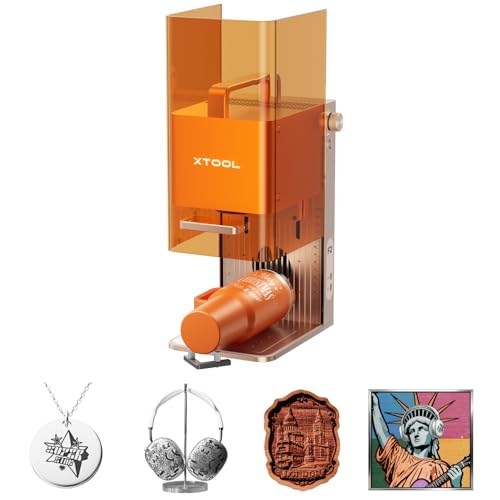
- 5W IR and 15W diode lasers
- 50MP positioning camera
- Portable, enclosed design
Best For: Jewelry and mixed-material gift customization
Best for Foot-Controlled Detail Work
CTISMICE Double-Head Pneumatic Engraver

- Two impact handpieces
- Foot-controlled power
- Compressor not included
Best For: Jewelers with an air compressor who want hands-free impact control
Best All-in-One Setup
GEMKIT HH-AT01 Air-Free Engraver

- No external compressor needed
- Power, speed, and pedal controls
- Six gravers and chucks included
Best For: Compact, compressor-free jewelry engraving setups
Best for Switching Between Fine and Deep Cuts
GEMKIT HH-G01 Dual-Head Engraver

- Fine-detail and deeper-cut heads
- Stated 400–8,000 RPM adjustment
- Compressor and tubing not included
Best For: Fine and deep metal engraving with an existing compressor setup
Best for Countertop Metal Gifts – AlgoLaser Pixi 1064nm
Among engraving machines for jewelry and small metal gifts, the AlgoLaser Pixi stands out for preparing simple personalization directly on its 3.5-inch touchscreen. Its 1064nm infrared laser is intended for suitable metal tags, nameplates, and keepsakes.
Best For: Gift sellers who want to personalize small metal pieces at a counter or market table.
Pros:
- On-device tools let you type names and dates or sketch a simple motif without first making a computer file.
- Includes 300-plus built-in designs with preset parameters and an on-screen positioning preview.
- Compact desktop machine weighs about 6.6 pounds and also supports compatible LightBurn and LaserGRBL workflows.
Cons:
- Its stated focus is suitable metal pieces, so confirm compatibility with your specific jewelry blanks.
- The compact format is better suited to small items than large projects.
If customers choose a name or date while they shop, the touchscreen workflow is the main draw; computer software remains an option for more detailed artwork.
Best for Inside-Ring Lettering – VEVOR Ring Engraver
If your search for engraving machines for jewelry centers on inscriptions inside rings, this VEVOR machine has a much narrower purpose than a general engraver. Its character dial, rotating chuck, and diamond nib are designed for manually tracing letters and numbers onto a ring’s interior.
Best For: Jewelers and hobbyists adding short English-letter or numeral inscriptions inside rings.
Pros:
- Five-inch dial provides English letters and Arabic numerals in approximately 1.5–2.0 mm character heights.
- Jaw rotates 360 degrees to position a ring during engraving.
- Diamond nib is described for engraving gold, silver, and other materials.
Cons:
- Limited to the characters provided on the dial rather than freeform designs.
- Requires the user to coordinate the pen and handle while tracing each character.
Choose this for its specific inside-ring task, not as an all-purpose tool for pendants or larger surfaces. Practicing the manual tracing motion is sensible before engraving a finished ring.
Best Cordless Detail Tool – AM ARROWMAX Mini Engraving Pen
For shoppers comparing engraving machines for jewelry who prefer a handheld tool, the AM ARROWMAX pen offers cordless, freehand engraving. Four speed settings span 15,000–30,000 RPM, and the included diamond-bit kit supports projects across a range of materials.
Best For: DIY makers who want a portable pen for freehand jewelry personalization and other small crafts.
Pros:
- Includes 30 diamond bits for varied engraving tasks.
- Forward and reverse rotation accommodate different hand positions and textures.
- OLED display shows speed, battery level, and rotation direction.
- Rechargeable 500mAh battery is advertised for up to two hours of cordless use.
Cons:
- Freehand results depend on the user’s control; this is not a template-guided lettering machine.
- Cordless sessions are limited by battery life.
This is the flexible pick for experimenting with marks on jewelry and other craft surfaces, especially when portability matters more than repeatable, machine-positioned text.
Best for Bench Metal Detailing – Dual-Head Pneumatic Jewelry Engraver
This dual-head pneumatic unit targets bench users comparing engraving machines for jewelry with an emphasis on controlled metal detailing. Its stated 400–8,000 RPM range and handpiece setup suit lettering, shading, carving, and texturing on small pieces.
Best For: Jewelry makers and repair benches working on metal detail and decorative texture.
Pros:
- Adjustable 400–8,000 RPM range offers control for different detailing tasks.
- Dual-head design is intended for work on rings, pendants, blanks, and other small pieces.
- Listed for gold, silver, brass, copper, and aluminum; foot pedal and metal impurity filter are included.
Cons:
- Corded bench setup is less portable than a handheld cordless pen.
- The supplied specifications conflict on weight, listing both a 5.5-pound body and a 9.03 kg item weight.
Its appeal is the range of hands-on metalworking tasks it covers. Verify the machine’s weight and your intended setup before buying, given the inconsistent weight figures provided.
Best Compact Metal Marker – AlgoLaser Pixi 1064nm
Among engraving machines for jewelry, the AlgoLaser Pixi suits creators who want fine surface marks on small metal pieces without a bulky setup. Its 1064nm infrared laser is intended for marking jewelry, tags, and other metal accessories rather than deep engraving or cutting.
Best For: Small-studio personalization of metal jewelry, tags, and gifts.
Pros:
- 1064nm infrared laser supports fine marking on stainless steel, aluminum, and coated metal.
- 3.5-inch touchscreen and AlgoOS allow operation without a constant PC connection.
- Compact desktop format fits smaller workspaces.
Cons:
- Not designed for deep engraving, wood cutting, or large-scale cutting.
- Reflective metals may need slower settings or marking spray for darker results.
Choose this model for names, logos, and detailed surface designs on small metal items. Clean, securely positioned workpieces and proper focus matter, and reflective-metal marking calls for suitable laser goggles and ventilation.
Best Benchwork Multitasker – GEMKIT HH-AT02 Engraving Station
The GEMKIT is a hands-on option among engraving machines for jewelry: its engraving handpiece pairs with a separate micromotor for polishing and drilling. A built-in air-free system avoids the need for an external compressor at the bench.
Best For: Jewelers who want manual engraving plus rotary finishing and drilling in one station.
Pros:
- Built-in air-free system eliminates an external compressor.
- Separate micromotor handpiece runs up to 35,000 RPM for rotary tasks.
- Includes 4g and 6g pistons, adjustable stroke controls, and a foot pedal.
- Kit includes gravers, chucks, and handpieces.
Cons:
- Manual handpiece work requires hands-on control rather than automated laser marking.
- At 11 pounds, it is heavier than the compact laser options listed here.
This is the practical pick when engraving is part of broader benchwork. The interchangeable pistons let you set up for lighter shading or heavier cuts, while the micromotor covers separate rotary jobs.
Best Dual-Laser Customizer – xTool F2
For shoppers comparing engraving machines for jewelry and mixed-material gifts, the xTool F2 combines a 5W infrared laser for metal marking with a 15W diode laser for other material projects. Its built-in 50MP camera helps position designs on small pieces.
Best For: Creators offering metal jewelry personalization alongside broader gift customization.
Pros:
- Dual lasers expand the range of metal marking and diode-laser projects.
- 50MP camera supports visual positioning of small workpieces.
- Fully assembled, enclosed design and 10-pound weight suit portable setups.
- Slide Extension compatibility offers a path to batch work.
Cons:
- Slide Extension, RA3, and purifier are optional rather than listed in the included kit.
- As a Class 4 laser, it still requires appropriate laser-safety practices.
The F2 makes the most sense if your catalog goes beyond jewelry. The camera and material presets can streamline positioning and setup, while optional accessories matter if you plan to add batch or rotary projects.
Best for Foot-Controlled Detail Work – CTISMICE Double-Head Pneumatic Engraver
Among engraving machines for jewelry, the CTISMICE stands out for its two impact handpieces and foot-controlled power. Its adjustable impact range is suited to delicate jewelry work as well as heavier metal engraving and hammering.
Best For: Jewelers who want two handpieces and hands-free power control, and already have an air compressor or plan to buy one.
Pros:
- Two impact handpieces support different engraving tasks.
- Foot valve lets you activate the handpiece and increase power as needed.
- Includes filters, hoses, test engraving knives, and other setup accessories.
Cons:
- Air compressor is not included.
- Coordinating foot pressure with engraving power may take practice.
This is a practical choice for a bench where pneumatic engraving is already part of the workflow. Budget for the separate compressor and some time to get comfortable with the pedal.
Best All-in-One Setup – GEMKIT HH-AT01 Air-Free Engraver
If you are comparing engraving machines for jewelry but do not want to add an external compressor, the GEMKIT HH-AT01 is the plug-in option here. Its built-in air-free system pairs separate power and speed knobs with a foot pedal for hands-free adjustment.
Best For: Jewelers seeking a compact engraving setup without a separate air compressor.
Pros:
- Built-in system eliminates the need for an external compressor.
- Separate controls adjust stroke force and frequency, with up to 3,000 strokes per minute stated.
- Includes six gravers, six quick-change chucks, and a foot pedal.
- Supports 100–240V power input.
Cons:
- Its stated top stroke rate is 3,000 per minute; check whether that suits your preferred workflow.
The included tools and compressor-free design make this the most self-contained option in the group. It is especially appealing when bench space for additional equipment is limited.
Best for Switching Between Fine and Deep Cuts – GEMKIT HH-G01 Dual-Head Engraver
The GEMKIT HH-G01 gives shoppers considering engraving machines for jewelry two interchangeable heads: one intended for fine detail and the other for deeper metal engraving. Its manual speed adjustment spans a stated 400–8,000 RPM.
Best For: Jewelers and metalworkers who want to switch between fine detailing and deeper cuts and can supply their own compressor setup.
Pros:
- Two heads cover fine detail and deeper engraving tasks.
- Manual speed adjustment allows changes for different materials.
- Includes a foot pedal, pressure regulator, and pressure gauge.
Cons:
- Air compressor and its original factory tubing are not included.
- Setup calls for an oil-water separator before the compressor to keep water out of the machine.
Choose this model for its head-switching flexibility rather than a ready-to-run kit. Confirm the required compressor tubing and moisture-control setup before ordering.
How We Picked the Best Engraving Machines for Jewelry
We organized the 10 machines by the work they are designed to do: laser marking, inside-ring lettering, portable hand engraving, and pneumatic hand engraving. We also considered practical buying details visible in the listed specifications, including laser type, controls, compressor requirements, and whether a tool offers functions beyond engraving. A higher speed rating or longer feature list does not automatically make a machine better for delicate jewelry.
Quick Comparison of Engraving Machines for Jewelry
1064 nm infrared lasers are the starting point for shoppers who want to mark metal jewelry with repeatable text or designs. The dual-laser xTool F2 adds a diode laser for a broader range of project materials, but check which laser a particular job requires. Inside-ring engravers are specialized for lettering within bands rather than decorating broad surfaces. Engraving pens are portable and approachable for occasional freehand work. Pneumatic machines suit controlled hand engraving and may require either an external air supply or a model with a built-in compressor.
Key Buying Factors for Jewelry Engraving Machines
Match the Tool to the Result
Choose a laser for repeatable names, logos, or patterns; a ring-lettering machine for characters inside bands; and a hand-guided tool for cuts shaped by the operator. If you need deep relief rather than a surface mark, verify the machine’s capability on your exact metal and allow for additional passes or finishing work.
Check Materials and Workpiece Fit
Gold, silver, stainless steel, plated pieces, and coated blanks can respond differently. Confirm the maker’s supported materials and test on a spare before working on valuable jewelry. For rings, check the supported band sizes, character blocks, and clearance around stones or settings. For lasers, consider the usable work area and whether a rotary accessory is needed for curved pieces; do not assume one is included.
Plan for Setup and Safety
Laser work may call for an appropriate enclosure, ventilation, and eye protection matched to the laser wavelengths. Pneumatic engraving calls for attention to air supply, noise, handpiece control, and maintenance; an air-free model can simplify setup but still needs suitable bench space. Compare total setup cost, not just the machine price.
Who Should Buy Which Engraving Machines for Jewelry?
For a small shop making repeatable metal tags or pendants, start by comparing the infrared laser options, then decide whether the xTool’s second laser and camera justify its added capabilities. For a business focused on inner-band personalization, the VEVOR ring engraver is the purpose-built choice to investigate. Occasional hobbyists may prefer the cordless AM ARROWMAX pen, provided they are comfortable with freehand results. Jewelers seeking traditional, hand-controlled detail should compare the dual-head pneumatic options with GEMKIT’s built-in-compressor models; the multifunction GEMKIT is worth considering when polishing and drilling are also part of the workflow.