Hand carders make it easier to prepare, blend, and align wool without committing to a large drum carder or dedicated fiber studio. For apartment crafters, beginners, and makers who store tools between projects, the right compact set can deliver useful control without taking over a worktable.
This roundup compares 10 hand carders and small-space fiber-preparation tools, including traditional carder pairs, blending boards, cotton carders, and hand-crank machines. Use the guide below to match card type, tooth configuration, storage needs, and project goals.
Best 10 Hand Carders for Small Spaces Picks for 2026
Portable Classic
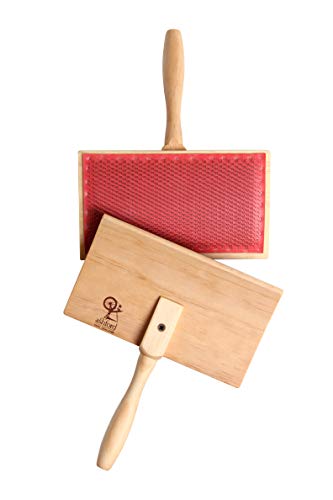
- Portable for compact work areas
- Blends wool and other fibers
- Stainless steel wire and rubber backing
Best For: Small-space wool and fiber preparation
Easy-Grip Pair

- Curved backs and easy-grip handles
- 70 pins per square inch
- Compact 4-by-7.5-inch carding area
Best For: Compact, comfortable hand carding
Space-Saving Board

- Includes stand and rolling rod
- Supports blending, layering, and rolling
- Compact wooden board design
Best For: Multipurpose fiber preparation in compact spaces
Lightweight 72-Point
Small 72-Point Hand Carder Pair

- 110 grams per carder
- Compact 12-by-8-centimeter size
- Pressed metal backs and angled handles
Best For: Lightweight carding in very limited spaces
Compact Metal Powerhouse
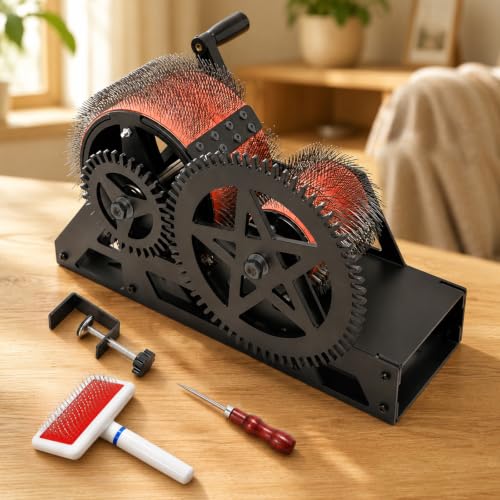
- All-metal frame with dual pinned drums
- Smooth manual crank for blending fibers
- Detachable crank aids compact storage
Best For: Serious fiber blending in a small studio or portable workshop
Classic Lightweight Choice
- Lightweight 1.3-pound design
- Only 0.5 inches thick for easy storage
- Stainless-steel wire with rubber backing
Best For: Compact cotton and fine-fiber carding
Accessible All-Rounder
Wool Drum Carder with Accessories

- Compact 4.41-pound drum-carder design
- Includes clamp, brush, and awl
- Handles wool, pet hair, and blending projects
Best For: DIY crafters needing a compact, accessory-rich setup
Adjustable Blending Board Set

- 12.99-by-10.62-inch blending board
- Adjustable tilt support
- Includes carders, brush, and craft sticks
Best For: Fiber artists needing a versatile tabletop blending setup
Compact Wooden Carder Pair
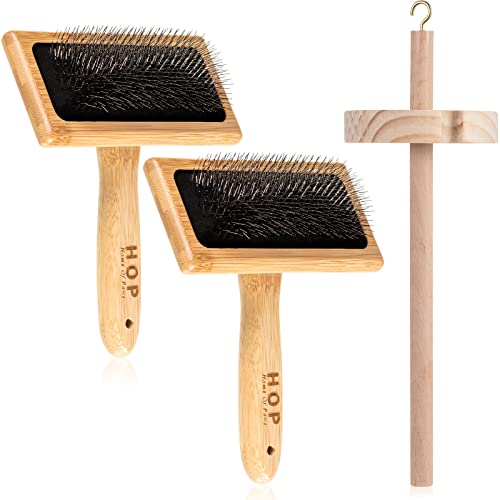
- Includes two carders and a drop spindle
- Carders measure about 6.06 by 4.8 inches
- Brush also supports pet grooming
Best For: Portable wool preparation and multipurpose crafting
Complete Wool Blending Kit

- 12.8-by-10.6-inch blending board
- Includes four sticks in two sizes
- Supports spinning and multiple felting crafts
Best For: Tabletop fiber artists seeking a drum-carder alternative
Portable Classic – Ashford Wool Hand Carders
For anyone seeking hand carders for small spaces, the Ashford Classic Wool Hand Carders offer a portable way to blend wool and other fibers. Their stainless steel wire and rubber backing provide a practical setup for compact fiber-preparation areas.
Best For: Home spinners and crafters who need portable carders for wool and other fibers.
Pros:
- Portable design suits small work areas.
- Can blend wool and other fibers.
- Uses stainless steel wire with rubber backing.
- 72-point wool carding surface.
Cons:
- At 2 pounds, they are heavier than some compact carders.
- The notes do not specify a handle or storage feature.
With an approximately 8.9-by-6.4-inch footprint, this pair balances portability with a substantial 72-point carding surface. They are a sensible choice when you want traditional hand carders without a large workstation.
Easy-Grip Pair – Curved-Back Hand Carders
These hand carders for small spaces use curved backs and easy-grip handles to make manual fiber preparation more manageable. The pair has a compact 4-by-7.5-inch carding area and a 70-pin-per-square-inch configuration.
Best For: Crafters who want a manageable pair with comfortable handling for compact workspaces.
Pros:
- Curved backs support the carding design.
- Easy-grip handles are practical for hand use.
- 70 pins per square inch provide a defined carding surface.
- Sold as a pair.
Cons:
- The carding area is smaller than the overall size of some standard carders.
- The supplied notes do not identify the construction materials.
The compact carding area and ergonomic features make this pair well suited to limited tables or storage spaces. At 1.8 pounds, it remains reasonably portable while offering a full two-carder setup.
Space-Saving Board – DIYEAH Wool Blending Board
For hand carders for small spaces, the DIYEAH Wool Blending Board provides a compact board-based alternative for layering, blending, combing, and rolling fibers. Its fixed stand and rolling rod are designed to help keep the board stable during use.
Best For: Home fiber projects and classes that need a multipurpose blending and preparation board.
Pros:
- Compact wooden design measures approximately 12.8 by 10.63 inches.
- Includes a fixed stand and rolling rod.
- Supports layering, blending, combing, prespinning, and winding.
- Designed for most fiber types and easy cleaning.
Cons:
- At 2.2 pounds, it may require dedicated storage.
- No warranty is listed in the supplied details.
- It is a blending board rather than a traditional handheld carder pair.
This board is useful when one compact tool needs to cover several preparation steps. The stand and rolling rod add stability, while the thin 0.47-inch profile can help conserve workspace when stored flat.
Lightweight 72-Point – Small 72-Point Hand Carder Pair
These hand carders for small spaces are a lightweight pair measuring approximately 12 by 8 centimeters. They use pressed metal backs, 72-point carders, and angled chunky handles intended to keep fingers away from the working surface.
Best For: Crafters who prioritize low weight and a smaller-than-standard carder footprint.
Pros:
- Lightweight at approximately 110 grams each.
- Compact 12-by-8-centimeter size suits limited storage.
- 72-point carding surface is suitable for clean wool carding and mixing.
- Rounded corners and lacquered woodwork offer a finished design.
Cons:
- They are lighter and slightly smaller than standard carders.
- Wool is not included.
- The notes specify use with clean wool rather than all fiber types.
If storage and portability are the main concerns, this pair is notably compact and light. The angled 13-centimeter handles and rounded lacquered finish add practical handling details, though the smaller surface may mean less coverage per pass.
Compact Metal Powerhouse – Hand Crank Wool Drum Carder
For shoppers comparing hand carders for small spaces, this compact drum carder offers efficient manual processing without needing an outlet. Its 14 x 5 x 8-inch footprint, detachable crank, and narrow-shelf-friendly design suit home studios, while the dual pinned drums handle blending and batt preparation.
Best For: Fiber artists who want a sturdy, portable drum carder for blending wool and other fibers in a compact workspace.
Pros:
- All-metal frame is designed for stable, long-term use.
- Dual drums gently process merino, alpaca, cashmere, silk, cotton, and synthetics.
- Smooth hand crank with lubricated bearings can reduce wrist fatigue.
- Detachable crank simplifies storage and transport.
Cons:
- At 9.9 pounds, it is heavier than the other listed options.
- Its 14-inch length may still require dedicated shelf space.
This is the strongest choice when durability and versatile fiber blending matter more than minimum weight. The metal construction and compact detachable design make it practical for serious home use, retreats, or markets.
Classic Lightweight Choice – Ashford Cotton Hand Carders
These Ashford hand carders are a simple option for anyone seeking hand carders for small spaces. At 1.3 pounds and only 0.5 inches thick, they are easy to store and carry, while the stainless-steel wire and rubber backing support blending and carding cotton and other fine fibers.
Best For: Beginners and fiber crafters who prioritize portability and straightforward hand carding for cotton and fine fibers.
Pros:
- Lightweight 1.3-pound pair is easy to handle and transport.
- Thin profile stores easily in a drawer, bin, or narrow craft shelf.
- Stainless-steel wire and rubber backing are suited to fine-fiber carding.
Cons:
- Designed for hand carding rather than faster drum-style processing.
- The supplied notes specifically emphasize cotton and fine fibers, so broad-fiber versatility is less clear.
For very limited workspaces, these are the most storage-friendly pick in the group. They trade drum-carder speed and capacity for a lightweight, familiar format that is easy to keep ready for small projects.
Accessible All-Rounder – Wool Drum Carder with Accessories
For hand carders for small spaces that need more capacity than flat cards, this 11.81 x 3.94 x 7.87-inch manual drum carder is a practical middle ground. It includes a table clamp, brush, and awl, making it easier to stabilize the tool, clean the drum, and remove finished fiber in a home studio.
Best For: DIY crafters who want a lightweight drum-carder setup for wool, pet hair, color blending, and felting.
Pros:
- Compact dimensions and 4.41-pound weight suit smaller work areas.
- Manual operation needs no electricity.
- Included clamp improves stability during use.
- Brush and awl add practical fiber-removal and maintenance support.
Cons:
- Plastic construction may feel less robust than an all-metal drum carder.
- The notes do not specify the drum’s pin density or processing capacity.
This model stands out for its useful starter package and manageable size. The clamp and accessories make it convenient for occasional home crafting, especially when storage space and setup simplicity are priorities.
Adjustable Blending Board Set – Spacious Fiber Blending Kit
For shoppers comparing hand carders for small spaces, this set offers a compact footprint while adding a 12.99-by-10.62-inch blending board. Its adjustable stand, hand carders, brush, and craft sticks support color blending, fiber sorting, and finishing without requiring a drum carder.
Best For: Fiber artists who want an adjustable blending setup for wool mixing, felting, and other small-space crafts.
Pros:
- Includes a blending board, two craft sticks, and a brush.
- Adjustable tilt angle can help reduce wrist fatigue.
- Wood and stainless-steel construction is designed for durability.
- Useful for blending colors, sorting fibers, and DIY felt crafts.
Cons:
- The 12.5-by-10.6-inch board still needs dedicated workspace during use.
- At 2.18 pounds, it is less lightweight than a basic pair of hand carders.
This is a versatile choice when you need more working room than standalone carders provide but still want a manageable tabletop tool. The adjustable support adds practical flexibility for longer carding sessions.
Compact Wooden Carder Pair – Carders with Drop Spindle
If portability is your priority when shopping for hand carders for small spaces, this set keeps the tools relatively compact and adds a drop spindle. The two wooden carders can help blend wool, while the included brush also works for grooming and general fiber preparation.
Best For: Crafters who want a compact wool-carder set with a spindle and multipurpose brush.
Pros:
- Includes two wooden wool carders, one drop spindle, and a brush.
- Carders measure about 6.06 by 4.8 by 1.65 inches.
- Stainless-steel needles are described as strong and resistant to bending.
- Brush can also be used for grooming cats, dogs, and other pets.
Cons:
- The set does not include a larger blending board for broad fiber batts.
- The product notes advise checking the size details before ordering.
This is the most space-conscious option of the three for users who prefer handheld tools. Its added spindle broadens the set’s usefulness for felting, pompoms, crocheting, and general crafts.
Complete Wool Blending Kit – Board with Carder and Sticks
For hand carders for small spaces that also provide room to prepare batts, this set combines a 12.8-by-10.6-inch board with a wool hand carder and four wooden sticks. It is designed for blending wool, alpaca, and other fibers for spinning, wet felting, and needle-felting projects.
Best For: Fiber artists who want a board-based alternative to a drum carder for organized tabletop blending.
Pros:
- Includes a blending board, wool hand carder, and four craft sticks.
- Two stick lengths support different fiber-rolling tasks.
- Suitable for wool, alpaca, and other fibers.
- Supports batt preparation, rolag making, spinning, wet felting, and needle felting.
Cons:
- The 12.8-by-10.6-inch board requires more storage than handheld carders alone.
- The kit contains one wool hand carder rather than a pair.
This set is a strong middle ground for small studios: it offers a defined blending surface without the size of a drum carder. The multiple stick sizes are especially useful for shaping and rolling prepared fibers.
How We Picked the Best Hand Carders for Small Spaces
We focused on tools that are practical when storage and workspace are limited. The selection includes compact hand-carder pairs, blending-board kits, and hand-crank drum carders so shoppers can compare different approaches to fiber preparation. We considered portability, included accessories, construction, intended fiber use, ease of storage, and the type of control each design offers.
Traditional hand carders are usually the simplest option for small batches and can be stored in a drawer or on a shelf. Blending boards add flexibility for color mixing and batt preparation, while crank-operated carders can improve throughput but require more setup space and a stable work surface.
Quick Comparison
| Tool type | Best for | Space needs | Main advantage |
|---|---|---|---|
| Hand-carder pair | Small batches and general prep | Low | Portable, direct control |
| Cotton carders | Fine or delicate fibers | Low | Specialized fiber handling |
| Blending board | Color blends and textured batts | Low to moderate | Layering and design control |
| Hand-crank drum carder | Repeated or larger batches | Moderate | Faster continuous carding |
Key Buying Factors for Hand Carders for Small Spaces
Carding Surface and Tooth Density
Choose a surface suited to your fiber. Standard wool carders are versatile for many sheep’s wools and general preparation. Finer or cotton-focused carders may be preferable for delicate, short, or densely packed fibers. Higher tooth density can help with fine alignment, but it may require a gentler technique.
Size, Storage, and Work Position
Measure your actual storage area and the surface where you will work. A pair of hand carders needs little space but still requires room for opposing strokes. Blending boards need a stable surface and enough clearance for a brush or handheld tool. Drum carders are more substantial, particularly when fitted with a clamp or accessories.
Included Accessories
Brushes, sticks, awls, clamps, and drop spindles can add value if they match your projects. A brush helps pack or remove fiber from a blending board, while sticks can assist with lifting and shaping rolags or batts. Avoid paying extra for accessories you will not use or cannot store conveniently.
Construction and Maintenance
Look for securely mounted cloth, smooth wooden handles or boards, and hardware that does not loosen during use. Keep carding cloth clean, remove trapped fibers after sessions, and store tools dry to protect both the wood and working surface.
Who Should Buy Which Hand Carders for Small Spaces?
Choose a classic hand-carder pair if you want the smallest, most straightforward setup for occasional spinning, felting, or wool preparation. A cotton carder makes more sense when your projects regularly involve finer or shorter fibers. Select a blending board if color blending, art yarn, and controlled fiber layering are your priorities.
A hand-crank drum carder is the better choice for makers who process larger quantities or want a more repeatable workflow, provided they have a sturdy table and enough storage space. Combination kits are useful for beginners who want several techniques in one purchase, but compare the actual tool sizes and accessories before buying. Among Hand Carders for Small Spaces, the best option is the one that fits your fibers, batch size, and available work area—not simply the tool with the most attachments.