The right hand carder can make fleece preparation faster, more consistent, and easier to control—especially when you are working in a home studio with limited space.
This roundup compares 10 options, including fine-tooth cotton carders, standard wool carders, blending tools, flick carders, and compact drum carders. Use the guide below to match carding density, format, and capacity to your fiber projects.
Best 10 Hand Carders for Home Studios Picks for 2026
Portable Fine-Fiber Pick
Ashford Small Cotton Hand Carders

- Compact and lightweight for easy storage
- 108-point teeth for blending and carding
- Silver beech hardwood with round handles
Best For: Portable cotton and fine-fiber blending
Compact Drum Carding Option
Consfly 3.15-inch Wool Drum Carder

- Compact crank-operated drum design
- Includes brush, awl, and clamp
- Suitable for wool and fiber blending
Best For: Home studios and small DIY workshops
Classic Cotton Specialist
Ashford Classic Cotton Hand Carders
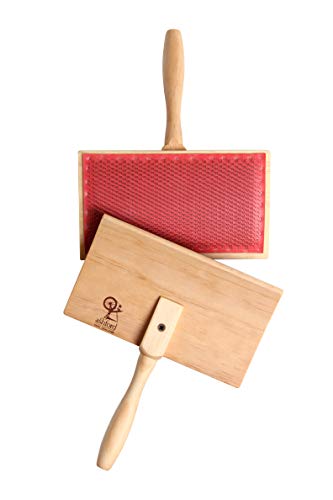
- Portable pair for hand carding
- 108-point cards for cotton and fine fibers
- Stainless steel wire with rubber backing
Best For: Cotton-focused home studio work
All-in-One Blending Set
5-Piece Wool Carding Board Kit
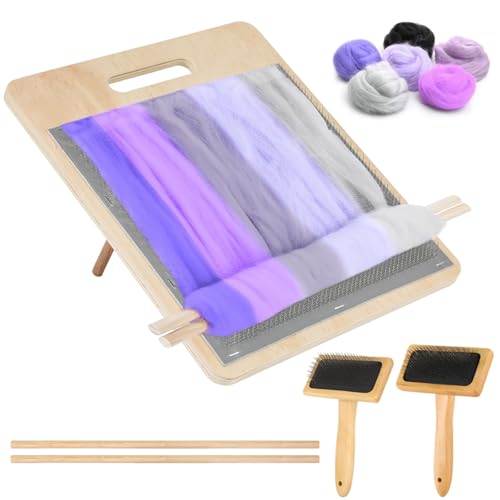
- Includes board, sticks, and two combs
- Closely spaced teeth for wool blending
- Compact set with ergonomic handling
Best For: DIY wool crafts and versatile home studios
Fine-Fiber Specialist
Ashford Superfine Hand Carders

- 190 PPSI teeth for super fine fibers
- Large 10.5-by-3.54-inch carding area
- Ergonomic, lightweight silver beech pair
Best For: Cotton, cashmere, angora, and other delicate fibers
Versatile Blending Pick
Woolbuddy Large Carder Brush Set

- Two brushes for blending wool colors
- Stainless steel pins and bamboo handles
- Includes reusable cotton storage bag
Best For: Felting, wool blending, and occasional pet grooming
Compact Wool Mixer

- Lightweight pair for clean wool
- Compact 12-by-8cm working size
- Angled, rounded lacquered wood handles
Best For: Small-batch wool carding and mixing
Best Lightweight Pick

- Lightweight 125 g design
- Sealed wood and pressed-metal construction
- Angled handle with rounded corners
Best For: Small clean-wool carding tasks
Best Traditional Pair

- Sold as a matched pair
- Curved backs and easy-grip handles
- Approximately 4 x 7.5 inch carding area
Best For: Home spinners who prefer two-carder preparation
Best for Blending
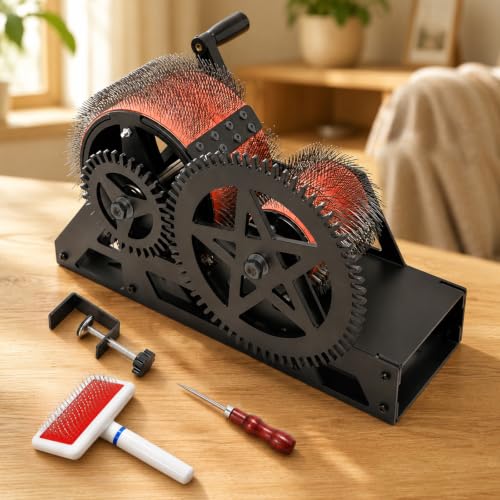
- Dual drums for blending fibers and colors
- Durable all-metal frame
- Manual crank works without electricity
Best For: Studio batt making and multi-fiber blending
Portable Fine-Fiber Pick – Ashford Small Cotton Hand Carders
For anyone comparing hand carders for home studios, these compact Ashford carders are designed for portable blending and carding of cotton and other fibers. Their small working surface and manual operation suit makers who value easy storage and control.
Best For: Blending and carding fibers in a compact home or travel setup.
Pros:
- Lightweight, portable design with comfortable round handles
- 108-point teeth are suited to carding and blending
- Silver beech hardwood paddles provide a sturdy natural construction
- Includes one pair of hand carders
Cons:
- Small 7.5-by-3.5-inch paddles provide less working area than larger carders
- Designed for manual use, so processing can be more hands-on
Choose this pair when portability and fine-fiber blending matter more than maximum capacity. The compact dimensions make it a practical option for a personal studio or mobile craft kit.
Compact Drum Carding Option – Consfly 3.15-inch Wool Drum Carder
This compact drum carder is a practical alternative for home studios that want a crank-operated workflow. Its 3.15-inch card-clothing width and included accessories support wool processing, blending, and small DIY projects.
Best For: Home users and DIY workshops processing wool, dog hair, and other fibers.
Pros:
- Compact 11.8-by-5.5-by-7.8-inch design for storage and carrying
- Hand crank provides a straightforward manual carding process
- Includes a brush, awl, and clamp
- Plastic strip helps secure the card clothing and reduce scratching or tangling
Cons:
- Its 3.15-inch card-clothing width limits the working area
- At 5.7 pounds, it is heavier than a small pair of hand carders
- Roller joints may overlap temporarily and require a few rotations to correct
The Consfly is worth considering if you prefer drum-style carding and need included tools for lifting and handling fiber. Its compact footprint keeps it suitable for a home studio while offering a different workflow from handheld paddles.
Classic Cotton Specialist – Ashford Classic Cotton Hand Carders
These Ashford hand carders are made for makers seeking hand carders for home studios that can blend and card cotton and other fine fibers. Stainless steel wire, rubber backing, and 108-point cards support controlled manual preparation.
Best For: Carding and blending cotton or other fine fibers in a portable setup.
Pros:
- Portable format is easy to use and store
- 108-point carding surface is intended for cotton
- Stainless steel wire with rubber backing
- Care instructions provide guidance for gentle cleaning and dry storage
Cons:
- Focused on cotton and fine fibers rather than a broad range of materials
- Manual hand-carder operation requires repeated physical handling
This classic pair is a focused choice for cotton-oriented fiber work. Its portable construction fits smaller studios, especially when you want a straightforward hand tool instead of a larger carding machine.
All-in-One Blending Set – 5-Piece Wool Carding Board Kit
For crafters wanting hand carders for home studios plus supporting tools, this five-piece set combines a wool blending board, two wooden sticks, and two handheld combs. Its compact format is aimed at DIY fiber projects and portable storage.
Best For: Beginners and experienced crafters making felted toys, decorative items, and other wool projects.
Pros:
- Complete set includes a blending board, two sticks, and two hand-held combs
- Wood and steel construction is designed for repeated use
- Closely spaced brush teeth help separate and blend wool fibers
- Lightweight, compact design with an ergonomic handle
Cons:
- At 2.53 pounds, the full set is less minimal than a simple pair of hand carders
- The set is oriented toward wool blending and craft projects rather than general-purpose carding
- Multiple pieces require organized storage
This kit makes sense when versatility and included accessories are priorities. It gives a home studio several tools for blending and craft work without requiring a larger carding setup.
Fine-Fiber Specialist – Ashford Superfine Hand Carders
For home studios working with delicate fibers, the Ashford Superfine Hand Carders are purpose-built for cotton, cashmere, angora, and similar materials. Their 190 PPSI teeth and generous 10.5-by-3.54-inch carding area support detailed fiber preparation while keeping the pair relatively lightweight.
Best For: Spinners and fiber artists preparing super fine fibers for hand spinning.
Pros:
- Designed for cotton, cashmere, angora, and other super fine fibers
- Very fine 190 PPSI wire teeth with flexible rubber backing
- Large carding surface and ergonomic handles
- Lightweight at about 17.5 ounces per pair
Cons:
- Specialized for fine fibers rather than a general-purpose carding setup
- No additional components are included
This is a strong choice among hand carders for home studios when delicate fiber preparation is the priority. The fine tooth density and comfortable wooden handles are especially suited to focused, small-batch work.
Versatile Blending Pick – Woolbuddy Large Carder Brush Set
The Woolbuddy 2PCS Large Wool Carder Brush set is a flexible option for home studios that blend colors for felting, spinning, or other fiber projects. Each lightweight brush has stainless steel pins and a varnished bamboo handle, and the pair doubles as slicker brushes for pets.
Best For: Felters and fiber artists who want a compact blending set with occasional pet-grooming versatility.
Pros:
- Useful for mixing wool colors and preparing fibers
- Stainless steel pins are designed to retain their shape
- Lightweight bamboo handles support longer sessions
- Includes two brushes and a reusable cotton storage bag
Cons:
- Brush dimensions are smaller than some full-size carders
- Warranty coverage is listed as 30 days
For makers seeking multipurpose hand carders for home studios, this set stands out for its blending focus and included storage bag. Its pet-brush function adds flexibility, though dedicated fiber workers may prefer a more specialized carder.
Compact Wool Mixer – 72 Point Hand Carders
These 72 Point Hand Carders offer a lightweight, compact option for home studios carding and mixing clean wool. The lacquered woodwork, rounded corners, and angled 13cm handles are designed for a secure, comfortable grip, while the smaller 12-by-8cm format is easy to manage.
Best For: Crafters who need lightweight carders for small-batch wool preparation and mixing.
Pros:
- Suitable for carding and mixing clean wool
- Lightweight at approximately 110 grams per carder
- Rounded, lacquered woodwork helps protect the finish
- Angled handles keep fingers away from the working surface
Cons:
- Smaller and lighter than standard carders
- Wool is not included
- The 72-point design is less specialized for superfine fibers than higher-density carders
This pair is a practical fit for makers who value maneuverability and low weight over a full-size working area. Its compact construction makes it approachable for small home-studio batches, especially when working with clean wool.
Best Lightweight Pick – Single Flick Hand Carder
For home studios seeking hand carders for home studios that are easy to handle, this single flick carder offers a compact option for working with clean wool. Its lightweight construction and shaped handle make it practical for smaller carding tasks.
Best For: Crafters who want a lightweight, single hand carder for clean wool.
Pros:
- Lightweight design with a listed weight of 125 g.
- Pressed-metal carding surface set into a sealed wooden back.
- Rounded corners and a long, angled 13 cm handle designed to keep fingers away from the working surface.
- Compact 11 x 7 cm size for straightforward storage.
Cons:
- Sold as a single carder rather than a pair.
- Wool is not included.
- Designed for clean wool, so it may be less suitable for heavily contaminated fleece.
This is a focused, portable choice for light wool preparation. Buyers wanting a matched pair or a larger working area may prefer another format.
Best Traditional Pair – Hand Carder Pair
This pair is a straightforward option for fiber artists comparing hand carders for home studios. The curved backs, easy-grip handles, and 4 x 7.5 inch carding areas provide a conventional two-carder setup for wool and fiber preparation.
Best For: Home spinners and fiber crafters who prefer using a matched pair of hand carders.
Pros:
- Sold as a pair for coordinated hand carding.
- Curved backs and easy-grip handles support a comfortable hold.
- Each carder has approximately 4 x 7.5 inches of carding area.
- 70 pins per square inch provides a specified pin density for carding work.
Cons:
- Listed weight is 1.8 pounds, making it substantially heavier than a lightweight single carder.
- The supplied notes do not specify the materials or finish.
- The larger pair format may require more storage space than a compact single tool.
With two curved-back tools and a defined pin density, this set suits buyers looking for a conventional hand-carder workflow rather than a single flick carder.
Best for Blending – Hand Crank Wool Drum Carder
For larger or more involved home-studio projects, this hand-crank drum carder is a substantial alternative to hand carders for home studios. Its dual rollers are intended to blend fibers and colors into batts, while the manual crank supports use without electricity.
Best For: Fiber artists making blended batts from wool, alpaca, cashmere, silk, cotton, or dyed synthetics.
Pros:
- Dual interlocking drums are designed for gentle carding and fiber blending.
- Supports a broad range of fibers, including merino, alpaca, cashmere, silk, cotton, and dyed synthetics.
- All-metal frame and electroplated steel pins are intended for sturdy, consistent use.
- Manual crank with lubricated bearings is designed to reduce wrist fatigue and works without power.
Cons:
- At 9.9 pounds, it is much heavier than handheld carders.
- Its 14 x 5 x 8 inch structure may be less convenient for very limited workspaces.
- More equipment than needed for simple, occasional hand carding.
This is the most capable option here for repeat blending and batt production, but its drum format and higher weight make it better suited to dedicated studio use than quick handheld tasks.
How We Picked the Best Hand Carders for Home Studios
We evaluated these tools by looking at carding surface density, working format, fiber compatibility, portability, handling, and likely value for small-batch studio work. The selection includes traditional paired hand carders, compact specialty tools, blending boards, and crank-operated drum carders so different preparation methods are represented.
For home use, we prioritized tools that can handle common tasks such as opening wool locks, blending colors, preparing rolags, and working with smaller quantities without requiring a large dedicated workspace.
Quick Comparison
| Tool type | Best for | What to consider |
|---|---|---|
| Paired hand carders | Traditional wool preparation and rolags | Requires coordinated two-handed work |
| Fine or cotton carders | Short, fine, or delicate fibers | Denser teeth may need more careful handling |
| Blending board | Color blending and art yarn preparation | Usually slower for large batches |
| Flick carder | Opening tips and small sections | Not a replacement for full carding pairs |
| Drum carder | Higher-volume preparation | Needs more storage space and setup |
Key Buying Factors for Hand Carders for Home Studios
Carding Density
Point density affects how the tool interacts with fiber. Lower-density carders are often easier for coarser wool and general-purpose preparation, while finer surfaces can help with shorter, softer, or more compact fibers. Very fine teeth may be less forgiving if the fleece contains debris or heavy vegetable matter.
Tool Format and Capacity
A pair of hand carders is versatile and relatively easy to store. Blending boards are useful when color control matters, while drum carders can prepare more fiber with fewer repeated passes. Choose based on batch size, available workspace, and whether you prefer manual control or faster throughput.
Handle Comfort and Construction
Carding involves repeated wrist and arm movements, so a secure handle and balanced weight matter. Look for sturdy wood or reinforced construction, evenly set teeth, and a carding surface that appears smooth and consistent. Protective storage is also helpful because exposed wire points can catch on nearby materials.
Fiber Type and Project Goals
Match the tool to your materials. Wool, alpaca, cotton, blends, reclaimed fibers, and felting projects may each benefit from different tooth spacing and working styles. If you spin rolags, paired carders are a practical starting point; if you build textured art batts, a blending board may offer better control.
Who Should Buy Which Hand Carders for Home Studios?
Choose paired hand carders if you want a flexible, traditional option for preparing wool and making rolags. Choose fine or cotton carders for delicate fibers and smoother blends. Choose a blending board if layered color effects and art yarn are your main goals. Choose a flick carder for quick lock opening, small repairs, or targeted preparation. Choose a drum carder if you process larger batches and have room for a more substantial tool.
Before buying, confirm the carding dimensions, tooth density, included accessories, and cleaning requirements. For most home studios, the best choice is the tool that fits both your fiber type and your normal batch size—not necessarily the largest or most densely toothed option.