Accurate layout is the foundation of clean furniture joinery, and the right marking gauge helps you scribe repeatable lines without relying on guesswork. This roundup compares 10 woodworking marking gauges for furniture making, including wheel, double-blade, brass, and traditional designs.
Whether you cut dovetails, tenons, mortises, or dados, focus on cutter quality, adjustment control, reference-fence stability, and compatibility with your preferred measuring system.
Best 10 Woodworking Marking Gauges for Furniture Making Picks for 2026
Best Value Precision Pick
Clarke Brothers Wheel Marking Gauge

- Flat-spot roll-stop fence for steadier layout
- Metric and imperial graduations to 150 mm
- Two replacement cutters included
Best For: Everyday furniture layout with useful spare parts
Best Premium Micro-Adjust
Woodpeckers Wheel Marking Gauge

- Ultra-thin blade leaves crisp layout lines
- Fine-threaded micro-adjust mechanism
- Two-position reference plate
Best For: Repeatable, high-precision furniture joinery
Best Traditional Japanese Design

- Lightweight natural bamboo body
- Adjustable marking width up to 90 mm
- Blade stores safely inside the body
Best For: Traditional, portable edge-referenced layout
Best Solid-Brass Workhorse
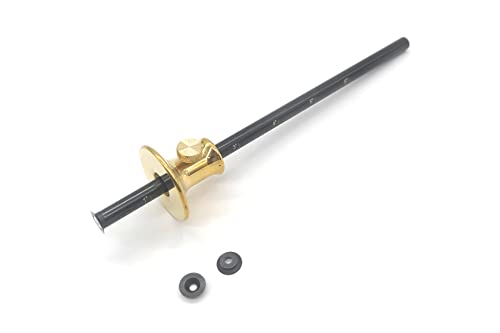
- Solid machined brass head and thumb screw
- 7-inch maximum cutting depth
- Two extra cutters included
Best For: Durable, repeatable shop layout work
Best Japanese-Style Gauge

- Dual adjustable blades
- Crisp, low-tear-out scoring
- 3.5-inch maximum width
Best For: Parallel joinery layout and traditional Japanese-style woodworking
Best Micro-Adjust Gauge
Taytools Solid Brass Wheel Gauge
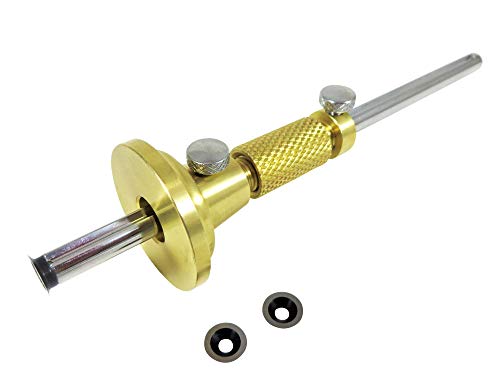
- Lockable micro-adjust head
- Hardened wheel cutter
- Two extra cutters included
Best For: Fine-adjustment joinery layout and clean cutting marks
Best Traditional Wood Gauge

- Classic rosewood construction
- Traditional marking-gauge design
- Made in the United Kingdom
Best For: Simple, traditional marking-out in furniture projects
Best Precision Kit
Clarke Brothers Wheel Marking Gauge
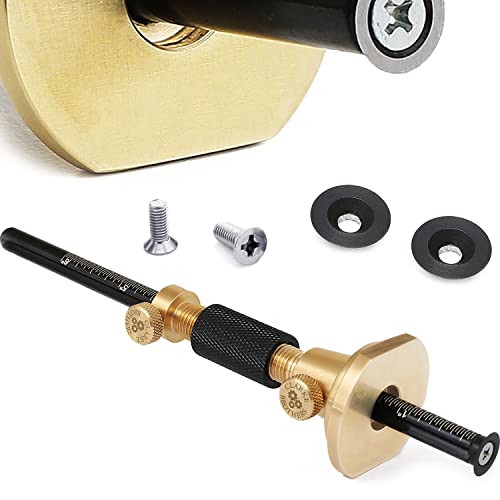
- Micro-adjustable fence for fine settings
- Anti-roll brass fence and dual scales
- Includes spare cutters and bolts
Best For: Furniture makers wanting adjustability and replacement parts
Best for Clear Scale Reading

- 8-inch bar with dual-unit graduations
- Scale window aids measurement reading
- Includes soft- and hardwood cutters
Best For: Beginners needing an approachable adjustable gauge
Best Dovetail Layout Set

- Marks dovetail slopes in softwood and hardwood
- Dual-unit 1 mm and 1/64-inch scale
- Includes cutters, pencil, and accessories
Best For: Dovetail-focused layout and pencil marking
Best Value Precision Pick – Clarke Brothers Wheel Marking Gauge
For shoppers comparing woodworking marking gauges for furniture making, the Clarke Brothers wheel gauge combines a solid metal build, dual-scale graduations, and a crisp cutting wheel. Its flat-spot roll-stop fence is designed to help keep the gauge steady against a flat surface while laying out parallel lines.
Best For: Furniture makers who want an easy-to-use wheel gauge with metric and imperial scales and spare cutters included.
Pros:
- Flat-spot roll-stop fence helps reduce unwanted rolling during layout.
- Laser-engraved SAE and metric graduations extend to 6 inches/150 mm.
- Includes two extra hardened steel wheel cutters.
- Solid brass, steel, and aluminum-alloy construction is corrosion-resistant.
Cons:
- Its 6-inch/150 mm scale limits longer layout settings.
- The compact design may offer less mass than heavier shop gauges.
This is a practical, versatile choice for routine furniture layout, especially when spare cutters and one-handed operation matter more than an advanced micro-adjust mechanism.
Best Premium Micro-Adjust – Woodpeckers Wheel Marking Gauge
When precision is the priority in woodworking marking gauges for furniture making, the Woodpeckers Wheel Marking Gauge stands out for its fine adjustment control and ultra-thin circular blade. The mechanism is intended to make setting the blade-to-fence distance easier and more repeatable.
Best For: Furniture makers who need crisp, narrow layout lines and convenient fine adjustment for repeatable work.
Pros:
- Ultra-thin blade creates a line less than one-fifth the width of a pencil mark.
- Fine-threaded micro-adjust mechanism supports precise setting changes.
- Two-position reference plate accommodates horizontal or vertical support.
- Stainless steel and aluminum construction is machined and assembled in the USA.
Cons:
- Its feature set may be more than needed for basic marking tasks.
- No spare blade or cutter is listed in the supplied details.
Choose this gauge when clean, narrow lines and controlled adjustments are central to your joinery workflow. Its adjustable reference plate also adds flexibility when working with varied stock orientations.
Best Traditional Japanese Design – KAKURI Japanese KEBIKI Gauge
The KAKURI KEBIKI offers a traditional approach to woodworking marking gauges for furniture making. Its bamboo body is lightweight and comfortable to handle, while the adjustable Japanese carbon-steel blade marks a parallel line from a workpiece edge.
Best For: Woodworkers who prefer a lightweight Japanese-style gauge with a protected blade and a 90 mm maximum setting.
Pros:
- Natural bamboo body is lightweight and comfortable in the hand.
- Hand-tightened screws make the marking width easy to adjust.
- Blade stores inside the wooden body when not in use.
- Made in Japan and handcrafted by Japanese craftsmen.
Cons:
- Maximum marking width is 90 mm, less than some longer gauges.
- The supplied details specify a metric scale rather than dual SAE and metric graduations.
- Its broad blade may produce a wider line than an ultra-fine wheel gauge.
This is a compelling option for traditional woodworking workflows and smaller furniture components. Its internal blade storage and low 3.1-ounce weight make it particularly convenient for carrying and storing.
Best Solid-Brass Workhorse – Taytools 467603 Wheel Gauge
For furniture makers seeking durable woodworking marking gauges for furniture making, the Taytools 467603 pairs a solid machined brass head with a hardened steel beam and cutting wheel. Its SAE and metric graduations make setup straightforward, while the heavier 6-ounce design provides a substantial feel in use.
Best For: Shop use requiring a durable wheel gauge with a 7-inch maximum cutting depth and multiple replacement cutters.
Pros:
- Solid brass head and thumb screw provide a substantial, ergonomic grip.
- Hardened steel beam measures 8 inches and supports up to 7 inches of cutting depth.
- Sharp high-speed-steel wheel is specified for softwood and hardwood, with or across the grain.
- Includes two extra cutters, and the cutter can be resharpened on its flat surface.
Cons:
- Graduations extend to 6 inches/150 mm even though the beam is 8 inches long.
- The heavier head may be less appealing for users prioritizing a lightweight tool.
This gauge is a strong shop-oriented choice when mass, cutter longevity, and a solid brass head are more important than micro-adjustment. Its replaceable and resharpenable cutter design supports ongoing use.
Best Japanese-Style Gauge – KAKURI Double Blade KEBIKI
The KAKURI KEBIKI is a practical choice among woodworking marking gauges for furniture making when you need crisp, parallel layout lines. Its two adjustable Japanese carbon-steel blades can mark two lines at once or work independently for single-line layout.
Best For: Mortises, tenons, grooves, rabbets, and other joinery layout in furniture making, cabinetry, carpentry, and DIY woodworking.
Pros:
- Dual blades can scribe parallel lines in one pass.
- Single-blade use adds layout flexibility.
- Japanese steel blades score fibers for crisp lines with less tear-out.
- Made in Japan with a laminated bamboo body.
Cons:
- Maximum marking width is limited to 3.5 inches.
- Its traditional dual-blade design may be more specialized than a basic single-blade gauge.
Choose this gauge if clean, repeatable joinery lines are your priority and you value a traditional Japanese layout tool. The adjustable 90 mm capacity suits many furniture-making tasks, though broader layouts require another tool.
Best Micro-Adjust Gauge – Taytools Solid Brass Wheel Gauge
The Taytools wheel gauge is a strong option among woodworking marking gauges for furniture making when controlled adjustment and cutting action matter. Its solid brass micro-adjust head, hardened steel beam, and wheel cutter support precise marking across wood grain.
Best For: Precision joinery layout, cutting gauge work, and furniture projects requiring fine head adjustments and clean cross-grain cuts.
Pros:
- Lockable solid brass head includes a knurled micro-adjustment knob.
- Hardened round cutter slices across wood grain.
- Includes two additional cutters.
- Cutter retracts into the head for protection during storage.
Cons:
- Its 7-inch beam may offer less reach than a longer gauge.
- The wheel-cutter design is more focused on cutting marks than simple scribing.
This is a compelling pick for woodworkers who want a solid brass body and incremental adjustment. The grooved beam helps prevent head rotation, while the spare cutters add useful longevity for regular layout work.
Best Traditional Wood Gauge – Crown Tools 138 Rosewood
The Crown Tools 138 offers a straightforward traditional option among woodworking marking gauges for furniture making. Its rosewood construction and classic design suit woodworkers who prefer a simple, familiar layout tool for marking out.
Best For: Traditional woodworking layout and general marking-out tasks where a rosewood gauge is preferred.
Pros:
- Traditional style with a rosewood body.
- Simple marking gauge configuration without extra components.
- Made by Crown Tools in the United Kingdom.
Cons:
- The supplied information does not specify blade type, adjustment range, or fine-adjust features.
- Only the marking gauge is included.
The Crown 138 is best considered a classic, no-frills choice for woodworkers who value traditional materials and uncomplicated layout. Because detailed performance specifications are not provided, confirm the gauge’s adjustment and cutter details before buying for demanding furniture joinery.
Best Precision Kit – Clarke Brothers Wheel Marking Gauge
For woodworkers comparing woodworking marking gauges for furniture making, the Clarke Brothers kit emphasizes fine adjustment, stable handling, and measurement flexibility. Its brass-and-steel construction, anti-roll fence, and included replacement cutters make it a practical option for repeatable layout work.
Best For: Furniture makers who want a well-equipped wheel gauge with metric and imperial scales, micro-adjustment, and spare parts.
Pros:
- Micro-adjustable fence and dual thumbscrews support fine-tuned settings.
- Anti-roll fence helps keep the gauge stable on the workbench.
- Includes metric and imperial ruler engravings plus two extra cutters and bolts.
- Brass body, steel rod, and hardened steel cutters are designed for durable workshop use.
Cons:
- Its feature-rich kit may be more than beginners need for occasional marking.
- The listing identifies one included tool rather than a multi-tool set.
The retractable cutter, V-shaped rod slot, and spare hardware add useful workshop practicality. Choose it when adjustment control and included replacements matter more than keeping the tool minimal.
Best for Clear Scale Reading – YOSELIN Wheel Marking Gauge
The YOSELIN wheel gauge is a straightforward choice among woodworking marking gauges for furniture making, with an 8-inch precision-ground bar and dual-unit scales. Its small scale window is intended to make readings easier while setting up accurate marks.
Best For: Beginners and general-purpose woodworkers who want an adjustable gauge with metric and imperial measurements.
Pros:
- Laser-printed metric and imperial scales provide 1 mm and 1/32-inch graduations.
- A small viewing window is designed to help observe the scale while working.
- Includes cutters for soft and hard wood, a screwdriver, and an M3 screw.
- CNC-made brass and aluminum-alloy construction is anodized for durability.
Cons:
- The listed warranty is limited to three months.
- The supplied details do not specify an anti-roll fence or micro-adjuster.
Its readable scale and included accessories make setup approachable, particularly for users learning layout techniques. It is a sensible pick when dual-unit measurement and ease of use are priorities.
Best Dovetail Layout Set – YOSELIN Dovetail Wheel Gauge
For furniture projects involving dovetails, this YOSELIN set combines a wheel marking gauge with cutters for softwood and hardwood. The 8-inch rod, knurled adjustment knob, and inch-and-millimeter scale support measured layout and quick depth-setting.
Best For: Woodworkers who want a dedicated dovetail-marking setup with accessories for pencil-based layout.
Pros:
- Designed to mark dovetail slopes in both softwood and hardwood.
- Precision-ground steel rod provides a depth gauge and measurement reference.
- 1 mm and 1/64-inch graduations support dual-unit setup.
- Includes two wheel cutters, screwdriver, pencil, pencil holders, and tightening screws.
Cons:
- Its dovetail-focused design may be less necessary for general marking tasks.
- The supplied details do not mention a micro-adjuster or anti-roll feature.
The included cutters and pencil accessories give this set a focused layout role, while the aluminum body keeps the listed weight to 9.2 ounces. Consider it when dovetail work and compact accessory coverage are central to your projects.
How We Picked the Best Woodworking Marking Gauges for Furniture Making
We focused on features that directly affect layout accuracy and day-to-day usability: cutter sharpness, fence stability, adjustment precision, beam length, material quality, and ease of replacement or sharpening. The selection includes traditional wooden gauges, solid brass models, micro-adjust designs, and tools with single or double cutters for different marking tasks.
For furniture work, a gauge should produce a clean, visible line while keeping the reference fence firmly against the stock. Extra cutters, metric and imperial scales, anti-roll features, and included accessories can add practical value, but they should not outweigh dependable construction and smooth adjustment.
Quick Comparison
| Gauge type | Best suited to | Main advantage | Potential trade-off |
|---|---|---|---|
| Wheel cutter | General furniture layout | Clean, narrow, controlled scribe lines | Cutters require occasional sharpening or replacement |
| Double-blade gauge | Grooves, dados, and parallel lines | Marks two lines at once | Less versatile for single-line tasks |
| Traditional wooden gauge | Classic joinery and simple layouts | Lightweight, straightforward operation | May offer less fine adjustment |
| Micro-adjust gauge | Precision fitting and repeat work | Fine positional control | Usually costs more and has more parts |
Key Buying Factors
Cutter Design and Cutting Action
Wheel cutters generally leave a crisp line and work well across the grain. Check whether the gauge includes spare cutters and whether replacement blades are readily available. A double-blade model is useful when laying out the sides of a groove or another pair of parallel cuts.
Fence Stability and Beam Length
A broad, square fence helps maintain consistent contact with the workpiece. Longer beams provide more capacity for large components, while compact gauges are easier to control on smaller parts. An anti-roll fence is helpful when the tool is set down between marking operations.
Adjustment and Measurement
Micro-adjusters are valuable when fitting furniture joints precisely, especially after test cuts. Graduated inch and metric scales speed setup, but verify that the locking mechanism holds the beam securely. A gauge that shifts under pressure can undermine even careful measurements.
Construction and Maintenance
Brass and machined metal components can provide durability and a substantial feel; hardwood bodies can be comfortable and traditional. Keep cutters sharp, remove dust from adjustment threads, and check the fence for square before critical layout work.
Who Should Buy Which Woodworking Marking Gauges for Furniture Making?
Choose a wheel marking gauge if you want one versatile tool for tenons, shoulders, dovetails, and general furniture joinery. A micro-adjust model is the better choice for precise fitting, repeated setups, and demanding cabinetmaking. Select a double-blade gauge if grooves, dados, or paired layout lines are frequent tasks.
Traditional wooden gauges suit woodworkers who value simple operation and classic joinery tools, while brass-bodied or machined models are worthwhile for users who want added durability and a heavier, more controlled feel. If you work with both softwood and hardwood, prioritize a sharp replaceable cutter, a secure fence, and a locking mechanism that remains consistent under pressure.