Accurate layout is the foundation of clean dovetails, rabbets, tenons, and other hardwood joinery. The right marking gauge should score a consistent line without tearing fibers, drifting across the workpiece, or becoming awkward to adjust.
We compare 10 woodworking marking gauges for hardwood, from compact Japanese-style scribers to solid brass wheel gauges with micro-adjustment, replacement cutters, and dual-scale measurements.
Best 10 Woodworking Marking Gauges for Hardwood Picks for 2026
Best Adjustable Kit
Clarke Brothers Wheel Marking Gauge
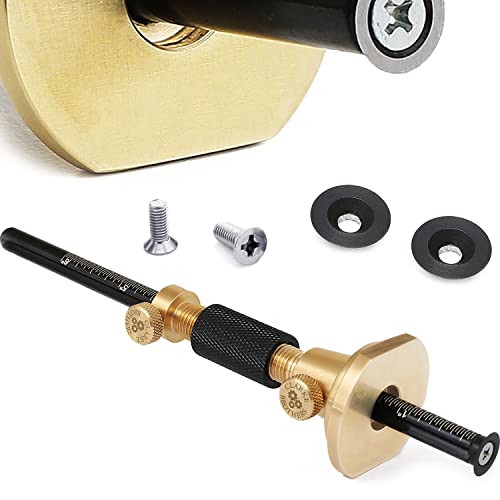
- Micro-adjustable fence for fine setup
- Metric and imperial ruler engravings
- Two extra cutters and bolts included
Best For: Repeatable hardwood layout work with adjustable measurements
Best Smooth-Cutting Design
Bearing-Assisted Wheel Marking Gauge

- Bearing-assisted wheel for smooth scoring
- 1/32-inch and 1-mm measurement scales
- Retractable cutter and spare blade
Best For: Clean, controlled marking across hardwood grain
Best Heavy Brass Option
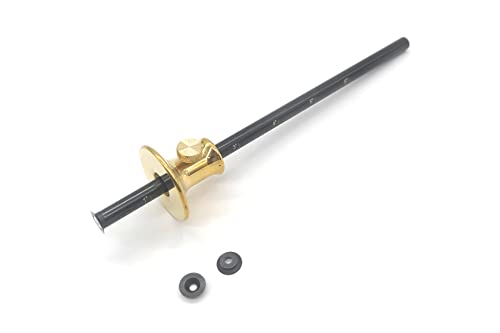
- Solid machined brass head
- 8-inch hardened steel beam
- Two extra high-speed cutters included
Best For: Controlled joinery marking with a substantial brass tool
Best Lightweight Japanese Style

- Lightweight natural bamboo body
- Japanese carbon-steel blade
- Blade stores inside the body
Best For: Parallel edge marking up to 90 mm
Precision Brass Pick
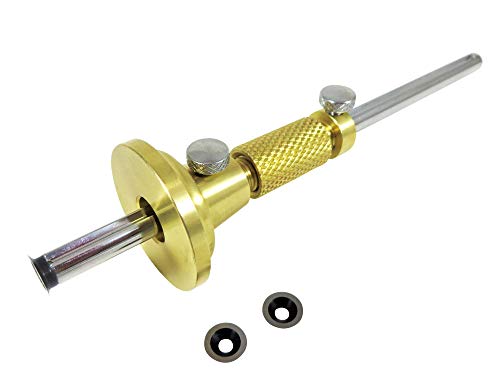
- Solid brass micro-adjust head
- Hardened wheel cutter for cross-grain marking
- Includes two extra cutters
Best For: Precision hardwood joinery layout
Hardwood Dovetail Set

- Locked cutter designed for hardwood
- Includes softwood cutter and accessories
- 1 mm and 1/64-inch measurement scales
Best For: Dovetail layout and versatile measurement
Traditional Dual-Pin Choice
UJ Ramelson Wood Marking Gauge

- Dual adjustable hardened marking pins
- Separate brass pin for standard marking
- Polished hardwood body with brass thumb screw
Best For: Joinery, cabinetry, and general layout
Precision Micro-Adjuster

- Fine-threaded micro-adjustment for repeatable settings
- Carbide wheel scores clean lines on hardwood
- Dual metric/imperial scale with anti-roll base
Best For: Precise dovetail, mortise, and tenon layout
Dual-Cutter Value Pick

- Separate cutters for hard and soft wood
- Metric and imperial 8-inch graduated bar
- Scale-viewing window aids measurement checks
Best For: Beginners and mixed-material workshop layouts
Replacement-Cutter Kit

- Roll-stop fence supports parallel marking
- Includes two replacement steel cutters
- Laser-engraved inch and millimeter scale
Best For: Home workshops and repeat one-handed layout
Best Adjustable Kit – Clarke Brothers Wheel Marking Gauge
For woodworkers comparing woodworking marking gauges for hardwood, this Clarke Brothers wheel gauge combines fine adjustment with a sturdy brass-and-steel build. Its hardened wheel cutters, dual scales, and anti-roll fence make it a practical choice for repeatable layout work.
Best For: Woodworkers who want an adjustable gauge with replacement cutters and metric/imperial measurement.
Pros:
- Micro-adjustable fence and dual thumbscrews support precise setup.
- Hardened steel cutters are suited to reliable marking on wood.
- Includes two extra cutters and bolts for replacement parts.
- Anti-roll fence helps keep the tool stable on the workbench.
Cons:
- The supplied notes do not specify a maximum marking depth.
- Its multiple adjustment and replacement components may be more than needed for simple layouts.
This is a well-equipped option when accuracy, storage stability, and long-term serviceability matter more than a minimalist design.
Best Smooth-Cutting Design – Bearing-Assisted Wheel Marking Gauge
This bearing-assisted model is a strong contender among woodworking marking gauges for hardwood when smooth movement and clean scoring are priorities. Its rolling cutter, dual-sided scales, and retractable blade support precise, convenient marking across different projects.
Best For: Woodworkers seeking smooth cutter travel, compact measurement ranges, and a spare blade.
Pros:
- Bearing-assisted cutter is designed to glide smoothly across hardwood grain.
- Imperial markings in 1/32 inch and metric markings in 1 mm support fine settings.
- Retractable cutter stores flush with the faceplate for safer handling.
- Includes a replacement cutter and hex wrench.
Cons:
- The scale extends to 6 inches/150 mm, which may limit wider offsets.
- The smooth grip may offer less texture than a knurled or contoured handle.
With its compact range and bearing-supported wheel, this gauge suits detail-oriented marking where controlled movement and a clean line are especially useful.
Best Heavy Brass Option – Taytools 467603 Wheel Gauge
The Taytools 467603 offers the substantial feel many woodworkers want from woodworking marking gauges for hardwood. Its solid machined brass head, hardened beam, high-speed cutting wheel, and extra cutters are designed for accurate joinery layout in both soft and hardwood.
Best For: Shop users who prefer a weighty brass head and an 8-inch beam for extended marking reach.
Pros:
- Solid machined brass head provides useful mass and hand control.
- Hardened high-speed cutter is described as effective with and across the grain.
- Includes two extra cutters, with the cutter also resharpenable.
- SAE and metric graduations simplify measurement setup.
Cons:
- The supplied specifications give a maximum cutting depth of 7 inches, not a larger range.
- Its 6-ounce weight may feel less convenient for users seeking an ultralight gauge.
This is a compelling traditional-style gauge for joinery work when solid brass construction, a longer beam, and replaceable cutting wheels are priorities.
Best Lightweight Japanese Style – KAKURI Bamboo Kebiki Gauge
The KAKURI SUJI KEBIKI takes a different approach to woodworking marking gauges for hardwood, using a lightweight bamboo body and Japanese carbon-steel blade. It is designed to scribe a parallel line from an edge, with a hand-tightened screw for setting the width.
Best For: Woodworkers who want a compact Japanese-style gauge for parallel edge marking up to 90 mm.
Pros:
- Natural bamboo body is lightweight and designed to fit comfortably in the hand.
- Japanese carbon-steel blade provides a dedicated scribing edge.
- Blade stores inside the wooden body when not in use.
- Hand-adjustable width supports straightforward parallel marking.
Cons:
- Its maximum width is 90 mm, narrower than the beam ranges of the wheel gauges here.
- The supplied notes specify a metric scale rather than both metric and imperial graduations.
- It uses a single blade rather than a set of spare cutters.
Made in Japan and handcrafted by Japanese craftsmen according to the supplied notes, this KAKURI is best suited to users who value light handling and a traditional scribing format.
Precision Brass Pick – Taytools Wheel Marking Gauge
For woodworkers seeking marking gauges for hardwood, the Taytools 464763 combines a solid brass micro-adjust head with a hardened wheel cutter. Its cutter is designed to slice across the grain cleanly, making it a practical choice for precise joinery layout.
Best For: Precision marking and cutting on hardwood, especially joinery where fine adjustment and repeatable settings matter.
Pros:
- Solid brass 1.625-inch head with a lockable micro-adjust mechanism.
- Hardened 3/8-inch cutter slices across the wood grain.
- Includes two additional cutters for continued use.
- Grooved hardened-steel beam helps prevent head rotation during adjustment.
Cons:
- The wheel-cutter design may be less versatile than a dual-pin gauge for marking both edges.
- At 7 inches long, it offers less reach than longer marking gauges.
The retractable cutter head adds a useful safety and storage feature, while the micro-adjust head supports accurate setup. This is a focused, durable option for hardwood layout rather than an all-purpose gauge.
Hardwood Dovetail Set – YOSELIN Wheel Marking Gauge
The YOSELIN set is a useful choice among marking gauges for hardwood when dovetail layout and quick measurement are priorities. It includes a locked wheel cutter for hardwood, a separate cutter for softwood, and a graduated rod for setting and transferring dimensions.
Best For: Woodworkers who want one compact set for hardwood dovetails, softwood marking, and inch-or-millimeter measurements.
Pros:
- Includes a locked wheel cutter intended for hardwood.
- Supports dovetail slope marking in both softwood and hardwood.
- 8-inch precision-ground steel rod includes 1 mm and 1/64-inch scales.
- Comes with a screwdriver, pencil, pencil holder, and tightening screw.
Cons:
- The set has separate cutters for softwood and hardwood rather than one universal cutter.
- Its aluminum construction may appeal less to users seeking a traditional all-brass gauge.
With dual measurement systems and included accessories, this set offers strong flexibility for layout work. The locked hardwood wheel cutter makes it especially relevant to dovetail and other repeatable marking tasks.
Traditional Dual-Pin Choice – UJ Ramelson Wood Marking Gauge
The UJ Ramelson marking gauge offers a traditional hardwood-body alternative for marking gauges for hardwood. Its dual adjustable hardened pins can mark both edges, while a separate brass pin handles standard marking tasks and a brass thumb screw secures the setting.
Best For: Joinery, cabinetry, and general layout work where dual-edge marking and a comfortable polished-wood body are useful.
Pros:
- Dual adjustable hardened pins support marking both edges.
- Includes a single brass pin for standard marking applications.
- Brass thumb-screw locking mechanism helps hold settings securely.
- Polished hardwood construction provides a comfortable hand feel.
Cons:
- At 6 inches long, it has a shorter body than the YOSELIN gauge’s 8-inch rod.
- Its pin-based design does not provide the wheel-cutter style of slicing action.
- No measurement scale or extra accessories are listed in the supplied details.
This gauge emphasizes adaptable pin marking and traditional construction rather than micro-adjustment or included accessories. It is a sensible fit for woodworkers who value a compact, versatile tool for everyday layout.
Precision Micro-Adjuster – Aluminum Wheel Marking Gauge
For woodworking marking gauges for hardwood, this model emphasizes controlled setup and crisp scoring. Its fine-threaded micro-adjustment, carbide wheel, and dual metric/imperial scale suit repeatable dovetail, mortise, and tenon layouts.
Best For: Woodworkers who want fine measurement adjustments and clean reference lines on hardwood, softwood, and composites.
Pros:
- Fine-threaded micro-adjustment helps dial in measurements and lock the setting securely.
- Carbide cutting wheel produces consistent scored lines for joinery layouts.
- Aluminum-alloy body and stainless-steel bar offer a sturdy, corrosion-resistant build.
- Anti-roll base, knurled knob, and dual scales support steady, convenient operation.
Cons:
- The tool is focused on wheel scoring rather than pencil-style marking.
- Its compact 9.52-inch form may not suit users seeking a longer reach.
This is a strong choice when precise adjustment and hardwood-friendly scoring matter more than a minimalist design. The stable base and clear scales add practical value for repeat joinery work.
Dual-Cutter Value Pick – YOSELIN Wheel Marking Gauge
Among woodworking marking gauges for hardwood, the YOSELIN stands out for including separate wheel cutters for different materials. Its CNC-made brass and aluminum-alloy body, viewing window, and dual-unit scale make setup approachable for both newer and experienced woodworkers.
Best For: Beginners and general workshop users who want metric and imperial readings plus dedicated cutters for softwood and hardwood.
Pros:
- Includes a locked wheel cutter for hard wood and a bearing cutter for soft wood.
- Laser-printed 8-inch bar provides metric and imperial graduations.
- Small scale-viewing window can make measurement checks easier during use.
- CNC-manufactured brass and anodized aluminum-alloy construction is designed for durability.
Cons:
- The supplied warranty is listed as three months.
- The scale increments are specified as 1/32 inch and 1 mm, rather than a finer fractional reading.
Its interchangeable cutter setup gives this gauge useful flexibility across wood types. It is particularly appealing if you want a straightforward, dual-unit tool without buying separate gauges for harder and softer stock.
Replacement-Cutter Kit – Clarke Brothers Wheel Gauge
For woodworking marking gauges for hardwood, the Clarke Brothers kit combines a solid metal bar with a roll-stop fence and extra cutters. The laser-engraved inch and millimeter scale is useful for parallel layout, while the included replacements add value for ongoing shop use.
Best For: Carpenters and home woodworkers who want a balanced one-handed gauge with spare hardened-steel cutters.
Pros:
- Roll-stop fence with a flat spot helps keep the gauge aligned against a flat surface.
- Laser-engraved metric and imperial graduations extend to 6 inches/150 mm.
- Two replacement hardened-steel wheel cutters are included.
- Solid brass, steel, and aluminum-alloy construction is described as corrosion-resistant.
Cons:
- The listed graduated scale reaches 150 mm, which may limit wider layout work.
- The product details identify it primarily for home use rather than a specialized professional setting.
This kit makes sense for buyers who value stability and replacement parts. Its roll-stop design and balanced one-handed operation are practical advantages when marking parallel lines repeatedly.
How We Picked the Best Woodworking Marking Gauges for Hardwood
We focused on the features that matter most when laying out dense hardwood: cutter design, adjustment control, beam stability, fence contact, durability, and measurement readability. Wheel gauges received particular attention because a sharp circular cutter can score a clean line while producing less tear-out than a broad blade. We also included traditional kebiki-style tools and straightforward wooden gauges for woodworkers who prefer a lighter, more tactile layout tool.
Because the selected products vary in construction and intended use, this list includes both precision-oriented brass models and simpler gauges suited to occasional shop work. Replacement cutters, anti-roll bases, metric or imperial scales, and included accessories were also considered where applicable.
Quick Comparison
- Best for repeatable precision: Choose a wheel gauge with a micro-adjuster and rigid brass head.
- Best for dovetail layout: Look for a sharp wheel, secure fence, and easy depth adjustment.
- Best for traditional Japanese layout: A compact kebiki-style gauge offers direct, simple control.
- Best for value: A basic wooden or brass gauge with a replaceable cutter can cover common joinery tasks.
- Best for mixed measuring systems: Select a tool with clearly marked metric and imperial scales.
Key Buying Factors for Woodworking Marking Gauges for Hardwood
Cutter Type and Sharpness
For hardwood, prioritize a hardened steel or carbide wheel that can score rather than drag through the grain. A sharp cutter leaves a narrower, cleaner reference line and is especially useful for cross-grain layout. Models with spare cutters are more convenient for long-term shop use.
Adjustment and Locking
A secure beam lock prevents the setting from shifting during repeated passes. Micro-adjustment is valuable when fitting dovetails or fine shoulder work, while a simple screw lock may be sufficient for general-purpose marking. Check that the adjustment mechanism is easy to operate without loosening the fence accidentally.
Fence Stability and Ergonomics
The fence should sit flat against the reference edge and resist rocking. An anti-roll base is useful when the gauge is placed on the bench, while a comfortable fence makes long layout sessions less tiring. Dense brass adds weight and stability, though lighter wooden tools can feel faster and more responsive.
Scale, Range, and Maintenance
Choose a beam length that covers your typical joinery dimensions without becoming cumbersome. Dual metric/imperial markings reduce conversion errors. Keep cutters clean and sharp, wipe brass surfaces as needed, and store the gauge so its cutting wheel cannot contact other tools.
Who Should Buy Which Woodworking Marking Gauges for Hardwood?
Choose a micro-adjust brass wheel gauge if you build furniture, cut frequent dovetails, or need repeatable settings across multiple pieces. Choose a Japanese kebiki-style gauge if you value compact size, direct control, and traditional layout technique. Choose a simple wooden gauge for occasional projects, basic mortise-and-tenon work, or a low-cost backup tool. Choose a multi-cutter set if you work with both softwood and hardwood or want replacements readily available.
Whichever style you select, the best Woodworking Marking Gauges for Hardwood are the ones that hold their setting, reference the edge consistently, and use a cutter sharp enough to make a controlled scoring line.