The right marking gauge makes joinery layout faster, cleaner, and more repeatable—especially when your workshop has limited space and every tool needs to earn its place.
We’ve selected 10 options ranging from compact aluminum gauges to solid brass precision tools, with features such as micro-adjusters, dual scales, replacement cutters, and anti-roll bases.
Best 10 Woodworking Marking Gauges for Small Workshops Picks for 2026
Best All-Round Kit
Clarke Brothers Wheel Marking Gauge
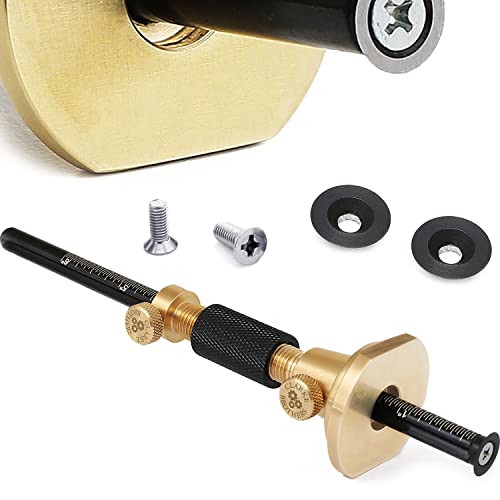
- Micro-adjustable fence with dual thumbscrews
- Metric and imperial ruler engravings
- Two extra cutters and replacement bolts included
Best For: Versatile workshop marking with useful spare parts
Best for Fine Scale Reading
WEN ME251R Offset Marking Gauge

- Metric and imperial Vernier scales
- Laser-engraved markings resist fading
- Quick sliding adjustment via center knob
Best For: Detailed offset layout and reference-line work
Best Traditional Precision Gauge
Taytools Solid Brass Wheel Gauge
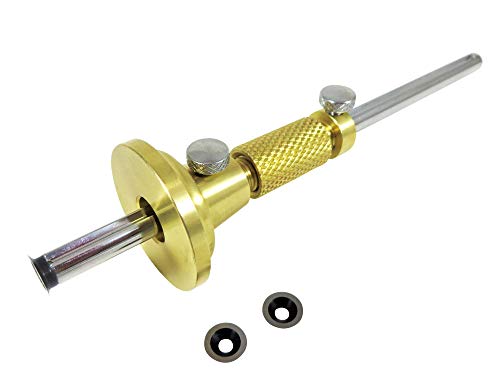
- Solid brass micro-adjustable head
- Hardened cutter for crossing wood grain
- Two spare cutters included
Best For: Precision joinery marking with a traditional brass design
Best Beginner-Friendly Dual-Unit Gauge

- 8-inch bar with metric and imperial scales
- Scale-viewing window for easier reading
- Soft- and hard-wood cutter options included
Best For: Beginner-friendly everyday marking in compact workshops
Precision Favorite
Woodpeckers Micro-Adjust Wheel Gauge

- Ultra-thin circular blade for crisp lines
- Fine-threaded micro-adjustment
- Two-position reference plate
Best For: Precision-focused small workshops
Best Value Kit
Clarke Brothers Wheel Marking Gauge

- Metric and imperial scales to 6 inches
- Roll-stop fence for parallel marking
- Two replacement cutters included
Best For: Versatile, value-minded shop setups
Safest Storage Design

- Bearing-assisted cutter for smooth scoring
- 1/32-inch and 1 mm scales
- Retractable cutter for safer storage
Best For: Compact shops prioritizing easy handling
Economical Brass Precision
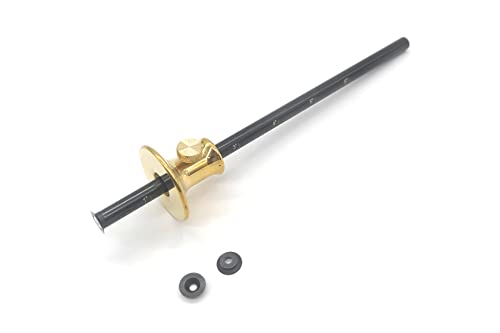
- Solid machined brass head with ergonomic control
- Includes fitted cutter and two extra cutters
- SAE and metric graduations on an 8-inch beam
Best For: General joinery layout in compact workshops
Micro-Adjust Stability

- Fine-thread micro-adjustment for precise setup
- Anti-roll base supports steady one-handed use
- Carbide wheel with metric and inch scales
Best For: Dovetail, mortise, and tenon layout
Balanced Micro-Adjust Layout
Precision Aluminum Wheel Gauge

- Fine-thread adjustment with locking for repeatable settings
- Durable aluminum alloy and stainless steel build
- Clear inch and metric scales for joint layout
Best For: Versatile fine woodworking and carpentry marking
Best All-Round Kit – Clarke Brothers Wheel Marking Gauge
For small workshops seeking versatile woodworking marking gauges for small workshops, the Clarke Brothers wheel gauge combines fine adjustment, dual-unit measurement, and replacement parts in one compact kit. Its brass-and-steel construction is designed for repeatable scribe lines.
Best For: Woodworkers who want a complete, adjustable wheel gauge with metric and imperial scales.
Pros:
- Micro-adjustable fence and dual thumbscrews support fine measurement changes.
- Anti-roll fence helps keep the tool stable on a workbench.
- Includes two extra cutters and two replacement bolts.
- Retractable cutter supports safer upright storage.
Cons:
- The 7-inch format may provide less reach than longer gauges.
- Its feature-rich design may be more than beginners need for simple marking.
This is a practical choice when flexibility and included spares matter. The engraved metric and imperial ruler, grooved rod, and hardened cutters make it well suited to general workshop layout work.
Best for Fine Scale Reading – WEN ME251R Offset Marking Gauge
WEN ME251R 10-Inch Aluminum Offset Marking Gauge and Layout Tool with Laser-Etched Scale
Check Price On AmazonThe WEN ME251R is an offset layout tool for woodworkers who value caliper-style adjustment and clearly defined measurements. Among woodworking marking gauges for small workshops, its aluminum body and laser-etched dual scales offer a straightforward setup for reference lines and cutting depths.
Best For: Small-shop users who prioritize fine metric and imperial scale readings in an offset gauge.
Pros:
- Offers metric measurements to .05 mm and imperial measurements to .002 inch.
- Laser-engraved markings are designed to resist fading.
- Center knob unlocks for quick sliding adjustments.
- Useful for reference lines, cutting depths, and fence alignment.
Cons:
- It is an offset layout gauge rather than a wheel-cutter kit.
- The supplied notes do not indicate included replacement cutters.
Choose this model when scale precision and quick positioning are more important than a traditional brass wheel-gauge setup. Its focused layout-tool design can suit compact workshops with varied measuring tasks.
Best Traditional Precision Gauge – Taytools Solid Brass Wheel Gauge
The Taytools 464763 is a compact solid-brass wheel gauge aimed at precision joinery. For shoppers comparing woodworking marking gauges for small workshops, it offers a micro-adjustable head, a hardened cutter for crossing wood grain, and spare cutters without adding unnecessary complexity.
Best For: Joinery-focused woodworkers who prefer a traditional brass gauge with micro adjustment.
Pros:
- Solid brass head includes a knurled micro-adjustment knob and lock.
- Hardened round cutter is designed to slice across wood grain.
- Two additional cutters are included.
- Grooved steel beam helps prevent head rotation during adjustment.
Cons:
- The 7-inch beam may limit reach on larger workpieces.
- The traditional design does not mention metric or imperial graduations.
Its emphasis is controlled, precise joinery marking rather than broad measuring versatility. The cutter-protection recess and spare cutters are useful details for a small shop that expects regular use.
Best Beginner-Friendly Dual-Unit Gauge – YOSELIN Wheel Marking Gauge
The YOSELIN wheel marking gauge is designed as an approachable layout tool, with an 8-inch bar, laser-printed metric and imperial scales, and a small viewing window for checking measurements. It is a practical option for beginners comparing woodworking marking gauges for small workshops.
Best For: Beginners and compact workshops needing an easy-to-use dual-unit marking gauge with two cutter options.
Pros:
- 8-inch precision-ground bar offers metric and imperial graduations.
- Viewing window helps observe the scale while working.
- Includes a bearing wheel cutter for soft wood and a locked cutter for hard wood.
- CNC-manufactured brass and aluminum-alloy construction is anodized for durability.
Cons:
- Scale spacing is specified at 1 mm and 1/32 inch, not finer Vernier-level increments.
- The supplied warranty description is limited to three months.
This model stands out for accessible operation and flexible cutter choices. Its longer bar and dual-unit scale make it useful for everyday marking, while the viewing window can help new users follow measurements.
Precision Favorite – Woodpeckers Micro-Adjust Wheel Gauge
For small workshops seeking precise woodworking marking gauges, the Woodpeckers Wheel Marking Gauge emphasizes crisp, narrow layout lines and controlled adjustment. Its ultra-thin circular blade, micro-adjust mechanism, and two-position reference plate make it suited to repeatable carpentry and marking-out work.
Best For: Woodworkers who prioritize fine layout lines, easy micro-adjustment, and American-made shop durability.
Pros:
- Ultra-fine circular blade creates lines narrower than a typical pencil mark.
- Fine-threaded micro-adjustment helps set the blade distance precisely.
- Two-position fence plate supports horizontal or vertical reference surfaces.
- Stainless steel and aluminum construction is designed for repeatable workshop use.
Cons:
- Its premium precision-focused design may be more than needed for basic marking tasks.
- The supplied dimensions and metal construction suggest a substantial tool rather than a minimalist option.
This is the strongest choice when line crispness and adjustment control matter more than keeping the tool simple. The American-made construction adds appeal for a small shop building a dependable precision layout kit.
Best Value Kit – Clarke Brothers Wheel Marking Gauge
Among woodworking marking gauges for small workshops, the Clarke Brothers model stands out as a practical kit with metric and imperial scales plus two replacement cutters. Its roll-stop fence, one-handed operation, and solid metal construction support straightforward layout work on flat stock.
Best For: Budget-conscious woodworkers who want a versatile gauge with dual measurements and spare cutters included.
Pros:
- Graduated metric and imperial scales extend to 6 inches or 150 mm.
- Roll-stop fence with a flat spot helps maintain a parallel reference.
- Includes two replacement hardened steel wheel cutters.
- Brass, steel, and aluminum alloy construction is corrosion-resistant, with a non-marring brass face.
Cons:
- The maximum graduated range is limited to 6 inches or 150 mm.
- It lacks the dedicated micro-adjust feature listed for the Woodpeckers model.
- The product notes describe the tool as lightweight, which may appeal less to users wanting a heavier gauge.
For a compact shop that values useful accessories and flexible measurement markings, this Clarke Brothers gauge offers a well-rounded setup. The included replacement cutters also reduce interruptions when a blade needs changing.
Safest Storage Design – Bearing-Assisted Wheel Gauge
This bearing-assisted wheel marking gauge is a practical option for small workshops that want smooth scoring and convenient storage. Its rolling cutter is designed to glide across hardwood grain, while dual-sided imperial and metric scales make offset settings easy to read.
Best For: Woodworkers who want smooth wheel movement, clear dual scales, and a retractable cutter for safer storage.
Pros:
- Bearing-assisted cutter wheel supports smooth gliding and clean scoring.
- Imperial markings in 1/32-inch increments and metric markings in 1 mm increments aid precise setup.
- Cutter retracts flush with the faceplate for handling and transport.
- Includes a spare blade and hex wrench, with brass, steel, and aluminum alloy construction.
Cons:
- The scale is limited to 6 inches or 150 mm.
- The notes identify a smooth grip rather than a knurled grip for added texture.
- It does not list a micro-adjust mechanism.
The retractable cutter gives this gauge a useful safety and storage advantage, while the bearing and dual scales support everyday marking tasks. It is a sensible choice for a compact workshop where ease of handling and quick setup are priorities.
Economical Brass Precision – Taytools Wheel Marking Gauge
For small workshops looking for woodworking marking gauges for small workshops, this Taytools wheel gauge offers a practical balance of solid construction, readable graduations, and replaceable cutters. Its brass head and hardened steel beam are suited to repeated layout work in both softwood and hardwood.
Best For: Woodworkers who want a durable, economical gauge for general joinery layout.
Pros:
- Solid machined brass head provides useful mass and comfortable control.
- Includes a fitted cutter plus two extra hardened high-speed cutters.
- Dual SAE and metric graduations simplify measurement setting.
- Cutter can be resharpened, and replacement cutters are available.
Cons:
- The beam is limited to an 8-inch length and a maximum 7-inch cutting depth.
- It uses a traditional locking-head design rather than a stated micro-adjustment mechanism.
This is a straightforward choice when dependable marking and long-term service matter more than advanced adjustment features. The brass head, cutter spares, and dual scales make it especially practical for a compact, regularly used workshop.
Micro-Adjust Stability – Aluminum Wheel Marking Gauge
This aluminum wheel gauge is a strong fit for woodworking marking gauges for small workshops when repeatable setup is a priority. Its fine-thread micro-adjustment, dual scale, anti-roll base, and carbide wheel support controlled layout for dovetails, mortises, and tenons.
Best For: Joinery-focused woodworkers who value fine measurement adjustments and steady one-handed handling.
Pros:
- Fine-threaded micro-adjustment helps refine settings and lock them securely.
- Laser-etched metric and imperial scales reduce conversion needs.
- Wide anti-roll base improves stability on the bench.
- Carbide cutting wheel is designed to score crisp lines across various materials.
Cons:
- Its modern aluminum construction may not provide the same brass mass as heavier traditional gauges.
- The supplied details do not specify a maximum marking depth or replacement-wheel availability.
With its combination of micro-adjustment and a stable base, this model is oriented toward controlled, repeatable joinery layout. It is a sensible option for small shops where compact storage and precise setup are both important.
Balanced Micro-Adjust Layout – Precision Aluminum Wheel Gauge
For small shops comparing woodworking marking gauges for small workshops, this aluminum alloy model emphasizes precise setup and clean scoring. The fine-thread micro-adjustment, locking feature, stainless steel rule, and ergonomic grip make it suitable for detailed carpentry layout.
Best For: Beginners and experienced woodworkers who need repeatable inch-and-metric marking for fine joints.
Pros:
- Micro-adjustment allows precise measurement changes before locking.
- Aluminum alloy and stainless steel construction is designed for workshop durability.
- Permanent dual scales support direct work from metric or imperial plans.
- Marking wheel is intended to create smooth lines without tearing fibers.
Cons:
- The notes do not mention an anti-roll base or included spare cutters.
- The supplied information does not state the gauge’s maximum marking range.
This gauge focuses on accessible precision rather than a heavy traditional form. Its ergonomic grip and fine adjustment make it a versatile candidate for small workshops handling dovetail, mortise, and other layout tasks.
How We Picked the Best Woodworking Marking Gauges for Small Workshops
We focused on features that matter in a small shop: dependable adjustment, readable graduations, stable reference surfaces, comfortable handling, and a cutter or scribe that can create a controlled layout line without tearing the grain. The selection includes traditional wheel gauges, offset designs, dual-cutter tools, and models with fine micro-adjustment.
Because product specifications and included accessories can vary, verify the current listing for scale units, cutter material, beam length, and replacement parts before ordering.
Quick Comparison
| Feature | Why It Matters | Best For |
|---|---|---|
| Micro-adjustment | Enables fine changes without repeatedly loosening the main lock | Dovetails, tenons, and precise joinery |
| Wheel cutter | Scores a narrow, clean line with less tendency to follow the grain | General layout and cross-grain marking |
| Brass construction | Adds weight and a stable feel during use | Frequent bench work and controlled marking |
| Aluminum construction | Keeps the tool light and often lowers its cost | Portable or occasional workshop use |
| Dual scales | Reduces conversion when switching between metric and imperial plans | Mixed-unit projects |
Key Buying Factors for Woodworking Marking Gauges for Small Workshops
Adjustment and Locking
Look for a positive beam lock and, if you regularly make fine joinery, a micro-adjuster with minimal play. A smooth adjustment mechanism is more useful than a long scale if it allows the setting to drift.
Reference Fence and Stability
The fence should sit squarely against the workpiece and resist rocking. An anti-roll feature helps prevent the gauge from falling off the bench, while a broad reference face can make repeated layout more consistent.
Cutter Design
Wheel cutters generally produce a fine, controlled score. Check whether the tool includes spare cutters and whether replacements are readily available. A sharp cutter is essential; even a well-built gauge performs poorly when the blade is dull.
Size, Materials, and Scales
Choose a beam length that covers your typical layout range without making the tool awkward to store. Brass feels substantial and stable, while aluminum is easier to carry. Metric and imperial graduations are convenient, but a reliable adjustable stop matters more than decorative markings.
Who Should Buy Which Woodworking Marking Gauges for Small Workshops?
Choose a solid brass model if you value a planted feel and use a marking gauge frequently for furniture or joinery. A micro-adjust version is the better choice for dovetails, mortises, tenons, and other work where small corrections affect the fit. Consider an aluminum or offset gauge if low weight, compact storage, or a lower purchase price is your priority.
For mixed-unit plans, select a clearly graduated metric-and-imperial model. If you are building a basic small-shop toolkit, prioritize a straightforward wheel gauge with a secure lock and replacement cutter availability over extra features. Whichever style you choose, test the fence against a known-square edge and sharpen or replace the cutter before precision work.