The best hand carders make it easier to blend colors, align fibers, and prepare manageable amounts of wool, cotton, and other fibers by hand. The right pair can improve consistency without requiring a large drum carder.
This roundup compares 10 hand carders across different point densities, working sizes, shapes, and intended uses—from general wool preparation to cotton and needle-felting projects.
Best 10 Hand Carders Picks for 2026
Classic Wool Workhorse
Ashford Classic Wool Hand Carders
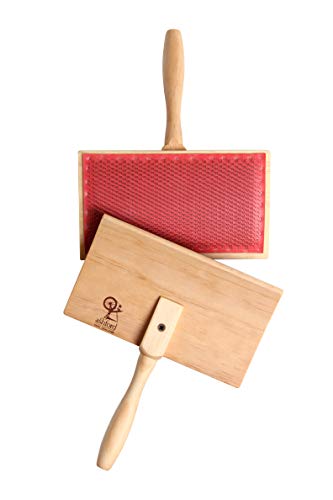
- Portable design for wool and other fibers
- Stainless steel wire and rubber backing
- 72-point carders in a 2-pound pair
Best For: General-purpose wool blending and carding
Compact Two-Pack Utility
Tessco 6.06-Inch Wool Carder Brushes

- Two brushes included
- Portable 6.06-by-4.8-inch size
- Useful for wool items and pet hair
Best For: Versatile household and fiber-care use
Fine-Tooth Portable Pick
Ashford Small Cotton Hand Carders

- 108-point teeth
- Small and lightweight with round handles
- Silver beech hardwood pair
Best For: Portable cotton and fine-fiber blending
Larger Flexible Pair
Tessco 7.09-Inch Wool Carder Brushes

- Two larger wool carder brushes
- 7.09-by-4.72-inch working size
- Also suited to textiles and pet hair
Best For: Versatile, larger-surface wool and textile care
Fine-Fiber Portability
Ashford Classic Cotton Hand Carders
- Made for cotton and other fine fibers
- Portable design with stainless steel wire
- 108-point cards with rubber backing
Best For: Cotton and fine-fiber preparation on the go
Compact Wool Blending
- Small, lightweight, and portable
- Comfortable round handles
- 72-point teeth for carding and blending
Best For: Portable wool and fiber blending
Curved Carding Control

- Pronounced curved construction
- Distinctive option for hand carding
- 11-by-8.5-by-4-inch product dimensions
Best For: Crafters seeking a pronounced curved carder design
Fine-Fiber Specialist
Ashford Superfine Hand Carders

- 190 PPSI teeth for superfine fibers
- Large 10½-by-3½-inch carding area
- Lightweight ergonomic pair
Best For: Cotton, cashmere, angora, and other superfine fibers
Compact Wool Mixer

- Made for carding and mixing clean wool
- Lightweight pressed-metal pair
- Rounded lacquered woodwork and angled handles
Best For: Compact wool preparation and beginner-friendly handling
Felting Utility Pair

- Large 6.06-by-4.8-inch carding surfaces
- Curved steel-wire needles for deeper combing
- Includes finger cots for added protection
Best For: Needle felting, wool blending, and gentle pet grooming
Classic Wool Workhorse – Ashford Classic Wool Hand Carders
The Ashford Classic Wool Hand Carders are a practical choice when you need portable hand carders for blending and carding wool or other fibers. Stainless steel wire and rubber backing support regular fiber preparation, while the 8.9-by-6.4-inch design remains manageable to carry.
Best For: Spinners and fiber crafters who want a portable pair for general wool blending and carding.
Pros:
- Designed for wool and other fibers
- Portable 8.9-by-6.4-inch format
- Stainless steel wire with rubber backing
Cons:
- At 2 pounds, they are heavier than some compact hand carders
- The supplied notes do not specify a handle shape or tooth density beyond 72 points
Choose this pair if durable-feeling materials and general-purpose fiber preparation matter more than minimizing weight. Its straightforward design makes it a versatile option for routine carding work.
Compact Two-Pack Utility – Tessco 6.06-Inch Wool Carder Brushes
This two-piece Tessco set is a flexible pick for shoppers seeking compact hand carders for wool, household textiles, and light grooming tasks. Each brush measures about 6.06 by 4.8 inches, has a smooth handle, and uses curved steel wire intended to help mix wool.
Best For: Crafters who want two portable brushes for wool care, textile upkeep, or occasional pet grooming.
Pros:
- Includes two carder brushes
- Compact size is easy to carry and store
- Wood and steel wire construction
- Can be used on wool items and pet hair
Cons:
- The curved steel needles may require attention during use
- The notes position these as practical brushes rather than specialized high-density fiber carders
This set stands out for versatility and quantity. It is a sensible choice when you want a spare or shared brush and expect to use hand carders beyond dedicated fiber preparation.
Fine-Tooth Portable Pick – Ashford Small Cotton Hand Carders
The Ashford Small Cotton Hand Carders are lightweight, manual hand carders made for blending and carding fibers. Their 108-point teeth provide a finer carding setup than a lower-point option, while the small paddle and rounded handle make the pair convenient to take along.
Best For: Fiber artists who prioritize a small, lightweight pair for cotton and other fiber-blending projects.
Pros:
- 108-point teeth for a fine carding surface
- Lightweight, small, and portable
- Comfortable round handles
- Silver beech hardwood construction
Cons:
- The smaller carding area may be less efficient for large batches
- Designed for manual use, with no powered operation
These are a strong match for compact workspaces, travel kits, and makers who regularly blend smaller quantities. Their cotton-oriented model name and 108-point specification make them especially appealing for finer fiber preparation.
Larger Flexible Pair – Tessco 7.09-Inch Wool Carder Brushes
The larger Tessco pair gives shoppers practical hand carders with a 7.09-by-4.72-inch footprint. They are made with wood and steel wire, feature smooth handles, and use curved needles designed to help mix wool while also serving as brushes for textiles and pet hair.
Best For: Users who want two versatile wool brushes with a larger working size for textile care and general carding.
Pros:
- Two brushes included for shared use or replacement
- Larger 7.09-by-4.72-inch size
- Wood and steel wire construction
- Suitable for wool items and pet hair
Cons:
- Curved steel needles require careful handling
- The larger size may be less compact than the 6.06-inch Tessco version
Pick this set when you want the extra coverage of a larger brush without giving up portability. Its two-piece format and broad range of suggested uses make it a flexible everyday option.
Fine-Fiber Portability – Ashford Classic Cotton Hand Carders
For compact fiber preparation, these hand carders are designed to blend and card cotton along with other fine fibers. Their stainless steel wire and rubber backing provide a purpose-built carding surface in a portable format.
Best For: Crafters preparing cotton and other fine fibers who want a portable pair of carders.
Pros:
- Designed for cotton and other fine fibers
- Portable for convenient handling and storage
- Uses stainless steel wire with rubber backing
- 108-point cotton cards
Cons:
- More specialized toward cotton and fine fibers than general-purpose wool carding
- Hand-wash care requires avoiding soaking and storing the carders dry
The 108-point surface makes this Ashford set a focused choice for fine-fiber work. Choose it when cotton preparation and portability matter more than a broadly specified wool-carder design.
Compact Wool Blending – Ashford Small Wool Hand Cards
These small Ashford hand carders suit fiber workers who value a lightweight, portable setup. The comfortable round handles and 72-point teeth are designed to blend and card fibers, while the compact paddles are sized for easy handling.
Best For: Beginners and experienced crafters seeking small, portable hand carders for wool and fiber blending.
Pros:
- Small and portable design
- Comfortable round handles
- Suitable for blending and carding fibers
- 72-point teeth with 5/16-inch tine height
Cons:
- Smaller carding area may require more passes for larger batches
- 72-point teeth are less fine than the 108-point surface on the cotton-focused Ashford model
The 7.5-by-3.5-inch wood paddles balance portability with a usable carding surface. This is a practical pick when comfortable handling and compact storage are priorities.
Curved Carding Control – Schacht Curved Hand Carders
Schacht Curved Hand Carders offer a distinctive pronounced curve for fiber preparation. Their shaped design makes them worth considering for crafters specifically seeking curved hand carders rather than a conventional flat profile.
Best For: Fiber artists who prefer the handling characteristics of a pronounced curved carder design.
Pros:
- Pronounced curved shape
- Distinctive design for hand carding
- Product dimensions are 11 by 8.5 by 4 inches
Cons:
- The supplied details do not specify tooth point, tine height, or fiber specialization
- No warranty is provided
- Curved construction may be less suitable for shoppers seeking flat carders
These Schacht carders stand out primarily for their pronounced curve. Consider them when that form is central to your carding preferences, but compare tooth specifications carefully if those details are important to your project.
Fine-Fiber Specialist – Ashford Superfine Hand Carders
For preparing delicate materials, these hand carders use very fine 190 PPSI wire teeth designed for cotton, cashmere, angora, and other superfine fibers. Their large carding area and ergonomic handles make them a focused option for hand spinning and fiber preparation.
Best For: Crafters working with cotton, cashmere, angora, and other superfine fibers.
Pros:
- 190 PPSI teeth are designed for superfine fibers.
- Large 10½-by-3½-inch carding area.
- Lightweight pair with ergonomic handles and flexible rubber backing.
Cons:
- Specialized for superfine fibers rather than general-purpose carding.
- Unfinished wood may require careful hand washing and handling.
Choose these Ashford carders when fine-fiber performance is more important than broad versatility. The lightweight construction and flexible backing add comfort for regular preparation work.
Compact Wool Mixer – 72 Point Hand Carders
These compact hand carders are made for carding and mixing clean wool. The 72-point pressed-metal backs, rounded lacquered woodwork, and angled handles provide a lightweight setup for straightforward fiber preparation.
Best For: Beginners and crafters who want a smaller, lightweight pair for clean wool.
Pros:
- Designed for carding and mixing clean wool.
- Lightweight at about 110 grams per carder.
- Rounded lacquered finish and angled 13 cm handles.
Cons:
- Smaller and lighter than standard carders.
- Wool is not included.
- The notes describe use with clean wool, limiting the stated application.
This pair suits users who value easy handling and compact storage. Its smaller 12-by-8 cm format may be convenient, though buyers wanting standard-sized carders should account for the reduced dimensions.
Felting Utility Pair – Large Wooden Wool Carders
These large wooden hand carders are aimed at needle felting and wool preparation, with curved steel-wire needles for deeper combing. The pair also supports color blending, gentle pet grooming, and combing wool textiles, while included finger cots help protect against the sharp needles.
Best For: Needle felting, wool blending, and occasional gentle pet grooming.
Pros:
- Large 6.06-by-4.8-inch carding surfaces.
- Curved steel-wire needles support deeper wool penetration.
- Includes two carders and a pair of finger cots.
- Ergonomic wooden handles are designed for extended use.
Cons:
- Sharp needles require careful handling.
- Finger cots are protective accessories, not a substitute for safe storage and use.
- The broader grooming and textile uses may be less targeted than dedicated fiber carders.
Consider this pair if you want one tool set for felting, blending, and light grooming tasks. Its large surfaces and curved needles offer versatile coverage, but safe handling is essential.
How We Picked the Best Hand Carders
We compared these Hand Carders by examining their fiber compatibility, card-cloth point density, working surface, handle design, construction, and stated use. We also considered whether each pair is better suited to general wool preparation, fine or superfine fibers, cotton, blending, or needle felting. A good pair should offer a practical balance of grip, coverage, durability, and control for the amount and type of fiber you plan to process.
Quick Comparison
| Best For | What to Look For |
|---|---|
| General wool preparation | Medium-density carding cloth and a comfortable pair of full-size cards |
| Small batches and travel | Compact cards with a manageable working surface |
| Cotton | Carders designed specifically for shorter, finer cotton fibers |
| Superfine fibers | High point density and controlled, gentle passes |
| Needle felting | Sturdy wooden backs and a size suited to your project scale |
| Color blending | Enough surface area to distribute multiple shades evenly |
Key Buying Factors for Hand Carders
Point Density
Point density affects how the tools interact with fiber. Lower or medium densities can be easier for general wool and bulkier materials, while densely packed points are useful for fine, short, or superfine fibers. Very dense cloth may require a lighter touch and more patience.
Fiber Type
Choose carders based on the material you process most often. Wool carders are typically intended for wool and similar fibers, while cotton models are optimized for cotton’s shorter staple. If your projects vary, a general-purpose wool pair may be more versatile than a specialized model.
Size and Shape
Larger cards cover more fiber per pass and can speed up blending, but smaller cards offer better control and are easier to store or carry. Curved surfaces may help hold fiber during carding, whereas flatter cards can feel more predictable for beginners.
Build and Ergonomics
Look for securely mounted cloth, durable wooden backs, and handles that allow a firm grip without excessive wrist strain. A matched pair is important because uneven sizes or surfaces can make carding less consistent.
Who Should Buy Which Hand Carders?
Beginners preparing ordinary wool should start with a comfortable, general-purpose pair rather than choosing the highest point count automatically. Crafters working mainly with cotton should select a cotton-specific model, while users processing very fine fibers should prioritize superfine, high-density carding cloth.
Choose smaller Hand Carders for limited batches, classes, travel, or detailed blending. Larger models make more sense when you regularly prepare larger quantities or combine several colors. Needle-felting users should focus on sturdy construction and a practical working size, while experienced spinners may prefer a curved design or specialized point density that matches their preferred fiber preparation method.