Hardwood rewards a sharp, stable plane, but the right tool depends on whether you need to flatten boards, refine a surface, joint an edge, or trim end grain. Blade quality, sole accuracy, mouth control, and overall size all affect how easily a plane handles dense stock.
We’ve selected 10 options covering bench planes, fore and jointer planes, Japanese-style kanna planes, and compact specialty tools. Use the guide below to match each design to your projects, skill level, and workshop setup.
Best 10 Hand Planes for Hardwood Picks for 2026
Best Overall Jack Plane
Taytools #5-1/2 Jack Bench Plane

- 14-3/4-inch sole for flattening and smoothing
- Ductile cast-iron body with 0.003-inch flatness
- Thick blade hardened to 55–60 HRC
Best For: General hardwood flattening, smoothing, and cabinetmaking
Best Adjustable Smoothing Plane

- Reusable O1 tool-steel blade
- Adjustable cutting depth for varied work
- Ductile-iron body with polished flat bottom
Best For: Routine hardwood smoothing, trimming, and deburring
Best Japanese Pull Plane

- Traditional pull-style Japanese design
- 60 mm laminated Japanese steel blade
- Oil-finished white-oak body with chipbreaker
Best For: Controlled smoothing of broad hardwood surfaces
Best for Wide Boards

- 18-inch sole for broad surfaces
- 60 mm hardened steel cutter
- Adjustable frog and 0.003-inch sole tolerance
Best For: Flattening wide hardwood boards, panels, and tabletops
Compact Japanese Craft

- Pull-style kanna for controlled smoothing and chamfering
- High-carbon steel blade with chipbreaker
- Compact ECO oak body with English instructions
Best For: Detailed woodworking and edge chamfering
Stable Bench Smoothing
Amazon Basics No. 4 Hand Planer

- Cast-iron body helps reduce vibration
- 2-inch steel blade for smoothing and trimming
- Adjustable mouth and depth gauge
Best For: General workshop smoothing and furniture work
Precision Edge Cleanup
Compact Dual-Blade Chisel Plane

- Flat and spear-point HSS blades
- Machined aluminum body with open-front visibility
- Case and wrench included for portable detail work
Best For: Plug trimming, glue removal, and tight joinery cleanup
Best Japanese-Style Pick
SUIZAN Kanna Japanese Wood Planer

- Made in Japan with a Japanese steel blade
- Compact 1.7-inch cutting width
- Lightweight pull-style hand plane
Best For: Compact smoothing, trimming, and detail work
Best Adjustable Bench Plane
Amazon Basics No. 4 Smoothing Plane
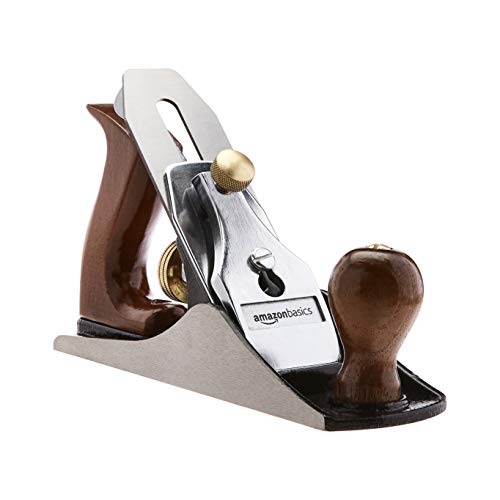
- Stable cast iron body
- Two-inch steel alloy blade
- Adjustable gear for precise results
Best For: General smoothing and carpentry projects
Best Long Jointer Option

- 14-inch body for jointed edges
- Two-inch blade for broad passes
- Cast iron construction for heavy use
Best For: Jointing, molding, and smoothing larger surfaces
Best Overall Jack Plane – Taytools #5-1/2 Jack Bench Plane
For flattening and smoothing hardwood, the Taytools #5-1/2 combines a long sole, substantial weight, and a thick hardened blade. Its ductile cast-iron body and carefully machined sole make it a practical choice for cabinetmakers and woodworkers who want a versatile bench plane.
Best For: Flattening and smoothing hardwood boards, panels, and cabinet components.
Pros:
- 14-3/4-inch sole helps smooth and flatten larger areas.
- Ductile cast-iron body and frog provide a durable, substantial platform.
- 0.125-inch-thick blade is hardened to 55–60 HRC.
- Sole and sides are machined flat within 0.003 inch.
Cons:
- At 6.9 pounds, it may feel heavy for extended overhead or fine-detail work.
- Its jack-plane format is less specialized than a dedicated smoothing plane.
The Taytools is a strong all-around option for hand planes for hardwood when you want mass for controlled stock removal and a wide, durable blade for general bench work.
Best Adjustable Smoothing Plane – JORGENSEN No. 4 Hand Plane
The JORGENSEN No. 4 is a compact, adjustable option for hand planes for hardwood. Its O1 tool-steel blade can be sharpened and reused, while the ductile-iron body and polished flat bottom support routine smoothing, trimming, and surface preparation.
Best For: Smoothing, trimming, deburring, and adjusting the surfaces of hardwood projects.
Pros:
- O1 tool-steel blade is designed for repeated sharpening and adjustment.
- Adjustable cutting depth accommodates different planing tasks.
- Ductile-iron body is built for heavy-duty use and drop-tested durability.
- Beech handle and polished flat bottom support comfortable, controlled operation.
Cons:
- The supplied details do not specify sole-flatness tolerance or overall sole length.
- Its 3 mm blade is less substantial than the thicker blades on some larger bench planes.
Choose this JORGENSEN when adjustability and everyday versatility matter more than the extra length and mass of a fore or jack plane.
Best Japanese Pull Plane – KAKURI Large Kanna Hand Plane
The KAKURI Large Kanna offers a different approach to hand planes for hardwood: it is pulled toward the user rather than pushed. Its oil-finished white-oak body, laminated Japanese steel blade, and chipbreaker are suited to controlled smoothing after proper blade setup.
Best For: Woodworkers who prefer a traditional Japanese pull plane for smoothing broad hardwood surfaces.
Pros:
- 60 mm blade covers a 50 mm cutting width for efficient passes.
- Laminated high-carbon Japanese steel blade is hand-sharpened.
- Chipbreaker helps control shavings and reduce tear-out.
- Large two-hand format and balanced 2.2-pound weight support stable pulling strokes.
Cons:
- Requires fine-tuning the blade with a hammer before use.
- The traditional pull-plane technique may require an adjustment period for Western-plane users.
- Its wooden body may require more setup and care than a ready-machined cast-iron plane.
The KAKURI is a distinctive choice for controlled hardwood smoothing, especially if you value traditional Japanese construction and are comfortable tuning a kanna.
Best for Wide Boards – Groz No. 6 Fore Plane
The Groz No. 6 is built for flattening wide hardwood boards and panels. Its 18-inch sole, 60 mm cutter, adjustable frog, and cast-iron body provide the reach and control needed for tabletops, workbenches, and other broad surfaces.
Best For: Flattening wide boards, tabletops, workbench surfaces, and panels.
Pros:
- 18-inch sole bridges uneven areas while flattening broad stock.
- 60 mm cutter removes material efficiently across wide surfaces.
- Adjustable frog lets users tune blade depth and mouth opening.
- 0.003-inch sole-flatness tolerance and machined blade seating reduce setup work.
Cons:
- Its long, fore-plane format is less convenient for small or detailed pieces.
- The supplied specifications list the blade as 2 mm thick, which is thinner than some heavy-duty bench-plane blades.
For large hardwood workpieces, the Groz No. 6 offers the reach of a fore plane with useful adjustability and a stated ready-to-use flatness tolerance.
Compact Japanese Craft – KAKURI Japanese Hand Plane
For detailed smoothing and chamfering, this compact KAKURI kanna offers a controlled option among hand planes for hardwood. Its pull-stroke design, Japanese high-carbon steel blade, and lightweight oak body suit small, precise woodworking tasks.
Best For: Detail work, edge chamfering, and woodworkers who want a compact traditional Japanese plane.
Pros:
- Japanese high-carbon steel blade is sharpened and ready to use.
- Pull-style operation supports controlled cuts with less effort.
- Compact ECO oak body is easy to handle and includes English instructions.
- Two-blade setup with chipbreaker helps reduce splitting.
Cons:
- Blade requires fine-tuning with a hammer before use.
- Its 42 mm blade width and compact size are better suited to detail work than broad surfaces.
This is a focused, portable choice for smoothing and chamfering rather than a general-purpose bench plane. The traditional setup rewards users willing to learn basic blade adjustment.
Stable Bench Smoothing – Amazon Basics No. 4 Hand Planer
This No. 4 bench plane is a practical pick for broader smoothing tasks when comparing hand planes for hardwood. Its cast-iron body, 2-inch steel blade, adjustable mouth, and depth gauge are intended for trimming and finishing wood surfaces.
Best For: Smoothing boards, trimming doors, furniture work, cabinetry, and general workshop use.
Pros:
- Heavy-duty cast-iron construction provides stability and helps reduce vibration.
- 2-inch steel blade supports broad smoothing cuts.
- Adjustable mouth and depth gauge allow tuning for different cuts.
- Front and rear handles provide control during extended use.
Cons:
- At 2.7 pounds, it is less portable than a compact block or chisel plane.
- The manual recommends maintaining a flat sole for best results, adding setup and maintenance work.
With its familiar No. 4 format and adjustable cutting setup, this plane is the most conventional option in the group. It makes sense for users who want one stable tool for routine smoothing and finishing.
Precision Edge Cleanup – Compact Dual-Blade Chisel Plane
This compact chisel plane fills a specialized role among hand planes for hardwood, handling flush cuts, plug trimming, glue removal, and joinery cleanup. Its interchangeable flat and spear-point HSS blades make it useful where a larger plane cannot reach.
Best For: Plug flushing, glue scraping, tight corners, joinery cleanup, and detailed edge finishing.
Pros:
- Flat and spear-point blades cover flush cutting and corner-detail work.
- One-piece aluminum construction is lightweight and rust-resistant.
- Open-front design improves blade visibility in confined areas.
- Includes a wrench and storage case for blade changes and organization.
Cons:
- Its compact design is intended for localized trimming, not broad surface smoothing.
- The blade uses a single-screw locking system, so secure setup is important before cutting.
This is a specialist finishing tool rather than a replacement for a full-size bench plane. Choose it when access, visibility, and interchangeable cutting profiles matter more than covering large areas.
Best Japanese-Style Pick – SUIZAN Kanna Japanese Wood Planer
For woodworkers exploring hand planes for hardwood, the SUIZAN Kanna offers a compact Japanese-style option with a 1.7-inch Japanese steel blade and beech wood body. It is pulled toward you rather than pushed, and its small footprint suits smoothing, trimming, and detail work.
Best For: Woodworkers who want a compact Japanese hand plane for smoothing and fine woodworking tasks.
Pros:
- Made in Japan, from design through assembly.
- Japanese steel blade measures 1.7 inches, or 42 mm.
- Lightweight 0.40-pound design is easy to handle.
- Beech wood body and pull-stroke operation provide a traditional feel.
Cons:
- Its 1.7-inch blade is narrower than the blades on the bench planes in this roundup.
- The Japanese pull technique may require an adjustment for users accustomed to push-style planes.
The SUIZAN is a focused choice for controlled smoothing and trimming rather than broad stock removal. Its compact size and Japanese construction make it especially appealing for detail-oriented projects.
Best Adjustable Bench Plane – Amazon Basics No. 4 Smoothing Plane
Among hand planes for hardwood, the Amazon Basics No. 4 is a conventional bench-plane option with a durable cast iron body, a 2-inch steel alloy blade, and an adjustable gear for tuning results. Its 3.8-pound weight provides a stable platform for smoothing and carpentry work.
Best For: DIY woodworkers and carpenters seeking a traditional adjustable smoothing bench plane.
Pros:
- Cast iron body offers stability and strength.
- Two-inch steel alloy blade supports broad smoothing passes.
- Adjustable gear allows users to pursue more precise cuts.
- Impact-resistant wooden handle has a contoured grip.
Cons:
- At 3.8 pounds, it is substantially heavier than the SUIZAN Kanna.
- The supplied details identify it as a smoothing plane, not a long jointer plane.
This No. 4 is a balanced general-purpose choice for users who prefer the stability of cast iron and want adjustment capability in a standard bench-plane format.
Best Long Jointer Option – Hoteche 14-Inch Wood Plane
For longer workpieces, the Hoteche 14-inch plane expands the hand planes for hardwood category with a long cast iron body and 2-inch blade. Its length is intended for smoothing, shaping, and creating jointed edges, while manual operation gives the user direct control over each pass.
Best For: Woodworkers who want a long hand plane for jointed edges, molding, and smoothing uneven surfaces.
Pros:
- Fourteen-inch length is suited to jointing and longer smoothing passes.
- Two-inch blade supports broad cutting coverage.
- Cast iron construction is designed for durability and heavy use.
- Manual operation allows fine control over shaping and finishing.
Cons:
- At 2.25 kg, it is the heaviest option in this comparison.
- Its longer body may be less convenient for small, detailed tasks.
- The supplied dimensions list an unusual 13.98-inch measurement for each dimension, so buyers should verify fit and storage requirements.
The Hoteche is the most task-specific option here: its long sole and 2-inch blade make it a logical fit for jointing and larger surfaces, provided you are comfortable with its heavier format.
How We Picked the Best Hand Planes for Hardwood
We focused on planes that offer practical value for working with dense hardwoods, considering body construction, blade size, adjustability, sole and side flatness, and intended use. Bench planes were evaluated for general smoothing and stock preparation, while longer fore and jointer planes were considered for flattening and edge jointing. Japanese-style planes and compact chisel planes were included for users who need precise trimming or prefer a pull-cutting tool.
Because hardwood exposes weaknesses quickly, we also considered sharpening requirements, replacement-blade practicality, grip and control, and whether a plane’s dimensions suit its stated task. Setup still matters: even a well-made plane may need blade honing, sole tuning, or mouth adjustment before producing its best results.
Quick Comparison
| Plane type | Best use | What to look for |
|---|---|---|
| No. 4 smoother | Final surface refinement | Fine blade adjustment and a reliable sole |
| No. 5 or 5½ jack plane | General stock removal | Balanced length, sturdy body, adjustable mouth |
| No. 6 fore plane | Flattening wider boards | Longer sole and a substantial blade |
| Jointer plane | Straightening long edges | Long sole and stable side registration |
| Japanese block or kanna plane | Fine trimming and end grain | Sharp blade, controlled throat, comfortable fit |
| Chisel plane | Plug flushing and corner work | Compact nose and specialized blade geometry |
Key Buying Factors for Hand Planes for Hardwood
Blade and Sharpening
Dense wood demands a properly honed edge. Look for hardened steel and a blade thick enough to resist chatter. A plane is only as effective as its sharpening routine, so confirm that you can hone, replace, or upgrade the cutter easily.
Sole Length and Intended Task
Short planes are easier to control for localized smoothing, while longer soles bridge dips and help create straight edges. Choose a No. 4 for finishing, a No. 5 or 5½ for versatile work, and a longer fore or jointer plane for broad surfaces and edge jointing.
Adjustment and Build Quality
Adjustable frogs, depth controls, lateral adjustment, and mouth settings make it easier to tune a plane for coarse or fine cuts. Cast-iron bodies provide mass and stability; wooden Japanese planes can offer excellent feedback but require more setup and care.
Ergonomics and Maintenance
Check handle comfort, weight, balance, and whether the plane suits push or pull cutting. Protect exposed metal from rust, keep the sole clean and lightly conditioned, and store the blade safely when the tool is not in use.
Who Should Buy Which Hand Planes for Hardwood?
Choose a No. 4 smoothing plane if your priority is clean final passes on furniture parts. A No. 5 or 5½ jack plane is the best all-purpose choice for many woodworkers because it can remove material and refine moderately sized boards. Select a No. 6 or jointer plane when flattening wide stock or preparing long mating edges is central to your work.
Japanese-style planes suit users who value compact control, fine shavings, and pull-cutting technique, though they may require more careful fitting and sharpening. A chisel plane is a specialist purchase for trimming plugs, glue lines, and corners rather than a replacement for a full-size bench plane. Beginners should prioritize a stable, adjustable bench plane with accessible replacement parts, while experienced users may benefit from pairing a jack or fore plane with a dedicated smoother or specialty kanna.