Choosing the right kiln shelf cleaner can help prevent glaze from bonding to shelves, reduce cleanup, and protect valuable kiln furniture. The options below include ready-to-use liquids, dry kiln washes, high-fire formulas, and a dedicated remover.
We compare 10 kiln wash products for pottery studios and workshops, focusing on application format, size, firing needs, and ease of maintenance.
Best 10 Kiln Shelf Cleaners for Workshops Picks for 2026
Ready-to-Use Pick
Creative Hobbies AC-001 Kiln Wash
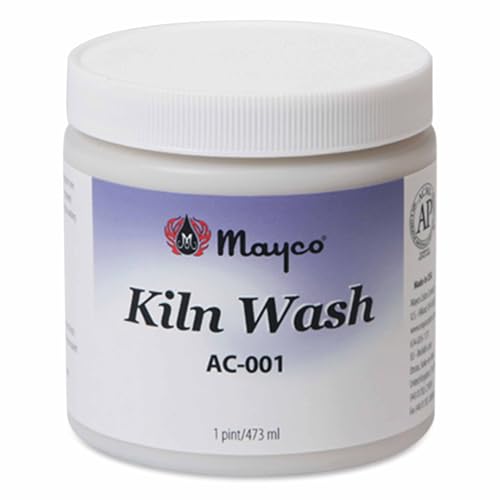
- Ready-to-use liquid formula
- Wide-mouth 16-ounce jar
- Made in the USA
Best For: Workshops wanting a no-mix kiln wash
Bulk Workshop Value

- Large four-pound carton
- Helps prolong shelf life
- ACMI certified non-toxic
Best For: Busy studios needing a larger supply
Custom-Mix Option

- Just add water before use
- Supports brush, roller, or sprayer application
- One-pound dry mix
Best For: Workshops wanting flexible application methods
Glass-Firing Pick

- Helps prevent glass sticking
- Suitable for ceramic, glass, and steel
- Resealable container
Best For: Glass fusing workshops
Long-Wearing Primer

- High-temperature shelf and mold primer
- Smooth application for multiple firings
- Covers 12–24 square feet per container
Best For: Glass and casting-mold applications
Ready-to-Use Protection

- Pre-mixed and ready to apply
- For ceramic and glass kiln firing
- Rated for temperatures up to 2400°F
Best For: Artists seeking convenient kiln shelf protection
Production-Focused Barrier

- Forms a barrier against molten glaze
- Supports kiln-furniture protection
- Designed to reduce cleanup and glaze adhesion
Best For: Ceramic workshops prioritizing furniture maintenance
High-Fire Shelf Protection

- Protects shelves and firebrick from drips
- Rated for firebrick kilns through 2400°F
- Powder form with unlimited shelf life
Best For: High-temperature workshop kiln maintenance
Baked-On Coating Removal

- Targets tough, adhered primer
- No dilution, measuring, or mixing
- Ready-to-apply 8-ounce formula
Best For: Quick removal of baked-on kiln primer
Ready-to-Use Liquid Coating

- Prevents glaze from sticking to shelves
- Brush-on liquid formula
- Requires at least 48 hours to dry
Best For: Pottery classrooms and small kiln shelves
Ready-to-Use Pick – Creative Hobbies AC-001 Kiln Wash
For workshops that value convenience, Creative Hobbies AC-001 is a ready-to-use option among kiln shelf cleaners for workshops. Its liquid formula comes in a wide-mouth pint jar and can be thinned with water if desired.
Best For: Potters who want a brush-on liquid without mixing powder first.
Pros:
- Ready to use directly from the jar.
- Helps keep glazed ceramics from sticking to kiln shelves.
- Can be thinned with water for application preferences.
- Made in the USA.
Cons:
- Requires two to three uniform coats.
- Each coat should semi-dry before the next is applied.
- Conventionally formulated kiln washes should be removed before application.
This is a practical choice when fast setup matters, provided shelves are properly prepared and you are comfortable applying multiple coats.
Bulk Workshop Value – AMACO 4-Pound Kiln Wash
AMACO 4-Pound Carton Kiln Wash | Protective Coating for Kiln Shelves During Glaze Firing, #52777L
Check Price On AmazonAMACO’s 4-pound carton suits busy studios looking for kiln shelf cleaners for workshops in a larger, concentrated format. It is designed to protect shelves during glaze firing and make glaze drippings easier to remove.
Best For: High-use pottery workshops that want a substantial powder supply.
Pros:
- Four-pound carton provides a generous workshop quantity.
- Helps prolong kiln shelf life.
- Makes glaze drippings easier to remove.
- ACMI certified non-toxic and conforms to ASTM D-4236.
Cons:
- Powder formulation requires preparation before use.
- Concentrated formulation may be less convenient than a ready-to-use liquid.
Its larger size and shelf-protection focus make it a sensible option for studios that use kiln wash regularly and prefer buying in bulk.
Custom-Mix Option – Penguin Pottery Dry Kiln Wash
Penguin Pottery - Dry Kiln Wash - Just Add Water - Prevents Glaze from Sticking to Kiln Shelves
Check Price On AmazonPenguin Pottery Dry Kiln Wash is a flexible choice among kiln shelf cleaners for workshops because the dry mix is activated by adding water. It can be applied in several thin coats with a brush, roller, or sprayer.
Best For: Workshops that want to mix only when needed and choose their preferred application tool.
Pros:
- Dry mix is activated by adding water.
- Can be applied with a brush, roller, or sprayer.
- Helps prevent glazed pieces from sticking to kiln shelves.
- One-pound package is compact for workshop storage.
Cons:
- Requires filling the jar with water and shaking before use.
- Several thin coats need thorough drying between applications.
- Not intended for fiber-based or silicon carbide shelves.
This product offers useful application flexibility, but shelf compatibility and drying time should be part of your workshop routine.
Glass-Firing Pick – Fireworks 1-Pound Kiln Wash
Fireworks 1-Pound Kiln Wash is especially suited to glass-oriented work among kiln shelf cleaners for workshops. It helps prevent glass from sticking to fusing molds and the kiln, and its resealable container supports straightforward handling.
Best For: Glass fusing workshops and users working with ceramic, glass, or stainless-steel surfaces.
Pros:
- Designed to prevent glass from sticking to fusing molds and the kiln.
- Works with ceramic, glass, and stainless-steel surfaces.
- Resealable container makes handling easier.
- Chlorine-free material formulation.
Cons:
- Its stated focus is glass fusing rather than general pottery use.
- One-pound quantity may be less suitable for high-volume workshops.
Choose this option when glass firing is central to your workflow and the listed surface compatibility matches your equipment.
Long-Wearing Primer – Primo Primer Kiln Wash
For workshops looking for kiln shelf cleaners for workshops that also create a durable firing barrier, Primo Primer Kiln Wash is a powder high-temperature primer. It applies smoothly, can last through multiple firings, and comes in a 1-1/2-pound container.
Best For: Glass and casting-mold applications where a powder primer and repeat-firing performance are useful.
Pros:
- Designed as a high-temperature shelf and mold primer.
- Applies smoothly and lasts for multiple firings.
- Coverage is listed at 12–24 square feet per container.
- Washable formulation.
Cons:
- Comes as a powder, so it requires preparation before application.
- Not waterproof or water resistant.
Choose this option if you want a versatile primer for glass surfaces and molds, especially when coverage and repeated firings matter. Its powder format may be less convenient than a ready-to-use liquid.
Ready-to-Use Protection – Paragon Liquid Kiln Wash
Paragon Liquid Kiln Wash is a convenient choice for workshops comparing kiln shelf cleaners for workshops. The pre-mixed liquid is made for ceramic and glass kiln firing and is intended to help prevent glaze or glass from bonding to shelves and firebrick.
Best For: Ceramic and glass artists who want a ready-to-apply kiln wash for firings up to 2400°F.
Pros:
- Pre-mixed and ready to apply without measuring or mixing.
- Made specifically for ceramic and glass kiln firing.
- Helps protect kiln shelves from glaze and glass bonding.
- Rated for firings up to 2400°F.
Cons:
- The 16-ounce package is smaller than a bulk workshop-size container.
- The supplied notes do not specify coverage or drying time.
Its main advantage is simplicity: open the container and apply it without mixing. It is a practical fit when application convenience is more important than detailed coverage information.
Production-Focused Barrier – JAOJAO Kiln Wash
JAOJAO Kiln Wash is designed for workshops evaluating kiln shelf cleaners for workshops with an emphasis on furniture protection and maintenance. Its liquid coating forms a high-temperature-resistant barrier between molten glaze and kiln furniture when applied in a thin, even layer.
Best For: Ceramic workshops focused on reducing glaze adhesion, cleaning time, and wear on kiln furniture.
Pros:
- Creates a physical barrier between molten glaze and kiln furniture.
- Designed to remain stable at continuous high temperatures.
- Application involves shaking, brushing on a thin layer, and air-drying.
- May help extend kiln-furniture service life and improve firing yield.
Cons:
- Requires complete air-drying, usually several hours or overnight.
- Application requires clean, dry surfaces and thorough mixing.
- The supplied notes do not specify a maximum firing temperature.
This is a maintenance-oriented option for users willing to allow drying time before firing. Its stated focus on barrier formation and reduced cleanup suits recurring ceramic production work.
High-Fire Shelf Protection – Paragon Kiln Wash
For workshops comparing kiln shelf cleaners for workshops, Paragon High Fire Kiln Wash is a powder-form protective coating designed to help keep glaze and glass drips from bonding to kiln firebrick and shelves. It can be used in firebrick kilns through 2400°F.
Best For: Workshops needing a high-temperature kiln wash for regular shelf and kiln-furniture protection.
Pros:
- Protects kiln firebrick and shelves from glaze and glass drips.
- Helps prevent glass from sticking to shelves or kiln furniture.
- Suitable for firebrick kilns through 2400°F.
- Powder has an unlimited shelf life.
Cons:
- Requires preparation before application because it is supplied as a powder.
- It is a protective kiln wash rather than a remover for already baked-on coating.
Choose this option when maximum firing-temperature compatibility and long-term storage matter more than ready-to-use convenience. Its 1-pound quantity is practical for maintaining kiln shelves over time.
Baked-On Coating Removal – Wash Away Kiln Wash Remover
For workshops looking for kiln shelf cleaners for workshops, Wash Away Kiln Wash Remover is aimed at removing tough, adhered primer rather than adding a new protective layer. The pre-mixed 8-ounce formula is applied directly and lightly scrubbed with a plastic scouring pad.
Best For: Removing baked-on kiln primer when you want a ready-to-apply product without measuring or mixing.
Pros:
- Designed to remove some of the toughest adhered primer.
- Apply it without dilution.
- Pre-mixed and ready to use.
- Includes an 8-ounce quantity for targeted cleaning jobs.
Cons:
- Requires light scrubbing with a plastic scouring pad.
- Its supplied notes focus on primer removal, not shelf protection after cleaning.
This is the most convenient choice in the group for cleanup work because there is no measuring or mixing. After removal, you may need a separate kiln wash if the shelf requires renewed protection.
Ready-to-Use Liquid Coating – Liquid Kiln Wash 500g
For workshops comparing kiln shelf cleaners for workshops, this ready-to-use liquid kiln wash forms a protective layer intended to prevent glaze from sticking during firing. It is designed for kiln shelves used with clay pottery and has a stated best-use temperature range of 1000–1300°C.
Best For: Pottery classrooms and enthusiasts who prefer a liquid wash for small kiln shelves and routine glaze firings.
Pros:
- Ready-to-use liquid formula.
- Helps prevent glazed pieces from sticking to kiln shelves.
- May help protect shelf surfaces and improve reuse.
- Suitable for school pottery teachers and pottery enthusiasts.
Cons:
- Requires shaking before use and even brush application.
- Needs to dry naturally for at least 48 hours before entering the kiln.
- Not for fiber-based or silicon carbide shelves.
This option favors application convenience but requires advance planning for its long drying period. Check your shelf material before buying, especially if your workshop uses fiber-based or silicon carbide shelves.
How We Picked the Best Kiln Shelf Cleaners for Workshops
We evaluated these Kiln Shelf Cleaners for Workshops by comparing their form, package size, intended use, application convenience, and suitability for common ceramic-firing routines. Ready-to-use liquids can save mixing time, while dry formulas are often easier to store and may offer more flexibility for frequent studio use. We also separated standard kiln washes from products designed for high-fire work or removing old shelf coatings.
Because firing temperatures, kiln materials, and glaze types vary, no single product is ideal for every workshop. Always follow the manufacturer’s directions and apply kiln wash only to the shelf surface—not heating elements, kiln walls, posts, or other areas where it does not belong.
Quick Comparison
| Type | Best for | Main advantage |
|---|---|---|
| Ready-to-use liquid | Convenient routine maintenance | No mixing required |
| Dry kiln wash | Studios using wash regularly | Flexible mixing and storage |
| High-fire kiln wash | Higher-temperature firing | Designed for demanding firing cycles |
| Kiln wash remover | Refreshing neglected shelves | Helps strip old coating |
Key Buying Factors for Kiln Shelf Cleaners for Workshops
Liquid or Dry Formula
Liquid kiln wash is the simplest choice when you want to open the container, stir it, and apply it. Dry powder can be economical for active studios, but it requires accurate measuring and thorough mixing with water. Consider whether convenience or long-term supply flexibility matters more to your workflow.
Firing Temperature and Compatibility
Check the product’s recommended firing range before buying. A standard kiln wash may suit common low- or mid-fire ceramics, while high-fire work calls for a compatible high-temperature formula. When in doubt, compare the wash specifications with your clay, glaze, and kiln schedule.
Coverage and Package Size
A pint, pound, or larger carton may be appropriate depending on how many shelves you maintain and how often you recoat them. Smaller containers reduce waste for occasional users; larger packages can make more sense for community studios, schools, and production workshops.
Application and Cleanup
Look for clear instructions on stirring, brushing, drying, and recoating. A smooth, even layer is generally preferable to a thick buildup, which can flake or interfere with shelf placement. If shelves already have several damaged layers, a remover may be useful before applying fresh kiln wash.
Who Should Buy Which Kiln Shelf Cleaners for Workshops?
Choose a ready-to-use liquid if you want the fastest setup and maintain shelves only occasionally. Pick a dry kiln wash if your workshop fires frequently and you prefer to mix only what you need. Select a high-fire product for firing schedules that exceed the range of ordinary kiln washes. If your shelves have chipped, peeling, or heavily accumulated coating, start with a kiln wash remover and then apply a compatible replacement.
For shared studios, prioritize clear instructions, dependable coverage, and a package size that matches regular maintenance. Hobby potters may prefer compact containers that are easy to store. Whichever option you choose, inspect shelves regularly, remove loose material safely, and keep kiln wash away from kiln components that should remain unobstructed.