A good model-making lathe can turn small shafts, bushings, wheels, and fittings that are difficult to make consistently by hand. The right choice depends less on the highest advertised RPM than on the materials and part sizes you actually use.
These 10 options range from lightweight educational machines to more capable benchtop lathes. Use the buying guide below to narrow the field before comparing individual models.
Best 10 Metal Lathes for Model Making Picks for 2026
Best for Angled Details

- Indexed A-axis for angled work
- All-metal construction
- 50 mm three-jaw chuck
Best For: Small soft-metal parts with multi-face details
Best for Larger Projects

- 7.09-inch swing over bed
- 50–2,500 rpm with display
- Four-way tool post
Best For: Larger model components and threading work
Best Compact Desktop Pick

- 50 mm maximum work diameter
- 0.02 mm molded handwheel scales
- Compact all-metal design
Best For: Small soft-metal parts on a desk
Best for Quiet Turning
Proxxon PD 250/E Precision Lathe

- Automatic feed
- Quiet, low-vibration design
- Two-year limited tool warranty
Best For: Quiet precision turning with automatic feed
Compact Learning Pick

- Small, 6.24-pound machine
- Turns wood, plastic, and pure soft metals
- Not specified for alloys
Best For: Small hobby projects and supervised learning
Powered Bench Pick

- 550W motor and 50–2,250 RPM range
- Manual or adjustable automatic feed
- 100-pound bench machine
Best For: Dedicated workbenches and variable-speed turning
Small-Part Detail Pick

- All-metal components and 3-jaw chuck
- Molded 0.02mm handwheel markings
- 50mm diameter, 150mm length limits
Best For: Detailed small parts in listed soft materials
Starter Kit Pick

- Tools and protective gear included
- Fixed speed up to 20,000 RPM
- Works with wood, plastic, and specified pure soft metals
Best For: Beginners seeking an accessory-inclusive desktop lathe
Small-Parts Pick
VEVOR 36W Didactical Mini Lathe

- 2.76-inch diameter capacity
- 5.12-inch workpiece length capacity
- Cooling fan and electrical protections
Best For: Hobbyists planning small parts to stated size limits
Elevated-Base Pick
All-Metal 36W Mini Safety Lathe
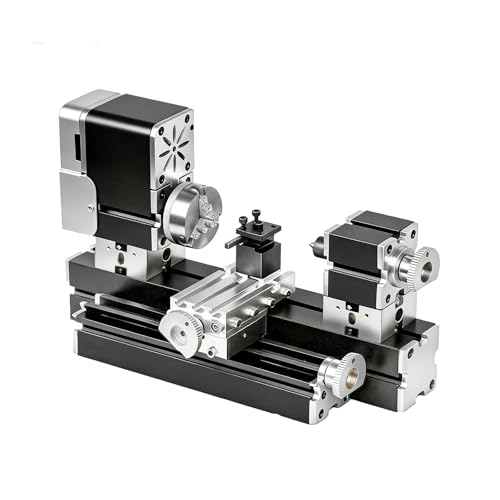
- Elevated design with 315 × 200 mm base
- Handwheel with 0.02 mm graduations
- Listed for wood, soft metals, acrylic, and plastic
Best For: Makers wanting an elevated desktop setup
Best for Angled Details – 60W Four-Axis Mini Lathe
Among metal lathes for model making, this compact 60W machine stands out for its four-axis setup and indexed A-axis, which can help with multi-face details on small soft-metal parts.
Best For: Model makers working with small aluminum, copper, gold, or silver pieces that need angled features.
Pros:
- A-axis rotates from -90° to +90°, with a quick indexer for repositioning.
- All-metal construction and dovetail slides with anti-loosening nuts.
- 0.02 mm-marked handwheels, a chuck crash guard, and travel limiters.
Cons:
- 60W motor is intended for soft metals and other light materials, not heavy cuts.
- The supplied chuck is 50 mm; the 60 mm four-jaw chuck is optional.
Choose this one when indexed angles matter more than the capacity of a larger workshop lathe. Match your project dimensions to the chuck and bed before buying.
Best for Larger Projects – VEVOR 7 x 14-Inch Metal Lathe
If your search for metal lathes for model making includes longer or wider parts, this 550W VEVOR offers a 7.09-inch swing and 13.78-inch distance between centers. Its variable speed and digital display give you control across different small-to-medium jobs.
Best For: Model makers who need more working capacity and a lathe suited to turning and threading.
Pros:
- 50–2,500 rpm speed range with a digital readout.
- Four-way tool post holds four standard turning tools.
- Metal gear, LED work lamp, and automatic power-off protection switch.
Cons:
- At 103 pounds, it is substantially less portable than the desktop mini lathes here.
- Its larger footprint may be unnecessary for very small parts.
This is the capacity-focused pick when your projects have outgrown a micro lathe. Plan for a stable, dedicated workspace.
Best Compact Desktop Pick – 36W All-Metal Mini Lathe
For metal lathes for model making on a small desk, this 36W machine keeps the setup compact while accommodating tiny copper and aluminum parts. The stated working limits are 50 mm in diameter and 150 mm in length.
Best For: Hobbyists, craft projects, and educational use involving small parts and soft materials.
Pros:
- All-metal headstock, gears, sliders, and chuck.
- 0.02 mm molded scales on the Z-axis and tailstock handwheels.
- Compact desktop size and a 12V supply with electrical protections.
Cons:
- 36W motor and stated capacity limit the size and intensity of cuts.
- Not intended for industrial use.
It is a practical choice when bench space and small-scale detail work are the priorities. Check your stock dimensions against its limits first.
Best for Quiet Turning – Proxxon PD 250/E Precision Lathe
For buyers comparing metal lathes for model making, the Proxxon PD 250/E emphasizes quiet, precise, low-vibration operation. Its slim design and automatic feed make it worth considering for repeated turning sessions.
Best For: Model makers who prioritize a quiet precision lathe with automatic feed.
Pros:
- Automatic feed for turning work.
- Designed for quiet, low-vibration operation.
- Slim design and a stated two-year limited tool warranty.
Cons:
- The supplied details do not specify swing, center distance, or speed range; verify these against your projects.
- At 34.3 pounds, it is not as light as the smallest desktop machines here.
This is a strong fit if operating feel and feed capability lead your checklist. Confirm its working capacity before committing to a particular model-making project.
Compact Learning Pick – W10003M 24W Mini Lathe
Among metal lathes for model making, this 24W mini machine suits small projects where bench space matters. Its 12V DC drive and metal components make it a practical option for supervised learning and hobby work.
Best For: Small wood, plastic, pure copper, or pure aluminum parts in hobby and educational settings.
Pros:
- Compact, 6.24-pound design takes up little workspace.
- Supports turning, drilling, boring, and threading.
- Metal headstock, sliders, and handwheel; supplied shims help set tool height.
Cons:
- Not specified for metal alloys.
- Harder materials require a slower feed rate.
Choose this for small-scale practice rather than tougher metal stock. Its material limits are especially important if your models call for alloy parts.
Powered Bench Pick – VEVOR 7 x 12-Inch Metal Lathe
If your search for metal lathes for model making calls for a substantial bench machine, this VEVOR pairs a 550W motor with a 7 x 12-inch size. Its adjustable speed and feed give you options for different turning operations.
Best For: Hobbyists with dedicated bench space who want variable-speed metal turning.
Pros:
- Speed adjusts from 50 to 2,250 RPM, with forward and reverse operation.
- Offers manual operation or adjustable automatic feed.
- Includes a self-centering 3-jaw chuck, compound rest, splashguard, and emergency stop button.
Cons:
- At 100 pounds and 33 x 14 x 18 inches, it needs a stable, dedicated workspace.
- Nylon gears may not appeal to buyers seeking all-metal gearing.
This is the bench-oriented option of the group: its controls and tooling setup offer flexibility, but its weight makes it a poor fit for a workspace you need to clear after each session.
Small-Part Detail Pick – 36W All-Metal Mini Lathe
For metal lathes for model making focused on small components, this 36W mini lathe combines an all-metal build with molded 0.02mm markings on the Z-axis and tailstock handwheels. It is listed for wood, plastics, acrylic, copper, and aluminum.
Best For: Compact model parts made from wood, plastics, acrylic, or the listed soft metals.
Pros:
- Metal construction includes the spindle and motor boxes, gears, sliders, handwheels, and 3-jaw chuck.
- Molded 0.02mm handwheel markings aid fine adjustments.
- Listed capacity is 50mm maximum diameter and 150mm maximum length.
- Power adapter includes over-current, over-voltage, and over-temperature protection.
Cons:
- 36W power and stated material range do not establish suitability for harder metals.
- 50mm-by-150mm workpiece limits rule out larger parts.
The fine handwheel markings and compact capacity make it worth considering for detailed small parts. Check your stock size and material against its stated limits before buying.
Starter Kit Pick – XENDOLL W103MA 24W Mini Lathe
For shoppers comparing metal lathes for model making, the XENDOLL W103MA offers a compact way to turn small wood, plastic, pure copper, and pure aluminum pieces. Its fixed-speed, 24W setup is geared toward hobby and educational projects rather than harder metals.
Best For: Beginners who want a small lathe with basic tools and protective gear included.
Pros:
- Includes turning tools, shims, safety goggles, apron, and power adapter.
- Compact 10.94 × 3.94 × 5.91-inch machine fits a small work area.
- Included shims allow turning-tool height adjustment.
Cons:
- Speed is fixed and cannot be adjusted.
- Soft-metal use is limited to pure copper and aluminum, not alloys; these materials require a slower feed than wood.
The included accessories make this a convenient starting point, but its material limits and non-adjustable speed matter if your model parts call for more varied machining.
Small-Parts Pick – VEVOR 36W Didactical Mini Lathe
Among metal lathes for model making, this VEVOR machine stands out for its stated workpiece capacity: up to 2.76 inches in diameter and 5.12 inches long. The 36W desktop lathe is intended for small parts in soft metals, acrylic, and plastic.
Best For: Hobbyists who want stated size limits for planning small turned parts.
Pros:
- Specified 2.76-inch diameter and 5.12-inch length capacities help with project planning.
- Three-jaw chuck and all-metal construction suit small-part work.
- Built-in cooling fan and over-current, over-voltage, and overheat protection.
Cons:
- Its stated 5.12-inch workpiece length limits longer projects.
- The supplied package listing names only the lathe, so additional accessories are not confirmed.
This is a practical option when your parts fit its published capacity and you plan to work with the listed softer materials; check accessory needs separately before ordering.
Elevated-Base Pick – All-Metal 36W Mini Safety Lathe
If you are weighing metal lathes for model making in a home studio or classroom, this 36W mini lathe pairs an elevated base with an all-metal build. It is listed for small projects in wood, copper, aluminum, acrylic, and plastic.
Best For: Makers who want an elevated desktop setup for small mixed-material projects.
Pros:
- Elevated design and 315 × 200 mm base provide a larger footprint for the machine.
- Handwheel is specified with 0.02 mm graduations for fine adjustments.
- Rounded corners and over-current, over-voltage, and overheat protection.
Cons:
- At 9.92 pounds, it is heavier than the other two listed mini lathes.
- The supplied details do not state a maximum workpiece diameter or length.
The elevated base and fine-graduation handwheel are useful features to consider, but confirm your intended part sizes before choosing it because workpiece capacity is not specified.
How We Picked These Metal Lathes for Model Making
We focused on machines suited to small hobby parts and compared their stated work capacity, power, speed control, construction, and intended materials. The selection spans compact 24–60W desktop tools, a precision-oriented Proxxon lathe, and two larger 550W VEVOR benchtop models. Published specifications are a starting point, not a guarantee of cutting accuracy: tooling, setup, workholding, and material also affect the result.
Quick Comparison by Project Type
- Wood, plastic, and occasional soft-metal miniatures: The 24W XENDOLL and compact 36W educational or all-metal models suit buyers prioritizing a small footprint and light cuts.
- Small precision-focused hobby parts: The Proxxon PD 250/E is worth comparing if your work calls for a dedicated metal-turning machine rather than a multi-use teaching tool.
- Larger or more demanding metal parts: The VEVOR 7 x 12-inch and 7 x 14-inch, 550W models offer substantially more stated capacity and power than the micro lathes, but need more bench space.
- Learning several machine operations: The 60W four-axis machine may appeal to experimenters who value versatility over a conventional lathe layout.
Key Buying Factors for Metal Lathes for Model Making
Part Size and Usable Capacity
Start with the largest diameter and length you expect to turn. Swing and distance between centers describe nominal capacity, but chucks, tailstocks, and tooling reduce usable space. A tiny lathe is convenient for miniature pins; it can become limiting when you need longer axles or larger wheels.
Materials, Power, and Speed
Check whether the maker explicitly supports your intended material. A machine advertised for soft metals should not be assumed capable of comfortable steel turning. Very high no-load RPM figures on micro machines do not indicate heavy-cutting ability. For mixed model work, useful low-speed control matters when turning larger diameters or working with less forgiving materials.
Precision and Workholding
Look beyond small graduated-scale claims. Consider how securely the toolpost holds a cutter, whether the slides adjust smoothly, and whether the chuck grips your usual stock diameters. Budget for suitable turning tools, drills, measuring equipment, and potentially a different chuck or collets. Confirm accessory compatibility before buying.
Space and Safety
Allow room for the machine, chip cleanup, and access to controls. Secure the lathe as instructed, wear eye protection, and keep loose sleeves and hair away from rotating work. A guard is useful, but it does not replace careful setup or safe operating habits.
Who Should Buy Which Metal Lathes for Model Making?
Choose a compact educational lathe for supervised learning, display-model details, and occasional light cuts in supported materials. Consider the Proxxon when small metal components are your main goal and you want a dedicated precision-oriented format. Move to a 550W benchtop VEVOR if your projects regularly exceed micro-lathe capacity or require more substantial cuts, provided you can accommodate its size. If you are unsure, list your three most common parts—their dimensions and materials—then choose the smallest machine that can handle them with a sensible margin.