Choosing the right lathe can make a home shop far more capable, whether you’re turning small precision parts or handling larger steel and aluminum projects. The best models balance rigidity, speed control, swing capacity, and ease of setup.
This roundup of metal lathes for home workshops focuses on practical options for hobbyists, DIY machinists, and small-shop users who want dependable performance without overspending.
Best 10 Metal Lathes for Home Workshops Picks for 2026
Best for Gearless Threading
INTSUPERMAI 8"×32" Gearless Benchtop Lathe

- Gearless belt-drive design reduces manual thread-change hassle
- Comes with both 3-jaw and 4-jaw chucks
- 50-2500 rpm variable speed with 1100W brushless motor
Best For: DIY users who want a compact benchtop lathe with electronic thread control and dual chucks.
Best for Gunsmithing Features
Grizzly G4003G 12" x 36" Metal Lathe
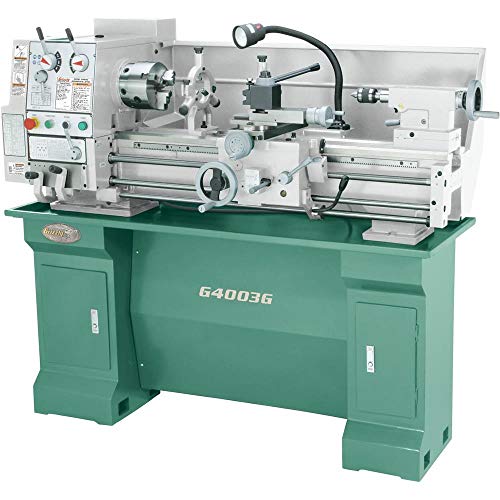
- 12" x 36" capacity with a 40mm spindle bore
- 2 HP motor and 9-speed range up to 1400 RPM
- Includes stand, chucks, faceplate, and steady rest
Best For: Home machinists and hobby gunsmiths who need a heavy-duty lathe with long-stock support.
Best for Variable Speed Control
VEVOR 8.3'' x 29.5'' Benchtop Lathe

- 0-2500 RPM variable speed with LCD readout
- 750W brushless motor with metal gears
- Safety interlocks and emergency stop switch
Best For: Hobbyists who want a compact lathe with flexible speed control and solid power.
Best for Thread Cutting
BK-260L 10.2" x 27.6" Bench Lathe
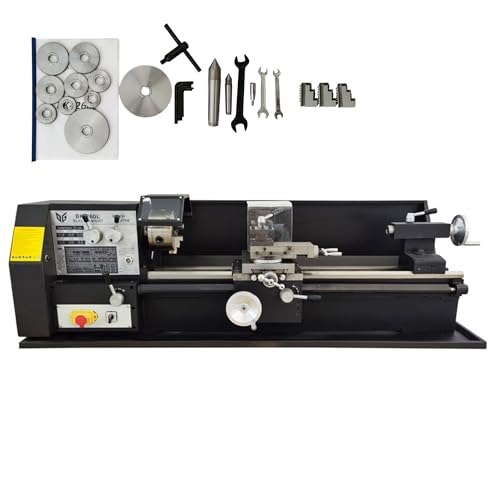
- Handles both inch and metric threading
- 115-1620 rpm geared speed range
- 27.56-inch center distance for longer stock
Best For: Home machinists who want a versatile bench lathe for threading and turning.
Best for Digital Readout Accuracy
VEVOR 7x14 Benchtop Metal Lathe

- Variable 50-2500 RPM with digital speed display
- 550W motor for small to medium turning jobs
- Metal gear upgrade and safety cut-off add durability
Best For: Hobbyists who want a compact benchtop lathe with digital speed feedback and good control.
Best for Large Projects
Heavy-Duty 10"×28" Precision Bench Lathe

- 1HP motor for stronger cutting performance
- Large swing and center distance for bigger parts
- Inch/metric threading for versatile home shop work
Best For: Home machinists and instructors needing a larger-capacity bench lathe for serious projects.
Best for Heavy-Duty Benchtop Work
Mechmaxx 10" x 22" Metal Lathe

- Large 1-1/2" spindle bore for more flexibility
- 1.5 HP brushless motor with 0-2000 RPM variable speed
- Heavy cast-iron build for steadier cuts
Best For: Home machinists who want a compact but more capable lathe for stable, precise work.
Best for Quiet Precision
Proxxon PD 250/E Precision Lathe

- Quiet, low-vibration operation
- Compact size for small home workshops
- Automatic feed for repeatable turning
Best For: Hobbyists and detail-focused users who need a compact, precise lathe for a home workshop.
Best for Threading Flexibility
VEVOR 8.7x39in Automatic Feed Lathe
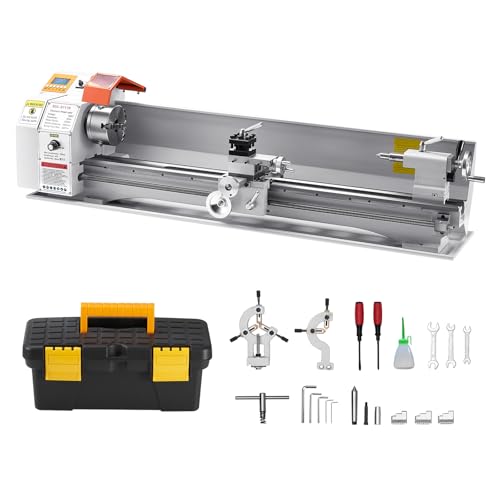
- Electronic gear system switches metric and imperial threads without gear changes.
- Automatic feed and variable speed support more controlled precision work.
- Belt-free spindle drive helps reduce maintenance and consumable costs.
Best For: Hobbyists and small-shop users who want flexible threading and automated feed control.
Best for Precision Threading
Double-Chuck 8"x30" Bench Lathe

- 0.02mm spindle precision for detailed machining
- Dual chucks improve workholding flexibility
- 1100W brushless motor with variable 50–2500RPM speed
Best For: DIY machinists and home workshop users who need accurate threading and stable bench lathe performance.
Best for Gearless Threading – INTSUPERMAI 8"×32" Gearless Benchtop Lathe
If you want one of the more modern metal lathes for home workshops, this INTSUPERMAI benchtop model stands out for its gearless design and electronic leadscrew controls. It’s aimed at hobbyists who want easier thread changes, variable speed, and a compact 8"×32" footprint for turning, facing, drilling, boring, and threading.
Best For: DIY users who want a compact benchtop lathe with electronic thread control, dual chucks, and low-noise operation.
Pros:
- Gearless belt-drive setup simplifies imperial/metric switching without manual gear changes
- Includes both 3-jaw and 4-jaw chucks for more setup flexibility
- 50-2500 rpm variable speed and 1100W brushless motor suit a wide range of hobby jobs
- Electronic leadscrew functions add convenience for threading and reciprocating work
Cons:
- Heavy 205-lb machine is not easy to move around a small shop
- 8" swing limits it to smaller parts rather than larger projects
- May be more machine than a first-time beginner needs
For metal lathes for home workshops, this is a strong pick if you value simpler thread setup and modern controls over traditional gear-swapping. It looks especially appealing for hobby users who want a capable benchtop lathe that can handle everyday precision work with less fuss.
Best for Gunsmithing Features – Grizzly G4003G 12" x 36" Metal Lathe
If you want one of the more capable metal lathes for home workshops and need gunsmithing-friendly details, the Grizzly G4003G is built for serious turning work. Its 12" x 36" capacity, 2 HP motor, large spindle bore, and included stand make it a strong fit for bigger hobby projects and longer stock.
Best For: Home machinists and hobby gunsmiths who want a robust lathe with a 40mm spindle bore, camlock spindle, and a full-size footprint.
Pros:
- Large 40mm spindle bore and D1-5 camlock for handling longer workpieces
- 2 HP, 220V motor with 9 speeds from 70 to 1400 RPM
- Includes a stand plus useful accessories like chucks, faceplate, and steady rest
- High-precision NSK spindle bearings and gunsmithing-focused features
Cons:
- Very heavy machine, so it is not easy to move or install
- 220V single-phase power may not suit every garage or shop
- Footprint and weight may be more than casual users need
For buyers comparing metal lathes for home workshops, this model stands out when capacity, rigidity, and gunsmithing extras matter more than compact size. It is best suited to a dedicated workspace where the weight, power needs, and large footprint are not a problem.
Best for Variable Speed Control – VEVOR 8.3'' x 29.5'' Benchtop Lathe
If you want more control over small turning jobs, this VEVOR model stands out among metal lathes for home workshops thanks to its 0-2500 RPM continuously variable speed, forward/reverse spindle, and clear LCD display. The 750W brushless motor and metal gears give it enough muscle for precision parts, while the compact benchtop size keeps it practical for garage or hobby shop use.
Best For: Hobbyists and home-shop users who want a compact lathe with flexible speed control and solid power for precision work.
Pros:
- Continuously variable speed with digital readout for more precise setup
- 750W brushless motor reduces maintenance and adds usable power
- Safety features include emergency stop, overload protection, and multiple interlocks
- Supports both metric and imperial threading for versatile projects
Cons:
- 197-pound machine is not easy to move around a shop
- Benchtop capacity is better for small to medium projects than larger stock
For metal lathes for home workshops, this VEVOR is a strong fit if you value speed flexibility, safety controls, and enough cutting capability for precision hobby work. It’s not the lightest or most compact option, but it offers a balanced feature set for builders who want more than an entry-level machine.
Best for Thread Cutting – BK-260L 10.2" x 27.6" Bench Lathe
The BK-260L is a practical pick for metal lathes for home workshops if you want a bench lathe that handles both inch and metric thread cutting. Its 110V power, geared spindle speeds, and heavy-duty build make it better suited to serious hobby use, light repair work, and small-shop projects than ultra-compact entry-level machines.
Best For: Home machinists who need a versatile bench lathe for threading, turning, and general metalworking.
Pros:
- Supports both metric and inch threads for broader project flexibility
- Wide 115-1620 rpm speed range with geared changes for more controlled operation
- 27.56-inch center distance gives extra room for longer workpieces
- Simple control panel with forward, reverse, stop, and emergency stop
Cons:
- At 359 pounds, it is not easy to move or reposition
- Requires dedicated space and a sturdy setup in the workshop
- May be more machine than casual DIY users need
For buyers comparing metal lathes for home workshops, the BK-260L stands out for threading versatility and a useful working envelope. It is a solid option if you value capability and control over portability.
Best for Digital Readout Accuracy – VEVOR 7×14 Benchtop Metal Lathe
If you want a compact machine that still gives you solid control, this VEVOR option is worth a close look. It fits well into metal lathes for home workshops where space is limited, but you still need variable speed, a digital display, and enough capacity for small to medium turning jobs.
Best For: Hobbyists and DIY users who want a benchtop lathe with digital speed feedback, a 3-jaw chuck, and better control for precision work.
Pros:
- Digital speed display and variable 50-2500 RPM range help with more controlled turning.
- 550W motor and 7.09″ swing x 13.78″ center distance suit a range of small projects.
- Metal gear upgrade, aluminum handwheel, and safety cut-off add durability and convenience.
- 4-way quick-change tool post supports multiple tools and finer adjustments.
Cons:
- Benchtop size means it’s better for smaller jobs than heavy production work.
- Setup and tuning may take time if you’re new to metal lathes.
Overall, this is a practical pick for metal lathes for home workshops if you value readout accuracy and a compact footprint more than raw industrial power. It offers a useful balance of control, capacity, and upgrade-friendly details for hobby machining.
Best for Large Projects – Heavy-Duty 10"×28" Precision Bench Lathe
If you need a compact machine with more turning room than most entry-level models, this is one of the more capable metal lathes for home workshops. The 1HP motor, 10.24-inch swing, and 27.56-inch center distance make it a solid fit for larger DIY parts, repair work, and training setups where accuracy still matters.
Best For: Hobbyists, home machinists, and shop teachers who want a higher-capacity bench lathe for larger metalworking projects.
Pros:
- 1HP motor provides strong torque for tougher materials and heavier cuts
- Large 10.24″ swing and 27.56″ between centers expand project size
- Inch and metric threading support adds flexibility for varied jobs
- Rigid bed, hardened gears, and MT4 spindle help improve cutting stability
Cons:
- Very heavy machine, so it is not ideal for frequent moving
- Overkill for users who only need light hobby turning
- 220V/110V listing details should be checked carefully before buying
For buyers comparing metal lathes for home workshops, this model stands out more for capacity and versatility than portability. It makes the most sense if you want a bench lathe that can handle serious work without stepping up to a full-size industrial machine.
Best for Heavy-Duty Benchtop Work – Mechmaxx 10" x 22" Metal Lathe
If you want one of the more capable metal lathes for home workshops, this Mechmaxx benchtop model stands out for its 1.5 HP brushless motor, 0-2000 RPM variable speed control, and unusually large 1-1/2" spindle bore. It’s built for hobbyists who need more capacity and rigidity than an entry-level mini lathe can offer.
Best For: Home machinists who need a compact lathe with stronger performance, better spindle capacity, and enough mass for more stable cuts.
Pros:
- Large 1-1/2" spindle bore adds flexibility for bigger workpieces and tooling
- 1.5 HP brushless motor and 0-2000 RPM range give you solid control across tasks
- Cast-iron construction and heavier bed help reduce vibration
- Thread dial indicator makes repeatable threading easier
Cons:
- At 308 lb, it’s not an easy move for a one-person setup
- 220V power requirements may limit some garage workshops
- Comes without a stand, so you’ll need a proper bench or base
For shoppers comparing metal lathes for home workshops, this Mechmaxx is a strong pick if you value capacity and rigidity over portability. It makes the most sense for a serious garage shop where stability, spindle size, and variable speed matter more than saving space.
Best for Quiet Precision – Proxxon PD 250/E Precision Lathe
If you want metal lathes for home workshops that prioritize control over brute size, the Proxxon PD 250/E is a strong fit. It’s designed for fine turning work, with low vibration and a compact footprint that makes it easier to place on a bench without sacrificing accuracy.
Best For: Hobbyists and detail-focused users who want a quiet, compact lathe for precision work in a home shop.
Pros:
- Quiet, vibration-free operation helps reduce fatigue during longer sessions
- Compact and lightweight design suits smaller home workshops
- Precision build is well suited to detailed turning tasks
- Automatic feed adds convenience for repeatable work
Cons:
- Not the best choice if you need a heavy-duty industrial lathe
- Smaller size limits capacity for larger stock
Overall, the PD 250/E is a smart pick for metal lathes for home workshops when accuracy, comfort, and a manageable footprint matter more than maximum capacity. It’s especially appealing for users who value clean, controlled turning in a quieter setup.
Best for Threading Flexibility – VEVOR 8.7x39in Automatic Feed Lathe
If you want one of the more feature-packed metal lathes for home workshops, this VEVOR bench lathe stands out for its electronic gear system, variable-speed control, and fully automatic feed. It’s built for users who want easier thread changes and repeatable machining on soft metals, plastics, and wood without constant setup swaps.
Best For: Hobbyists and small-shop users who need metric/imperial threading flexibility and automated feed control for precision part work.
Pros:
- Electronic gear system supports metric and imperial threads without gear changes.
- Automatic feed and adjustable stroke help streamline threading and longer cuts.
- 0-2500 RPM variable speed with a 1250W brushless motor improves control on different materials.
- Belt-free spindle drive reduces consumables and routine maintenance.
Cons:
- At 193 lb, it’s a heavy bench machine that needs a dedicated setup.
- Customer review count is still limited and average ratings are modest.
- More machine than a casual beginner may need for very light projects.
This is a strong fit if you want more automation than a basic mini lathe can offer. For metal lathes for home workshops, it’s especially appealing when threading versatility and speed control matter more than keeping the machine as simple as possible.
Best for Precision Threading – Double-Chuck 8"x30" Bench Lathe
If you want metal lathes for home workshops that lean toward higher precision, this 8"x30" bench lathe stands out for its 0.02mm spindle accuracy, dual-chuck setup, and wide speed range. It’s built for users who need more capability than a basic mini lathe without jumping straight to a full-size industrial machine.
Best For: DIY machinists, repair shops, and home workshop users who need accurate threading, turning, and general-purpose metalworking with a compact bench footprint.
Pros:
- 0.02mm spindle precision and 0.03mm–0.05mm concentricity for fine work
- Dual chucks expand workholding options for larger or awkward pieces
- 1100W brushless motor with 50–2500RPM variable speed control
- Handles both metric and inch threading for flexible project use
Cons:
- At 220 lb, it’s not a casual move-around machine
- Likely more lathe than a beginner needs for occasional light tasks
For buyers comparing metal lathes for home workshops, this model makes the most sense when precision, threading versatility, and stable cutting matter more than low weight or bargain pricing. It’s a strong fit if you want a compact bench lathe that can still handle serious work.
How We Picked the Best Metal Lathes for Home Workshops
For Metal Lathes for Home Workshops, the best choices combine usable swing and bed length with stable construction, smooth variable speed, and enough motor power for common materials. We also looked at thread-cutting capability, feed options, control layout, and whether the machine makes sense for a garage or basement shop.
Preference went to lathes that offer a clear value proposition: compact benchtop machines for limited space, and heavier-duty options for users who need more rigidity and capacity.
Quick Comparison
Smaller benchtop lathes are usually the easiest fit for beginners, jewelry-style precision work, and light-duty parts. Mid-size machines offer a better balance of capacity and stability for general machining. Full-size benchtop or stand-mounted lathes are the better choice when you want more swing, longer workholding, or less chatter on tougher jobs.
Key Buying Factors for Metal Lathes for Home Workshops
Size and Capacity
Check swing over bed and center distance first. Swing determines the largest diameter you can machine, while bed length affects how long your workpiece can be. Don’t buy extra capacity you won’t use, but avoid going so small that common projects feel cramped.
Motor Power and Speed Range
Higher horsepower helps with steel and deeper cuts, while variable speed makes it easier to dial in the right cutting speed for different materials. A wider RPM range is especially helpful if you plan to work with brass, aluminum, and mild steel.
Rigidity and Build Quality
For Metal Lathes for Home Workshops, rigidity matters as much as raw speed. Heavier cast-iron construction, solid ways, and low backlash in the feed system usually translate to better surface finish and more accurate results.
Threading and Feed Features
If you plan to cut threads regularly, confirm inch and metric threading support, lead screw options, and automatic feed. These features expand what the machine can do and improve repeatability.
Power, Noise, and Setup
Benchtop lathes are easier to place and often run on standard household power, but some still need careful leveling and a sturdy stand. Brushless motors and digital speed controls can make operation smoother and more convenient in a home shop.
Who Should Buy Which Metal Lathes for Home Workshops?
Beginners and casual DIY users should look for compact, variable-speed benchtop models with simple controls. Hobby machinists who want better rigidity and threading flexibility should consider mid-size machines with more mass and a wider feature set. If your work involves longer stock, frequent steel cuts, or you want a machine that feels more like a small production tool, choose one of the larger heavy-duty options.
In short, the best choice depends on the parts you make most often, the space you have available, and how much precision you expect from your home workshop lathe.