The best small jewelry anvils for jewelry making give you a stable, durable surface for stamping, flattening, texturing, and shaping metal without taking over your workbench. Compact designs are especially useful for home studios, repair benches, and beginners building a practical tool setup.
This roundup compares 10 small horn anvils, flat bench blocks, and combination sets, with attention to size, material, stability, versatility, and included accessories.
Best 10 Small Jewelry Anvils for Jewelry Making Picks for 2026
Compact Horn Starter Set
3-Lb Mini Horn Anvil with Rubber Hammer
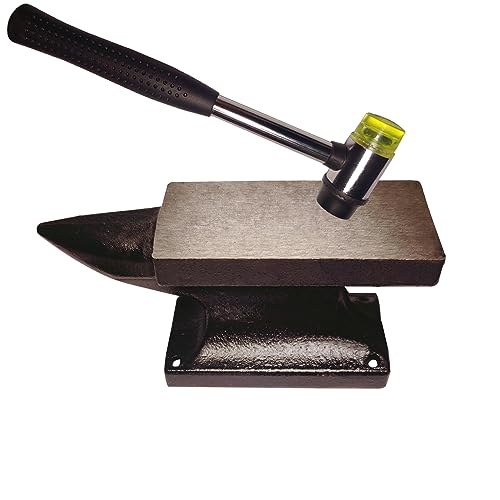
- Includes a cast-iron anvil and rubber hammer
- 4 x 2-inch face plus oblate shaping horn
- Mounting holes and large base improve stability
Best For: Portable jewelry forming and wire-design starter work
Dual-Horn Precision Pick
Mini Stainless Steel Dual-Ended Horn Anvil

- Flat and rounded horns offer two shaping profiles
- Polished solid stainless-steel construction
- Pritchel hole and mounting holes add utility
Best For: Small studios and DIY jewelry shaping
Stamping Stability Choice
OWDEN Round Steel Bench Block for Jewelry Stamping

- Three-inch professional steel stamping surface
- Soft plastic base reduces rebound
- Chrome-plated mirror finish supports precise work
Best For: Metal stamping, flattening, and chasing
Sturdy Single-Horn Option
HimaPro 2.2-Lb Mini Jewelry Anvil

- Cast-iron body for a durable work base
- Flat face and round horn cover core shaping tasks
- Compact design measures about 5.5 inches long
Best For: Jewelry hammering, stamping, and curved forming
Best Flat Bench Block

- 4-by-4-inch flat tool-steel surface
- Designed for stamping and wire forming
- Solid 3.3-pound bench block
Best For: Detailed stamping and flat jewelry work
Best Starter Set

- Includes anvil, hammer, and sandpaper
- Flat surface plus forming horn
- Mounting holes improve stability
Best For: Small-scale jewelry shaping and stamping
Best Dual-Ended Design

- Flat and rounded forming ends
- Heat-treated steel construction
- Supports stamping and wire shaping
Best For: Versatile small-scale metal forming
Best Overall Bench Block
Steel Bench Block with Rubber Base and Hammer

- 4-by-4-inch flat steel working surface
- Rubber base helps reduce vibration
- Includes a 6-inch jewelry hammer
Best For: Stamping, jewelry repair, and general bench work
Best Compact Option
QWORK Mini Cast Iron Horn Anvil

- Compact 1-pound cast-iron body
- Four slots for bench mounting
- Polished surface for light-duty work
Best For: Small jewelry, model-making, and hobby projects
Best Horn-Style Set
Iron Horn Anvil with Stamping Hammer

- Compact 1.15-pound cast-iron anvil
- Horn profile supports forming tasks
- Includes a metal stamping hammer
Best For: Small forming, riveting, flattening, and stamping
Compact Horn Starter Set – 3-Lb Mini Horn Anvil with Rubber Hammer
For shoppers comparing small jewelry anvils for jewelry making, this set combines a compact cast-iron anvil with a rubber hammer. Its 4 x 2-inch work surface supports hammering, while the oblate horn helps with curved forming and shaping.
Best For: Jewelry makers who want a portable starter kit for light forming, wire work, hammering, and straightening.
Pros:
- Includes both the 3-pound anvil and a rubber hammer.
- Flat surface and horn support different shaping tasks.
- Large base and four mounting holes promote stability.
- Rubber hammer helps reduce surface damage to jewelry.
Cons:
- The 4 x 2-inch work surface is relatively small.
- Cast iron is heavier than the stainless-steel mini anvil options.
- No manufacturer warranty is listed.
This is a practical all-in-one choice when you need both a small anvil and a gentler hammer for jewelry projects. The horn and mounting holes add versatility, though the compact face favors detailed work over larger pieces.
Dual-Horn Precision Pick – Mini Stainless Steel Dual-Ended Horn Anvil
This Beadsmith model is a particularly compact option among small jewelry anvils for jewelry making. Its solid stainless-steel body has a flat horn and rounded horn, plus a small pritchel hole for riveting and bending tasks.
Best For: Jewelry designers and DIY hobbyists working in limited spaces who need multiple shaping surfaces in a miniature tool.
Pros:
- Dual-ended design provides flat and rounded horns.
- Solid stainless steel has a polished finish.
- Pritchel hole supports riveting and bending.
- Base holes allow attachment to a workbench.
Cons:
- At 2.5 x 1 x 1.5 inches, the work area is very limited.
- It does not include a hammer or other accessories.
- The small 0.82-pound weight may require secure mounting for forceful work.
Its dual-ended layout makes this one of the most space-conscious choices for shaping, flattening, stamping, and wire hardening. Secure it to a bench to get the most stable performance from its miniature footprint.
Stamping Stability Choice – OWDEN Round Steel Bench Block for Jewelry Stamping
If your priority is stamping rather than horn work, this round bench block is a focused alternative among small jewelry anvils for jewelry making. The 3-inch steel surface sits in a soft plastic base designed to improve stability and reduce rebound.
Best For: Jewelry stamping, flattening, chasing, laying out, and working on metal blanks or tags.
Pros:
- Three-inch round steel face provides a solid working surface.
- Mirror finish with chrome plating offers a smooth surface.
- Soft plastic base helps reduce rebound and slipping.
- Suitable for stamping, shaping, flattening, and chasing.
Cons:
- It is a flat bench block, not a horned anvil for curved forming.
- No hammer is included.
- The 3/4-inch height offers less raised clearance than a traditional anvil.
This is a sensible specialized pick for accurate stamping and controlled tapping. Choose it over a horned anvil when a stable, low-rebound flat surface matters more than bending around a horn.
Sturdy Single-Horn Option – HimaPro 2.2-Lb Mini Jewelry Anvil
The HimaPro mini anvil offers a straightforward balance of portability and support for shoppers evaluating small jewelry anvils for jewelry making. Its cast-iron body pairs a polished flat surface with a round horn for bending and shaping.
Best For: Jewelry makers who want a compact single-horn tool for hammering, punching, metal stamping, and curved forming.
Pros:
- Cast-iron construction is designed for strength and durability.
- Round horn handles bending and shaping tasks.
- Polished flat surface supports hammering and punching.
- Compact dimensions make it suitable for smaller workspaces.
Cons:
- Single-horn design offers fewer profiles than a dual-ended anvil.
- No hammer or other accessory is included.
- The listed weight varies between the title and product details.
This model is a focused choice for makers who prefer a traditional flat-face-and-horn layout without a larger shop anvil. It covers common jewelry and stamping tasks, while its single horn keeps the design simple.
Best Flat Bench Block – Steel Stamping Anvil
For jewelry makers who need a dependable flat surface, this Beadsmith steel bench block is a practical choice among small jewelry anvils for jewelry making. Its compact 4-by-4-inch format supports close stamping, wire forming, and general hammering while helping protect your work surface.
Best For: Flat stamping, riveting, wire shaping, and detailed jewelry work.
Pros:
- Scratch- and dent-resistant tool-steel construction.
- Flat 4-by-4-by-0.5-inch surface suits close, detailed stamping.
- Works with hammers, mallets, and wire-forming tools.
- Compact 3.3-pound design provides a solid work surface.
Cons:
- Flat design does not provide a horn for curved forming.
- It is a single bench block rather than a multi-piece tool set.
This is the most straightforward option for makers who primarily stamp, flatten, or shape pieces on a stable, flat steel surface. Choose it over a horned anvil when simplicity and detailed stamping are the priority.
Best Starter Set – Mini Horn Anvil and Hammer
This NewFe set combines a compact horn anvil with a hammer, making it a convenient choice among small jewelry anvils for jewelry making. The polished flat surface handles small hammering tasks, while the horn supports curved forming and the included rubber hammer is intended to reduce damage to delicate metal.
Best For: Beginners and jewelry makers who want a compact anvil-and-hammer setup for shaping and stamping.
Pros:
- Includes a 1.1-pound horn anvil, 8.2-inch hammer, and sandpaper.
- Flat 2.4-by-1.4-inch work surface suits small-scale tasks.
- Horn helps bend, shape, and form curved metal elements.
- Base has four mounting holes for added stability.
Cons:
- Its small work surface is less suitable for larger pieces.
- At 1.1 pounds, it is lighter than a full-size anvil.
The included tools make this a practical all-in-one starting point, especially for compact workspaces. It offers more forming versatility than a flat block, but its small dimensions keep it focused on detailed, small-scale projects.
Best Dual-Ended Design – Splenor Horn Anvil
The Splenor Tools Horn Anvil is a compact steel forming tool for makers comparing small jewelry anvils for jewelry making. Its dual-ended flat and rounded horns support flattening, embossing, wire forming, and curved metalwork, while the smooth, heat-treated surface is designed for repeated hammering.
Best For: Jewelry makers who need both flat hammering and rounded forming surfaces in one bench tool.
Pros:
- Heat-treated steel construction is built for durability.
- Dual-ended flat and rounded horns increase forming versatility.
- Smooth surface and thick chamfers help protect metal from damage.
- Suitable for hammering, riveting, stamping, and precious-metal wire work.
Cons:
- It does not include a hammer or other accessories.
- The 1.07-pound body is relatively lightweight for heavy forming.
This anvil is a strong middle ground for makers who want more shaping options than a flat bench block without choosing a larger, heavier tool. Pair it with a suitable hammer for a flexible jewelry-forming setup.
Best Overall Bench Block – Steel Bench Block with Rubber Base and Hammer
For small jewelry anvils for jewelry making, this set combines a flat alloy-steel bench block, shock-absorbing rubber base, and a 6-inch jewelry hammer. Its broad 4-by-4-inch working surface suits stamping, repairs, and general hammering where a stable, low-vibration platform is useful.
Best For: Jewelry makers who want a flat bench block with a rubber base and included hammer for stamping and repair work.
Pros:
- Includes the steel block, rubber base, and 6-inch hammer.
- Flat, smooth steel surface supports stamping and jewelry repair tasks.
- Rubber base helps absorb shock and reduce vibration.
- Durable alloy-steel construction is designed for repeated use.
Cons:
- Flat bench-block design does not provide a horn for curved forming.
- The set is larger and heavier than some compact mini anvils.
This is a practical all-in-one choice when a stable flat surface matters more than horn-anvil shaping. The included hammer also makes it convenient for beginners building a basic jewelry workbench.
Best Compact Option – QWORK Mini Cast Iron Horn Anvil
QWORK Mini Cast Iron Horn Anvil 1lb Bench Block – Compact Tool for Jewelry, Metal Craft & Model Work
Check Price On AmazonThis QWORK mini anvil is a space-saving choice among small jewelry anvils for jewelry making. Its 1-pound cast-iron body has a polished, hardened surface, while the compact flat top is sized for light-duty jewelry, model-making, and small metal-craft projects.
Best For: Hobbyists who need a compact anvil for light jewelry work and want the option to secure it to a bench.
Pros:
- Compact 1-pound design fits small workspaces.
- Polished and hardened cast-iron surface is suited to light-duty use.
- Four base slots allow secure mounting to a workbench.
- Useful for jewelry, model work, and small hardware assembly.
Cons:
- Its small flat top is less suitable for larger workpieces.
- Designed for light-duty hobby use rather than heavy forging.
Choose this model when footprint and mounting flexibility are priorities. The compact working area is well matched to small projects, but users doing broader or heavier metalwork may prefer a larger bench block.
Best Horn-Style Set – Iron Horn Anvil with Stamping Hammer
For makers seeking small jewelry anvils for jewelry making with a shaped horn, this cast-iron bench anvil provides a polished working surface and includes a metal stamping hammer. Its compact 1.15-pound format is intended for riveting, flattening, forming, and other small metalworking tasks.
Best For: Jewelry makers who want a horn-style cast-iron anvil and a hammer for small forming and stamping jobs.
Pros:
- Includes a 1.15-pound iron horn anvil and metal stamping hammer.
- Horn-style shape supports small forming and metalworking tasks.
- Polished cast-iron surface provides a firm work area.
- Suitable for riveting, flattening, forging, and forming small metals.
Cons:
- Smaller 2.36-by-1.3-inch surface limits the size of workable pieces.
- Bare-metal grip offers no cushioned handle or vibration-damping base.
- Cast-iron construction is intended for small work rather than heavy forging.
This set is a good fit when curved forming capability and an included hammer are more important than a wide flat surface. Its compact dimensions make it convenient for jewelry benches, provided your projects remain small.
How We Picked the Best Small Jewelry Anvils for Jewelry Making
We focused on compact anvils and bench blocks suited to common jewelry tasks such as metal stamping, flattening wire, forming sheet, texturing, and light repair work. The selection includes cast iron and forged iron horn anvils, solid steel bench blocks, dual-ended designs, and kits that include a hammer.
Key considerations include working-surface shape, overall weight, footprint, construction, edge and horn versatility, and whether the tool is practical for a small bench. A heavier base generally resists movement, while a lighter model is easier to reposition or carry. Product dimensions and included accessories should be checked carefully because “mini” anvils vary considerably in size.
Quick Comparison
| Type | Best For | Main Advantage | Watch For |
|---|---|---|---|
| Horn anvil | Curves, rings, and forming | Tapered and rounded shaping surface | Less flat area than a bench block |
| Flat bench block | Stamping and flattening | Stable, even working surface | Limited curved forming capability |
| Dual-ended horn | Versatile small-scale forming | Different horn profiles in one tool | May be lighter than a full bench anvil |
| Hammer set | Beginners and portable setups | Ready-to-use combination | Included hammer quality may vary |
Key Buying Factors for Small Jewelry Anvils for Jewelry Making
Shape and Working Surface
Choose a flat block for stamping, riveting, and straightening. Select a horn anvil when you need to shape curves, domes, bezels, or small components. A dual-ended horn can provide more forming options in a compact footprint.
Weight and Stability
Weight matters because an anvil that shifts can make precise hammer work difficult and may damage a project. For bench use, choose the heaviest model that fits your workspace. Lightweight anvils are more convenient for mobile work but may need a non-slip mat or temporary fastening.
Material and Finish
Steel and forged iron typically provide durable striking surfaces. Cast iron can be a cost-effective choice, but inspect the surface for rough casting marks, sharp edges, or imperfections before working delicate metal. A smooth, clean face helps prevent unwanted marks.
Size and Compatibility
Measure your available bench space and compare the anvil’s actual dimensions, not just its listed weight. Also consider the metals you work with: small jewelry anvils are intended for controlled, light-to-moderate forming rather than heavy blacksmithing.
Who Should Buy Which Small Jewelry Anvils for Jewelry Making?
Beginners may prefer a horn anvil and hammer set because it provides the basic tools in one purchase. Jewelry makers focused on stamping, texturing, and flattening should choose a solid flat bench block. Makers who frequently form curves or rings will benefit from a single- or dual-ended horn design.
For a shared or very small workspace, prioritize a compact stainless-steel or steel block that stores easily. For greater stability during repeated work, choose a heavier iron model and pair it with a firm, non-slip surface. Whichever style you select, use appropriate eye protection and match your hammer force to the anvil and material.