A clean acrylic bend starts with heat applied in the right place, across the full length of the fold. The best setup for a small sign may be a poor fit for a long display panel.
These 10 options range from compact 12-inch benders to a 71-inch machine, with flexible strip heaters and adjustable bending machines in between. Here is how to narrow the choice to your material and workspace.
Best 10 Strip Heaters for Acrylic Bending Picks for 2026
Best for Long Bends
BriskHeat RH48 48-Inch Strip Heater

- 48-inch heating line
- 1/2-inch-wide radiant heater
- 209-watt rating
Best For: Long acrylic bend lines and custom fabrication
Best Digital Control
24-Inch Digital Acrylic Bender

- Digital temperature display
- Length and angle brackets
- For 1–6 mm thermoplastic sheets
Best For: Repeat bends needing visible temperature settings
Best Compact Strip
BriskHeat RH36 36-Inch Strip Heater

- 36-inch heating line
- 1/2-inch-wide radiant heater
- 157-watt rating
Best For: Craft and workshop bends within 36 inches
Best Adjustable Machine
24-Inch Three-Setting Acrylic Bender

- Three temperature settings
- Adjustable length and angle brackets
- Water-cooling system
Best For: Guided batch bends in 1–6 mm sheets
Compact Workbench Pick
12-Inch Adjustable Acrylic Bender

- 12-inch heating format
- Adjustable temperature
- Water-circulation cooling
Best For: Short bends at a compact workbench
Mid-Width Setup Pick
24-Inch Water-Cooled Strip Heater

- 24-inch heating format
- 800W, 110V rating
- Pump and controls listed
Best For: Medium-length bends with a water-cooled setup
Long-Bend Pick
48-Inch Bender with Angle Bracket

- 49.21-inch maximum bend width
- Angle frame and scale
- Water-circulation cooling
Best For: Long bends and sign-making work
Best Equipped 12-Inch Kit
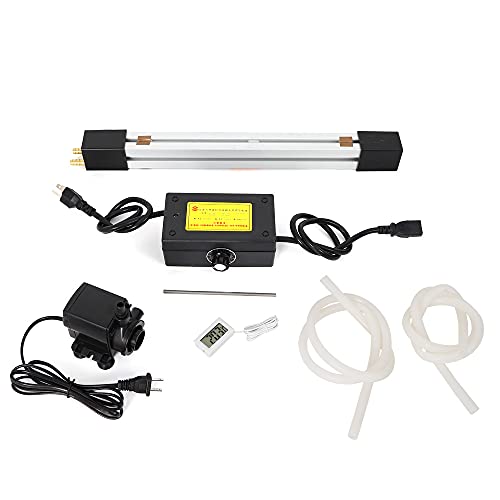
- 12-inch heater for 1–6 mm sheets
- Includes pump, tubing, and controls
- Adjustable temperature and water cooling
Best For: Small projects needing an included cooling setup
Flexible Workbench Pick
- Use alone or with a worktable
- Adjustable heat with water cooling
- Can pair with other heaters
Best For: Compact sign-making and display work
Best Simple Pick
71-Inch Acrylic Bending Heater
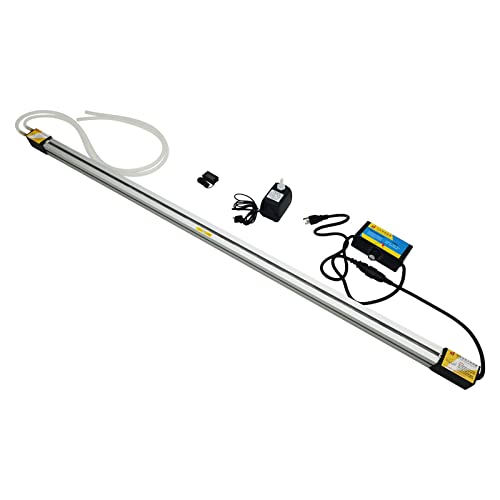
- 71-inch maximum bending width
- Specified for 1–6 mm sheets
- Adjustable heat and water cooling
Best For: Long bends in large plastic sheets
Best for Long Bends – BriskHeat RH48 48-Inch Strip Heater
For shoppers comparing strip heaters for acrylic bending, the BriskHeat RH48 offers a 48-inch radiant heating line for longer workpieces. Its 1/2-inch-wide heater softens acrylic without touching the sheet.
Best For: Makers who need a long heating line for acrylic frames, crafts, or custom fabrication.
Pros:
- 48-inch length accommodates longer bend lines.
- Fiberglass-reinforced, multi-stranded wire provides even heat across the heater.
- Radiant heat keeps the heater from contacting the plastic.
Cons:
- No temperature control is specified in the supplied product details.
- No bending guides or angle brackets are listed.
Choose this 209-watt strip when heating-line length matters more than built-in positioning accessories.
Best Digital Control – 24-Inch Digital Acrylic Bender
Among strip heaters for acrylic bending, this 24-inch machine suits buyers who want a digital temperature display and built-in bending supports. Its carbon-fiber heating tube is designed for acrylic, PVC, and other thermoplastic sheets 1–6 mm thick.
Best For: Repeat bending jobs where temperature settings, bend placement, and angle control matter.
Pros:
- Digital display lets you set and view the temperature.
- Length and angle brackets, plus a ruler, help position bends.
- Includes a water pump for its cooling system.
Cons:
- Listed sheet-thickness range is limited to 1–6 mm.
- Its 16-pound weight makes it less portable than the standalone strip heaters here.
Its main advantage is the combination of visible temperature settings and positioning aids; check that your sheet thickness fits the stated range.
Best Compact Strip – BriskHeat RH36 36-Inch Strip Heater
If you want strip heaters for acrylic bending without a full bending machine, the BriskHeat RH36 provides a 36-inch radiant heating line. Its 1/2-inch width concentrates heat along the intended bend while keeping the heater off the plastic.
Best For: Craft and workshop projects that fit a 36-inch heating line.
Pros:
- 36-inch length suits shorter setups than the 48-inch RH48.
- Fiberglass-reinforced, multi-stranded wire provides even surface heat.
- Radiant design does not contact the sheet.
Cons:
- Shorter heating line than the RH48.
- No temperature control or bending brackets are specified.
This 157-watt option is a straightforward choice when a 36-inch line covers your work and you do not need integrated guides.
Best Adjustable Machine – 24-Inch Three-Setting Acrylic Bender
For buyers comparing strip heaters for acrylic bending with complete bending machines, this 24-inch model adds adjustable supports, a ruler, and a three-setting temperature knob. Its 1000-watt carbon-fiber heating tube is intended for 1–6 mm acrylic, PVC, and other thermoplastic sheets.
Best For: Batch bending projects that benefit from adjustable bend positioning and water cooling.
Pros:
- Length and angle brackets help guide bend placement and shape.
- Three temperature settings accommodate different material thicknesses.
- Water pump and silicone tubing support the cooling system.
Cons:
- Temperature adjustment is limited to three settings rather than a stated digital setpoint.
- Specified sheet thickness is 1–6 mm.
Pick this machine if guided bending and cooling matter more to you than fine-grained digital temperature adjustment.
Compact Workbench Pick – 12-Inch Adjustable Acrylic Bender
If you need strip heaters for acrylic bending at a small workbench, this 12-inch, 110V unit offers adjustable temperature and a portable format. It can be used alone or paired with a workbench.
Best For: Short bends in acrylic, PVC, and other plastic sheets where workspace is limited.
Pros:
- Adjustable temperature for different bending jobs.
- Circulating-water cooling runs alongside the heating area to limit unwanted heating.
- Can be used alone or with another heater for top-and-bottom heating.
Cons:
- The 12-inch size is less suited to long bends.
- Water circulation adds setup steps.
Choose this one for compact, flexible bending rather than wide-sheet work. For thicker sheets, the notes suggest using two heaters or grooving the bend area.
Mid-Width Setup Pick – 24-Inch Water-Cooled Strip Heater
Among strip heaters for acrylic bending, this 24-inch, 110V model offers a longer heating area than a compact unit without moving to a full 48-inch setup. Its listed kit includes a water pump, silicone tubes, temperature controller, and water thermometer.
Best For: Medium-length bends in acrylic, PVC, and other thermoplastic sheets.
Pros:
- Adjustable temperature and an 800W power rating.
- Water circulation cools both sides of the heating tube.
- Included pump, tubing, controller, and thermometer support setup.
Cons:
- Requires a water-cooling setup.
- The title specifies 1–6 mm bending thickness, while the notes also mention sheets over 6 mm; check your material needs before buying.
This is a practical middle size if your bends exceed 12 inches. Multiple heaters can be combined for more than one bend point, though that calls for additional units.
Long-Bend Pick – 48-Inch Bender with Angle Bracket
For longer runs, this 48-inch option stands out among strip heaters for acrylic bending. The supplied notes specify a maximum bending width of 49.21 inches and include an angle-fixing frame, scale, and stand for positioning work.
Best For: Long bends in acrylic, PVC, Plexiglass, and other plastic sheets, including sign-making projects.
Pros:
- 49.21-inch maximum bending width suits larger pieces.
- Angle-fixing frame and scale help with bend positioning.
- Circulating-water cooling runs alongside the heating pipe.
Cons:
- Its long format needs more workspace than shorter units.
- The stated heating thickness is within 6 mm; thicker acrylic calls for two heaters or a cut slot.
Consider this model when bend length and angle positioning matter more than a compact footprint. Plan the cooling setup and any extra preparation needed for sheets over 6 mm.
Best Equipped 12-Inch Kit – 300W Acrylic Strip Heater
Among strip heaters for acrylic bending, this 12-inch, 300W model is a practical choice when you want the pump, tubing, temperature controller, and water thermometer included. It is specified for 1–6 mm sheet and also works with PVC and other thermoplastics.
Best For: Small acrylic or PVC projects where an included cooling setup is useful.
Pros:
- Water circulation cools both sides of the heating tube to help limit unwanted deformation.
- Adjustable temperature supports work with different thermoplastics.
- Includes a water pump, two silicone tubes, temperature controller, and water thermometer.
Cons:
- Its 12-inch length limits the width of a single heated bend.
- The water-cooling components need to be connected before use.
This is the most complete small-format package of the three, especially if you do not already have cooling components. Check that its working length fits your sheet before buying.
Flexible Workbench Pick – 12-Inch Plastic Sheet Bender
If you are comparing strip heaters for acrylic bending for sign-making or display work, this 12-inch unit offers a compact heater that can be used alone or assembled with a worktable. Its listing describes adjustable temperature and water-circulation cooling for acrylic, PVC, and other thermoplastics.
Best For: Sign-making and display projects that call for a compact, workbench-compatible heater.
Pros:
- Can operate alone or be combined with a worktable.
- Adjustable temperature and water-circulation cooling support controlled line heating.
- Multiple heaters can be combined for more than one bend point or for heating both sides.
Cons:
- The 12-inch heating length is not suited to a single long bend.
- The supplied notes do not specify which cooling accessories are included.
Its main appeal is setup flexibility. If you need to heat thicker stock from both sides or make several bends at once, plan for additional heaters as described in the listing.
Best Simple Pick – 71-Inch Acrylic Bending Heater
For buyers who need strip heaters for acrylic bending across larger sheets, this 71-inch model stands apart from the compact options. Its stated maximum bending width is 71 inches, with a specified heating thickness of 1–6 mm for acrylic, PVC, Plexiglass, and other listed plastics.
Best For: Long bends in sign-making, display, and other large-sheet projects.
Pros:
- 71-inch maximum bending width accommodates longer bend lines.
- Adjustable temperature can be set for different plastic sheets.
- Circulating water on both sides of the heating pipe helps protect areas outside the bend line.
- Aluminum-extrusion body is described as sturdy and smooth against the sheet.
Cons:
- Sheets thicker than 6 mm call for a second heater to warm both sides or a slot cut in the sheet, according to the listing.
- Its long format requires substantially more workbench space than a 12-inch heater.
Choose this one for reach, not compactness. The adjustable heat and cooling system make it a fit for long, controlled bends when your workspace can accommodate the 71-inch span.
How We Picked These Strip Heaters for Acrylic Bending
We compared the listed working lengths, heater styles, power requirements, stated material limits, and controls across the 10 selected products. The goal is to help match each format to a likely job—not to imply that every model was hands-on tested. Product titles do not always establish usable heating length, temperature range, or included accessories, so confirm those details with the seller before ordering.
Quick Comparison: Which Format Fits Your Work?
12-inch machines suit short bends, small signs, and occasional projects where bench space matters. 24-inch machines offer more room for common display and fabrication work; some listings include adjustable angles or widths, while one specifies digital controls. 36- and 48-inch BriskHeat strips are longer, narrow heating elements for a setup you configure around the strip. The 48-inch manual bender may appeal to buyers who want a longer integrated machine. The 71-inch machine is the long-format option, but its footprint and electrical needs deserve extra scrutiny.
Key Buying Factors for Acrylic Bending
Working Length and Bend Placement
Choose a heater that covers the entire intended bend line, with enough clearance to position the sheet securely. Check whether the advertised dimension describes overall machine size or usable heating length. For wide sheets, plan where the material will rest on both sides of the heat line.
Material Thickness and Heat Control
Several machines are advertised for acrylic or PVC up to roughly 6 mm, but limits vary by listing. Match the stated range to the sheets you actually use. Adjustable temperature or digital control can help when switching materials and thicknesses; it does not replace test bends. Heat acrylic gradually and evenly, following the sheet manufacturer’s guidance to reduce bubbles, scorching, or uneven folds.
Machine Versus Heating Strip
An integrated bender may provide a ready-made work surface and positioning features. A standalone strip can be more adaptable, but you may need a suitable base, supports, guards, or a separate bending jig. Compare the complete setup cost rather than the heater price alone. If a listing mentions a spare heating wire, check whether replacements remain available.
Power, Workspace, and Safety
Verify voltage, wattage, plug type, and circuit requirements; the selected listings include 110V and 120VAC models. Allow space for hot surfaces and sheet overhang, work in a well-ventilated area, and follow the manufacturer’s instructions—particularly if bending PVC or other plastics.
Who Should Buy Which Strip Heaters for Acrylic Bending?
Pick a 12-inch bender for short, occasional bends; a 24-inch machine for a versatile midsize workbench; or a 36- or 48-inch strip if you are building a customized heating station. Consider a 48-inch integrated bender for longer repeated bends, and the 71-inch option only when your projects, workspace, and power supply justify its size. Start with the longest bend you regularly make, then choose the controls and format that support repeatable results.