Sharp carving tools are easier to control, produce cleaner cuts, and require less force—important advantages when you work in a home studio. The right sharpener depends on your tool profiles, available workspace, and comfort with manual or powered maintenance.
We compared 10 sharpening options, including leather strops, grooved whetstones, contour systems, and adjustable electric machines, to help you choose a setup that fits your carving routine and budget.
Best 10 Carving Tool Sharpeners for Home Studios Picks for 2026
Best All-Around Gouge Strop
Flexcut SlipStrop with Compound

- Multiple profiles for V, sweep, and U gouges
- Includes 1-ounce Flexcut Gold compound
- Compact manual polishing and deburring tool
Best For: Home-studio woodcarvers maintaining polished gouge edges
Best Variable-Speed Grinder
Consfly 4000RPM Engraving Sharpener

- 0–4000 RPM adjustable speed range
- Four discs from 200 to 3000 grit
- Compact design with stabilizing foot pads
Best For: Home workshops sharpening engraving knives and small tools
Best Compact Manual Strop

- Shaped profiles for several gouge types
- Includes polishing compound
- Lightweight, compact hand-operated design
Best For: Carvers performing routine manual gouge maintenance
Best Simple Precision Grinder
Adjustable Engraving Sharpener

- 0–4000 RPM control with rotation switch
- Three discs from 320 to 2000 grit
- Tray and anti-slip pads support desktop stability
Best For: Home studios sharpening small carving and engraving tools
Best Grooved Single-Stone Option
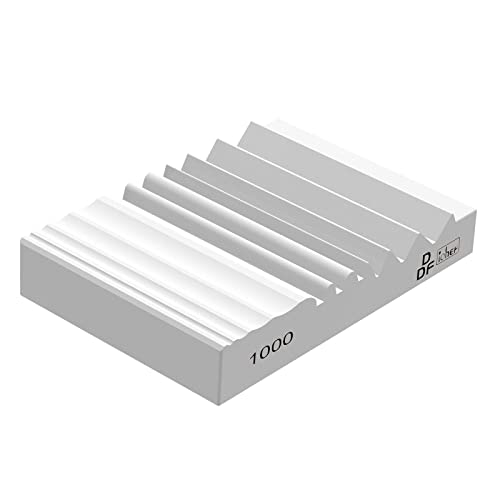
- Multiple grooves for chisels and gouges
- 1000 grit for maintenance sharpening
- Water-based and easy to clean
Best For: Routine edge maintenance with one contoured stone
Best for Fast Edge Touch-Ups
KAKURI Stropping Maintenance Kit

- Works with multiple carving profiles
- Four angled stropping supports
- Includes cloth, block, and oil applicator
Best For: Routine stropping, polishing, and light deburring
Best Complete Grit Range
Sharp Pebble Grooved Stone Set
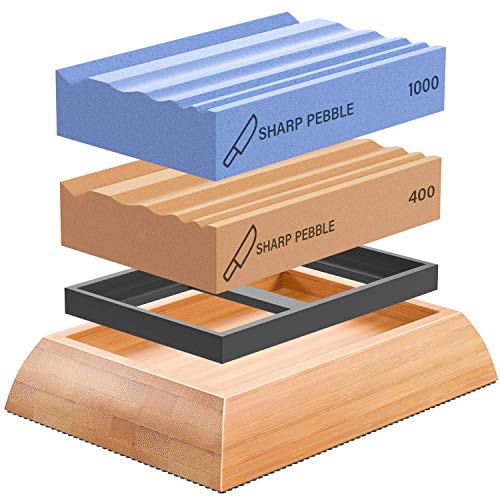
- Includes 400- and 1000-grit stones
- Multiple grooves for contoured tools
- Waterstones with non-slip bamboo base
Best For: Coarse repair through fine maintenance sharpening
Contour Edge Strop
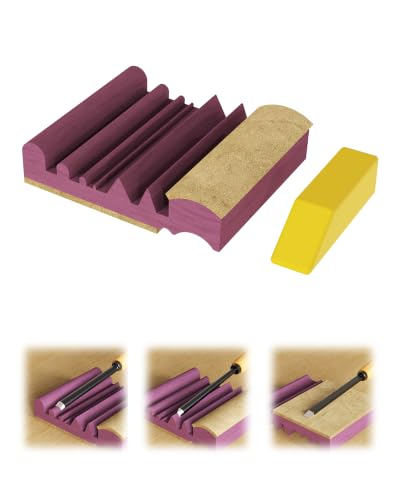
- Flat, curved, and V-groove profiles
- Polishes and removes sharpening burrs
- Includes fine polishing wax
Best For: Maintaining contoured carving blades in home studios
Dual-Grit Water Stone

- 400- and 1000-grit sharpening stages
- Wavy and flat sharpening surfaces
- Nonslip pads and bamboo base included
Best For: Small-tool hobby carving and versatile studio sharpening
Spoon Carving Strop
BeaverCraft Leather Honing Kit

- Leather and sandpaper sides
- Includes compound and two sandpaper sheets
- Designed for gouges and hook knives
Best For: Spoon-carving edge maintenance and honing
Best All-Around Gouge Strop – Flexcut SlipStrop with Compound
For carving tool sharpeners for home studios, the Flexcut SlipStrop is a compact manual option focused on polishing and deburring V, sweep, and U gouges. Its multiple profiles help match varied tool shapes, while the included Flexcut Gold compound is formulated for hardened steels.
Best For: Home-studio woodcarvers who want a shaped leather strop for maintaining polished gouge edges.
Pros:
- Multiple profiles accommodate V, sweep, and U gouges.
- Polishes and deburs edges for a smoother cutting surface.
- Includes a 1-ounce bar of Flexcut Gold Polishing Compound.
- Made in the USA and compact at 5 x 4 x 1 inches.
Cons:
- Designed for polishing and deburring rather than powered grinding.
- Manual stropping requires working each tool by hand.
This is a practical choice when edge refinement and routine maintenance matter more than rapid material removal. The profile variety makes it especially useful for a home studio with several gouge styles.
Best Variable-Speed Grinder – Consfly 4000RPM Engraving Sharpener
Among carving tool sharpeners for home studios, the Consfly engraving knife sharpening machine suits users who want powered grinding with adjustable control. Its copper motor, variable speed, reversible direction, and four included discs cover rough grinding through finer polishing tasks.
Best For: Home workshops and craft studios needing a compact powered sharpener for engraving knives and small delicate tools.
Pros:
- Adjustable speed from 0 to 4000 RPM.
- Forward-reverse switch supports different grinding needs.
- Includes 200-, 800-, 2000-, and 3000-grit discs.
- Foot pads help keep the compact desktop machine stable.
Cons:
- Powered grinding may require more technique than a manual strop.
- The compact design is intended for smaller tools and delicate items.
With four grit levels and speed control, this model offers more process flexibility than a single-purpose strop. Its small footprint is well suited to studios where bench space is limited.
Best Compact Manual Strop – Flexcut SlipStrop
Flexcut SlipStrop, Polish and Debur Cutting and Carving Tools For Razor Sharp Blade Edges
Check Price On AmazonThe Flexcut SlipStrop is a straightforward choice for carving tool sharpeners for home studios when the goal is polished, deburred edges rather than aggressive stock removal. Its shaped profiles are intended for V, sweep, and U gouges, and it includes polishing compound for immediate use.
Best For: Carvers who want a lightweight, hand-operated strop for routine gouge edge maintenance.
Pros:
- Profiles fit several common gouge shapes.
- Leather, wax, and wood construction supports manual stropping.
- Includes SlipStrop and a 1-ounce polishing compound bar.
- Small 5 x 4 x 1-inch form is easy to store.
Cons:
- Not a powered sharpener for rapid grinding.
- Best suited to polishing and deburring after an edge has been shaped.
This model makes sense as a simple maintenance tool for carvers who prefer direct hand control. Its included compound and varied profiles make it ready for regular edge refinement.
Best Simple Precision Grinder – Adjustable Engraving Sharpener
For carving tool sharpeners for home studios, this compact engraving knife machine provides powered edge work with a 0–4000 RPM range and three supplied discs. The mounted tray and anti-slip pads are designed to support steady desktop operation for small carving and engraving tools.
Best For: Home studios seeking a compact powered grinder for carving cutters, CNC bits, and other delicate tools.
Pros:
- High-torque copper motor is designed for stable grinding without jamming.
- Speed control and rotation switch support varied grinding requirements.
- Includes 320-, 800-, and 2000-grit discs.
- Tray design and anti-slip pads promote steadier operation.
Cons:
- Includes three discs rather than the four supplied with some comparable models.
- Its compact format is aimed at smaller tools and delicate work.
This sharpener offers a focused balance of speed adjustment, grit flexibility, and desktop stability. It is a good fit when a home studio needs powered maintenance without a larger workshop machine.
Best Grooved Single-Stone Option – 1000-Grit Carving Sharpener
For home studios looking for carving tool sharpeners, this 1000-grit waterstone offers a straightforward way to maintain contoured chisels, gouges, and other woodworking tools. Its multiple grooves and convex surface are designed to match different tool profiles, while water-based use avoids the need for sharpening oils.
Best For: Routine sharpening and polishing of wood carving tools, chisels, and gouges when you want one grooved maintenance stone.
Pros:
- Multiple grooves accommodate various contours, including round and triangular chisels.
- 1000 grit is suited to sharpening and polishing edges for maintenance.
- Corundum construction is described as corrosion resistant, heat resistant, and durable.
- Uses water and is easy to clean without specialty oils.
Cons:
- Only includes a 1000-grit stone, so it is not intended for aggressive repair of badly damaged edges.
- Users must match each tool profile to an appropriate groove.
This is a practical pick for carvers who primarily need ongoing edge maintenance and want a longer grooved stone rather than a flat whetstone. A separate coarse sharpening option may be useful for heavily dulled tools.
Best for Fast Edge Touch-Ups – KAKURI Stropping Maintenance Kit
Among carving tool sharpeners for home studios, this KAKURI kit is aimed at quick edge finishing rather than full sharpening or damage repair. The compound-impregnated cloth, angled beech strop block, and four edge angles support stropping and deburring across several carving profiles.
Best For: Daily maintenance of carving knives, flat chisels, U-gouges, V-tools, veiners, and skew chisels.
Pros:
- Supports multiple profiles, including flat chisels, U-gouges, and V-tools.
- Four edge angles help provide consistent stropping support.
- Designed for fast touch-ups, light burr removal, polishing, and edge refinement.
- Made in Japan and includes an oil applicator for routine care.
Cons:
- It is for edge finishing and maintenance, not repairing chips or reshaping damaged edges.
- Blade oil is not included.
- Stropping may not replace a sharpening stone for dull tools.
This compact kit makes sense for carvers who already have a primary sharpening method and want a controlled way to keep edges crisp between more substantial sharpening sessions.
Best Complete Grit Range – Sharp Pebble Grooved Stone Set
For home studios that need both repair and maintenance capability, this two-stone set combines 400- and 1000-grit waterstones with multiple grooves. The contoured surfaces are designed for wood carving tools, gouges, chisels, and lathe tools, making the set more versatile than a single fine stone.
Best For: Carvers who need an aggressive coarse stone for dull or damaged edges plus a finer stone for sharpening and polishing.
Pros:
- Includes 400 grit for dull or damaged edges and 1000 grit for maintenance.
- Multiple grooves accommodate different chisel and gouge contours.
- Convex portions can sharpen triangular and round chisels.
- Water-based stones are easy to clean and do not require honing oils.
Cons:
- The two-stone set is heavier and bulkier than a single sharpening stone.
- Users still need to select the correct groove and grit for each task.
This is the most broadly equipped option of the three for a studio beginning to build a sharpening setup. Its coarse-and-fine progression covers more stages of edge work, while the grooved design keeps contoured tools supported.
Contour Edge Strop – 3-in-1 Wood Carving Sharpener
For home studios needing versatile carving tool sharpeners, this 3-in-1 contour strop is designed for flat surfaces, curved profiles, and V-grooves. Its leather, wood, and fine polishing wax setup helps deburr and refine carving blades after sharpening.
Best For: Woodcarvers who work with gouges, V-tools, and other contoured carving blades and want a compact polishing and deburring solution.
Pros:
- Three sharpening shapes cover flat surfaces, varying arcs, and V-grooves.
- Helps polish away burrs and rough edges for a refined blade finish.
- Includes fine polishing wax and is suitable for beginners or experienced carvers.
Cons:
- Its fine-grit focus is intended for polishing and edge refinement rather than major reshaping.
- The compact 3.98-by-3.2-inch size may feel small for larger tools.
This is a practical choice when your home-studio sharpening routine centers on maintaining already-shaped carving edges and reaching profiles that flat stones cannot easily address.
Dual-Grit Water Stone – Carving Gouge Sharpener
Among carving tool sharpeners for home studios, this dual-stone water system offers both edge sharpening and polishing in one organized setup. The wavy side accommodates contoured tools, while the flat side works with straight blades such as chisels, knives, and scissors.
Best For: Hobby carvers who want 400- and 1000-grit stones, water-based sharpening, and a stable bamboo base for small carving tools.
Pros:
- Wavy surfaces support gouges, lathe tools, and other contoured edges.
- 400 grit handles sharpening, while 1000 grit supports polishing.
- Includes nonslip pads and a bamboo base for added stability and storage.
- Uses water instead of honing oil; the stones soak for 10–15 minutes before use.
Cons:
- The stones are designed especially for smaller tools and hobby work.
- Pre-soaking is required before sharpening.
- At 1.5 pounds and 5.2 inches long, it is less compact than a simple strop.
This kit suits carvers who prefer a traditional two-grit water-stone workflow and need one station for both shaped carving edges and ordinary straight blades.
Spoon Carving Strop – BeaverCraft Leather Honing Kit
This paddle strop is a focused option among carving tool sharpeners for home studios, particularly for spoon carving tools, gouges, and hook knives. It combines a leather polishing side with a sandpaper side for light sharpening and includes the compound needed for honing.
Best For: Spoon carvers and woodworkers who want a straightforward double-sided strop for maintaining sharp edges between heavier sharpening sessions.
Pros:
- Designed to help maintain spoon carving tools, gouges, and hook knives.
- Double-sided construction combines leather polishing with light sandpaper sharpening.
- Includes polishing compound and two sheets of sandpaper.
- Compact 12.2-by-2.76-inch paddle format is easy to handle and store.
Cons:
- Its very-fine grit and strop format are better for honing and maintenance than substantial edge repair.
- The narrow paddle may be less convenient for broad, flat tools.
- Unlike the water-stone kit, it does not provide coarse and fine stone grits.
Choose this kit if your studio routine prioritizes quick edge maintenance, especially on spoon-carving profiles and other curved tools that benefit from leather stropping.
How We Picked the Best Carving Tool Sharpeners for Home Studios
We focused on the maintenance tasks woodcarvers perform most often: honing, polishing, deburring, and restoring a usable edge. The selection includes compact manual tools for quiet studio work as well as powered sharpeners for faster material removal. We also considered compatibility with straight edges, gouges, V-tools, hook knives, and other curved profiles.
Other criteria included included accessories, abrasive variety, speed control, portability, ease of use, and the likelihood that a tool can handle routine touch-ups without taking up excessive bench space. Product claims and specifications should still be checked before purchase, particularly for grit ratings, disc sizes, and included compounds.
Quick Comparison
| Sharpener type | Best suited to | Main advantage | Potential limitation |
|---|---|---|---|
| Leather strop | Routine honing and polishing | Quiet, compact, and gentle | Cannot replace major edge reshaping |
| Grooved stone | Gouges and carving profiles | Supports curved edges | Requires controlled technique and lubrication |
| Contour strop | Mixed tool shapes | Reaches inside curves and V-tools | May require several passes or compounds |
| Powered sharpener | Frequent sharpening or repair work | Fast and adjustable | Needs careful speed and angle control |
Key Buying Factors for Carving Tool Sharpeners for Home Studios
Match the Abrasive to the Job
Strops and polishing compounds are best for refining an existing edge. Coarser stones or grinding discs are more appropriate when an edge is damaged or needs reshaping. A practical setup often combines a shaping abrasive with a finer honing or stropping stage.
Check Profile Compatibility
Flat stones work well on chisels and the outside of some gouges, but curved carving tools need grooves, tapered stones, or shaped leather. Confirm that the sharpener can reach both the inside and outside of your profiles without rounding the cutting edge.
Consider Control and Cleanup
Manual systems are slower but provide useful feedback and create little noise or dust. Powered units save time, yet adjustable speed, secure workholding, eye protection, and a light touch are essential to avoid overheating or removing too much steel.
Evaluate Storage and Included Supplies
Home studios benefit from compact kits with dedicated storage, nonslip bases, replacement abrasives, and polishing compound. If a product includes only the sharpener, budget separately for lubricant, stropping compound, or protective equipment.
Who Should Buy Which Carving Tool Sharpeners for Home Studios?
Choose a leather strop if you already maintain sharp tools and mainly need quick finishing between carving sessions. Select grooved stones or a contour strop if your collection includes gouges, hook knives, or V-tools with varied curves. A whetstone kit is a sensible all-around choice for carvers who want more control and do not mind learning a consistent sharpening angle.
Powered adjustable sharpeners make the most sense for busy makers, classrooms, or anyone regularly restoring neglected edges. They are less necessary for occasional hobbyists, who may prefer the lower cost, quieter operation, and greater control of a manual kit. Whichever option you choose, sharpen lightly, preserve the original bevel, and finish with honing or stropping for a cleaner working edge.