The right anvil gives jewelry makers a stable, durable surface for forming, stamping, riveting, and texturing metal without taking over a small workbench. Compact designs are especially useful in home studios where space, noise, and portability matter.
This roundup compares 10 small jewelry anvils for home studios, from single- and dual-horn models to hardened steel bench blocks and complete anvil-and-hammer sets.
Best 10 Small Jewelry Anvils for Home Studios Picks for 2026
Best Compact Cast Iron Pick

- 1-pound cast iron construction
- 2.5-by-1.38-inch flat top
- Four slots for bench mounting
Best For: Space-limited jewelry and model-making benches
Best Dual-Ended Design
Beadsmith Dual-Ended Horn Anvil

- Flat and rounded horn ends
- Solid polished stainless steel
- Includes a pritchel hole
Best For: Wire shaping, riveting, and small jewelry forming
Best for Stamping

- Three-inch polished steel surface
- TPR shock-absorbing bottom
- Rated for more than 10,000 impacts
Best For: Jewelry stamping and flat-surface metalwork
Best Heavier Mini Anvil

- 2.2-pound cast iron body
- Rounded horn for shaping
- Polished flat hammering surface
Best For: Jewelry and stamping work needing a sturdier base
Best Flat Bench Block

- Hardened, polished flat workface
- Solid steel for repeated strikes
- Stable 4-by-4-inch work area
Best For: Stamping, flattening, and general jewelry bench work
Best Horned Starter Set
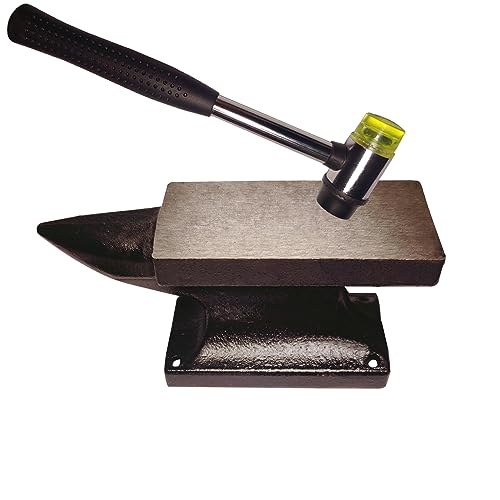
- Includes anvil and rubber hammer
- Horn supports curved shaping
- Base has four securing holes
Best For: Compact, versatile jewelry-making setups
Best Low-Rebound Stamping Block

- Mirror-finished chrome-plated steel
- Soft base helps reduce rebound
- Compact 3-inch round profile
Best For: Precise stamping and small jewelry work
Compact Horn Starter Set

- 1.1-pound cast-iron anvil with polished surface
- Horn supports curved forming and shaping
- Includes rubber hammer and mounting holes
Best For: Beginners and compact home jewelry studios
Stable Flat Workstation
Steel Bench Block Jewelry Tool

- 4-by-4-inch solid steel flat block
- Rubber base absorbs shock and vibration
- Includes 6-inch jewelry-making hammer
Best For: Jewelry repair and flat metal stamping
Traditional Horn Value Pick

- Cast-iron body with polished work surface
- Horn supports bending and forming
- Includes a metal stamping hammer
Best For: DIY makers doing small forming and forging tasks
Best Compact Cast Iron Pick – Mini Horn Bench Anvil
QWORK Mini Cast Iron Horn Anvil 1lb Bench Block – Compact Tool for Jewelry, Metal Craft & Model Work
Check Price On AmazonFor small jewelry anvils for home studios, the QWORK Mini Cast Iron Horn Anvil emphasizes a compact footprint and straightforward bench mounting. Its polished, hardened cast iron body and 2.5-by-1.38-inch flat top suit light-duty jewelry and model-making tasks.
Best For: Jewelry makers and hobbyists who need a small, mountable anvil for light metalwork.
Pros:
- Compact 1-pound design for space-limited workbenches.
- Polished and hardened cast iron surface for light-duty use.
- Four base slots allow secure attachment to a workbench.
Cons:
- Small flat top limits the size of workpieces it can support.
- Designed for light-duty hobby work rather than heavier forging.
Choose this model when bench space and easy mounting matter most. Its modest working area makes it particularly suitable for detailed, small-scale projects.
Best Dual-Ended Design – Beadsmith Dual-Ended Horn Anvil
Among small jewelry anvils for home studios, The Beadsmith Dual-Ended Horn Anvil offers both flat and rounded horn surfaces in a stainless steel design. Its miniature size, pritchel hole, and base attachment holes support shaping, riveting, stamping, and wire hardening.
Best For: Jewelry designers who want multiple forming surfaces for wire and small metal projects.
Pros:
- Dual-ended design provides flat and rounded horn options.
- Solid stainless steel construction with a polished finish.
- Pritchel hole supports riveting and bending tasks.
- Base holes allow attachment to a workbench.
Cons:
- Miniature working surfaces may feel restrictive for larger pieces.
- At 0.82 pounds, it is lighter than the heavier anvil options in this roundup.
This is a versatile choice for a compact studio where one tool needs to handle several jewelry-forming techniques. The two horn profiles are especially useful for shaping wire designs.
Best for Stamping – Hardened Steel Bench Block
If your small jewelry anvils for home studios search centers on stamping and flattening, the BESTNULE Professional Steel Bench Block is a focused alternative. This three-inch hardened carbon steel block has a polished surface and a TPR-covered bottom designed to provide shock absorption.
Best For: Jewelry stamping, tag work, flattening, chasing, and shaping on a flat surface.
Pros:
- Hardened carbon steel is rated to withstand more than 10,000 impacts.
- Polished three-inch surface supports stamping and flattening.
- TPR soft-plastic bottom helps absorb shock.
- Works with materials including brass, leather, aluminum, silver, and stainless steel.
Cons:
- It is a flat bench block rather than a horned anvil.
- Its 0.59-inch height provides less raised clearance for forming work.
Pick this block when a stable, flat impact surface is more valuable than horn or bending features. It is well matched to stamping-focused jewelry benches.
Best Heavier Mini Anvil – HimaPro Single Horn Anvil
For shoppers comparing small jewelry anvils for home studios, the HimaPro Single Horn Anvil provides a more substantial 2.2-pound cast iron platform. Its rounded horn supports bending and shaping, while the polished flat surface is intended for hammering and punching.
Best For: Jewelry making and metal stamping when you want a compact anvil with added weight and a single horn.
Pros:
- Heavier 2.2-pound cast iron body offers a substantial base.
- Rounded horn supports bending and shaping.
- Polished flat surface is suited to hammering and punching.
- Compact dimensions remain practical for a home studio.
Cons:
- Single-horn design offers fewer profile options than a dual-ended anvil.
- Its larger 5.5-inch length may require more bench space than the smallest models.
This model makes sense for makers who prefer a sturdier mini anvil for repeated jewelry and stamping work. Its combination of weight, flat surface, and rounded horn gives it broad small-scale utility.
Best Flat Bench Block – HimaPro Hardened Steel
For home studios looking for small jewelry anvils, the HimaPro is a straightforward flat work surface for stamping, flattening, planishing, and wire work. Its solid steel construction and 4-by-4-inch profile provide a stable platform for repeated hammering.
Best For: Jewelry makers who want a durable, flat bench block for stamping and general metalsmithing.
Pros:
- Hardened, polished, ground-flat work surfaces support precise work.
- Solid steel construction withstands direct hammer strikes.
- Chamfered edges improve handling and avoid sharp corners.
- Substantial weight helps keep the block stable while hammering.
Cons:
- The flat design does not provide a horn for curved shaping.
- Its roughly 3.34-pound weight may be more than needed for highly portable setups.
This is a practical choice when a reliable, dent-resistant flat surface matters more than specialized anvil features. It also offers enough working area for a range of jewelry and metalworking tasks.
Best Horned Starter Set – Mini Horn Anvil with Hammer
This mini horn anvil set gives home studios both a compact cast-iron anvil and a rubber hammer. The flat top handles hammering, while the oblate horn supports bending, smoothing, and shaping curved jewelry components.
Best For: Beginners and home-studio makers who want a compact anvil-and-hammer combination for varied jewelry work.
Pros:
- Includes a 3-pound cast-iron anvil and rubber hammer.
- Flat 4-by-2-inch top supports hammering and straightening.
- Horn helps with curved workpieces and shaping tasks.
- Large base and four holes support secure placement.
Cons:
- Cast iron may not offer the same hardened workface characteristics as a hardened steel block.
- The compact top provides less flat workspace than a larger bench block.
- No manufacturer warranty is listed in the supplied details.
Its strongest advantage is versatility: the horn expands shaping options, and the included rubber hammer can help reduce surface damage to jewelry. The compact format suits makers who want multiple functions without a full-size anvil.
Best Low-Rebound Stamping Block – OWDEN Round Steel Bench Block
For small jewelry anvils for home studios, the OWDEN round bench block focuses on controlled stamping and tapping. Its mirror-finished steel surface sits in a soft plastic base designed to improve stability and reduce rebound during detailed work.
Best For: Jewelry makers prioritizing precise stamping, lettering, flattening, and chasing on small pieces.
Pros:
- Professional-grade steel provides a solid working surface.
- Mirror finish with chrome plating offers a smooth contact area.
- Soft plastic base helps reduce rebound force while tapping.
- Three-inch round form is compact for a home bench.
Cons:
- The round 3-inch surface offers less room than a 4-by-4-inch block.
- Its specialized bench-block design does not include a horn for curved shaping.
- At 1.2 pounds, it may require extra attention to placement during heavier hammering.
This block is best viewed as a precision stamping tool rather than an all-purpose anvil. The low-rebound base and compact footprint make it especially appealing for tags, blanks, lettering, and other small jewelry projects.
Compact Horn Starter Set – Mini Iron Horn Anvil & Hammer
For small jewelry anvils for home studios, this compact cast-iron set offers a polished work surface, a horn for curved forming, and a rubber hammer for getting started with delicate metalwork. Its 1.1-pound anvil has a 2.4-by-1.4-inch flat area and mounting holes for added stability.
Best For: Beginners and home-studio makers who want a compact horn anvil with a matching hammer for jewelry shaping, stamping, and small metalworking tasks.
Pros:
- Includes the 1.1-pound anvil, 8.2-inch metal stamping hammer, and sandpaper.
- Polished flat surface supports stamping, hammering, and shaping.
- Horn design helps with bending, forming, and curved metalwork.
- Four base holes allow anchoring to a work surface.
Cons:
- The 2.4-by-1.4-inch flat area is suited to small projects rather than larger work.
- At 1.1 pounds, it may need anchoring for more forceful hammering.
This is a convenient all-in-one option for jewelry makers who value a small footprint and versatile horn shape. The included rubber hammer is particularly useful when working with delicate surfaces.
Stable Flat Workstation – Steel Bench Block Jewelry Tool
Among small jewelry anvils for home studios, this steel bench block emphasizes a broad, flat surface and vibration control. The 4-by-4-inch steel block sits in a shock-absorbent rubber base and comes with a 6-inch jewelry-making hammer.
Best For: Jewelry repair, metal stamping, and makers who prefer a flat bench block with a rubber base for reduced vibration.
Pros:
- Solid steel block provides a smooth, flat, hard-wearing work surface.
- Rubber base absorbs shock and reduces vibration on the bench.
- Includes a 6-inch jewelry-making hammer and rubber base.
- The 4-by-4-inch block offers more flat working area than the compact horn models.
Cons:
- Its flat design does not provide a horn for curved forming.
- The complete setup weighs about 1.38 kilograms, making it less lightweight for frequent repositioning.
This bench block is a practical choice when a stable, flat surface matters more than horn versatility. It fits stamping and repair work especially well, with the rubber base helping keep bench vibration under control.
Traditional Horn Value Pick – Small Iron Anvil Bench Block
This small cast-iron horn anvil is a straightforward option for home studios comparing small jewelry anvils for home studios. It provides a polished work surface, a single horn for forming, and a metal stamping hammer for small forging, riveting, flattening, and shaping tasks.
Best For: DIY jewelry makers and metalsmiths who want a simple cast-iron horn anvil and hammer for small forming projects.
Pros:
- Cast-iron construction offers a durable support surface.
- Polished surface is designed for small forging and forming work.
- Horn shape supports bending and curved metalwork.
- Includes a metal stamping hammer.
Cons:
- The approximately 2.36-by-1.3-inch surface is limited to small workpieces.
- The bare-metal handle and hammer may offer less cushioning than rubber-handled alternatives.
With its compact dimensions and traditional horn profile, this set covers core small-scale metalworking tasks without adding extra components. It is best suited to makers who want basic forming capability in a small bench tool.
How We Picked the Best Small Jewelry Anvils for Home Studios
We focused on compact anvils suited to jewelry repair, metal stamping, forming, and light fabrication in a home workshop. The selection includes cast iron and forged iron horn anvils, hardened steel bench blocks, stainless-steel designs, and kits that include a hammer. We considered working-surface shape, stated dimensions and weight, material, stability, versatility, and how easily each tool can fit on a small bench.
Because product specifications and included accessories can vary, check the current listing before buying. In particular, confirm whether a hammer, rubber base, or protective covering is included.
Quick Comparison
- Best for curved work: A single- or dual-horn anvil provides tapered surfaces for shaping rings, bracelets, and other rounded pieces.
- Best for stamping: A flat steel bench block offers a broad, consistent surface for lettering, texture, and light riveting.
- Best for beginners: An anvil-and-hammer set supplies the basic tools for getting started, though the included hammer may be less specialized.
- Best for portability: Mini anvils weighing about one pound are easier to store and move, but they generally offer less stability than heavier models.
Key Buying Factors for Small Jewelry Anvils for Home Studios
Shape and Working Surface
Choose a horn anvil when you need to curve, dome, or shape small metal components. A flat bench block is usually better for stamping and flattening. If you perform both types of work, a compact horn model paired with a separate flat block may be more useful than a single compromise tool.
Material and Durability
Steel and hardened steel surfaces are typically preferred for repeated stamping and forming because they resist dents and provide dependable rebound. Cast or forged iron can be practical and affordable, especially for light jewelry work, but inspect the surface for roughness, casting marks, and corrosion protection.
Weight, Footprint, and Noise
A heavier anvil stays put during striking, while a lighter mini model is easier to store. On a home bench, add a dense rubber mat or non-slip base to reduce movement and vibration. A covered underside can also help protect the work surface and reduce noise.
Included Accessories
Sets with a rubber or stamping hammer can be convenient for beginners, but experienced makers may prefer selecting a hammer matched to the metal and task. Verify the hammer material, anvil dimensions, and whether the base is fixed, rubberized, or sold separately.
Who Should Buy Which Small Jewelry Anvils for Home Studios?
Choose a horn anvil if your projects involve rings, curved bangles, doming, or forming around a tapered surface. Choose a flat bench block if stamping, texturing, soldering support, and jewelry repair are your main tasks. Choose a heavier model when stability matters more than portability, particularly for frequent hammering. Choose a compact set if you are building a first home-studio toolkit and want the convenience of matched basic equipment.
For many makers, the most flexible setup is a small horn anvil plus a separate flat steel block. That combination covers curved forming and precise stamping while remaining practical for a limited workspace.