Choosing the right dovetail saw can make cabinet joinery cleaner, faster, and easier to control. The 10 options in this roundup cover Japanese pull saws, traditional backsaws, folding designs, and fine-cut models for different skill levels and workflows.
Whether you are cutting small drawer dovetails or larger casework joints, focus on tooth pattern, blade stiffness, handle comfort, and how much control your projects require.
Best 10 Dovetail Saws for Cabinet Making Picks for 2026
Best Versatile Pull Saw
SUIZAN 7-Inch Dozuki Dovetail Saw

- 0.3 mm blade with 0.5 mm kerf
- Rigid steel back for accurate cuts
- 17 TPI rip, cross, and angle teeth
Best For: Versatile fine joinery and cabinetry
Best Flush-Cut Option

- Reversible left- or right-cutting blade
- 50 mm wide-body flush-cut blade
- Comfortable ProTouch handle
Best For: Flush cuts and reversible saw use
Best Compact Saw
SUIZAN 6-Inch Dozuki Dovetail Saw

- Compact 6-inch Japanese pull saw
- Thin blade with narrow 0.5 mm kerf
- 17 TPI universal cutting pattern
Best For: Small joinery, boxes, and trim
Best Traditional Western Saw
Thomas Flinn Pax 8-Inch Gent Saw

- 20 TPI resharpenable teeth
- Solid rolled brass back for stiffness
- Walnut handle with brass ferrule
Best For: Traditional fine dovetail work
Ultra-Fine Japanese Precision

- 30 TPI crosscut teeth for clean joinery cuts
- 0.2 mm blade creates a narrow 0.3 mm kerf
- Replaceable blade and lightweight rattan handle
Best For: Fine dovetails, boxes, kumiko, and detailed cabinetry
Traditional Sheffield Craftsmanship

- 20 TPI crosscut filing for fine joinery
- Rigid brass back supports controlled cuts
- Resharpenable Sheffield alloy spring-steel blade
Best For: Traditional cabinetmakers who want a durable, maintainable saw
Comfortable Artisan Pull Saw
WORKPRO 6-Inch Japanese Pull Saw

- 23 TPI triple-tooth geometry for efficient cuts
- Thin SK5 blade reduces cutting resistance
- Lightweight design with non-slip beechwood handle
Best For: Comfortable DIY dovetails, tenons, and fine woodworking
Best Japanese Precision Pick
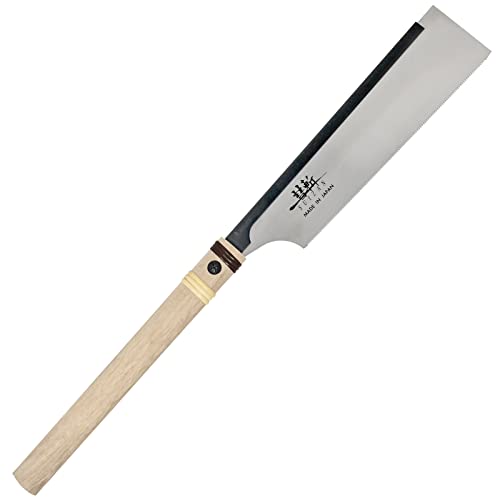
- 25 TPI crosscut teeth for crisp joinery
- 0.5 mm kerf supports accurate cuts
- Rigid steel back and replaceable blade
Best For: Fine dovetails and precision cabinet joinery
Best Full-Size Workhorse

- 12-inch 65Mn steel blade
- 11 TPI double-ground teeth cut both ways
- Reinforced spine and ergonomic handle
Best For: General cabinet joinery and faster cuts
Best Compact Folding Option
JORGENSEN 6-Inch Japanese Pull Saw
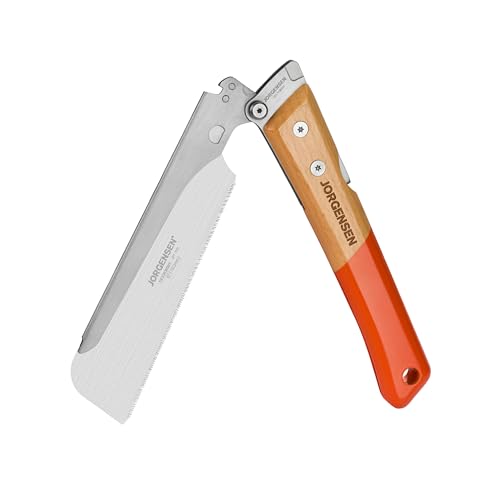
- 0.3 mm blade for narrow kerfs
- 21 TPI hardened crosscut teeth
- Folds and changes blades without tools
Best For: Portable detail work and furniture restoration
Best Versatile Pull Saw – SUIZAN 7-Inch Dozuki Dovetail Saw
For cabinet makers who want one compact tool for multiple joinery cuts, the SUIZAN 7-inch Dozuki is a practical choice among dovetail saws for cabinet making. Its fine Japanese-steel blade, rigid steel back, and universal 17 TPI teeth are suited to dovetails, tenons, rip cuts, crosscuts, and angle cuts.
Best For: Fine joinery, cabinetry, furniture work, and woodworkers who want a versatile pull saw with a replaceable blade.
Pros:
- Thin 0.3 mm blade creates a narrow 0.5 mm kerf and smooth cut face.
- Steel back helps keep the blade straight and square.
- Non-slip elastomer handle and tool-free replacement blade design.
- 17 TPI teeth handle rip, cross, and angle cuts.
Cons:
- Replacement blades are sold separately.
- The 7-inch blade may be more saw than needed for very small projects.
This is a strong all-around option when accuracy, low cutting force, and versatility matter more than a traditional Western saw feel.
Best Flush-Cut Option – IRWIN 10-Inch Dovetail Saw
The IRWIN 10-Inch Dovetail Saw is a useful alternative for cabinet makers who value a reversible blade and flush-cut capability. Its spring-loaded blade can be set for left- or right-cutting, while the ProTouch handle is designed for ergonomic comfort.
Best For: Flush-cutting applications and users who want a reversible manual saw with a comfortable plastic-and-rubber handle.
Pros:
- Spring-loaded blade reverses for left- or right-cutting.
- Wide-body flush-cut blade measures 50 mm.
- ProTouch handle provides an ergonomic grip.
- Lightweight design is easy to handle.
Cons:
- Its 14-point tooth count is less fine than the 17- to 20-TPI options in this roundup.
- Supplied details describe it for engineered wood, so material suitability should be considered.
Choose this model when reversible orientation and flush cutting are priorities; for delicate dovetail work, its wider blade and coarser tooth specification may be less specialized.
Best Compact Saw – SUIZAN 6-Inch Dozuki Dovetail Saw
The compact SUIZAN 6-inch Dozuki is well suited to small cabinet components and detailed joinery. As one of the more portable dovetail saws for cabinet making, it combines a thin Japanese-steel blade, rigid back, and universal teeth for rip, cross, and angle cuts.
Best For: Small boxes, picture frames, trim, model work, and cabinet makers who prefer a compact saw for controlled cuts.
Pros:
- 0.3 mm blade produces a narrow 0.5 mm kerf.
- 17 TPI teeth support rip, cross, and angle cuts.
- Steel back helps maintain a straight cutting path.
- Lightweight 150 g design and long vinyl rattan handle support light pull strokes.
Cons:
- The replacement blade must be matched to the SUIZAN 6-inch silver-back model.
- Replacement requires a Phillips screwdriver.
- Its shorter blade is less suited to larger cuts.
This is the better SUIZAN choice for portability and small-scale precision, especially when a full-size dovetail saw would feel cumbersome.
Best Traditional Western Saw – Thomas Flinn Pax 8-Inch Gent Saw
For cabinet makers who prefer a traditional Western-style tool, the Thomas Flinn Pax Gent saw offers an 8-inch high-carbon steel plate, a solid rolled brass back, and a walnut handle. Its 20 TPI teeth and resharpenable blade make it a durable choice among dovetail saws for cabinet making.
Best For: Traditional hand-tool woodworking, fine dovetails, and users who want a resharpenable saw with a weighted brass back.
Pros:
- 20 TPI tooth pattern is suited to fine cutting.
- Solid rolled brass back stiffens the blade and adds weight for controlled cuts.
- High-carbon alloy steel plate is designed for durability and sharpening.
- Walnut handle with brass ferrule provides a traditional finish.
Cons:
- Its 0.028-inch kerf is wider than the supplied SUIZAN saw specifications.
- The traditional design may require more sharpening familiarity than a replaceable-blade saw.
This saw stands out for its traditional construction and resharpenable high-carbon blade, making it appealing to woodworkers building a long-term hand-tool kit.
Ultra-Fine Japanese Precision – SUIZAN Dozuki 8-Inch
For cabinetmakers seeking dovetail saws for cabinet making, the SUIZAN Dozuki emphasizes narrow, accurate cuts. Its 30 TPI crosscut teeth and 0.2 mm blade are suited to fine joinery, dovetails, tenons, and other detailed woodworking.
Best For: Fine dovetails, box making, kumiko, picture frames, and precise cabinet joinery.
Pros:
- Ultra-thin blade produces a narrow 0.3 mm kerf for delicate work.
- 30 TPI crosscut teeth are designed for clean, smooth cuts.
- Lightweight 6-ounce design and traditional rattan handle support controlled pull strokes.
- Replaceable blade helps extend the saw’s usefulness.
Cons:
- The very thin blade is intended for precision work rather than heavy-duty sawing.
- Replacement blades must be the matching SUIZAN Dozuki 8-inch blade.
Choose this model when minimizing kerf and maximizing fine-cut control matter most. Its compact, lightweight design makes it particularly appealing for detailed cabinet and box work.
Traditional Sheffield Craftsmanship – Lynx 8-Inch Dovetail Saw
Among dovetail saws for cabinet making, the Lynx 8-inch model takes a traditional, durable approach. Its Sheffield alloy spring-steel blade, rigid brass back, and 20 TPI crosscut filing are built around controlled fine joinery work.
Best For: Traditional dovetail and fine joinery work where a rigid, resharpenable saw is preferred.
Pros:
- 20 TPI crosscut blade is suited to fine joinery cuts.
- Massive brass back helps keep the 8-inch blade rigid and secure.
- Sheffield alloy spring steel offers a traditional sawmaking construction.
- Blade can be resharpened, supporting long-term maintenance.
Cons:
- At 16 ounces, it is substantially heavier than lightweight Japanese pull saws.
- The traditional fixed-blade design may be less convenient than a replaceable-blade model.
This is a strong candidate for woodworkers who value a classic push-saw feel, a substantial brass-backed blade, and the ability to maintain the teeth through resharpening.
Comfortable Artisan Pull Saw – WORKPRO 6-Inch Japanese Pull Saw
The WORKPRO 6-inch is a practical choice among dovetail saws for cabinet making, combining a Japanese-style pull design with a flexible SK5 blade. Its 23 TPI triple-tooth geometry and thin blade target controlled cuts in dovetails, tenons, and other woodworking projects.
Best For: DIY woodworkers and cabinetmakers wanting a lightweight pull saw with a comfortable handle.
Pros:
- 23 TPI triple-tooth geometry is designed for sharp, efficient cutting.
- Thin 0.017-inch blade helps reduce cutting resistance.
- Reinforced spine supports straight, controlled cuts.
- Non-slip beechwood handle and 4.48-ounce weight encourage comfortable handling.
Cons:
- The 6-inch blade offers less length than the 8-inch alternatives in this roundup.
- Its flexible blade may feel less rigid for users accustomed to heavy traditional backsaws.
Consider this saw when comfort, low weight, and reduced cutting resistance are priorities. It offers a balanced option for fine woodworking, DIY joinery, and routine dovetail work.
Best Japanese Precision Pick – SUIZAN Dozuki Dovetail Saw
For dovetail saws for cabinet making, the SUIZAN Dozuki emphasizes exceptionally thin, accurate cuts. Its rigid steel back, 25 TPI crosscut teeth, and narrow 0.02-inch kerf make it well suited to fine joinery and crisp layout lines.
Best For: Fine dovetails, tenon shoulders, and precision cabinet joinery.
Pros:
- Thin 0.3 mm blade and 0.5 mm kerf support accurate cuts close to the line.
- Steel spine helps keep the blade straight and square.
- Long 9.45-inch blade provides smooth strokes across wider boards.
- Replaceable blade and lightweight rattan-wrapped wood handle.
Cons:
- Designed primarily for crosscuts rather than rip cuts.
- The very thin blade benefits from careful handling.
This is the most precision-focused option in the group. Choose it when clean baselines and tight-fitting fine joinery matter more than fast stock removal.
Best Full-Size Workhorse – HAUTMEC 12-Inch Dovetail Saw
Among dovetail saws for cabinet making, the HAUTMEC favors a longer blade and efficient cutting. Its 11 TPI double-ground teeth, hardened 65Mn steel blade, and reinforced spine are aimed at controlled work in hardwood, plywood, MDF, and engineered wood.
Best For: Tenons, grooves, trim, panels, and cabinet projects where reach and cutting speed are useful.
Pros:
- 12-inch blade offers useful reach for larger workpieces.
- Double-ground teeth cut on both push and pull strokes.
- Induction-hardened teeth are designed for extended sharpness.
- Reinforced spine and triple-bolt ergonomic handle provide control.
Cons:
- 11 TPI is less fine than the higher-tooth-count Japanese options.
- At 0.8 mm thick, the blade produces a wider kerf than ultra-thin precision saws.
The HAUTMEC is a practical choice when you want a sturdy back saw that balances speed, durability, and accuracy across a range of cabinetmaking materials.
Best Compact Folding Option – JORGENSEN 6-Inch Japanese Pull Saw
For portable dovetail saws for cabinet making, the JORGENSEN combines a compact 6-inch format with a thin SK5 steel blade. Its 21 TPI hardened teeth and 0.3 mm blade are suited to narrow-kerf cuts, while the folding design makes storage and transport convenient.
Best For: Small dovetails, furniture restoration, instrument work, and single-hand detail cutting.
Pros:
- Thin blade supports narrow, precise kerfs.
- 21 TPI hardened teeth are intended for clean cuts in hardwood and softwood.
- Tool-less blade changes and folding improve portability.
- Beechwood handle is designed for comfortable single-hand use.
Cons:
- Six-inch blade has less reach than full-size saws.
- Shorter format may be less efficient on wider boards.
This is the nimble option for detail work and mobile tool kits. Its compact blade favors control and portability, while the folding mechanism adds convenience between projects.
How We Picked the Best Dovetail Saws for Cabinet Making
We evaluated these saws by the features that matter most in cabinet joinery: tooth pitch, cutting style, blade length, stiffness, handle design, replaceability, and overall control. The selection includes both Japanese pull saws and Western-style backsaws so you can compare different approaches rather than being limited to one design.
For Dovetail Saws for Cabinet Making, a fine, accurately set tooth line is usually more important than maximum blade length. We also considered whether each saw appears suited to delicate drawer work, general furniture construction, or heavier tenon and casework tasks.
Quick Comparison
| Best For | Look For | Most Suitable Style |
|---|---|---|
| Fine drawer dovetails | Fine teeth and a narrow blade | Dozuki or gent’s backsaw |
| General cabinet joinery | Balanced length and moderate tooth pitch | Japanese pull saw or traditional backsaw |
| Occasional workshop use | Accessible price and replaceable blade | Pull saw or folding saw |
| Larger joints and tenons | Longer, stiffer blade | Tenon-style backsaw |
Key Buying Factors for Dovetail Saws for Cabinet Making
Tooth Pitch and Cut Quality
Higher teeth-per-inch counts generally produce a finer cut and are useful for small pins, tails, and thin stock. Coarser teeth remove material faster but can leave a rougher surface. Choose a fine-tooth saw when tear-out and precise baselines are your main concerns.
Pull Saw or Western Backsaw
Japanese pull saws cut on the pull stroke and often use thin, flexible blades. They can feel fast and precise but require care because the blade may bend under excessive pressure. Western backsaws cut on the push stroke and typically have a more rigid blade, which many woodworkers prefer for consistent tracking.
Blade Length, Spine, and Handle
A shorter blade can be easier to control on small dovetails, while a longer blade may feel smoother on larger cabinets. A brass or steel spine adds rigidity and weight. Handle shape matters during repeated cuts, so consider whether you prefer a traditional full handle, a Japanese-style grip, or a compact folding design.
Maintenance and Replacement Parts
Check whether the blade is replaceable and whether replacement parts are readily available. Pull saw teeth are commonly impulse-hardened and may not be practical to sharpen, while some traditional backsaws can be sharpened or tuned by an experienced user.
Who Should Buy Which Dovetail Saws for Cabinet Making?
Beginners: Choose a manageable Japanese pull saw or folding model with a fine-to-medium tooth pitch. These are approachable for learning layout and controlled cuts.
Fine furniture and drawer builders: Prioritize a fine-tooth Dozuki-style saw or a traditional gent’s dovetail saw with a rigid spine and comfortable handle.
Experienced cabinetmakers: Consider keeping both styles available: a rigid backsaw for repeatable baselines and a thin pull saw for delicate trimming or difficult-to-reach cuts.
Heavy-duty users: Select a longer, reinforced backsaw with a stiffer blade if your work includes larger dovetails, tenons, or thicker cabinet components.