Clean dovetails depend on accurate starts, controlled cuts, and a blade that follows a layout line without tearing out delicate fibers. The right saw can make fine joinery faster and more predictable.
We’ve gathered 10 dovetail saws for precision work, including rigid-back dozuki saws, versatile ryoba designs, compact craft saws, and folding options for shop or jobsite use.
Best 10 Dovetail Saws for Precision Work Picks for 2026
Best All-Around Dozuki
SUIZAN 7-Inch Dozuki Dovetail Saw

- 0.3 mm blade creates a narrow 0.5 mm kerf
- 17 TPI teeth handle rip, cross, and angle cuts
- Replaceable blade and non-slip elastomer grip
Best For: Versatile fine joinery and dovetail work
Best Traditional-Style Back Saw
HAUTMEC 12-Inch Fine-Cut Dovetail Saw

- 12-inch 65Mn steel blade for larger work
- 11 TPI double-ground teeth cut both strokes
- Reinforced spine supports straight angled cuts
Best For: Tenons, grooves, trim, and furniture work
Best Two-Edged Option
Temple Tool Co. 9.5-Inch Ryoba Pull Saw

- Rip teeth on one edge and crosscut teeth on the other
- Pull action enables thin, narrow-kerf cutting
- Japanese steel and handcrafted wooden handle
Best For: Versatile stock sizing and medium joinery
Best Compact Precision Saw

- 0.3 mm blade with a 0.4 mm kerf
- 21.1 TPI fine pitch for smooth cuts
- Compact design with reinforced spine
Best For: Small joinery, kumiko, and detailed craft work
Heritage Precision Pick
Temple Tool Co. Japanese Pull Saw

- 18 TPI rip teeth for dovetails and tenons
- Thin Japanese steel blade for clean cuts
- Wingnut wood handle with brass components
Best For: Fine rip-cut joinery and traditional tool craftsmanship
Lightweight Detail Choice
WORKPRO 6-Inch Japanese Pull Saw

- 23 TPI triple-tooth blade for fine cuts
- 0.017-inch SK5 blade reduces resistance
- Non-slip beechwood handle and reinforced spine
Best For: Lightweight dovetail and tenon work for woodworking or DIY
Fine Crosscut Specialist
SUIZAN 6-Inch Dozuki Dovetail Saw

- 25 TPI crosscut teeth for crisp joinery lines
- Rigid steel back supports straight tracking
- 0.5 mm kerf and replaceable blade
Best For: Fine crosscuts, dovetail baselines, and small joinery projects
Versatile Value Pick
RUITOOL 6-Inch Double-Edge Ryoba Saw

- Double-edged 14/17 TPI blade
- SK5 steel with hardened teeth
- Lightweight beechwood handle
Best For: Flexible rip, crosscut, flush, and finish work
Portable Precision Pick
JORGENSEN 6-Inch Folding Dovetail Saw
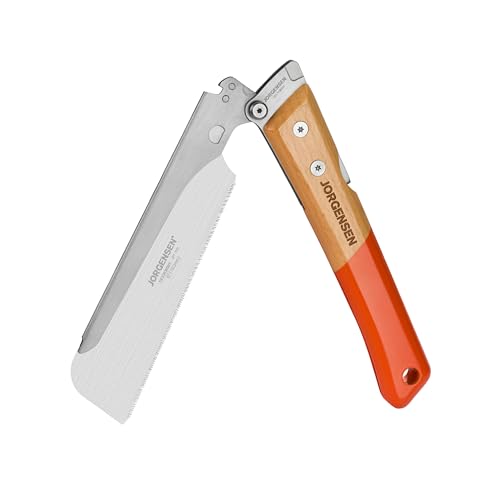
- Thin 0.3 mm precision blade
- Fine 21 TPI crosscut teeth
- Folding, tool-less blade system
Best For: Portable fine joinery and restoration work
Long-Reach Joinery Pick
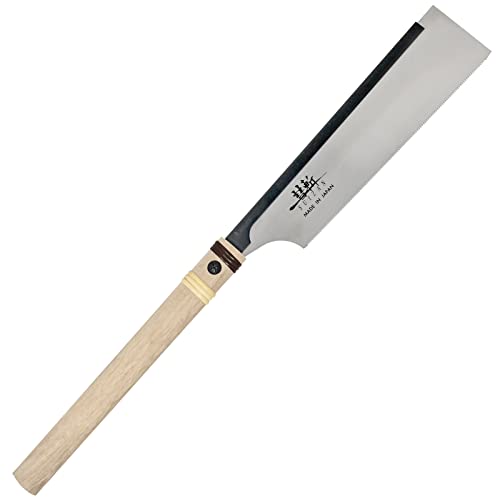
- Rigid steel-backed 0.3 mm blade
- Fine 25 TPI crosscut teeth
- Replaceable blade with 240 mm reach
Best For: Straight, crisp dovetail and tenon cuts
Best All-Around Dozuki – SUIZAN 7-Inch Dozuki Dovetail Saw
For dovetail saws for precision work, the SUIZAN Dozuki offers a useful balance of fine cutting, control, and versatility. Its 17 TPI teeth handle rip, cross, and angle cuts, while the thin blade and reinforced steel back support clean, accurate joinery.
Best For: Dovetails, tenons, cabinetry, box making, and general fine joinery on a crowded workbench.
Pros:
- 0.3 mm blade and 0.5 mm kerf produce narrow, smooth cuts.
- 17 TPI teeth support rip, cross, and angle cuts.
- Steel back helps keep cuts straight and square.
- Replaceable blade installs by hand without tools.
Cons:
- Replacement blade is sold separately.
- Its compact 7-inch blade may be less suitable for larger stock.
The SUIZAN is a practical choice when one precision pull saw needs to cover several joinery tasks. Its light 6.7-ounce design and secure elastomer grip make it easy to control during detailed work.
Best Traditional-Style Back Saw – HAUTMEC 12-Inch Fine-Cut Dovetail Saw
Among dovetail saws for precision work, the HAUTMEC emphasizes a rigid, full-size back-saw format with a 12-inch blade. Its 11 TPI double-ground teeth are designed for efficient push-and-pull cutting across joinery and panel work.
Best For: Tenons, grooves, trim, furniture panels, moldings, and users who want a longer blade for larger woodworking projects.
Pros:
- 65Mn steel blade is designed for toughness, elasticity, and wear resistance.
- Induction-hardened teeth are rated HRC 50–58 for edge retention.
- Double-ground teeth cut on both push and pull strokes.
- Reinforced steel spine supports accurate 90-degree and angled cuts.
Cons:
- Its 11 TPI pitch favors speed as well as precision, rather than ultra-fine cutting.
- The 12-inch format is less compact than a mini or 7-inch saw.
The HAUTMEC suits woodworkers who prefer a longer, sturdier back saw for repeatable joinery cuts. Its ergonomic, triple-bolt handle adds support for extended use, while the hardened teeth reduce routine maintenance.
Best Two-Edged Option – Temple Tool Co. 9.5-Inch Ryoba Pull Saw
The Temple Tool Co. Ryoba is a flexible choice for dovetail saws for precision work because it combines two tooth patterns in one Japanese pull saw. One edge is intended for rip cuts and the other for crosscuts, allowing the saw to move from stock preparation to medium-sized joinery.
Best For: Woodworkers who want one lightweight saw for rip cuts, crosscuts, dovetails, tenons, and cutting boards to length or width.
Pros:
- Double-edged design provides separate rip and crosscut teeth.
- Pull-stroke action supports a thin, narrow-kerf blade.
- Japanese steel is designed to maintain sharpness in soft and hardwoods.
- Wood handle with brass components combines grip and traditional styling.
Cons:
- It does not provide the single specialized tooth pattern of a dedicated dozuki.
- The notes do not specify the blade thickness, kerf, or TPI.
This Ryoba is a strong general-purpose option when versatility matters more than a dedicated back saw. Its 9.5-inch format and lightweight construction make it suitable for both stock sizing and larger joinery cuts.
Best Compact Precision Saw – KAKURI 5-Inch Mini Dozuki
For small-scale dovetail saws for precision work, the KAKURI Mini Dozuki focuses on control and exceptionally fine cuts. Its 5-inch blade, 21.1 TPI tooth pitch, and 0.4 mm kerf make it well suited to intricate joinery and small wooden parts.
Best For: Small dovetails, tenons, kumiko, notches, slots, and detailed craft projects.
Pros:
- Ultra-thin 0.3 mm blade and 0.4 mm kerf support fine work.
- 21.1 TPI fine pitch helps produce clean, smooth finishes.
- Rigid reinforced spine improves control and accuracy.
- Lightweight beechwood handle is comfortable for detailed work.
Cons:
- The 5-inch blade is intended for small materials rather than large stock.
- Its fine tooth pitch is less suited to fast, heavy cutting.
The KAKURI is the most specialized option here for delicate, close-tolerance work. Its compact size and very fine blade make it easy to maneuver around small parts, while the pull-cut design reduces effort.
Heritage Precision Pick – Temple Tool Co. Japanese Pull Saw
Temple Tool Co. Japanese Pull Saw - Rip-Cut 9.5 - Hand Saw for Dovetails, Tenons, Fine Joinery
Check Price On AmazonFor woodworkers comparing dovetail saws for precision work, the Temple Tool Co. Japanese Pull Saw combines an 18 TPI rip-cut blade with a lightweight pull-stroke design. It is suited to cutting with the grain for dovetails, small tenons, and other fine joinery.
Best For: Rip-cut dovetails, tenons, and fine joinery in softwood and hardwood.
Pros:
- 18 TPI rip teeth are designed for joinery cuts along the grain.
- Thin, narrow-kerf Japanese steel blade supports smooth, accurate cuts.
- Wingnut wood handle with brass components offers a distinctive, ergonomic build.
- Includes a case and is handcrafted in Japan.
Cons:
- Rip-cut teeth are less suited to crosscuts across the grain.
- Its specialized joinery focus may be narrower than a general-purpose hand saw.
This is a strong choice when clean rip cuts and traditional Japanese craftsmanship matter most. Its 18 TPI profile makes it particularly appealing for precise dovetail and tenon work rather than broad, general cutting.
Lightweight Detail Choice – WORKPRO 6-Inch Japanese Pull Saw
The WORKPRO 6-Inch Japanese Pull Saw is a practical option among dovetail saws for precision work, pairing 23 TPI triple-tooth geometry with a very thin 0.017-inch SK5 blade. Its reinforced spine and flexible, gold-coated steel aim to balance fine cutting with controlled tracking.
Best For: Dovetails, tenons, and detail woodworking or DIY projects where a lightweight saw is useful.
Pros:
- 23 TPI triple-tooth blade is designed for clean, efficient cuts.
- Ultra-thin blade minimizes cutting resistance for precision work.
- Reinforced spine helps maintain straight, controlled cuts.
- Non-slip beechwood handle is lightweight and comfortable to hold.
Cons:
- The flexible blade may require careful handling to keep cuts controlled.
- It is primarily intended for wood rather than broader material applications.
Choose this model if you want a compact, lightweight pull saw with a fine tooth count and comfortable grip. The thin blade favors detail work, while the reinforced spine adds useful control for dovetail and tenon cuts.
Fine Crosscut Specialist – SUIZAN 6-Inch Dozuki Dovetail Saw
For precise crosscutting, the SUIZAN Dozuki is one of the more specialized dovetail saws for precision work. Its 25 TPI crosscut teeth, 0.3 mm blade, narrow 0.5 mm kerf, and rigid steel back are designed to produce crisp lines and controlled cuts in small joinery projects.
Best For: Crosscut dovetail baselines, tenon shoulders, box making, picture frames, trim, and model work.
Pros:
- 25 TPI crosscut teeth leave fine, crisp lines across the grain.
- Steel back keeps the thin blade straight and square.
- Narrow 0.5 mm kerf supports accurate, low-waste cuts.
- Replaceable blade design extends the saw’s usable life.
Cons:
- Crosscut teeth are not the ideal choice for rip cuts along the grain.
- Replacement blades are sold separately.
- The thin blade and fine teeth are best reserved for detail work rather than heavy cutting.
This SUIZAN is a compelling pick for controlled crosscuts and small-scale joinery. Its steel spine makes the delicate blade easier to track, while the replaceable-blade design is useful for woodworkers who expect regular use.
Versatile Value Pick – RUITOOL 6-Inch Double-Edge Ryoba Saw
For shoppers comparing dovetail saws for precision work, the RUITOOL Ryoba offers a compact 6-inch blade with two tooth patterns. Its SK5 high-carbon steel blade is designed for controlled finish and flush cuts in both hardwood and softwood.
Best For: Woodworkers who want one lightweight pull saw for rip, crosscut, flush, and finish work.
Pros:
- Double-edged design provides 17 TPI for hardwood and 14 TPI for softwood.
- Three-sided hardened teeth are intended to cut smoothly and clear chips efficiently.
- Flexible 6-inch SK5 blade and beechwood handle keep the tool compact and light.
Cons:
- Its 6-inch blade offers less reach than longer dovetail saws.
- The flexible blade may require more attention to alignment than a backed saw.
This is a practical choice when versatility and portability matter more than a rigid steel-backed blade. The two tooth pitches make it more adaptable than a dedicated crosscut dovetail saw.
Portable Precision Pick – JORGENSEN 6-Inch Folding Dovetail Saw
The JORGENSEN is a strong option among dovetail saws for precision work when you need a narrow kerf and easy transport. Its 0.3 mm SK5 blade has fine 21 TPI crosscut teeth, while the folding, tool-less design supports convenient blade changes.
Best For: Fine dovetails, tenons, furniture restoration, and other detailed joinery where portability is useful.
Pros:
- Extra-thin blade is designed for narrow, accurate cuts.
- Hardened 21 TPI teeth suit fine crosscut work in hardwood and softwood.
- Folding system and tool-less blade replacement improve portability and upkeep.
- Short beechwood handle supports comfortable single-hand operation.
Cons:
- The compact 6-inch blade may be less suitable for long cuts.
- Blade replacement requires tapping the blade and spine into position.
Choose this model if a fine kerf, compact format, and replaceable blade are priorities. It is especially appealing for detailed joinery and travel between projects.
Long-Reach Joinery Pick – SUIZAN 9.5-Inch Dozuki Saw
For precision work across wider boards, the SUIZAN Dozuki combines a 9.45-inch blade with a rigid steel back. Its 25 TPI crosscut teeth and 0.5 mm kerf are intended for crisp dovetail baselines, tenon shoulders, and other fine joinery.
Best For: Woodworkers who want long, straight strokes and accurate crosscuts for dovetails, tenons, and furniture work.
Pros:
- Steel spine helps keep the thin 0.3 mm blade straight and square.
- 25 TPI crosscut teeth are designed for crisp, accurate fine cuts.
- Long 240 mm blade supports smooth strokes across wider boards.
- Replaceable blade design extends the saw’s serviceability.
Cons:
- Its 21.57-inch overall length needs more storage space than compact saws.
- The dedicated 25 TPI crosscut pattern is less versatile than a double-edged saw.
This is the better fit when straight tracking and longer cutting strokes are more important than compact storage. The steel back gives it the rigid feel many users prefer for fine joinery layouts.
How We Picked These Dovetail Saws for Precision Work
We focused on features that directly affect fine joinery: tooth configuration, blade stiffness, kerf control, handle comfort, cutting direction, and overall usefulness for dovetails, tenons, small parts, and other precision woodworking tasks. The selection includes both Japanese pull saws and conventional back-saw-style designs so you can match the tool to your preferred technique.
Blade length and tooth count also matter. Shorter blades can feel easier to control on small workpieces, while longer blades may provide a smoother stroke on larger panels. Higher tooth counts generally favor cleaner, more controlled cuts, though they can remove material more slowly.
Quick Comparison
| Type | Best suited to | What to look for |
|---|---|---|
| Dozuki | Fine dovetails and delicate joinery | Rigid spine, fine teeth, narrow kerf |
| Ryoba | Versatile rip and crosscut work | Double-sided blade and balanced handle |
| Mini saw | Small parts, crafts, and light projects | Compact blade and easy control |
| Folding pull saw | Portable woodworking and storage | Secure lock, replaceable blade, comfortable grip |
| Back saw | Traditional guided joinery cuts | Rigid reinforced spine and stable handle |
Key Buying Factors for Dovetail Saws for Precision Work
Tooth Pattern and Cutting Direction
Japanese pull saws cut on the pull stroke, which keeps the blade under tension and allows manufacturers to use thin blades. This can produce a narrow kerf and excellent control, but the technique may take a little practice. Choose a rip-cut tooth pattern for cutting along the grain, a crosscut pattern for trimming across it, or a double-edged ryoba when you want both functions.
Blade Stiffness and Back Support
A dozuki or other backed saw resists bending and can make it easier to start a straight cut. The tradeoff is reduced clearance for deep or enclosed cuts. Flexible blades are more adaptable for flush work and irregular access, but they require a steadier hand.
Size, Handle, and Maintenance
Match blade length to your workpieces and workspace. A smaller saw is usually easier to maneuver around narrow tails, while a longer model can make extended cuts more efficiently. Check that the handle provides a secure grip without forcing your wrist into an awkward angle. Keep fine teeth free of packed sawdust, avoid twisting the blade, and store the saw where its teeth will not contact other tools.
Who Should Buy Which Dovetail Saws for Precision Work?
Choose a fine-tooth dozuki if your priority is clean, repeatable dovetail work. A ryoba is the better choice for woodworkers who want one saw for both rip and crosscut tasks. Pick a compact mini saw for small boxes, crafts, and detail work. A folding model suits portable kits, while a reinforced back saw is a practical option if you prefer a more familiar guided-cut feel.