A clean cut can make the difference between a polished display and a ragged-looking project. The best tool depends on whether you’re trimming paper-faced foam board, making beveled edges, or shaping bare foam.
These 10 options include manual straight and bevel cutters alongside hot-wire tools. The buying guide below helps you match the cutting method to your material and workspace.
Best 10 Foam Board Cutters for Art Picks for 2026
Most Versatile Kit

- Straight, U-shaped, and F-shaped heads
- Replacement wires and storage case included
- Supports several listed foam materials
Best For: Varied foam crafts and model-making
Best Heat Control

- Adjustable heat for hot-wire and straight heads
- Three cutting heads for varied shaping
- 30-minute use limit noted
Best For: Heat-adjustable cuts in low-density foam
Best Straight-and-Bevel Option
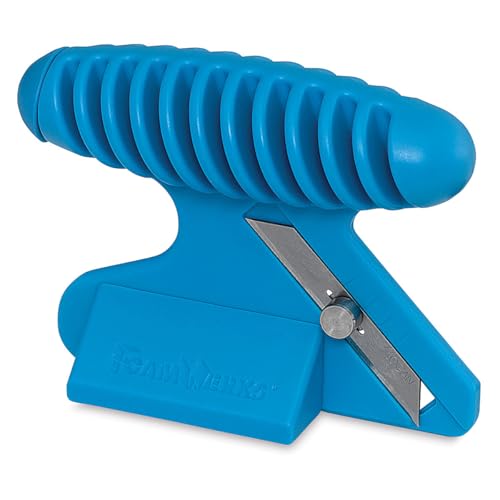
- Rotating base switches cut angle
- Adjustable blade depth
- Two blades with on-board storage
Best For: Guided straight and beveled foam-board cuts
Best Detail Pen

- Wire, holing, and engraver tips
- LED indicator and on/off button
- Cleaning pen included
Best For: Detailing compatible low-density foam
Best for Straight Trimming
Logan 701-1 Straight Cutter Elite

- Straight cuts in foam board and matboard
- Adjustable-depth pivot action
- Includes replacement blades
Best For: Straight trimming for art and framing
Best for Angle Options
Adjustable 45°/90° Foamboard Cutter

- Switches between bevel and straight cuts
- Adjustable depth with thickness scale
- Includes spare blades
Best For: Small crafts needing 45-degree and 90-degree cuts
Best for Foam Shapes

- Shapes compatible low-density foam
- Seals edges while cutting
- Not intended for dense boards
Best For: Small-scale foam carving and lettering
Best with Extra Features
GOCHANGE 4-in-1 Foam Cutter with Voltage Control

- Four cutting heads for varied shapes
- Digital voltage control
- Designed for low-density foam
Best For: Artists who need multiple cutting styles
Best Multi-Head Starter Kit

- Two wands plus an 18cm bow
- Includes replacement bow wire
- Rest cutting pen after 15 minutes
Best For: Crafters working with varied foam thicknesses
Best Simple Cutting Pen

- Single 4-inch cutting pen
- One-key on/off switch
- For low-density styrofoam
Best For: Occasional small foam crafts
Most Versatile Kit – 4-in-1 Hot Wire Foam Cutter
For artists comparing foam board cutters for art, this 4-in-1 kit offers several ways to shape a project without switching tools. Its interchangeable straight, U-shaped, and F-shaped cutting heads support straight cuts, curves, grooves, and detailed work.
Best For: Mixed foam crafts, models, and decorations that call for multiple cut styles.
Pros:
- Includes replacement wires, a cleaning brush, metal holder, and storage case.
- Heated tips produce smooth cuts with reduced foam debris.
- Works with listed materials including EPS, EVA, XPS, PE foam board, and KT board.
Cons:
- Interchangeable heads add setup compared with a single-purpose cutter.
- Heated tips require care during use and handling.
Choose this kit when flexibility matters more than the simplicity of a basic straight-edge cutter, especially if you want to keep the accessories together between projects.
Best Heat Control – 36W 3-in-1 Hot Wire Cutter
Among foam board cutters for art, this 36W kit stands out for adjustable heat rather than a fixed setting. It pairs three interchangeable cutting heads with a dial offering five levels for the hot wire and three for the straight cutter.
Best For: Artists who want to tune heat while cutting or shaping compatible low-density foam.
Pros:
- Adjustable settings help match the cutting head and material.
- Includes replacement wires, a metal stand, cleaning brush, and marker pen.
- LED-indicated switch gives clear on/off control.
Cons:
- Not intended for high-density material; the stated XPS limit is 1.87 lb/ft³ (30 kg/m³).
- Instructions advise using it for no more than 30 minutes at a time.
The controls make it a practical choice if you work across compatible foams, but check material density and start at a low heat setting as directed.
Best Straight-and-Bevel Option – Logan Foam Werks Cutter
If your search for foam board cutters for art is really about neat straight edges and bevels, this manual Logan tool keeps the approach simple. Rotate its angled base block to switch between straight and bevel cutting, and adjust the blade depth to suit the cut.
Best For: Foam-board artwork and signs that need straight or beveled edges.
Pros:
- Switches between straight and bevel cuts with a rotating base block.
- Adjustable blade depth and ergonomic handle support controlled use.
- Includes two blades and on-board blade storage.
Cons:
- Limited to straight and bevel cutting rather than the shaped cuts offered by heated multi-head kits.
- A suitable straight edge is needed to guide cuts.
Pick this one for board-focused layout work where a guided blade is more useful than a hot-wire carving tool.
Best Detail Pen – Cooltop 18W Foam Cutter
For small-scale foam board cutters for art, the Cooltop 18W pen offers three tip styles in one handheld tool: a hot wire tip, a holing tip, and an engraver tip. It is aimed at cutting and detailing low-density foam rather than hard, high-density stock.
Best For: Cutting, making holes, and engraving details in compatible low-density foam crafts.
Pros:
- Three interchangeable tips cover different detail tasks.
- On/off button and LED indicator make its operating state visible.
- Includes a cleaning pen for the tips.
Cons:
- Not intended for very high-density hard material.
- Guidance recommends a break after 30 minutes of use and cooling the tool before changing tips.
This pen is a better fit for varied detail work than for users who only need guided straight cuts; plan around its cool-down and break guidance.
Best for Straight Trimming – Logan 701-1 Straight Cutter Elite
Logan 701-1 Straight Cutter Elite Straight Matboard and Foamboard Cutter For Framing and Matting
Check Price On AmazonAmong foam board cutters for art, the Logan 701-1 is a pull-type option for straight cuts in foam board, matboard, and other creative materials. Its adjustable-depth pivot action makes it useful for both detail work and larger framing or design projects.
Best For: Artists and framers who need straight cuts and trimming rather than beveled edges.
Pros:
- Adjustable cutting depth accommodates different projects.
- Works with several Logan cutting systems and rules.
- Includes replacement blades.
Cons:
- Does not cut bevel edges.
- Its listed compatibility centers on Logan products.
Choose this cutter if clean, controlled straight trimming matters more to your work than angled cuts.
Best for Angle Options – Adjustable 45°/90° Foamboard Cutter
If your search for foam board cutters for art includes angled edges, this compact tool switches between 45-degree bevel and 90-degree straight cuts. Its adjustable cutting depth and thickness scale help you set up small DIY craft cuts.
Best For: Small craft projects that call for both straight and beveled cuts, including work with EVA foam.
Pros:
- Rotating base switches between 45-degree and 90-degree cutting.
- Adjustable depth includes a thickness scale for reference.
- Ambidextrous grip and spare blades are included.
Cons:
- Marketed for small cutting projects rather than large-format work.
- Angle settings are limited to the stated 45-degree and 90-degree positions.
This is the more flexible manual pick when a project needs a bevel as well as a straight edge, provided those two angles meet your needs.
Best for Foam Shapes – 18W Hot Wire Foam Cutter Kit
For artists comparing foam board cutters for art, this 18W heated kit takes a different approach: it cuts softer, low-density foam with hot tools that can form shapes and fine details. The heated cutting action seals foam edges as it goes, helping avoid loose debris.
Best For: Small-scale carving, lettering, and shaped cuts in compatible low-density foam.
Pros:
- Designed for intricate shapes and cuts from different angles.
- Includes different wand lengths for varying foam thicknesses.
- Heated cutting seals edges and leaves no cutting debris.
Cons:
- Not suitable for dense foam such as XPS or for plastic boards.
- Recommended only for small-scale projects.
- Requires ventilation and breaks during extended use.
Pick this kit for sculptural work in compatible soft foam, not as a substitute for a manual cutter on dense boards.
Best with Extra Features – GOCHANGE 4-in-1 Foam Cutter with Voltage Control
For shoppers comparing foam board cutters for art, this 18W kit offers four cutting heads and a digital voltage controller for switching between cuts and detail work. It is intended for compatible low-density foam, including standard foam board, EPE, and XPS.
Best For: Artists who want several cutting shapes in one kit and are comfortable setting the correct voltage for each head.
Pros:
- Includes an 18cm bow, a bending-style cutter, and two straight cutters.
- Digital controller lets you select the specified voltage for each accessory.
- Heats in a stated 5–15 seconds and is designed to leave smooth, sealed edges.
Cons:
- Using the wrong voltage may damage an accessory or transformer.
- Not intended for high-density foam, rubber, plastic bottles, or hardwood.
The range of heads makes this a flexible option for foam models and lettering, but check the voltage before changing accessories and give the tool a break after extended use.
Best Multi-Head Starter Kit – GOCHANGE 3-in-1 18W Hot Knife
Among foam board cutters for art, this 18W GOCHANGE kit is a practical choice if you want both straight hot knives and a bow cutter. It includes 7cm and 12cm wands, an 18cm bow, replacement bow wire, and a holder.
Best For: Crafters cutting medium- to low-density foam in different thicknesses who prefer a kit with replacement bow wire.
Pros:
- Three cutter styles cover straight cuts and bow-wire shaping.
- Includes 10m of replacement wire for the bow.
- Textured, ergonomic handle is designed for control.
Cons:
- The instructions call for a rest after 15 minutes of cutting-pen use.
- Moderately high-density material requires preheating and a slow feed.
This kit gives beginners several ways to shape compatible foam without buying separate cutters. Match the wand to the material thickness and allow the recommended preheat time before cutting.
Best Simple Cutting Pen – Jhua 15W Foam Cutter
If you need a straightforward option among foam board cutters for art, the Jhua 15W pen has a 4-inch cutting length and a one-key on/off switch. It is intended for shaping low-density styrofoam and foam board.
Best For: Small, occasional low-density foam projects where a single handheld cutting pen is enough.
Pros:
- Reaches a stated 150°C within 10 seconds.
- One-key switch makes power control simple.
- Designed to make smooth cuts with sealed edges and little debris.
Cons:
- Heated wire can bend or break if pushed instead of guided slowly.
- Recommended continuous use is no more than 30 minutes.
This is the simplest setup of the three, but it lacks interchangeable heads. Let the heat do the cutting, and keep the hot tip away from children.
How We Picked These Foam Board Cutters for Art
We looked at the cutting methods represented in this selection: manual straight cutters, adjustable bevel cutters, and electric hot-wire or hot-knife tools. The priority was matching each type to a realistic art task, such as trimming presentation boards, cutting framing openings, or shaping foam for models and props. We also considered practical distinctions visible in the product descriptions, including angle options, power ratings, included wires, and voltage control. Those details help narrow a shortlist, but they do not replace checking material compatibility and current specifications before buying.
Quick Comparison: Which Cutting Method Fits?
Manual straight cutters are the first place to look for crisp lines on paper-faced foam board. A guide or straightedge helps keep long cuts consistent. Manual bevel cutters suit angled edges and presentation work; confirm the supported angles and board thickness. Hot-wire cutters are better suited to shaping compatible bare foams and making curves. A hot knife offers another way to shape foam, but its tip and heat can leave a different edge than a wire. Do not assume an electric tool is suitable for every paper-faced board.
Key Buying Factors for Foam Board Cutters for Art
Material Comes First
Identify the exact board or foam you plan to cut. Paper-faced foam board is generally a better candidate for a sharp manual blade than for a heated tool, which may scorch the facing or melt the core unevenly. For bare foam, check the manufacturer’s approved materials. Avoid hot-cutting unknown plastics or coated materials; heated cutting can release unpleasant or hazardous fumes.
Cut Style and Size
For straight display-board edges, prioritize a cutter that works securely against a guide. For framing or decorative borders, look at bevel capability and whether you need 45° cuts, 90° cuts, or both. For sculptures and terrain, consider whether a wire, knife tip, or pen-style cutter gives you enough reach and control. Match the tool’s cutting depth to your thickest material rather than its advertised versatility alone.
Control, Consumables, and Workspace
Adjustable heat can help you dial in a cut on compatible foam, but wattage alone does not guarantee a cleaner result. Check whether replacement wires or blades are available and whether the kit includes the attachments you will actually use. Plan for a stable cutting surface, ventilation when using heated tools, and a clear place to rest a hot tip. With manual cutters, use a suitable cutting mat and change dull blades promptly to reduce tearing.
Who Should Buy Which Foam Board Cutters for Art?
Poster makers and classroom crafters: start with a manual straight cutter for paper-faced board. Framers and presentation artists: choose a straight/bevel tool when angled edges are part of the finished look. Model makers and prop builders: consider a hot-wire kit for compatible bare foam and curved shapes. Mixed-project artists: keep a manual cutter for faced boards and add a heated tool only when your foam and workspace call for one.