A frame corner can expose even a small cutting error. The right saw and guide help you cut molding consistently, whether you are assembling full-size picture frames or building miniature displays.
These 10 picks span compact razor-saw kits, larger hand-saw miter boxes, and a dedicated miter trimmer. The best choice depends on your molding’s size and material, the angles you need, and how much setup you are willing to do.
Best 10 Miter Saws for Art Frames Picks for 2026
Best Clamping Box
CRAFTSMAN 12-Inch Mitre Saw Set

- Twist-lock cam pins secure stock
- 45° and 90° miters; 22.5° face angle
- Saw stop and onboard storage
Best For: Manual frame cuts with built-in work holding
Best Finishing Trimmer
Rockler Precision Miter Trimmer

- Shears micro-fine finishing slices
- Gauges adjust from 45° to 90°
- Cast-iron body; honeable knives
Best For: Refining visible picture-frame joints
Best Basic Angle Kit
Olympia Tools Mitre Box and Backsaw
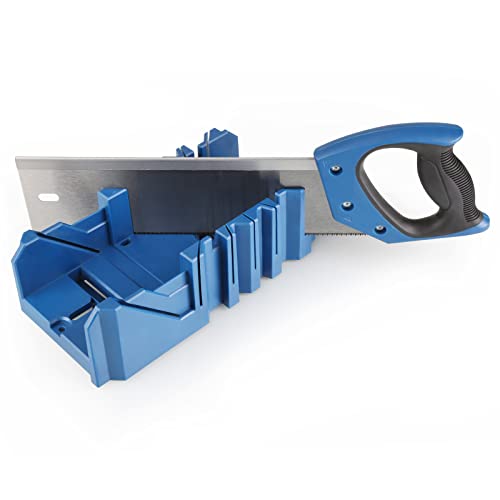
- 14-inch backsaw included
- 90°, 45°, and 22.5° slots
- Compact ABS miter box
Best For: Standard-angle cuts with an included hand saw
Best for Miniature Frames
Excel Blades Mini Miter Box Set

- 6-inch aluminum miter box
- 46 TPI razor pull saw
- Fixed 45° and 90° cuts
Best For: Miniature frames and delicate trim
Best for Thin Trim
Zona Ultra Thin Saw and Mini Miter Box

- For stock 1/4 inch thick or less
- Ultra-thin 32 TPI saw
- Adjustable stop and beveled channel
Best For: Thin frame trim and small craft pieces
Best for Comfort
Metal Miter Box Set with Two Razor Saws

- Two razor saw blades included
- Fixed 45° and 90° guides
- 0.79-inch cutting depth
Best For: Miniature frames and model-making trim
Versatile Blade Pick
12-Inch Miter Box and Japanese Saw Set

- Guides miter, straight, and bevel cuts
- Japanese saw for hardwood and softwood
- Includes replaceable fine and coarse blades
Best For: Frame makers cutting wood and other small materials
Beginner-Friendly Kit
12-Inch Miter Box With Three Blades
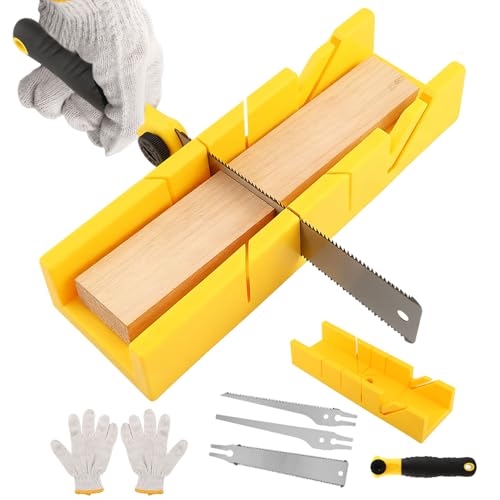
- Guides 45°, 90°, and 135° cuts
- 12-inch ruler scale
- Includes three blades and gloves
Best For: Beginners making picture frames and crafts
Best Clamping Box – CRAFTSMAN 12-Inch Mitre Saw Set
For miter saws for art frames, this CRAFTSMAN hand-saw kit offers a useful way to hold molding steady while cutting. Its cam-shaped pins twist and lock into a honeycomb base, and the included saw has a 12-inch blade.
Best For: Frame makers who want a manual saw and a work-holding miter box in one kit.
Pros:
- Cam pins secure stock during cuts.
- Supports 45° and 90° miters, plus 45° and 22.5° face angles.
- Extended base lip helps hold the box in place; a saw stop helps protect the box.
- Molded storage holds the pins and a pencil.
Cons:
- Manual sawing takes more effort than a powered cutter.
- The listed angles may not suit projects requiring freely adjustable miters.
The built-in clamping is the main reason to choose this set: it helps control narrow frame stock without a separate holding accessory.
Best Finishing Trimmer – Rockler Precision Miter Trimmer
Among tools considered alongside miter saws for art frames, the Rockler miter trimmer is a finishing tool rather than a basic saw-and-box set. Its knives shear off micro-fine slices to refine the fit of pre-finished frame molding.
Best For: Picture framers refining miter joints and seeking smooth finished edges.
Pros:
- Shearing knives produce a smooth finish cut.
- Left and right gauges lock at angles from 45° to 90°.
- Accommodates up to 4-inch stock when mitering and 6-inch stock when squaring ends.
- Machined cast-iron construction and detachable, honeable knives.
Cons:
- At a listed 30.6 pounds, it is less convenient to move or store than a small miter box.
- Designed to remove fine slices, not serve as the sole tool for cutting molding to rough length.
Choose this for the final fitting stage: its adjustable gauges and shearing action address the edge quality and joint fit that matter on visible frame corners.
Best Basic Angle Kit – Olympia Tools Mitre Box and Backsaw
If you are comparing manual miter saws for art frames, this Olympia Tools kit covers three common cut angles without requiring a separate saw purchase. The ABS box has fixed 90°, 45°, and 22.5° slots and comes with a 14-inch backsaw.
Best For: Woodworkers making frame pieces with standard fixed-angle cuts.
Pros:
- Includes a 14-inch backsaw so the kit is ready for hand cutting.
- Fixed slots guide 90°, 45°, and 22.5° cuts.
- Compact 11-by-5-inch box fits a modest work area.
Cons:
- Fixed slots do not provide continuously adjustable angles.
- The supplied notes do not identify a built-in clamp for holding narrow stock.
This is a straightforward choice when your frame design uses the provided angles. Plan how you will steady smaller molding while sawing.
Best for Miniature Frames – Excel Blades Mini Miter Box Set
For small-scale miter saws for art frames, the Excel Blades set pairs a 6-inch aluminum miter box with a fine-toothed razor pull saw. Its fixed 45° and 90° slots are suited to precise cuts on small wood, plastic, or soft-metal pieces.
Best For: Miniature frames, models, and other small-format trim work.
Pros:
- 46 TPI pull saw provides fine control on small stock.
- Aluminum box resists flex while guiding 45° and 90° cuts.
- Includes a K5 handle with an aluminum chuck that secures the blade.
- Replacement pull-saw blades are available.
Cons:
- Small box and saw are a poor match for larger frame molding.
- Only fixed 45° and 90° angles are listed.
The compact format is its advantage: use it when delicate pieces call for fingertip control rather than a full-size saw setup.
Best for Thin Trim – Zona Ultra Thin Saw and Mini Miter Box
ZONA - SA35/251 Zona 35-251 Ultra Thin Saw 35-200 32 TPI with Plastic Mini Miter Box
Check Price On AmazonFor miter saws for art frames, this manual Zona set suits small projects using material 1/4 inch thick or less. Its ultra-thin 32 TPI saw and plastic mini miter box are intended for square ends, splices, and mitered corners.
Best For: Cutting thin frame trim and other small craft pieces no thicker than 1/4 inch.
Pros:
- Ultra-thin, 32 TPI saw is suited to detailed cuts.
- Adjustable stop helps with repeated cuts.
- Beveled channel accommodates tubing and dowels.
Cons:
- Specified for material 1/4 inch thick or less.
- Plastic miter box may not appeal to shoppers seeking a metal guide.
Choose this set when thin stock is the priority; check your molding thickness before buying.
Best Multi-Material Kit – HAUTMEC Mini Hacksaw and Aluminum Miter Box
If your search for miter saws for art frames includes a tool for other repairs, this compact manual kit pairs a 6-inch hacksaw with an aluminum miter box. Its guide provides 45°, 90°, and 135° slots for small moldings and craft cuts.
Best For: Small frame moldings and mixed-material craft or repair work.
Pros:
- Aluminum miter box offers 45°, 90°, and 135° guides.
- Included 24 TPI bi-metal blade is specified for wood, PVC, rubber, and steel pipe.
- Six blade-angle settings and adjustable tension add flexibility.
Cons:
- Only one blade is included.
- The supplied notes list no warranty.
This is the more versatile option if you also cut materials beyond wood; for frame work, match the blade and guide size to your molding.
Best for Comfort – Metal Miter Box Set with Two Razor Saws
Among compact miter saws for art frames, this manual metal-box set is aimed at miniature frames, decorative trim, and model pieces. It includes two razor saw blades, one handle, and fixed 45° and 90° guides.
Best For: Miniature frames, dollhouse trim, and other small model-making cuts.
Pros:
- Includes two razor saw blades and a replaceable-blade handle.
- Metal miter box provides fixed 45° and 90° slots.
- Specified cutting area is 1.57 inches wide and 0.79 inch deep.
Cons:
- Fixed guides do not provide angles beyond 45° and 90°.
- Soft aluminum box may show saw marks during use.
Its stated cutting capacity makes it worth considering for small-scale frame parts; measure wider or taller molding before ordering.
Versatile Blade Pick – 12-Inch Miter Box and Japanese Saw Set
For shoppers comparing miter saws for art frames, this hand-powered set pairs a 12-inch miter box with a Japanese saw and interchangeable fine- and coarse-tooth blades. Its guided 45° miter and 90° straight cuts suit small frame corners as well as general trim work.
Best For: Frame makers who want blade options for wood and other small materials.
Pros:
- Guides 45° and 135° miter cuts, 90° straight cuts, and 45° bevel cuts.
- Japanese saw has separate tooth patterns for hardwoods and softwoods.
- Replaceable fine- and coarse-tooth blades broaden material options.
Cons:
- Hand-powered cutting takes more effort than a powered saw.
- The 12-inch box may be more tool than very small frame pieces require.
The varied blades make this a flexible choice if frame-making shares bench space with other DIY projects; check that your molding fits the box before buying.
If you’re shopping for miter saws for art frames and want a ready-to-use hand-tool kit, this set includes a miter box, handle, three interchangeable blades, and work gloves. The box has a 12-inch ruler scale and guides common frame-corner cuts.
Best For: Beginners making picture frames, crafts, or small molding projects.
Pros:
- Guides 45°, 90°, and 135° cuts for angled and straight work.
- Built-in 12-inch ruler scale helps with repeat measurements.
- Includes three replacement blades and work gloves.
Cons:
- Manual operation requires time and effort for multiple cuts.
- The notes do not specify a dedicated blade for especially delicate frame molding.
This is a convenient starter option when you want the box and accessories together. For fine frame stock, test a cut on an offcut before working on finished pieces.
Among miter saws for art frames, this compact hand set is worth considering for thin wood and soft decorative pieces. It combines a Japanese pull saw, additional fine- and coarse-tooth blade options, and a lightweight miter box intended for light-duty work.
Best For: Small craft frames and decorative trim, not thick lumber.
Pros:
- Compact box is intended for small DIY and craft projects.
- Double-sided Japanese saw has tooth patterns for hardwood and softwood.
- Fine- and coarse-tooth blade options accommodate different materials.
Cons:
- Explicitly not intended for thick lumber or heavy-duty work.
- Supplied notes give conflicting box-width figures, so confirm fit before ordering.
Its light-duty focus suits small frame components, but the listed dimensions and width description differ. Check the actual cutting capacity against your frame molding.
How We Picked These Miter Saws for Art Frames
We focused on tools that make repeatable angled cuts practical for frame-making: guided hand-saw kits, small boxes for delicate stock, larger boxes for wider molding, and a trimmer intended for refining miters. Our comparison emphasizes workpiece capacity, listed angle options, blade style, and whether the kit includes a saw. Product names and specifications alone cannot verify cutting accuracy, so check current dimensions and use before committing to a project.
Quick Comparison
For miniature frames and narrow decorative strips, start with compact options such as the Excel Blades aluminum mini box, the ZONA ultra-thin saw kit, or the metal box with razor saws. If you need more room for common picture-frame molding, compare the larger CRAFTSMAN, Olympia Tools, and 12-inch box sets. The Rockler miter trimmer serves a different purpose: refining an already-cut edge rather than replacing a saw for rough cutting. The HAUTMEC kit pairs a small aluminum box with a bi-metal hacksaw blade, so consider it when your material calls for that blade type.
Key Buying Factors for Frame-Making
Molding Size and Support
Check the box’s usable width and height against your molding—not just the advertised box length. A profile that overhangs or rocks can shift during the cut. A firm stop, clamp, or other way to hold stock steady matters when cutting four sides to matching lengths.
Angles and Corner Fit
Most rectangular frames call for 45-degree miters; a 90-degree slot is useful for square cuts. Additional slots, such as 22.5 degrees, help only if your design needs them. Test two offcuts together before cutting finished pieces: even a well-marked guide will not compensate for stock that moves or a blade that wanders.
Blade, Material, and Finish
Fine-tooth razor saws suit thin wood and small profiles, while a larger backsaw can be easier to use on thicker molding. Match the blade to the material, especially with plastic or metal trim. For cleaner visible edges, use light strokes, support fragile finishes, and plan for a little final fitting rather than assuming the first cut will make a gap-free joint.
Who Should Buy Which Miter Saws for Art Frames?
Choose a mini miter box for models, tiny frames, and limited bench space. Choose a larger hand-saw box when your molding needs more support and you are making standard-sized frames. Consider an interchangeable-blade kit if you work with several materials, but confirm that suitable replacement blades are available. Add a precision trimmer if your main frustration is fine-tuning 45-degree joints after sawing. Whichever style you choose, measure your actual stock first; capacity and secure workholding matter more than the number of accessories in the box.