When print work has to line up fast and stay consistent, the right registration board can save time, reduce waste, and improve repeatability. That matters whether you are printing on flatbeds, plates, cards, badges, or specialty substrates.
This roundup focuses on practical options for shops that need dependable alignment tools for production workflows, from universal peg-board jigs to model-specific templates and micro-adjustment tables.
Best 10 Printing Registration Boards for Production Work Picks for 2026
Micro-Adjustment Table

- XY axis and angle fine-tuning
- Aluminum alloy, high precision
- Stable, sturdy, smooth adjustment
Best For: Fine registration on flatbed printers and marking machines
UV Peg Board Jig
Epson SC V 1070 Registration Jig

- Precision fit for Epson SC V 1070
- Non-warp plastic stays flat under heat
- PDF template included for setup
Best For: Repeatable UV flatbed registration with multi-piece runs
3D Micro-Registration Press
Alignment Press for Rigid Materials

- 3D micro-registration adjustment
- Pallet ruler and positioning pads
- For PCB, glass, metal, and boards
Best For: Precise screen printing on rigid substrates
Business Card Jig
Roland BD-8 Card Alignment Jig

- Made for the Roland BD-8
- Anodized aluminum stays flat
- Digital file included for setup
Best For: Repeatable business card registration on Roland BD-8
Screen Print Registration
Pre-Registration Template Poster

- No light table needed
- Rolls up for storage
- 3 mil vinyl for taping positives
Best For: Screen printers needing a portable pre-registration aid
UV Flatbed Jig

- Engineered for A3 UV flatbeds
- 4mm locating pins for alignment
- Non-warp plastic stays flat
Best For: A3 UV flatbed shops doing repeatable multi-item runs
Mimaki UV Jig
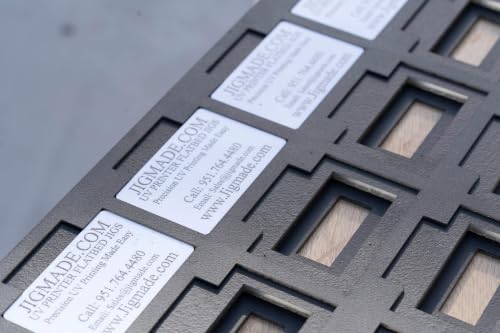
- Fits MIMAKI UJF 3042 series
- 15 spaces for production runs
- PDF template included
Best For: Mimaki UJF 3042 users printing multiple CR80 items
Precision Peg-Board Jig
Universal Peg Board Jig for Roland BD 8 UV Flatbed Printer
- Precision fit for Roland BD-8 UV flatbed workflows
- 4mm locating pins help repeat print registration
- Non-warp plastic is made to stay flat under UV heat
Best For: Production runs that need repeatable alignment on a Roland BD-8
CR80 Production Jig
CR80 Printing Jig for Roland BD-8 Flatbed Printer
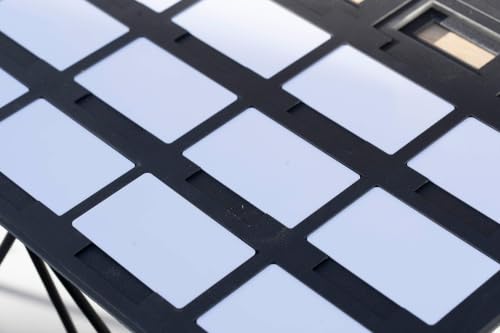
- Made for CR80 card production on a Roland BD-8
- Includes PDF templates for setup and alignment
- Non-warp plastic is designed for UV curing heat
Best For: Card-sized batch jobs that need reliable registration
Badge Alignment Jig
Name Badge Printing Jig for Roland BD-8 Flatbed Printer

- Sized for 3" x 1" name badge production
- Helps keep batch registration consistent
- Includes PDF templates and custom-order support
Best For: Repeatable name badge runs on a Roland BD-8
Micro-Adjustment Table – XY Fine-Tuning Workbench
If you need printing registration boards for production work, this dual-axis micro-adjustment table is built for dialing in screen printing alignment with more control. It supports XY axis and angle fine-tuning, making it a practical fit for shops that need precise positioning on flatbed printers and marking machines.
Best For: Operators who need fine XY and angle adjustments for accurate registration on flatbed-style production setups.
Pros:
- XY axis and angle fine-tuning for precise positioning
- High-precision aluminum alloy construction
- Sturdy, durable, and built for stable performance
- Smooth adjustment feel for careful registration work
Cons:
- Designed for specialized production setups rather than casual use
- Best suited to users who need manual adjustment control
This is a straightforward choice when alignment accuracy matters more than speed. If your workflow depends on repeatable registration and stable setup control, this workbench is aimed at that exact job.
UV Peg Board Jig – Epson SC V 1070 Registration Jig
Universal Peg Board Jig for Epson SC V 1070 UV Printer with 4mm Locating Pins and Digital Template
Check Price On AmazonFor printing registration boards for production work, this peg board jig is made to keep UV flatbed jobs aligned consistently. It is engineered for the Epson SC V 1070, uses 4mm locating pins, and includes a digital template to help you set up accurate print placement from the first sheet.
Best For: Epson SC V 1070 users who want a fitted UV jig for repeatable registration and multi-piece runs.
Pros:
- Precision fit for the Epson SC V 1070 UV printer
- Durable non-warp plastic stays flat under UV curing heat
- Multi-piece capacity supports higher-throughput production
- PDF template included for step-by-step alignment
Cons:
- Built for a specific printer model, so compatibility is limited
- More useful in structured production workflows than one-off jobs
If your process depends on dependable registration and repeated layout accuracy, this jig is purpose-built for that. The included template and flat, heat-resistant material make setup easier for production-minded users.
3D Micro-Registration Press – Alignment Press for Rigid Materials
This screen printing press is aimed at production work that needs reliable registration boards and fine alignment control. With 3D micro-registration, left-to-right and back-to-front adjustment, and a ruler-equipped pallet, it is designed to help you position parts accurately across a range of rigid materials.
Best For: Screen printers working on PCB, metal, glass, wood, plastic boards, and other rigid materials.
Pros:
- 3D micro-registration with three-direction adjustment
- Suitable for rigid materials like PCB, glass, metal, and plastic boards
- Pallet ruler and positioning pads help with accurate placement
- Gravity balance plates support smoother screen lifting
Cons:
- Not recommended for cloth or other textile printing
- Large, heavy machine may be more than needed for simple jobs
For shops that print on hard substrates, this press offers a focused set of alignment features. The combination of micro-adjustment, balancing hardware, and positioning aids makes it a strong production-oriented option.
Business Card Jig – Roland BD-8 Card Alignment Jig
Anodized Aluminum Business Card Jig for Roland BD-8 / Digital File Included / 3.38"" x 2.12""
Check Price On AmazonIf you are building printing registration boards for production work on a Roland BD-8, this business card jig is set up for precise placement in a compact format. The anodized aluminum construction is meant to stay flat, and the included digital file supports consistent alignment from run to run.
Best For: Roland BD-8 users printing business cards with a repeatable, compact registration jig.
Pros:
- Engineered specifically for the Roland BD-8
- Anodized aluminum build for a flat, durable jig
- Digital file included for setup guidance
- Compact business card size is easy to integrate into production
Cons:
- Limited to a very specific card size and printer model
- Not intended as a general-purpose jig for varied item formats
This jig makes the most sense when your workflow is centered on one exact output size and machine. For repeatable business card registration on the BD-8, it offers a simple, purpose-built setup.
Screen Print Registration – Pre-Registration Template Poster
Trooperbay Screen Printing Pre Registration Template Poster Register Film Positves Easily
Check Price On AmazonIf you need a simple way to improve alignment in screen printing, this pre-registration template poster is designed to help with printing registration boards for production work without requiring a light table or light-safe exposure unit. It is printed on 3 mil vinyl, so you can tape positives down and roll it up when you are done.
Best For: Screen printers who want a portable pre-registration aid for positioning film positives efficiently.
Pros:
- No light table or light-safe exposure unit needed
- Rolls up for easy storage
- Printed with UV solvent inks for long life
- 3 mil vinyl surface lets you tape positives down
Cons:
- Built for pre-registration use rather than a full production jig system
- Vinyl format may not suit users who want a rigid board
This is a practical, low-friction option if you want a reusable registration aid that is easy to store and built for repeated handling. It keeps the workflow straightforward while still supporting more accurate setup.
UV Flatbed Jig – Universal Peg Board Template
Universal Peg Board Jig for A3 UV Flatbed Printer with 4mm Locating Pins and Digital Template
Check Price On AmazonThis universal peg board jig is built for UV flatbed printer workflows where repeatable alignment matters in printing registration boards for production work. It is engineered for A3 UV flatbed printers, uses 4mm locating pins, and includes a PDF template to help you get set up accurately from the start.
Best For: Shops using an A3 UV flatbed printer that need a precision-fit jig for multi-piece runs.
Pros:
- Precision fit for A3 UV flatbed printers
- 4mm locating pins support consistent registration
- Non-warp plastic stays flat under UV curing heat
- PDF template included for step-by-step alignment
Cons:
- Made specifically for A3 UV flatbed printer setups
- Best suited to workflows that use peg board alignment
If your production process depends on reliable placement and stable material under curing heat, this jig is purpose-built for that job. The multi-piece capacity also makes it a strong fit for shops trying to improve throughput.
Mimaki UV Jig – CR80 15-Space Template
CR80 Printing Jig for MIMAKI UJF 3042/3042 MKII/3042 MK IIE UV Printer with PDF Template (15 Spaces)
Check Price On AmazonThis CR80 printing jig is aimed at users who need tighter control over alignment in printing registration boards for production work on compatible Mimaki UV printers. It is engineered for the MIMAKI UJF 3042 series, includes 4mm locating pins, and comes with a PDF template for step-by-step setup.
Best For: Mimaki UJF 3042 owners looking for a 15-space jig for repeatable CR80 runs.
Pros:
- Made for MIMAKI UJF 3042/3042 MKII/3042 MK IIE printers
- 15 spaces support multi-piece production runs
- Non-warp plastic is designed to stay flat under UV curing heat
- PDF template included for alignment guidance
Cons:
- Only intended for the listed Mimaki UV printer models
- Best suited to CR80 workflows rather than general-purpose use
For shops running CR80 jobs on supported Mimaki equipment, this jig focuses on precision and repeatability rather than versatility. Its layout is designed to help streamline setup while keeping registration consistent across multiple items.
Precision Peg-Board Jig – Universal Peg Board Jig for Roland BD 8 UV Flatbed Printer
If you need printing registration boards for production work on a Roland BD-8, this peg board jig is built to help keep alignment consistent from sheet to sheet. It’s aimed at UV flatbed workflows where fit, flatness, and repeatable placement matter for efficient runs.
Best For: Shops printing multiple items per run on a Roland BD-8 and wanting a custom-fit peg board setup.
Pros:
- Engineered specifically for UV flatbed printers for precise print registration.
- 4mm locating pins support repeatable placement.
- Durable non-warp plastic stays flat under UV curing heat.
- Multi-piece capacity helps reduce setup time across production runs.
Cons:
- Built for a specific Roland BD-8 workflow, so it’s not a general-purpose jig.
- Best value depends on whether your jobs match the peg-board format.
Overall, this is a production-minded registration board designed to improve consistency and throughput rather than serve as a universal accessory. The included PDF template and custom-order option make it especially practical if you want a setup tailored to your process.
CR80 Production Jig – CR80 Printing Jig for Roland BD-8 Flatbed Printer
For printing registration boards for production work, this CR80 jig is aimed at keeping small-format jobs aligned on a Roland BD-8 flatbed printer. It’s designed for UV flatbed use, with a focus on flatness, repeatability, and simple setup through the included PDF templates.
Best For: CR80 card jobs that need consistent placement and efficient multi-piece production.
Pros:
- Engineered specifically for UV flatbed printers for consistent registration.
- Durable non-warp plastic helps the jig stay flat under curing heat.
- Multi-piece capacity supports faster batch production.
- PDF template is included to guide initial alignment.
Cons:
- Designed around CR80 sizing, so it’s not ideal for other formats.
- Works best if your production process matches the template-driven setup.
This is a straightforward production jig for shops that want reliable CR80 positioning without building a custom workflow from scratch. If your output is card-sized and repetitive, the combination of template support and flat UV-safe construction makes it a practical choice.
Badge Alignment Jig – Name Badge Printing Jig for Roland BD-8 Flatbed Printer
Name Badge Printing Jig for Roland BD-8 Flatbed Printer with PDF Templates (3"" x 1"")
Check Price On AmazonIf your printing registration boards for production work are centered on name badges, this jig is built to keep 3″ x 1″ items lined up on a Roland BD-8 flatbed printer. It’s a focused UV flatbed accessory meant to support repeatable placement, flat performance under heat, and faster multi-item runs.
Best For: Shops producing 3″ x 1″ name badges in repeatable batches.
Pros:
- Purpose-built for 3″ x 1″ name badge production.
- Engineered for UV flatbed printers to improve registration consistency.
- Durable non-warp plastic stays flat under UV curing heat.
- Multi-piece capacity helps streamline batch workflow.
Cons:
- Size-specific design makes it less flexible for other job types.
- Best suited to shops already using a Roland BD-8 workflow.
For badge-focused production, this jig keeps the setup practical and repeatable without adding unnecessary complexity. The included PDF template and custom-order option add flexibility if you need a workflow that’s closer to your exact production needs.
How We Picked the Best Printing Registration Boards for Production Work
We looked for tools that help streamline setup, improve placement accuracy, and support repeatable output in real production environments. Priority went to build quality, alignment precision, template availability, compatibility with common UV and screen-printing workflows, and how well each option supports everyday production tasks.
For Printing Registration Boards for Production Work, versatility matters as much as precision. The best picks are the ones that reduce operator error without slowing down throughput.
Quick Comparison
Broadly speaking, the options here fall into three groups: micro-adjustment workbenches for fine alignment, universal peg-board jigs for flexible everyday use, and model-specific templates for devices like Roland, Epson, and Mimaki printers. Screen-printing registration tools also appear for shops handling film positives, PCB work, metal, glass, or single-color runs.
Key Buying Factors for Printing Registration Boards for Production Work
Compatibility
Start with your actual machine, substrate size, and job type. A model-specific jig can be faster to deploy, while a universal board gives more flexibility across multiple workflows.
Registration Accuracy
Look for features such as micro-adjustment control, fixed locating pins, and clear digital templates. These details help keep artwork, cards, badges, and flat parts aligned from one run to the next.
Template Quality
Well-designed templates save setup time and make it easier to standardize jobs across operators and shifts. Digital files are especially useful when you need repeatable positioning or plan to re-create layouts later.
Material and Durability
Anodized aluminum, stable work surfaces, and rigid construction are worth prioritizing in production settings. They hold registration better and stand up to repeated daily use.
Workflow Fit
Choose a board or jig that matches the way your shop runs. If you handle mixed jobs, a universal option may be best. If you specialize in one printer or one product format, a dedicated jig can be more efficient.
Who Should Buy Which Printing Registration Boards for Production Work?
If you need maximum flexibility, choose a universal peg-board jig. If you run a specific printer model or card format every day, a dedicated jig or template set will usually be faster and more reliable. Shops that need tight manual alignment control should lean toward a micro-adjustment table or precision registration workbench. For screen printers working with film positives or specialty substrates, a registration template or micro-registration press can be the better fit.
In short, the best choice depends on whether your priority is speed, precision, or compatibility. For most buyers, the right tool is the one that fits the job format and cuts setup time without sacrificing registration quality.