Choosing pyrography machines for classrooms means balancing creative flexibility with predictable heat control, manageable cleanup, and equipment that can withstand repeated student use. The right station should help instructors demonstrate techniques clearly while keeping setup and supervision straightforward.
We selected 10 wood-burning kits spanning single- and dual-pen stations, wire-nib and solid-point systems, and entry-level options with useful accessories. Use the guide below to compare the features that matter most before outfitting a classroom, makerspace, or supervised art program.
Best 10 Pyrography Machines for Classrooms Picks for 2026
Versatile Classroom Starter
YIHUA 939-II Pyrography Station

- 250–750°C adjustable temperature
- 20 wire nibs for varied techniques
- Includes holder, stencils, and practice wood
Best For: Guided classroom projects with varied techniques
Simple Tip-Swapping Pick
Weller 15-Piece Woodburning Kit
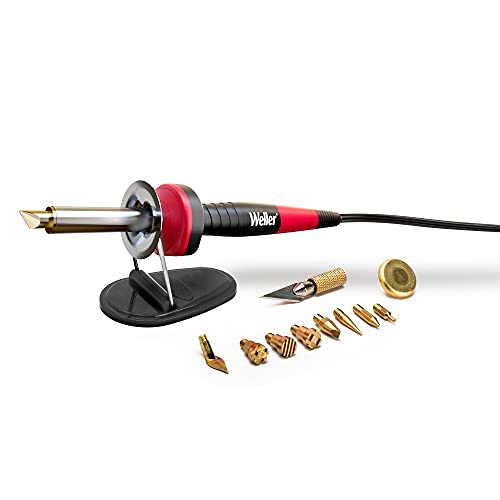
- Stay-cool handle and heat deflector
- Integrated safety rest
- Includes varied tips and storage case
Best For: Introductory woodburning and leather embossing
Efficient Dual-Station Choice
YIHUA 939 III Dual-Pen Station

- Two pens reduce repeated nib changes
- 250–750°C adjustable temperature
- 20 nibs plus classroom-ready accessories
Best For: Technique demonstrations and efficient project work
Fast-Heating Detailer

- 60W fast heat response
- Adjustable voltage control
- 20 wire tips for varied designs
Best For: Detail-focused supervised craft sessions
Most Versatile Dual-Pen Pick
YIHUA 939D-II Dual-Mode Pyrography Station

- Solid-point and wire-nib pens
- Separate 200–750°C temperature ranges
- Includes 20 nibs and practice wood
Best For: Classrooms teaching varied pyrography techniques
Best Starter Kit
WEP 939-II 32-Piece Wood Burning Station

- 32-piece classroom-friendly kit
- Includes stencils and practice wood
- Top-mounted holder saves workspace
Best For: Beginner lessons and structured practice
Best Compact Dual-Pen Design
YIHUA 939D-VI Digital Wood Burning Kit

- Compact integrated holder design
- Digital 250–750°C temperature display
- Dual pen positions with 20 wire nibs
Best For: Space-conscious classrooms teaching wire-nib techniques
Best Adjustable Starter Kit

- 250–750°C adjustable temperature
- 20 wire-nib tips included
- Compact holder and LED display
Best For: Introductory wood and leather projects
Best Dual-Pen Classroom Kit

- Two pens for quick technique changes
- 23 varied wire-nib tips
- Six wood pieces and six stencils
Best For: Technique-focused group projects
Best Versatile Tip Selection

- Solid-point and wire-nib pens
- 86 included pieces
- Both pens can operate simultaneously
Best For: Multi-technique art-room instruction
Versatile Classroom Starter – YIHUA 939-II Pyrography Station
For classrooms seeking pyrography machines for classrooms with broad creative flexibility, the YIHUA 939-II combines adjustable heat with a substantial selection of wire nibs. Its station-style design and included accessories make it suitable for guided projects across different materials, though students should follow the operating instructions closely.
Best For: Structured classroom demonstrations, mixed-skill projects, and detailed wood-burning techniques.
Pros:
- Adjustable 250–750°C temperature range supports different materials and effects.
- Includes 20 skew, wire, and shader nibs for outlining, shading, stippling, and lettering.
- Comes with a pen holder, stencils, scrap wood, tweezers, and pliers.
- Includes 12-month US manufacturer technical coverage and 24/7 Amazon assistance.
Cons:
- Single-channel design supports one connected pen at a time.
- Students must carefully install the nibs and ensure the wires do not touch each other.
- Designed for 110–127V, 60Hz US-standard power.
The wide heat range and 20-nib assortment give instructors room to teach both basic and advanced techniques. For classroom use, plan for clear safety instruction and supervised setup.
Simple Tip-Swapping Pick – Weller 15-Piece Woodburning Kit
The Weller 15-piece kit is a straightforward option among pyrography machines for classrooms, particularly where comfort and uncomplicated tip changes matter. Its stay-cool handle, heat deflector, and integrated safety rest support more controlled supervised use.
Best For: Introductory woodburning, leather embossing, and classrooms that value a portable kit with organized storage.
Pros:
- Stay-cool handle and heat deflector help improve handling comfort.
- Integrated safety rest provides a designated place to set down the iron.
- Includes a storage case plus soldering, branding, and woodburning tips.
- Quick tip changes support different burning, cutting, branding, and embossing tasks.
Cons:
- Its 400°C upper temperature rating is less extensive than the 750°C range of some adjustable stations.
- The supplied notes do not specify a variable temperature control.
- Only one woodburning iron is included, so group activities may require shared scheduling.
Weller’s emphasis is practical handling rather than maximum temperature versatility. The safety rest and storage case are useful for organized lessons, while the range of tips supports several beginner-friendly applications.
Efficient Dual-Station Choice – YIHUA 939 III Dual-Pen Station
For classrooms where students or instructors need to switch techniques efficiently, the YIHUA 939 III is one of the more flexible pyrography machines for classrooms. Its two pens can hold different nibs, reducing repeated tip changes and cooling delays during a project.
Best For: Demonstrations and projects that alternate between outlining, shading, lettering, and detail work.
Pros:
- Dual-pen setup lets users alternate between two prepared nibs.
- Adjustable 250–750°C temperature range accommodates wood, leather, foam, gourds, and other materials.
- Includes 20 wire nibs with writer, skewed, and shader styles.
- Accessory set includes a dual-pen holder, pliers, screwdriver, stencils, practice wood, and cleaning sponge.
Cons:
- The 4.4-pound station is less lightweight than a basic single-pen kit.
- Students still need practice selecting temperatures and controlling pen speed.
- Designed for 110–127V, 60Hz US-standard power.
The dual-pen arrangement is the standout classroom advantage, especially for lessons comparing line and shading techniques. It offers strong flexibility, but instructors should still provide close guidance on heat selection and tool handling.
Fast-Heating Detailer – Tekchic 60W Wood Burning Kit
The Tekchic 60W kit suits classrooms looking for pyrography machines for classrooms with fast heat response and a compact pen design. Its voltage adjustment and 20 wire tips provide students with room to practice detailed work on wood, gourds, and paper.
Best For: Detail-focused craft sessions where quick heating and a lightweight-feeling pen are priorities.
Pros:
- 60W power is designed for fast heat response.
- Voltage adjustment knob allows users to vary the heat level.
- Small pen handles are intended to reduce fatigue during longer drawing sessions.
- Includes 20 wire tips for different designs and effects.
Cons:
- The supplied notes do not give a specific temperature range.
- The kit’s 21-piece count is less extensive in accessories than some station-style options.
- Its listed item weight is 2.57 kg, so it may not be as easy to move as the compact pen suggests.
Tekchic emphasizes quick response and detailed control rather than a long list of extras. It can work well for supervised craft lessons, provided instructors establish appropriate heat settings for each material.
Most Versatile Dual-Pen Pick – YIHUA 939D-II Dual-Mode Pyrography Station
For classrooms needing flexibility across skill levels and materials, this pyrography machine for classrooms combines a solid-point pen with a wire-nib detailer. Independent temperature ranges and two-pen operation make it suitable for demonstrations, practice work, and more detailed projects.
Best For: Classrooms that want two pen styles and broad material compatibility.
Pros:
- Includes both solid-point and wire-nib pens for different techniques.
- Offers separate temperature ranges from 200–480°C and 250–750°C.
- Includes 20 nibs, scrap wood, a heat-resistant holder, and ergonomic grips.
- Works on wood, leather, cork, pumpkin, gourd, and plastic.
Cons:
- It takes about 1–3 minutes to reach the selected temperature.
- Designed for 110–127V, 60Hz outlets with a US-standard plug.
The dual-pen layout is the main advantage for instructional settings, letting students explore both broad solid-point marks and finer wire-nib work. Its integrated storage and included practice materials also help keep classroom setups organized.
Best Starter Kit – WEP 939-II 32-Piece Wood Burning Station
This pyrography machine for classrooms is a practical starter package for guided lessons, with 20 wire nibs, practice wood, letter and number stencils, and basic tools. Its adjustable 250–750°C range supports introductory exercises and varied wood-burning techniques.
Best For: Beginner-focused classrooms that value a complete, organized kit.
Pros:
- 32-piece set includes nibs, wood pieces, stencils, tweezers, and a screwdriver.
- Detachable soft-grip pen supports comfortable drawing.
- Built-in indicator shows whether the station is switched on.
- Top-mounted holder saves workspace and stores small tools.
Cons:
- The wire-nib pen takes about 1–2 minutes to heat fully.
- It is rated for 110–127V, 60Hz USA specifications and should not be connected to 220V.
The included stencils and practice pieces make this a convenient option when several learners need structured first projects. The single wire-nib pen is less flexible than a dual-pen station, but the generous accessory set is well suited to classroom instruction.
Best Compact Dual-Pen Design – YIHUA 939D-VI Digital Wood Burning Kit
For classrooms where desk space matters, this pyrography machine for classrooms provides two interchangeable pen positions in a compact station. A clear digital display, 20 wire nibs, and a 250–750°C temperature range give instructors useful control for shading, stippling, and engraving exercises.
Best For: Compact classroom workstations teaching multiple wire-nib techniques.
Pros:
- Dual-pen design allows quick switching between fitted tips.
- Digital display clearly shows the selected temperature.
- Integrated holder keeps the main unit compact.
- Includes 20 wire nibs, two wood pieces, and spare screws.
Cons:
- It includes wire-nib pens rather than a solid-point pen.
- Designed for 110–127V, 60Hz outlets with a US-standard plug.
The compact integrated-holder design is useful when classroom tables are crowded, while the dual-pen setup supports switching between techniques without changing the entire tool. It is a focused choice for wire-nib projects rather than a broad mixed-tip kit.
Best Adjustable Starter Kit – WEP 939D-V Wood Burning Kit
For classrooms seeking pyrography machines for classrooms with straightforward controls, the WEP 939D-V combines a detachable pen, digital temperature readout, and 20 wire-nib tips. Its 30W station covers wood and leather projects, although students should allow 1–2 minutes for the pen to heat fully.
Best For: Classroom groups learning adjustable-temperature wood and leather burning with a compact, single-pen setup.
Pros:
- Adjustable 250–750°C temperature range with LED readout
- Includes 20 wire-nib tips, two wood pieces, and basic tools
- Detachable soft-grip pen and integrated holder help with storage and handling
- Includes one-year U.S. technical support
Cons:
- Only one pen channel is included
- Requires 1–2 minutes to heat up
- Designed for 110–127V, 60Hz U.S. power
This is a practical choice when a teacher wants one adaptable station with useful accessories and a clear temperature display. For simultaneous pen use or more extensive tip variety, a dual-pen model may be more suitable.
Best Dual-Pen Classroom Kit – YIHUA 939-VI Wood Burning Kit
The YIHUA 939-VI is one of the more flexible pyrography machines for classrooms because it includes two pens and lets users switch between different tips and techniques. Its 23 wire nibs, stencils, and six wood pieces provide ready-to-use materials for guided classroom exercises.
Best For: Classes that benefit from switching between two prepared pens for detailing, shading, stippling, and other techniques.
Pros:
- Two pen channels support quick changes between techniques
- Includes 23 varied wire-nib tips and six pyrography stencils
- Six wood pieces provide multiple practice surfaces
- Temperature adjusts from 250–750°C via a dial
Cons:
- Wire-nib pens still require heating time before use
- Designed for 110–127V, 60Hz U.S. power
- Tips are wire-nib style rather than a mixed solid-point and wire-nib selection
The dual-pen design is useful for classroom demonstrations and projects that alternate between techniques. The included stencils and wood pieces also reduce the need to assemble a separate beginner activity kit.
Best Versatile Tip Selection – WEP 939D-II 2-in-1 Kit
For classrooms needing broad project flexibility, the WEP 939D-II stands out among pyrography machines for classrooms with two detachable pen types and 86 included pieces. Students can use the solid-point pen for heat-transfer work, shading, and outlining, or the wire-nib pen for fine detail and feathering.
Best For: Art rooms teaching multiple pyrography techniques and needing both solid-point and wire-nib tools.
Pros:
- Includes separate solid-point and wire-nib pens
- Offers 51 solid-point tips plus 20 wire-nib tips
- Both pens can be turned on at the same time
- Includes stencils, wood pieces, cleaning sponge, pliers, and storage
Cons:
- Solid-point and wire-nib pens have different temperature ranges and controls
- Solid-point pen takes about 2–3 minutes to heat; wire nib takes 1–2 minutes
- Its larger accessory collection may require more organized storage
This is the strongest option for a classroom curriculum that moves beyond basic line work. Its extensive tip assortment supports varied lessons, while the dual-pen station allows instructors to keep two tools ready for different applications.
How We Picked the Best Pyrography Machines for Classrooms
We focused on practical classroom needs rather than accessory count alone. Each selected kit was evaluated for temperature adjustment, pen configuration, tip variety, station design, ease of handling, and suitability for demonstrations or shared projects. Dual-pen stations received attention because they can reduce swapping time, while detachable pens and stable holders can make transitions between activities easier.
We also considered whether a kit supports both broad shading and fine detail. Wire-nib systems generally heat quickly and offer responsive control, while solid-point tips can be useful for basic patterns, lettering, and introductory lessons. Teachers should still verify current safety specifications, included accessories, and replacement-tip availability before purchasing.
Quick Comparison
- Best for flexible demonstrations: Dual-pen stations with independent pens or interchangeable tip systems.
- Best for detailed artwork: Wire-nib kits with adjustable temperature and multiple shaped nibs.
- Best for beginners: Kits with simple controls, a stable holder, clear temperature readouts, and included practice wood.
- Best for broad curriculum coverage: 2-in-1 kits combining solid points and wire nibs.
- Best for budget-conscious classrooms: Single-pen stations with a useful range of tips and uncomplicated controls.
Key Buying Factors for Pyrography Machines for Classrooms
Temperature Control
Adjustable heat lets instructors match the tool to different woods, line weights, and student skill levels. A digital display can make lessons more repeatable, but clear analog controls may be perfectly adequate for supervised introductory work.
Pen Capacity and Workflow
A dual-pen station can keep two techniques ready at once and limit interruptions during group demonstrations. For smaller classes, a single station may be easier to store and less expensive to equip across multiple worktables.
Tips, Holders, and Accessories
Look for a stable pen stand, heat-resistant handling tools, and tips suited to outlining, shading, lettering, and texture. Large bundles are useful only when the included parts support your curriculum and replacement components are easy to find.
Safety and Classroom Management
No pyrography machine eliminates the need for supervision. Plan for heat-safe work surfaces, ventilation, tool-rest procedures, cooldown time, and age-appropriate instruction. Keep cords organized and establish a clear station checkout routine.
Who Should Buy Which Pyrography Machines for Classrooms?
Choose a dual-pen model if several students will rotate through demonstrations or if your lessons regularly alternate between fine lines and broad shading. Choose a 2-in-1 solid-point and wire-nib station when you want one machine to support both beginner exercises and more advanced projects.
A temperature-adjustable single-pen kit is a practical choice for a small classroom, mobile makerspace, or teacher demonstration table. Kits with many included tips and practice pieces suit programs that want to begin immediately, while a simpler kit may be preferable when storage, inventory, and straightforward instruction matter most. Among Pyrography Machines for Classrooms, the best option is the one that matches your supervision capacity, class size, available workstations, and planned techniques.