Clean, tight dovetails depend on more than sharp chisels and careful layout. The right saw helps you start accurately, track a straight baseline, and remove waste without tearing delicate fibers.
Our roundup compares 10 dovetail saws for furniture making, including Japanese pull saws, traditional gent’s saws, and versatile reversible designs. Whether you prioritize control, cutting speed, durability, or value, the options below cover a range of furniture-making workflows.
Best 10 Dovetail Saws for Furniture Making Picks for 2026
Best Compact Japanese Dozuki

- Thin 0.3 mm blade for fine cuts
- Rigid steel back improves control
- 17 TPI rip, cross, and angle teeth
Best For: Fine furniture joinery and compact workbenches
Best Traditional Brass-Backed Saw
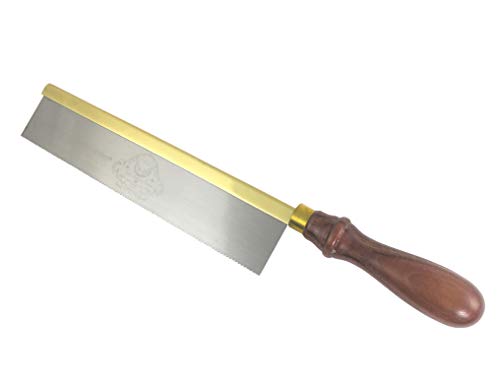
- Solid rolled brass back adds stiffness
- 20 TPI teeth for fine joinery
- Resharpenable high-carbon steel plate
Best For: Traditional push-saw woodworking and furniture joinery
Best Two-Edge Versatility

- 9 TPI rip and 15 TPI crosscut edges
- Pull stroke supports controlled cutting
- Includes storage bag and replaceable blade design
Best For: Mixed furniture joinery and general wood cutting
Best Thick-Kerf Push Saw

- 8-inch razor-saw blade
- 18 TPI teeth and 0.020-inch kerf
- Designed for forceful push cutting
Best For: Portable woodworking and conventional push-stroke cutting
Traditional Japanese Precision

- 9.5-inch metal blade for fine joinery
- Handles dovetail, tenon, miter, and cross cuts
- Suitable for furniture and cabinet work
Best For: Fine furniture, cabinet, and trim joinery
Portable Fine-Cut Specialist
JORGENSEN 6-Inch Folding Dovetail Saw
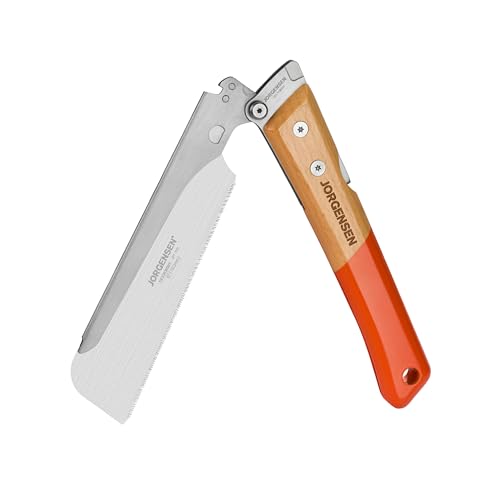
- Thin 0.3 mm blade for narrow kerfs
- 21 TPI hardened SK5 steel teeth
- Folds and changes blades without tools
Best For: Portable precision joinery and furniture restoration
Sheffield-Built Stability
Thomas Flinn Pax 8-Inch Gent Saw

- Solid rolled brass back adds stiffness and weight
- 20 TPI resharpenable high-carbon steel blade
- Walnut handle with brass ferrule
Best For: Traditional, stable, resharpenable furniture joinery
Best Fine-Cut Japanese Saw

- 25 TPI crosscut teeth for crisp joinery
- Rigid steel back and 0.02-inch kerf
- Replaceable blade with rattan-wrapped handle
Best For: Small dovetails, tenons, boxes, and fine furniture details
Best Traditional Sheffield Saw

- 20 TPI teeth filed for crosscutting
- Rigid brass back supports straight cuts
- Re-sharpenable alloy spring-steel blade
Best For: Fine furniture joinery and long-term workshop use
Best Reversible Jamb Saw
JORGENSEN 10-Inch Dovetail Saw

- Spring-loaded reversible blade for either hand
- 13 TPI double-ground teeth and flexible SK5 steel
- Soft grip for flush cuts in corners and jambs
Best For: Door frames, flush cuts, millwork, and difficult access areas
Best Compact Japanese Dozuki – SUIZAN 7-Inch Dozuki
For woodworkers comparing dovetail saws for furniture making, the SUIZAN Dozuki is a compact pull saw built for controlled, fine joinery. Its thin Japanese-steel blade, rigid steel back, and versatile teeth suit dovetails, tenons, shoulders, and angle cuts.
Best For: Fine furniture, cabinetry, box making, and crowded workbenches where a lightweight, precise saw is useful.
Pros:
- Thin 0.3 mm blade produces a narrow 0.5 mm kerf and smooth cut face.
- Steel back helps keep the blade straight and square.
- 17 TPI teeth handle rip, cross, and angle cuts.
- Comfortable non-slip elastomer grip and tool-free replaceable blade.
Cons:
- Replacement blades are sold separately.
- Its 7-inch blade is less suited to larger, deeper cuts.
At 6.7 ounces, this is an easy-to-control option for precise joinery. It is especially attractive when low cutting effort, a fine kerf, and replaceable blades matter more than maximum capacity.
Best Traditional Brass-Backed Saw – Thomas Flinn 10-Inch Gent
The Thomas Flinn Gent is a traditional choice among dovetail saws for furniture making, combining a long carbon-steel plate with a solid rolled brass back. Its 20 TPI teeth and weighted construction are designed for smooth, accurate hand cutting.
Best For: Furniture makers who prefer a traditional push saw with a walnut handle, brass fittings, and a resharpenable blade.
Pros:
- Solid brass rolled back stiffens the blade and adds weight.
- 10-inch plate provides useful reach for larger joinery work.
- 20 TPI teeth support fine dovetail cuts.
- High-carbon alloy steel plate can be resharpened.
Cons:
- The 0.028-inch kerf is wider than the SUIZAN Dozuki’s listed kerf.
- Traditional construction may feel less lightweight than a Japanese pull saw.
Made by Thomas Flinn of Sheffield, England, this saw emphasizes classic materials and durable serviceability. The brass-backed blade and walnut handle make it a strong fit for users who value a traditional furniture-making tool that can be sharpened again.
Best Two-Edge Versatility – SUIZAN 9.5-Inch Ryoba
For shoppers seeking versatile dovetail saws for furniture making, the SUIZAN Ryoba provides two tooth patterns in one pull saw. Flip between 9 TPI rip teeth and 15 TPI crosscut teeth for dovetails, tenons, trim, molding, and board work.
Best For: Woodworkers who want one saw for both ripping and crosscutting, including furniture joinery and miter-box work.
Pros:
- Double edge combines 9 TPI rip and 15 TPI crosscut teeth.
- Pull-stroke design supports controlled, low-force cutting.
- 0.5 mm Japanese-steel blade leaves a listed 0.8 mm kerf.
- Replaceable blade and included zippered storage bag add practicality.
Cons:
- The assembly version requires the user to fit the handle and tighten one screw.
- Replacement blades are sold separately.
- The 23.23-inch overall length needs more storage space.
This Ryoba is a flexible choice when changing between rip and crosscut tasks is more important than having a dedicated backsaw. Its longer blade offers reach, while the pull action remains easy to control for beginners and experienced woodworkers.
Best Thick-Kerf Push Saw – Zona 8-Inch Dovetail Saw
The Zona 35-380 offers a more forceful push-stroke approach for woodworkers choosing dovetail saws for furniture making. Its 8-inch alloy-steel blade has 18 TPI teeth, a 0.020-inch kerf, and a 1-3/4-inch listed cutting depth.
Best For: Portable woodworking and users who prefer a longer razor-saw blade designed for stronger push-stroke cutting.
Pros:
- Long 8-inch blade is Zona’s longest razor saw blade.
- Thick-kerf design accommodates more forceful push-stroke cutting.
- 18 TPI teeth suit fine wood cutting.
- Compact 12-1/2-inch overall length is convenient to carry.
Cons:
- It has no listed warranty.
- It does not offer the two tooth patterns of a double-edge saw.
- Push-stroke cutting may require more user control than a pull saw.
With its portable format and comparatively robust cutting style, the Zona is a straightforward option for users who want a conventional push saw. It is less feature-rich than the other choices, but its long blade and 18 TPI tooth spacing keep it practical for detailed woodwork.
Traditional Japanese Precision – Gyokucho Dozuki Noko Giri
For woodworkers comparing dovetail saws for furniture making, the Gyokucho Dozuki Noko Giri offers a manual Japanese-style option with a 9.5-inch metal blade. Its stated applications include fine miter, cross, tenon, and dovetail cuts, along with cabinet, furniture, trim, and deeper cutting work.
Best For: Cabinetmakers and furniture builders who want one manual saw for fine joinery and deeper cuts.
Pros:
- Designed for fine miter, cross, tenon, and dovetail cuts.
- Suitable for cabinet, furniture, and trim carpentry work.
- Long 9.5-inch blade supports deeper cuts.
- Rattan handle and wide rectangular blade construction.
Cons:
- The supplied notes do not specify a tooth-per-inch rating.
- It is listed as a bare tool with no additional components.
This is a versatile choice when your furniture work includes more than dovetails alone. Buyers who prioritize a specified tooth count or included accessories may want to compare its details with other options.
Portable Fine-Cut Specialist – JORGENSEN 6-Inch Folding Dovetail Saw
Among dovetail saws for furniture making, the JORGENSEN stands out for its thin 0.3 mm SK5 steel blade, 21 TPI hardened teeth, and folding design. It is intended for narrow-kerf precision work, including dovetails, tenons, musical-instrument crafting, and furniture restoration.
Best For: Furniture restorers and woodworkers who value fine cuts, compact storage, and one-handed operation.
Pros:
- 0.3 mm blade is designed for narrow, precise kerfs.
- Hardened 21 TPI teeth are intended to stay sharp longer.
- Folding system improves portability and tool-less blade changes.
- Beechwood handle supports comfortable single-hand use.
Cons:
- The short 6-inch blade may be less suitable for larger cuts.
- Replacement blades must correspond to the model.
- The supplied specifications list a 126-tooth count, while the product description specifies 21 TPI.
This is a practical pick for detailed joinery and restoration where a fine kerf and portable format matter. Its compact blade favors control and convenience over extended cutting capacity.
Sheffield-Built Stability – Thomas Flinn Pax 8-Inch Gent Saw
For buyers seeking traditional dovetail saws for furniture making, the Thomas Flinn Pax Gent Saw combines an 8-inch high-carbon steel plate with a solid rolled brass back. The brass spine adds stiffness and weight for smooth, accurate cutting, while the 20 TPI teeth can be resharpened.
Best For: Furniture makers who want a traditional, weighted saw with a resharpenable blade.
Pros:
- Solid rolled brass back stiffens the plate and adds cutting weight.
- High-carbon alloy steel blade is designed for durability and sharpening.
- 20 TPI tooth pattern suits fine joinery work.
- Walnut handle and brass ferrule provide a traditional build.
Cons:
- The 8-inch blade is shorter than the Gyokucho’s 9.5-inch blade.
- It is listed as a bare tool with no additional components.
This saw is appealing when stability, traditional construction, and long-term maintenance matter more than folding portability. Its brass-backed design should suit controlled, accurate furniture joinery.
Best Fine-Cut Japanese Saw – SUIZAN Dozuki 6-Inch
For dovetail saws for furniture making, the SUIZAN Dozuki is a compact choice when clean, controlled crosscuts matter. Its rigid steel back, 25 TPI teeth, and narrow 0.02-inch kerf suit fine joinery and small woodworking projects.
Best For: Dovetail baselines, tenon shoulders, boxes, picture frames, trim, and other detailed crosscut work.
Pros:
- Thin 0.3 mm blade and narrow kerf support accurate, crisp cuts.
- Steel back helps keep the blade straight and square.
- Rattan-wrapped wood handle provides a secure grip.
- Replaceable blade design extends the saw’s usable life.
Cons:
- The 6-inch blade is intended more for small projects than large stock.
- Its 25 TPI crosscut teeth are specialized for fine cuts rather than fast rough sawing.
- Replacement blades are sold separately.
This is a strong fit for beginners and experienced woodworkers who prioritize precision and a light, maneuverable saw for fine joinery.
Best Traditional Sheffield Saw – Lynx 8-Inch Dovetail Saw
Among dovetail saws for furniture making, the Lynx 8-Inch model offers a traditional, re-sharpenable design for fine joinery. Its Sheffield alloy spring-steel blade, brass back, and 20 TPI crosscut filing balance rigidity with long-term serviceability.
Best For: Furniture makers who want an 8-inch dovetail saw for fine crosscut joinery and prefer a re-sharpenable blade.
Pros:
- Massive brass back provides rigidity and secures the blade.
- 20 TPI crosscut filing suits fine joinery.
- Alloy spring-steel blade can be re-sharpened.
- Stained European beech handle with brass button screws offers a traditional feel.
Cons:
- At 16 ounces, it is heavier than the compact SUIZAN-style option.
- The 8-inch blade may feel less nimble for very small detail work.
- Its traditional design may require sharpening skills to maintain peak performance.
The Lynx is a compelling workshop saw for woodworkers who value a substantial brass-backed tool and the ability to sharpen rather than replace the blade.
Best Reversible Jamb Saw – JORGENSEN 10-Inch Dovetail Saw
The JORGENSEN is a specialized option among dovetail saws for furniture making, combining a reversible blade with a jamb-saw format. Its 13 TPI double-ground teeth, reinforced back, and flexible SK5 blade are designed for flush cuts and work in corners or other difficult areas.
Best For: Door-frame trimming, flush cuts, corner work, millwork, flooring tasks, and indoor tile preparation.
Pros:
- Spring-loaded blade reverses for left- or right-handed cutting.
- Flexible 0.6 mm SK5 blade helps with flush cuts.
- Reinforced back supports straighter cutting and reduces bending.
- Soft PP and TPR handle improves comfort during extended use.
Cons:
- Its 13 TPI teeth are less suited to the fine, delicate cuts of traditional dovetail work.
- The jamb-saw design is more specialized and less compact than a standard dovetail saw.
- The blade is sharp and requires careful handling when cutting near finished surfaces.
Choose this saw when access, reversibility, and flush-cut capability matter more than ultra-fine dovetail joinery. It is particularly useful for installation and repair work around frames and corners.
How We Picked the Best Dovetail Saws for Furniture Making
We focused on the features that matter most in fine joinery: tooth configuration, kerf, blade stiffness, handle comfort, cutting depth, and overall control. The selection includes pull saws and push saws, crosscut and rip-oriented teeth, compact blades for small boxes, and more substantial backsaws for repeated furniture work.
We also considered practical details such as replaceable blades, reversible designs, folding handles, brass backs, and the ability to make clean cuts in hardwoods and softwoods. A good dovetail saw should start easily on a knife line, stay predictable through the cut, and leave minimal cleanup.
Quick Comparison
- Best for versatile Japanese joinery: A dozuki or ryoba saw offers a thin kerf and efficient pull stroke.
- Best for traditional control: A brass-backed gent’s saw provides a rigid plate and familiar push-cut feel.
- Best for portability: Folding pull saws are convenient for small shops, job sites, and occasional repairs.
- Best for specialized cuts: Reversible or double-edge models can handle different tooth patterns or flush-cutting tasks.
- Best for small, precise work: Shorter blades are easier to guide in boxes, drawers, and narrow tails.
Key Buying Factors for Dovetail Saws for Furniture Making
Tooth Pattern and Cutting Direction
Rip teeth are generally the better choice for cutting along the grain when sawing dovetail pins and tails. Crosscut teeth can be useful for shoulder work and general trimming. Japanese pull saws cut on the pull stroke, which allows for a thin, flexible blade, while Western backsaws cut on the push stroke and often feel more rigid.
Kerf, TPI, and Blade Control
A narrow kerf removes less material and makes it easier to follow a fine layout line, but thin blades require a lighter touch. Higher tooth counts tend to produce smoother cuts, while lower counts can clear waste faster. For furniture joinery, stiffness and tracking are usually more important than maximum cutting speed.
Handle, Back, and Blade Length
Choose a handle that supports a relaxed grip and keeps your index finger aligned with the blade. A rigid brass back can improve accuracy, while a longer blade may be more comfortable for extended cuts. Compact saws offer better maneuverability in confined spaces.
Who Should Buy Which Dovetail Saws for Furniture Making?
Choose a Japanese pull saw if you want a very thin kerf, low-effort cutting, and easy blade replacement. These are especially appealing for beginners and woodworkers who frequently switch between joinery tasks.
Choose a traditional gent’s or brass-backed saw if you prefer a solid, controlled push stroke and a classic furniture-making tool. They suit makers who value rigidity, balance, and long-term repairability.
Choose a folding or reversible saw if portability and versatility matter more than a dedicated dovetail profile. These designs are useful additions to a compact workshop, though their extra mechanisms can add bulk or play.
Before buying, match the saw to your typical stock thickness, preferred cutting direction, and sharpening or replacement-blade preferences. The best Dovetail Saws for Furniture Making are the ones you can guide comfortably and consistently through your own layout lines.