The best inverter generators for job sites balance usable wattage, portability, fuel flexibility, and dependable operation around tools and sensitive electronics. This roundup compares 10 options ranging from compact 4,000-watt models to high-output dual- and tri-fuel machines.
Before choosing, match the generator’s running watts to your tools, account for startup surges, and check whether you need features such as 50-amp service, remote starting, parallel capability, or transfer-switch readiness.
Best 10 Inverter Generators for Job Sites Picks for 2026
Best Quiet High-Capacity Pick

- 5,000 peak and 3,900 rated watts
- Remote, electric, and recoil start
- As low as 52 dBA with up to 18-hour runtime
Best For: Quieter, extended-runtime 120-volt power
Best Dual-Fuel Power Upgrade
AIVOLT 8000W Inverter Generator
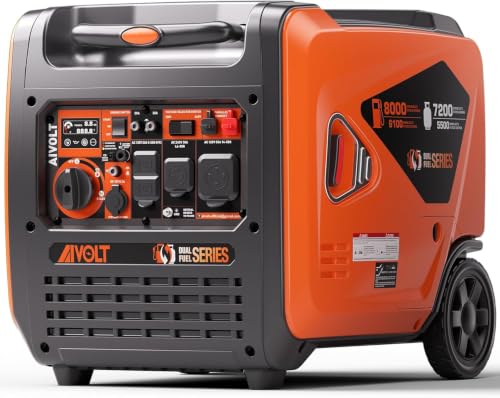
- 8,000 surge and 6,100 running watts
- Gasoline and propane fuel flexibility
- 120/240-volt output with CO auto-shutoff
Best For: Higher-output job sites needing dual-fuel versatility
Best Lightweight Job-Site Option

- 47.3-pound portable design
- 3,200 rated and 4,000 peak watts
- 59 dB operation and parallel-ready
Best For: Lighter-duty work requiring easy transport
Best Multi-Fuel Heavy-Duty Pick

- 10,500 peak and 7,800 running watts
- Tri-fuel operation: gasoline, LPG, and natural gas
- Remote, recoil, and automatic start options
Best For: High-demand construction and backup power
Best Dual-Fuel Pick
WEN DF525iX Inverter Generator
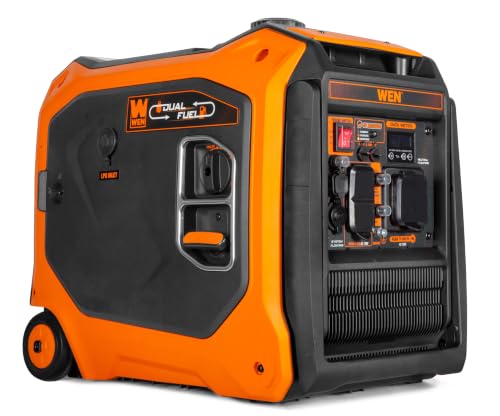
- 5,250 starting and 4,200 running watts on gasoline or propane
- Clean inverter power for sensitive electronics
- CO shutdown, electric start, wheels, and folding handle
Best For: Job sites needing flexible gasoline or propane operation
Best Long-Run Value
Oxseryn 4400-Watt Inverter Generator

- 4,400 peak and 3,400 running watts
- Up to 14 hours at 25% load with ECO mode
- 56-pound frame with fuel gauge and RV outlet
Best For: Portable job-site power with extended runtime
Best Quiet Compact Pick
PowerSmart 4000-Watt Inverter Generator

- 4,000 starting and about 3,200 running watts
- Under 59 dBA with under 3% THD
- Parallel-ready with USB, DC, duplex, and twist-lock outlets
Best For: Quieter portable power for lighter job-site tasks and electronics
Best Balanced Job-Site Pick
AMERISUN 4500W Open-Frame Inverter

- 4,500 starting and 3,800 running watts
- CO shutdown protection and ECO mode
- 68 pounds with parallel-ready output
Best For: Moderate-duty jobs, RVs, and backup power
Best Heavy-Duty Pick
AIVOLT 4200W Portable Inverter

- Up to 16 hours at 25% load
- 54.3 pounds and rated at 68 dB
- Less than 3% THD with five listed ports
Best For: Extended light-duty jobs and portable power
Best High-Output Option
Westinghouse iGen12000DFc Dual-Fuel Inverter

- Up to 12,000 peak and 9,000 running watts
- Gasoline and propane operation with 120/240V output
- Remote start, CO sensor, and transfer-switch readiness
Best For: Heavy-duty job sites and whole-home backup
Best Quiet High-Capacity Pick – Westinghouse iGen5000
For buyers comparing inverter generators for job sites, the Westinghouse iGen5000 offers a useful balance of output, portability, and lower-noise operation. It delivers 3,900 rated watts, includes remote electric start, and provides inverter power with less than 3% THD for compatible sensitive electronics.
Best For: Job-site users who need substantial 120-volt power, convenient starting, and extended gasoline runtime.
Pros:
- Provides 5,000 peak watts and 3,900 rated watts with less than 3% THD.
- Remote, electric, and recoil start options add flexibility.
- Runs as low as 52 dBA and up to 18 hours on a 3.4-gallon tank in the stated conditions.
- Includes wheels, a telescoping handle, an RV-ready outlet, USB ports, and parallel capability.
Cons:
- At 104.7 pounds, it is not a lightweight carry-only generator.
- It is gasoline-powered rather than dual- or tri-fuel.
- The listed outlets are 120-volt, so buyers should verify compatibility with their job-site equipment.
The iGen5000 is a practical choice when quiet operation and long runtime matter as much as usable wattage. Its 30-amp outlet and mobility kit improve versatility, while the gasoline-only design keeps fuel planning straightforward.
Best Dual-Fuel Power Upgrade – AIVOLT 8000W Inverter Generator
The AIVOLT 8000W is a strong option among inverter generators for job sites when higher output and fuel flexibility are priorities. Its 6,100 running watts, dual-fuel capability, electric start, and 120/240-volt support make it adaptable for demanding work and backup applications.
Best For: Job sites and RV users who want high output, propane or gasoline operation, and built-in safety monitoring.
Pros:
- Produces 8,000 watts of surge power and 6,100 running watts.
- Switches between gasoline and propane without manual adjustments, according to the supplied notes.
- Rated at 62 dBA from 23 feet and equipped with wheels and a telescoping handle.
- Includes CO auto-shutoff, low-oil shutdown, electric start, and a multi-function LCD display.
Cons:
- At 130.7 pounds, transport is less convenient than with compact generators.
- The stated runtime is up to 10 hours at 25% load, so heavier job-site loads will reduce runtime.
- Its four-outlet configuration may require careful planning for multiple tools.
With more output than many portable inverter models and two fuel choices, the AIVOLT is well suited to users who value operating flexibility. Its size and weight are the main trade-offs for the added capacity and features.
Best Lightweight Job-Site Option – Pulsar PGD40ISCO
Pulsar PGD40ISCO Ultra Light Quiet 4000W Portable Gas Inverter Generator, white
Check Price On AmazonThe Pulsar PGD40ISCO stands out among inverter generators for job sites where easy handling and quieter operation matter more than maximum capacity. Weighing 47.3 pounds, it supplies 3,200 rated watts and can be paired with another unit through its parallel-ready design.
Best For: Portable job-site tasks, emergency use, and RV applications that need a compact gasoline inverter generator.
Pros:
- Lightweight 47.3-pound design is easier to move than larger models.
- Provides 4,000 peak watts and 3,200 rated watts.
- Operates at a stated 59 dB and includes automatic voltage regulation.
- Parallel-ready design can support additional capacity with a compatible unit.
Cons:
- The 1-gallon tank provides about four hours of runtime at half load.
- Its 3,200 rated watts may not cover high-demand tools running simultaneously.
- It uses gasoline only and has a magneto ignition rather than electric start.
This Pulsar is a sensible choice when portability is the deciding factor. Its smaller tank limits endurance, but the low weight, 59 dB operation, and parallel capability give it flexibility for lighter-duty work.
Best Multi-Fuel Heavy-Duty Pick – GENMAX GM10500XiT
For demanding inverter generators for job sites, the GENMAX GM10500XiT combines high output with tri-fuel flexibility and automatic-start compatibility. It is rated for 7,800 running watts, reaches 10,500 peak watts, and uses inverter technology with THD of 3% or less for compatible electronics.
Best For: Construction sites and backup users who need substantial power, gasoline-LPG-natural-gas flexibility, and advanced start options.
Pros:
- Delivers 10,500 peak watts and 7,800 rated running watts.
- Supports gasoline, LPG, and natural gas for broad fuel flexibility.
- Offers one-button, remote, and recoil starting plus two-wire automatic start/stop.
- Includes a digital display, CO alarm function, 50-amp connection, and parallel capability.
Cons:
- The supplied details do not list the unit’s weight, dimensions, noise rating, or tank capacity.
- Its higher-capacity design may be more generator than needed for light-duty tools.
- Buyers should confirm the specific automatic-transfer-switch setup before relying on ATS functionality.
The GM10500XiT is the most capable option in this group for users who need serious output and multiple fuel choices. Its advanced controls and automatic-start features add convenience, but installation and compatibility details deserve extra attention.
Best Dual-Fuel Pick – WEN DF525iX Inverter Generator
For job sites where fuel flexibility matters, the WEN DF525iX is a strong option among inverter generators for job sites. Its 181cc engine delivers 5,250 starting watts and 4,200 running watts on either gasoline or propane, while clean inverter power helps protect sensitive electronics.
Best For: Contractors who want matched output from gasoline or propane, electric starting, and portable job-site power.
Pros:
- Runs on gasoline or propane with the same 5,250-watt surge and 4,200-watt rated output.
- Produces clean power for laptops, tablets, smartphones, and other sensitive electronics.
- Includes CO shutdown protection, electric start, wheels, a folding handle, and a three-year limited warranty.
- Fuel shutoff helps use remaining carburetor fuel before shutdown, which can support easier storage and maintenance.
Cons:
- Heavier-duty output and included equipment may be more than needed for light portable tasks.
- Only the listed four outlets are available, including one TT-30R RV receptacle and one 12V DC receptacle.
The DF525iX stands out when a job site may need either gasoline or propane without giving up rated output. Its CO sensor, clean power, and practical portability add useful safety and convenience, though buyers should confirm that the outlet mix fits their tools.
Best Long-Run Value – Oxseryn 4400-Watt Inverter Generator
The Oxseryn EDOG10 combines useful capacity with a relatively light 56-pound open-frame design, making it a practical choice among inverter generators for job sites. It supplies 4,400 peak watts and 3,400 running watts, with ECO mode extending runtime up to 14 hours at 25% load.
Best For: Job-site users who prioritize long runtime, portability, and straightforward gasoline-powered output.
Pros:
- Delivers 4,400 starting watts and 3,400 running watts for tools, RV use, or backup power.
- Runs up to 14 hours at 25% load with ECO mode and includes a two-gallon tank with fuel gauge.
- At 56 pounds, it is relatively easy to move around a work area.
- Includes two 120V AC ports, a 12V DC port, and an RV port, plus low-oil shutdown and overload protection.
Cons:
- Its stated noise level is under 72 dBA from 23 feet, so it is not the quietest option here.
- Uses gasoline only and includes a one-year manufacturer warranty.
The Oxseryn is appealing when runtime and manageable weight matter more than premium noise performance. Its fuel gauge, ECO mode, and useful outlet selection make it job-site friendly, while the shorter warranty and gasoline-only design are worth weighing before purchase.
Best Quiet Compact Pick – PowerSmart 4000-Watt Inverter Generator
The PowerSmart 4000W is a compact gasoline inverter generator suited to job sites where low noise and clean power are priorities. It provides 4,000 starting watts and about 3,200 running watts, operates at under 59 dBA from 23 feet, and supports parallel connection for additional output.
Best For: Users who need quieter portable power for lighter job-site duties, electronics, camping, or residential backup.
Pros:
- Produces clean power with total harmonic distortion under 3% for laptops, phones, and tablets.
- Operates at under 59 dBA from 23 feet and weighs 50.7 pounds.
- Offers a 120V duplex outlet, 30A twist-lock outlet, 12V DC outlet, dual USB ports, and ECO mode.
- Parallel-ready design allows two compatible 4000W generators to be connected with a separately sold kit.
Cons:
- Provides less running output than the WEN and Oxseryn options.
- Parallel kit is sold separately, and the unit uses recoil start rather than electric start.
The PowerSmart is a good fit when quiet operation, clean electronics-friendly power, and portability are more important than maximum capacity. Its twist-lock outlet and parallel capability add flexibility, but heavier-demand tools may require a higher-output model.
Best Balanced Job-Site Pick – AMERISUN 4500W Open-Frame Inverter
For buyers comparing inverter generators for job sites, the AMERISUN AM5041 offers a practical mix of output, portability, and safety features. It supplies 4,500 starting watts and 3,800 running watts for tools, pumps, appliances, and other moderate power demands.
Best For: Portable job-site use, RV power, and emergency backup where 3,800 running watts is sufficient.
Pros:
- 4,500 starting watts and 3,800 running watts can handle many power tools and appliances.
- Built-in CO sensor automatically shuts the generator down when unsafe concentrations are detected.
- Parallel-ready design allows two compatible units to be linked with an optional kit.
- Lightweight 68-pound open-frame design includes ECO mode, a digital display, and a 120V 30A RV outlet.
Cons:
- Parallel kit is not included.
- Open-frame construction may provide less enclosure than fully enclosed models.
- Runtime is listed at up to 6.5 hours at 50% load, so heavier use may require more frequent refueling.
The AMERISUN is a sensible middle-ground option when job-site portability matters more than maximum output. Its CO protection and parallel capability add useful flexibility, while the 3,800-watt running capacity suits moderate-duty applications.
Best Heavy-Duty Pick – AIVOLT 4200W Portable Inverter
The AIVOLT VO4310101 stands out among inverter generators for job sites when runtime and easy handling are priorities. Its 4,200 peak watts and 3,300 running watts support tools, refrigerators, sump pumps, and selected RV loads, while ECO mode helps extend operation.
Best For: Smaller job sites and overnight or extended use where low weight and long runtime are especially valuable.
Pros:
- Up to 16 hours of runtime at 25% load from a 2.6-gallon tank.
- Produces clean inverter power with less than 3% THD for sensitive electronics.
- Lightweight 54.3-pound design operates at a listed 68 dB.
- Includes an RV outlet, two household outlets, two USB ports, and parallel capability.
Cons:
- Its 3,300 running watts provide less continuous capacity than the AMERISUN.
- Optional parallel kit is required to link two generators.
- The 16-hour figure is based on a relatively light 25% load.
Choose the AIVOLT when minimizing refueling and transport effort is more important than maximizing continuous wattage. It is well suited to lighter-duty work, charging, and equipment that can operate within its 3,300-watt running limit.
Best High-Output Option – Westinghouse iGen12000DFc Dual-Fuel Inverter
For demanding inverter generators for job sites, the Westinghouse iGen12000DFc provides substantially more capacity than compact portable models. It delivers up to 12,000 peak and 9,000 running watts on gasoline, with dual-fuel operation, 120/240V output, and transfer-switch-ready connections.
Best For: Large job sites, heavy equipment loads, and applications that also need whole-home backup capability.
Pros:
- High output reaches 12,000 peak and 9,000 running watts on gasoline; propane output is also supported.
- 120/240V 50A and 30A outlets are transfer-switch or interlock-kit ready.
- Remote electric start, CO sensor, low-oil shutdown, and overload protection add convenience and protection.
- Inverter output is rated at 3% or less THD, and the digital display tracks fuel, output, runtime, voltage, and hours.
Cons:
- At 187.4 pounds, it is much less portable than compact open-frame generators.
- Its larger size and 7.9-gallon fuel tank require more storage and transport space.
- Maximum output and runtime depend on fuel type and load conditions.
The Westinghouse is the strongest choice here for high-demand work, especially when 240V power and home-backup connectivity matter. Its size and weight make it better suited to truck-based or semi-permanent use than frequent hand-carrying around a job site.
How We Picked These Inverter Generators for Job Sites
We selected models across several job-site use cases, including light-duty repair work, mobile crews, RV-compatible power, and demanding backup applications. Our comparison focuses on advertised peak and running output, fuel options, starting systems, portability, noise-conscious inverter operation, safety features, and connection flexibility. Because specifications can vary by fuel type and operating mode, verify the manufacturer’s current manual and ratings before purchase.
Quick Comparison
Compact 4,000- to 4,500-watt open-frame models are generally the easiest to move and suit smaller tools, chargers, lights, and intermittent workloads. The 5,000- to 8,000-watt options provide more headroom for multiple devices or larger startup loads. High-output 10,500- and 12,000-watt generators are better suited to serious backup power and demanding job sites, but they typically require more space, fuel, and handling effort.
Dual-fuel models can run on gasoline or propane, while the tri-fuel option adds natural gas flexibility where an appropriate connection is available. Remote electric start, wheel kits, 50-amp outlets, CO sensors, parallel capability, and transfer-switch readiness can be more valuable than headline wattage for particular crews.
Key Buying Factors for Inverter Generators for Job Sites
Output and Surge Capacity
Add the running wattage of the tools you expect to use simultaneously, then allow extra capacity for motor-driven equipment such as saws, compressors, pumps, and mixers. Peak wattage helps cover startup surges, but it should not be treated as continuous output.
Fuel and Runtime
Gasoline is widely available and often delivers strong output. Propane and natural gas can offer storage or convenience advantages, though output and runtime may differ. Compare runtime at a stated load rather than relying only on tank size.
Portability and Site Practicality
Look for wheels, folding or fixed handles, manageable weight, lifting points, and a frame suited to rough surfaces. Open-frame designs may improve service access and cooling, while enclosed models can be more comfortable near people when noise is a priority.
Safety and Connections
A carbon-monoxide sensor, circuit protection, grounded outlets, and low-oil shutdown are important safeguards. Confirm the outlet types and amperage needed for your equipment, along with any requirements for GFCI protection, parallel kits, or a transfer switch.
Who Should Buy Which Inverter Generators for Job Sites?
Choose a compact 4,000- to 4,500-watt model for lighter tools, finish work, maintenance crews, and buyers prioritizing easier transport. A 5,000- to 8,000-watt generator is a more flexible middle ground for several tools, RV use, and moderate backup needs. Select a 10,500- or 12,000-watt dual- or tri-fuel unit when you need substantial capacity, multiple fuel choices, or transfer-switch-ready backup power.
For any generator, operate it outdoors far from doors, windows, and vents, use properly rated extension cords, and follow the manufacturer’s grounding, fueling, and maintenance instructions.